


Procure AI Raises $13M to Build Europe’s First AI-Native Procurement Automation Platform
London-based Procure AI has raised $13 million (£9.8 million) in seed funding to accelerate the development of its AI-native procurement automation platform, designed to help enterprises streamline sourcing, contracting and supplier management at a time of unprecedented global supply chain volatility. The round was led by Headline, with participation from C4 Ventures, Futury Capital and several high-profile procurement industry angels.
Founded by Konstantin von Büren and Yves Bauer, Procure AI aims to fundamentally redesign how procurement teams operate. Instead of retrofitting legacy tools or building point solutions for individual workflows, the company offers an end-to-end AI-native platform, one built from scratch with autonomous and collaborative AI agents that can run entire procurement processes with minimal human intervention
Procurement’s Breaking Point: Complexity, Shortages and Volatile Supply Chains
Procurement teams today face a perfect storm. Companies are dealing with escalating operational complexity, unpredictable global delivery timelines, supply chain disruptions and rising tariff pressures. According to industry data:
- 47% of B2B buyers cite operational complexity as their biggest challenge.
- 90% of organizations say resource shortages, fewer staff, tighter budgets and skills gaps are preventing transformation.
- New US tariff changes, including universal levies and country-specific duties of up to 34%, are forcing businesses to re-evaluate sourcing strategies in real time.
This volatility comes at a time when procurement functions are already stretched thin. For large enterprises, external supplier spending accounts for 60–75% of revenue. Even marginal efficiency gains translate to billions saved globally. The Hackett Group estimates that AI-powered procurement transformation can deliver:
- Up to 10% improvements in cost, quality and productivity
- 47% lower process costs
- 50%+ productivity gains through generative AI
Against this backdrop, Procure AI is positioning itself as the platform capable of delivering these improvements with speed and scale.

An AI-Native Platform for End-to-End Procurement Automation
What differentiates Procure AI is its architecture? Instead of automating isolated tasks, the platform deploys more than 50 AI agents across three categories:
- Autonomous Agents: Fully execute procurement tasks such as sourcing events, quote requests, and supplier comparison, without human involvement.
- Collaborative Agents: Assist procurement teams by enriching data, suggesting decisions, identifying risks and reducing the cognitive load on buyers.
- Ambient Agents: Continuously monitor systems and provide proactive insights, alerts and recommendations across procurement workflows.
This combination enables automation across sourcing, contracting, purchase intake and invoice-related processes. The company’s flagship modules include:
- Autonomous Spot-Buy and Tactical Sourcing: 35–46% time reduction and 3.7–5.2% savings per sourcing event
- Quote-to-Order Intake Automation: 60% of requests handled autonomously
- Unified Procurement Analytics
- Intelligent Supplier Management
- Seamless Operations and Workflow Orchestration
The platform integrates with existing procurement data rather than replacing legacy systems. This focus on data enrichment, rather than system overhaul, is one of Procure AI’s core selling points.
A Rapidly Growing Customer Base
In just over a year, Procure AI has experienced rapid traction, showing 4x revenue growth and onboarding major enterprise clients across Europe. Its users include prominent names such as EnBW and Kärcher, both of which have adopted the platform as a core component of their AI-driven procurement transformation. Customer implementations have yielded measurable results:
- Up to 30% reduction in processing time
- More than 5% additional savings achieved through autonomous sourcing
- €2.35 million in annual savings for enterprises with €70 million in tail spend
- Faster execution of sourcing events and improved supplier engagement
This traction underscores the demand for AI-native tools that integrate seamlessly into fragmented procurement landscapes.
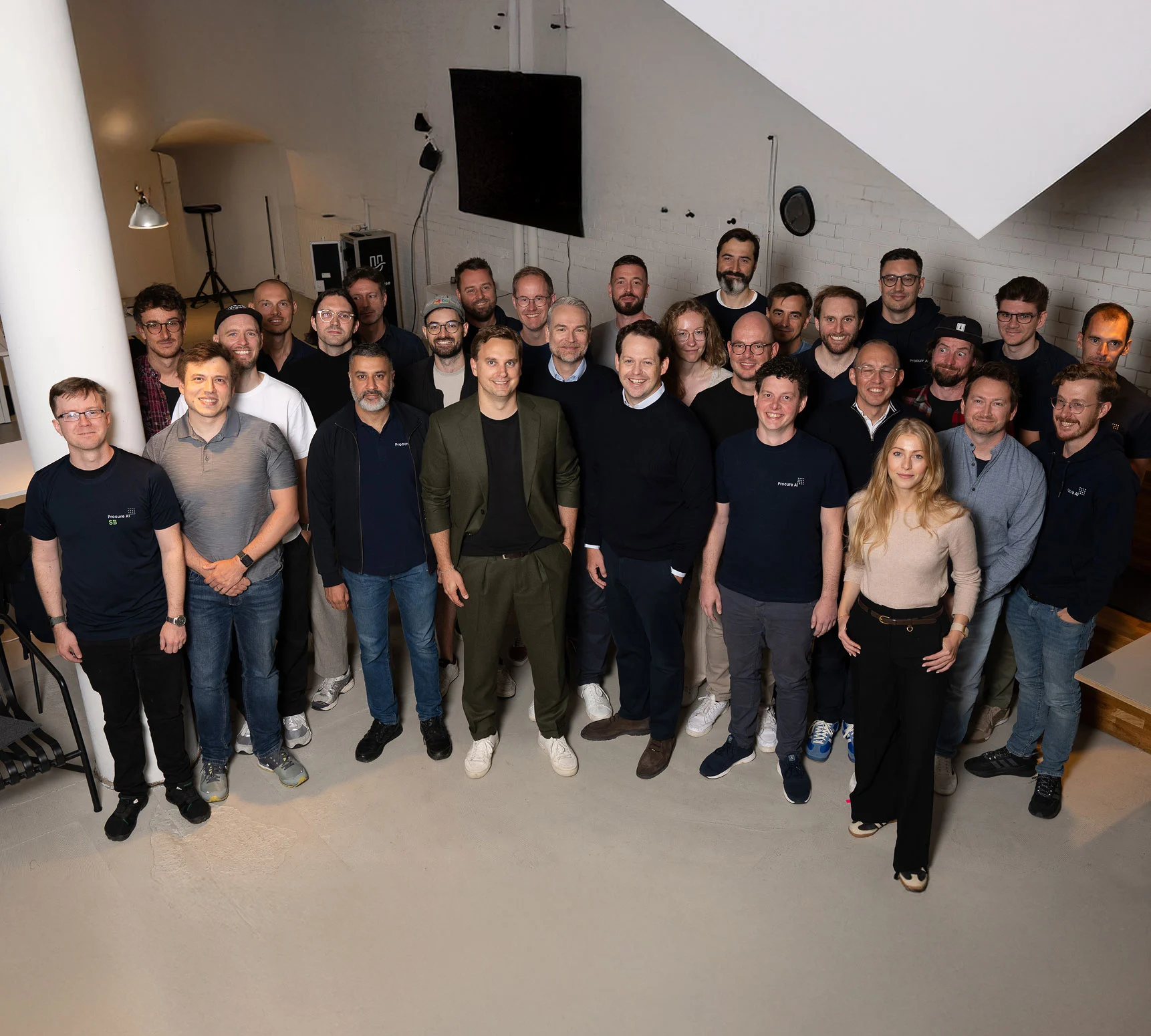
Investors See a Rare Opportunity to Redefine Procurement
Headline partner Dominic Wilhelm noted that the strength of Procure AI lies in its system-level approach. “Most procurement AI tools solve isolated problems. Procure AI solves the system,” he said. The investor syndicate echoed similar sentiments.
C4 Ventures founder Pascal Cagni highlighted the company’s blend of deep technical capability and market execution: “Konstantin and Yves have built something rare: an AI-native platform that simplifies procurement by rethinking it from the ground up. Their ability to achieve 4x revenue growth while maintaining deep technical innovation demonstrates both market validation and execution excellence.”
With supply chain pressure increasing and AI adoption becoming mainstream, 78% of organizations now use AI in at least one business function. Procure AI’s timing positions it at the convergence of two accelerating trends: procurement digitalization and agent-based automation.
Driving European Expansion of Procure AI
With the new seed funding, Procure AI will expand beyond its initial DACH market into the UK, Nordics, Benelux and France, strengthening its engineering and go-to-market teams to meet demand from manufacturers, retailers, distributors and multinational enterprises.
As companies navigate rapidly shifting tariff regimes, supply constraints and the need to re-map supplier networks, the ability to automate and augment procurement work has become a strategic necessity.
Procure AI’s founders believe the future of procurement will be defined by AI-native platforms capable of delivering autonomous execution with compliance-grade rigor, something legacy tools were never designed to do.
Procure AI stands out because it addresses procurement as an interconnected system ripe for autonomous transformation. Its AI-native foundation gives it a structural advantage over traditional procurement software, especially as supply chain volatility and cost pressures push enterprises toward automation.
The challenge ahead will be maintaining precision, compliance and trust in environments where procurement mistakes can escalate quickly. If Procure AI can balance autonomy with enterprise-grade controls, it may become one of the defining platforms in the emerging agentic AI landscape.