

Bevel Raises $10 Million to Build the AI Health Companion
New York–based startup Bevel has raised $10 million in Series A funding led by General Catalyst, marking a major milestone in its mission to redefine how people understand and manage their health.
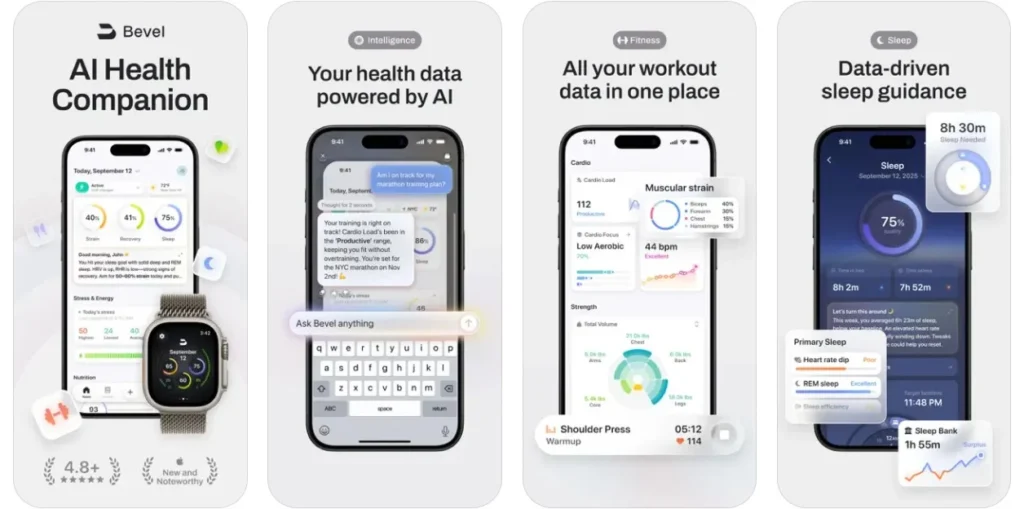
At its core, Bevel isn’t just another wellness app. It’s an AI health companion, a digital layer that unifies data from wearables, sleep, fitness and nutrition into meaningful, personalized insights. The company wants to shift the way people interact with their own health, away from a reactive, system-driven model to one where individuals become active, informed participants.
Bevel’s Vision: Bringing Health Back to the Individual
Bevel’s story begins with a simple observation: modern healthcare has lost its intimacy. In a world filled with medical advancements and endless wellness advice, people are more disconnected from their own bodies than ever.
The company’s founders trace this disconnection through history. For most of human civilization, health was personal and communal which is rooted in intuition, daily habits and holistic understanding. But as medicine evolved through the 19th and 20th centuries, people gradually outsourced their well-being to systems of doctors, insurers and digital platforms.
Bevel aims to close that gap. Its vision is not to replace doctors, but to restore individuals as the CEOs of their own health, with technology acting as an advisor, not a manager.
The Bevel app reflects that philosophy. It is designed around simplicity, clarity and accessibility, going beyond charts and step counts to provide a clear narrative of one’s health journey. More importantly, it’s interoperable, meaning users aren’t locked into one wearable ecosystem. Whether you use an Apple Watch, Fitbit or Oura Ring, Bevel brings all that information into a single intelligent interface.
The Problem: Health Data Is Fragmented, Healthcare Is Reactive
The problem Bevel addresses is universal: people are overwhelmed with health data but under-equipped to interpret it.
An average user might track sleep on one app, steps on another, food intake on a third and still have no clear picture of how it all connects. This fragmentation leads to confusion rather than clarity. Meanwhile, healthcare remains reactive. It steps in after a problem appears, not before.
This mismatch between the availability of data and the lack of insight has created a vacuum in preventive care. People are becoming passive consumers of health information instead of active participants in their own well-being. Bevel’s founders see this as both a technological and philosophical challenge. Their answer: build an AI companion that bridges the gap between raw data and actionable understanding.

The Solution: An AI Health Companion That Understands You
Bevel’s product revolves around a simple but powerful premise: help users connect the dots across every dimension of their health.
Its AI engine collects and analyzes data from multiple sources: wearables, nutrition logs, exercise routines and sleep cycles, to form a unified picture of an individual’s lifestyle. Then it interprets those inputs to deliver personalized insights. Instead of saying “You slept six hours,” Bevel might highlight how a late-night meal or reduced activity earlier in the day affected your sleep quality. Instead of simply showing calories burned, it might suggest how hydration or recovery time impacts your performance.
Bevel’s AI continuously learns from user habits to tailor recommendations. The goal isn’t to overwhelm users with numbers, it’s to translate metrics into meaning.
And Bevel’s design ensures privacy from the start. The company emphasizes that it never sells or shares personal data and all storage happens only with explicit user permission. In a world increasingly skeptical of digital health surveillance, that stance has become one of its strongest differentiators.
The Funding Round: General Catalyst Leads the Push for Preventive Health
Bevel’s $10 million Series A round was led by General Catalyst, a firm known for backing transformative health companies such as Livongo and Color Health. The participation of a healthcare-focused investor signals confidence not only in Bevel’s product, but also in the broader movement toward proactive, preventive care powered by AI.
The funding will be used to scale Bevel’s AI models, grow its engineering and design teams and expand user adoption through its iOS app. The company also plans to develop deeper integrations with popular wearables and potentially launch Android and smartwatch versions.
General Catalyst’s involvement also connects Bevel to a growing ecosystem of startups reimagining the future of healthcare: where data, empathy and design intersect.
The Era of AI Wellness Companions
Bevel’s emergence comes at a time when the global digital health market is undergoing a dramatic shift. As AI becomes embedded in everything from diagnostics to personal fitness, a new category of products is forming: AI wellness companions. These tools go beyond tracking: they interpret, predict and coach. From Whoop and Oura to Eight Sleep and Fitbit’s evolving analytics, the trend is clear: users no longer want dashboards; they want understanding.
What sets Bevel apart is its philosophy. While many apps focus on performance optimization or quantified competition, Bevel focuses on balance, context and self-awareness. Its AI isn’t designed to push harder, it’s designed to help users listen better. In an industry racing toward automation, Bevel’s bet is on human-centered intelligence: technology that feels less like a doctor’s report and more like a thoughtful conversation about your well-being.
The Human Layer Behind the Tech of Bevel
Unlike many health platforms that prioritize data collection, Bevel puts user trust and experience at the center.
The app’s design language is calm, intuitive and minimal: making complex health data feel approachable. Its architecture is built around privacy-first principles. Data is never stored or shared without explicit consent and users remain in control of their digital health footprint.
Equally important, Bevel is not bound to one hardware ecosystem. Its interoperability philosophy allows people to use whichever wearable or fitness app they prefer. This open approach stands in contrast to the walled gardens of tech giants and signals a more democratized future for digital health.
What’s Next for Bevel? From App to Everyday Companion!
With the new funding, Bevel’s roadmap extends well beyond simple tracking and analytics. The company plans to deepen its AI capabilities to make the app more context-aware, recognizing subtle patterns in behavior and lifestyle. Future updates may include predictive insights, personalized health goals and real-time recommendations based on biometrics.
Bevel also intends to expand partnerships with clinical experts, nutritionists and mental health professionals, allowing its AI companion to deliver a more holistic form of guidance. In time, Bevel hopes to evolve from a passive dashboard into an active, trusted companion, one that helps users not just measure their health, but truly understand it.

Bevel’s Role in the Future of AI and Healthcare
Bevel’s rise represents something bigger than another funding headline. It marks a turning point in how people engage with health data and how technology can restore agency rather than erode it. As artificial intelligence becomes more personal, Bevel is carving a path that merges design, data and humanity. It’s not promising to replace doctors or outsmart biology. It’s promising something simpler: to help people live in sync with their own bodies again.
In a world where health often feels transactional and overwhelming, Bevel’s message is refreshingly human. As healthcare becomes more intelligent, Bevel wants to make sure it also becomes more personal.