

Inside the Shift to Autonomous Insurance: Why Platforms Like Neutrinos Matter?
For years, the insurance industry has invested heavily in digital transformation. Policy systems moved online, claims could be submitted through apps, and underwriting models began incorporating analytics. Yet despite this progress, most insurance operations still depend on human coordination. Employees gather documents, verify details, move cases between systems, and decide when automation should intervene. Software accelerated tasks, but it rarely completed them independently.
Today, a new phase of enterprise technology is beginning to take shape. Instead of digitizing workflows, organizations are attempting to automate decisions themselves. This transition requires more than a single AI model or chatbot. It demands systems capable of coordinating many specialized AI agents that can act safely within regulated environments. Singapore-headquartered Neutrinos is positioning its platform as part of this emerging operational layer, designed to orchestrate autonomous processes across insurance enterprises.
Insurance as a Process-Heavy Industry
Insurance is fundamentally a decision business. Every policy, claim, and risk evaluation passes through multiple checkpoints. An underwriting request might involve identity verification, risk scoring, document interpretation, and pricing calculation. Claims processing requires validation, fraud assessment, coverage interpretation, and payment authorization.
Historically, these steps have been distributed across different software systems and teams. Even when automation tools exist, they usually handle isolated tasks such as extracting information from forms or flagging anomalies. Human operators remain responsible for stitching outputs together into a final decision. This structure makes insurance an ideal environment for testing autonomous operational systems. The work is repetitive, rules-driven, and data-intensive, yet mistakes carry financial and regulatory consequences.
Why Traditional Automation Reached Its Limits?
Over the past decade, robotic process automation promised to remove manual work from enterprise operations. In practice, it often automated surface-level tasks rather than decision-making. Systems could transfer data between applications but struggled when context or interpretation was required.
As a result, organizations accumulated layers of automation tools alongside existing workflows. Instead of eliminating complexity, many deployments added coordination overhead. Employees still monitored processes, corrected edge cases, and resolved inconsistencies between systems. Artificial intelligence expanded capabilities by interpreting documents and recognizing patterns. Yet deploying multiple models introduced a new challenge: each system operated independently, without a unified execution framework.
The Emergence of Agent-Based Operations
The current generation of enterprise AI focuses on agents rather than isolated models. These agents can perform specific functions such as reading policy language, evaluating eligibility, or communicating with customers. However, real-world processes rarely involve a single step.
A claims workflow may require several agents to collaborate. One verifies identity, another interprets coverage terms, and a third evaluates repair estimates. Without coordination, organizations risk inconsistent outcomes or duplicated actions. This is where orchestration becomes critical. Instead of asking whether AI can perform a task, enterprises now ask how multiple AI systems can operate together reliably.
Neutrinos Building the Coordination Layer
The Neutrinos platform attempts to address this coordination challenge through a unified execution environment. Its architecture integrates data access, workflow management, and agent orchestration so processes can run continuously across systems.
Features such as a unified viewer provide consolidated visibility into operations, while a data fabric connects disparate enterprise data sources. An orchestration layer manages how agents interact, ensuring tasks occur in sequence and within defined rules.
Rather than replacing existing infrastructure, the system acts as a control layer over multiple technologies. Organizations can deploy agents developed internally or externally while maintaining consistent execution standards.
From Assistance to Execution
The distinction between assisting employees and executing operations marks a significant shift in enterprise software philosophy. Earlier generations of technology generated recommendations. Workers still performed the final action.
In autonomous workflows, software completes the action itself. For example, underwriting may not only suggest eligibility but finalize policy issuance after verification steps are satisfied. Claims systems may evaluate documentation and initiate payment without manual approval when conditions are met. Such capabilities require reliability and auditability. Regulated industries must demonstrate how decisions were made and ensure they follow policy rules. Orchestration platforms therefore function as governance systems as much as automation tools.
Signals of Industry Adoption and Recognitions
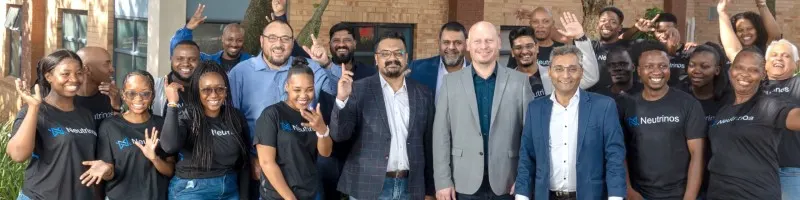
Recognition from industry analysts suggests growing interest in this model. Neutrinos has been positioned in Everest Group’s Intelligent Process Automation Platform PEAK Matrix and named a technology standout in life insurance claims administration by Celent. These evaluations typically focus on operational capability rather than theoretical innovation, indicating practical deployment within enterprise environments.
Adoption patterns reflect a broader industry movement. Insurers are experimenting with AI not only for analytics but for operational execution. The emphasis is shifting from improving employee productivity to redesigning workflows around autonomous systems.
Observations From the India AI Impact Summit 2026, Delhi
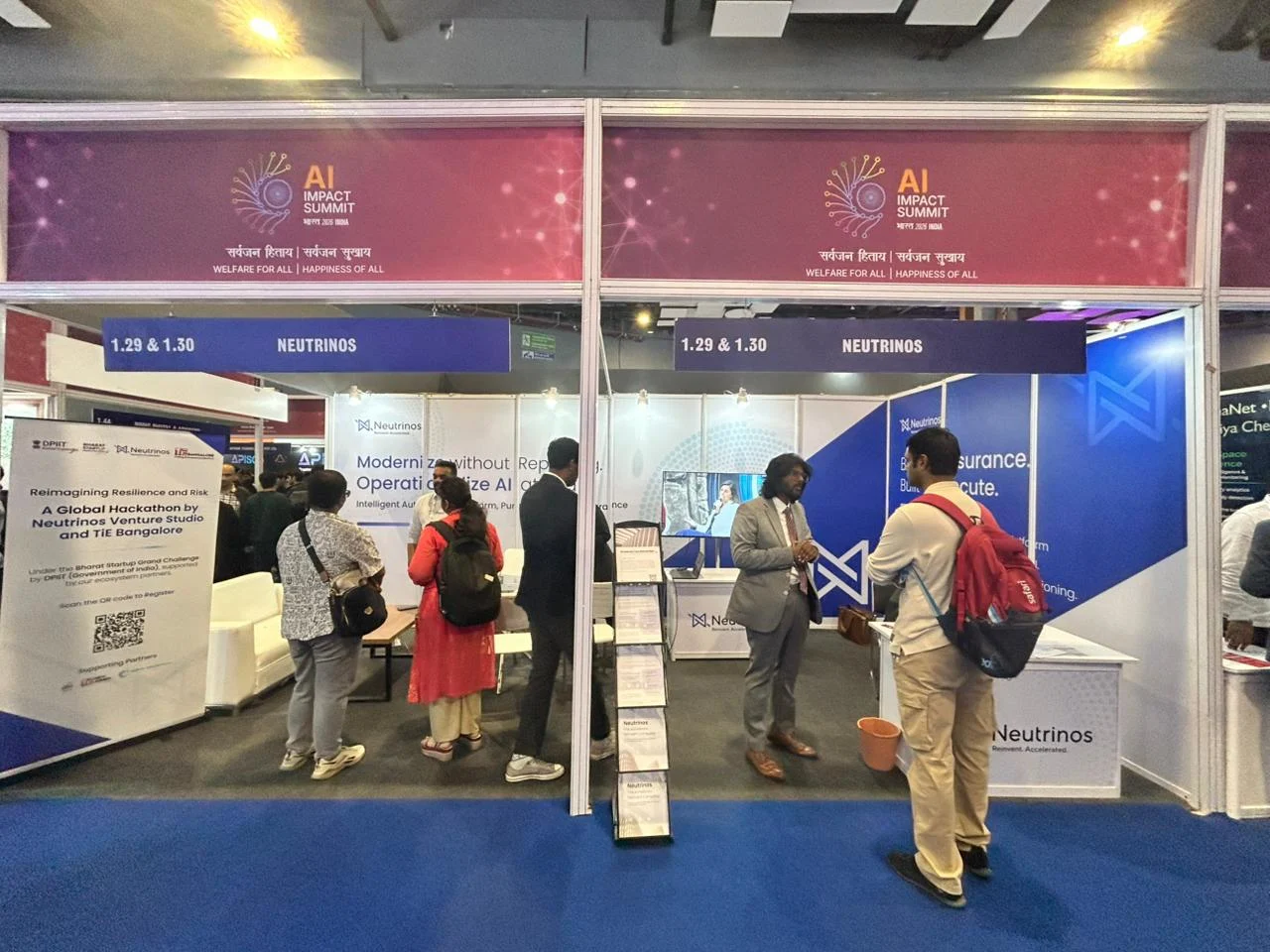
At the India AI Impact Summit 2026 in New Delhi, conversations among insurers and technology providers reflected similar themes. Rather than debating whether AI would affect insurance, discussions centered on how to operationalize it safely. Enterprises sought methods to scale automation without losing control over compliance or customer experience.
Representatives from Neutrinos emphasized measurable operational outcomes rather than experimental pilots. The focus was less on introducing new tools and more on integrating AI into everyday processes across underwriting, claims, and distribution. This perspective highlights a maturity phase in enterprise AI adoption. Organizations are moving beyond isolated demonstrations toward continuous operational deployment.
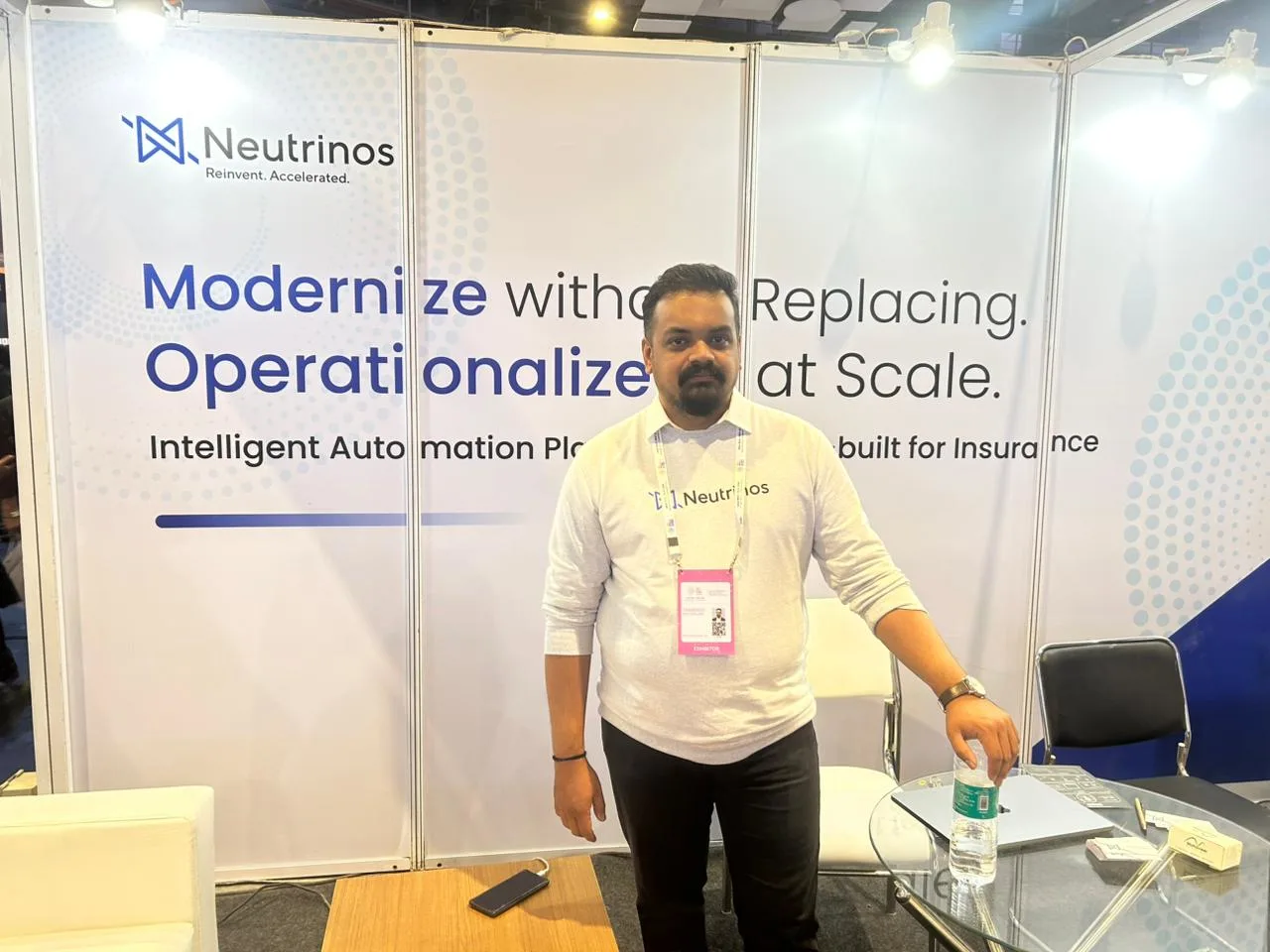
During the summit, We, The Futurism Today, also interacted with Mr. Sabareesh Natarajan, Director of Global Alliances and Partnerships at Neutrinos. He described how the company is helping insurers move beyond fragmented automation through an AI-powered business execution platform supported by a library of pre-built accelerators, enabling organizations to operate with greater agility and operational consistency.
Insurance as the Testing Ground for Autonomous Enterprises
Because insurance decisions involve risk evaluation and regulatory oversight, the industry provides a controlled environment for autonomous systems. If AI agents can manage such processes reliably, similar architectures could expand to banking, healthcare administration, and other complex sectors.
The transition parallels earlier shifts in enterprise computing. Databases centralized information storage, and cloud platforms centralized infrastructure. Agent orchestration platforms may centralize decision execution. In this framework, software stops acting as a passive record system and begins functioning as an operational participant.
The Broader Implication for Enterprise Technology
As organizations adopt multiple AI agents, coordination becomes more important than individual model performance. Enterprises will need systems that manage interactions, resolve conflicts, and enforce policy constraints automatically.
This suggests a future where enterprise applications resemble ecosystems rather than standalone tools. Instead of employees navigating software interfaces, software systems coordinate activities among themselves while humans supervise exceptions.
Platforms enabling this structure may become foundational components of enterprise architecture, particularly in regulated industries where reliability and traceability are critical.
The importance of platforms like Neutrinos lies not in automation alone but in coordination. Enterprises are entering an era where multiple AI systems operate simultaneously, and managing their interaction becomes the primary challenge. Insurance provides an early example because of its structured processes and regulatory requirements. If orchestration frameworks succeed here, similar operational models may extend across many industries, marking a shift from software that assists decisions to software that executes them under supervision.