

Cortical Labs: Inside the World’s First Commercial Biological Computer
Every morning, at a data centre in Melbourne, Australia, a technician begins the working day by topping up the computers with a liquid modelled on cerebrospinal fluid, the fluid that surrounds the human brain. Every 24 hours, that fluid is removed and replaced, because the living neurons that power the machines have depleted its oxygen and glucose. The mixture of gases inside the units is also adjusted, maintaining approximately five percent oxygen, the prime atmospheric conditions for biological computing.
This is not a scene from a science fiction film. It is the operational reality of Cortical Labs, a Melbourne-based biotech company that has built and commercialised the world’s first biological computer, the CL1, and is now running a cloud platform that allows developers anywhere in the world to deploy code directly to real human neurons without ever entering a laboratory.
Four Billion Years of Evolution, on a Silicon Chip
The foundational insight behind Cortical Labs is both scientifically elegant and practically audacious. Silicon-based AI systems spend enormous computational resources and energy attempting to replicate the learning, adaptability, and generalisation capabilities of biological neurons. Cortical Labs simply starts with the neurons. Its CL1 device cultivates human neurons, derived from human stem cells, inside a nutrient-rich solution that supplies them with everything they need to survive and function.
Those neurons grow across a silicon multi-electrode array chip, which sends and receives electrical impulses directly into the neural structure. The result is a hybrid system: a biological neural network, living and learning, fused with hard silicon in a single closed-loop device.
The company calls this approach Synthetic Biological Intelligence, or SBI. The operating system that governs it is called biOS, the Biological Intelligence Operating System. biOS creates a simulated world and sends information directly to the neurons about their environment. As the neurons react to that information, their electrical impulses affect the simulated world in turn, creating a genuine closed loop between biological processing and digital computation.
This is the same fundamental mechanism that, in 2021, allowed Cortical Labs to grow neurons on a chip and watch them teach themselves to play Pong, the first demonstration in history that neurons in a dish could learn and adapt to a digital environment. That moment, published in the peer-reviewed journal Neuron and reported globally, established Cortical Labs as the pioneer of an entirely new category of computing.
The CL1: Specifications, Capabilities, and What Makes It Different
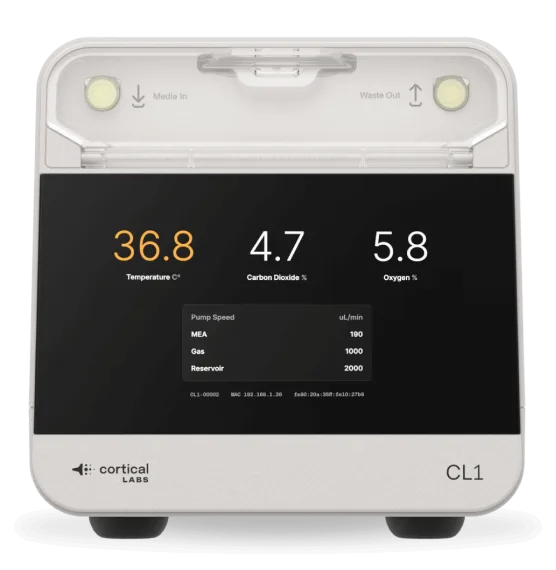
The CL1 is the commercial product that emerged from that research. It is described by Cortical Labs as the world’s first code-deployable biological computer: a self-contained unit housing a multi-electrode array carrying approximately 200,000 living human neurons, a complete internal life support system maintaining the fluid, gas, and temperature conditions the neurons require, and a fully programmable bidirectional stimulation and recording interface that allows developers to send information to the neurons and receive their electrical responses as computational output.
The energy consumption figure is striking in context. At 30 watts per unit, each CL1 uses less power than a handheld calculator, according to Cortical Labs CEO Hon Weng Chong. A modern GPU, by comparison, can consume up to 6,000 watts. As the global technology industry confronts an accelerating energy crisis driven by the insatiable power demands of AI training and inference workloads, the CL1’s biological efficiency represents something genuinely new in the landscape of computing architectures.
The neurons do not need to be programmed with statistical patterns from massive datasets. They learn from their interactions with their simulated environment, just as neurons in biological organisms do, requiring a fraction of the training data that conventional AI systems demand.
The CL1 is plug-and-play extensible: cameras, USB devices, and actuators can be connected directly to the unit, and it integrates with the Cortical Cloud for broader experimentation and data collection. A touchscreen interface allows users to visualise system status, view live neural activity data, and run pre-packaged assays without requiring specialised expertise in electrophysiology.
The unit is priced at approximately $35,000, a figure that positions it as accessible to well-resourced research laboratories while reflecting the biological complexity and life support infrastructure it contains.
The Cortical Cloud: Neurons as a Service
Recognising that most developers, researchers, and organisations do not have the physical laboratory infrastructure or the biological expertise to operate a CL1 unit on site, Cortical Labs has built and launched the Cortical Cloud, a remote access platform that allows anyone to deploy code to real living neurons without a lab or device. The Cortical Cloud was announced in March 2026, covered by Bloomberg, and represents a fundamental expansion of biological computing’s accessibility.
The model works as follows. Users sign up and access the platform from a browser, using familiar data science tools including Jupyter notebooks and a Python SDK. They can upload custom code or build applications that run on an array of CL1 units operated by Cortical Labs in its Melbourne data centre.
The company handles all neural health monitoring, life support management, and infrastructure maintenance, delivering neural compute on demand without requiring the customer to engage with any of the biological complexity underlying the system. Users pay with a credit card, own the data their experiments produce, and can access raw output from the neurons in real time.
What makes the Cortical Cloud operationally distinctive is the nature of the preparation it requires for each job. Unlike conventional cloud computing, where a virtual machine can be spun up in seconds, preparing a biological computing job takes approximately a week, as Cortical Labs must source the appropriate cell line for the customer’s research objective, set up the physical environment, and allow the neurons to establish their networks before computation begins.
Most users are expected to rent three or four CL1 units simultaneously to enable duplicate results and control groups, reflecting the scientific rigour that biological experiments require. The company has been transparent about these constraints, framing them as the current reality of a technology that is genuinely at the frontier of what has ever been attempted.
“AI capacity is accelerating faster than most people realise, and everyone is talking about chips, models, and megawatts. But nobody is talking about neurons.” – Hon Weng Chong, Founder and CEO, Cortical Labs
Biological Data Centres: The Next Frontier
In March 2026, Cortical Labs announced it was building what it calls biological data centres, physical facilities housing racks of CL1 units rather than conventional GPU servers. The first, a proof-of-concept facility in Melbourne, houses 120 CL1 units and represents the first biological data centre ever constructed. A second facility is being established in Singapore in partnership with sustainability-focused data centre operator DayOne, beginning with a single rack of 20 CL1 units deployed in an initial validation phase at the Yong Loo Lin School of Medicine at the National University of Singapore, with plans to scale to as many as 1,000 units at a commercial DayOne facility.
These facilities are built around the same biological infrastructure as the CL1 device itself, scaled up. The organoid networks that power them can learn and adapt in ways conventional computing struggles to replicate, according to Cortical Labs, while operating on a fraction of the energy required by digital systems. The Melbourne facility processes daily fluid replacements and gas adjustments by human technicians, a biological maintenance routine that has no equivalent in conventional data centre operations.
Whether this operational model can scale to commercially meaningful compute capacity within realistic timeframes is the central question the validation phases in Melbourne and Singapore are designed to answer.
Research Applications: Medicine, Drug Discovery, and Beyond
Beyond the engineering milestone of creating a commercial biological computer, Cortical Labs has a clear thesis about the research value of the CL1 that extends well beyond computing performance. The ability to work with real, living human neural networks in a controlled, programmable environment opens possibilities in biomedical research that neither conventional computing nor animal testing can provide.
Drug testing is one of the most significant near-term applications. Currently, the pharmaceutical industry relies heavily on animal models to test how compounds affect the nervous system, a process that is expensive, time-consuming, ethically contested, and frequently inaccurate because animal neurology differs substantially from human neurology. The CL1 offers a third path: real human neurons, tested directly, with the electrical responses of those neurons to drug compounds measured in real time.
Research published in Nature Communications demonstrated that drug treatment measurably alters performance in a neural microphysiological system, confirming that CL1-scale neural networks respond to pharmacological agents in ways that can be quantified and compared. This is the foundation of a new approach to drug testing that is simultaneously more ethically defensible and more scientifically relevant than animal models.
The research pipeline Cortical Labs has built is extensive. The company has published peer-reviewed work in Neuron, Nature Communications, Nature Reviews Bioengineering, Cell Biomaterials, and a range of other leading scientific journals. Topics span the CL1 as a platform technology, the learning and plasticity properties of biological neural cultures compared to deep reinforcement learning, the computational perspective on NeuroAI and Synthetic Biological Intelligence, and the ethical questions surrounding embodied neural systems, which the company takes seriously enough to have published its own research on organoid ethics. A nomenclature paper calling for a scientific consensus on how to classify diverse intelligent systems, including SBI, reflects the company’s commitment to building a rigorous conceptual framework alongside its engineering work.

The Ethical Dimension: Taking Consciousness Seriously
Cortical Labs is unusually forthright about the ethical questions its technology raises. When neurons learn, adapt, and exhibit goal-directed behaviour in response to their environment, questions about the moral status of those neural systems are not purely academic. The company has published research on whether embodied neural systems can enable investigations of morally relevant states, and has collaborated on papers examining whether there is evidence for organoid ethics.
Chief Scientific Officer Brett Kagan, PhD, who led the foundational research that produced DishBrain and later the CL1, has been among the most prominent voices in the field arguing that these questions deserve genuine scientific and ethical scrutiny rather than dismissal.
Cortical Labs states that regulatory compliance and bioethics oversight are integral to its commercialisation strategy, and its research platform operates within established ethical frameworks. The company has initiated a scientific nomenclature process, inviting the broader research community to participate in defining how SBI systems should be categorised, measured, and governed, recognising that the field needs conceptual infrastructure as urgently as it needs technical infrastructure.
The Team and the Vision of Cortical Labs
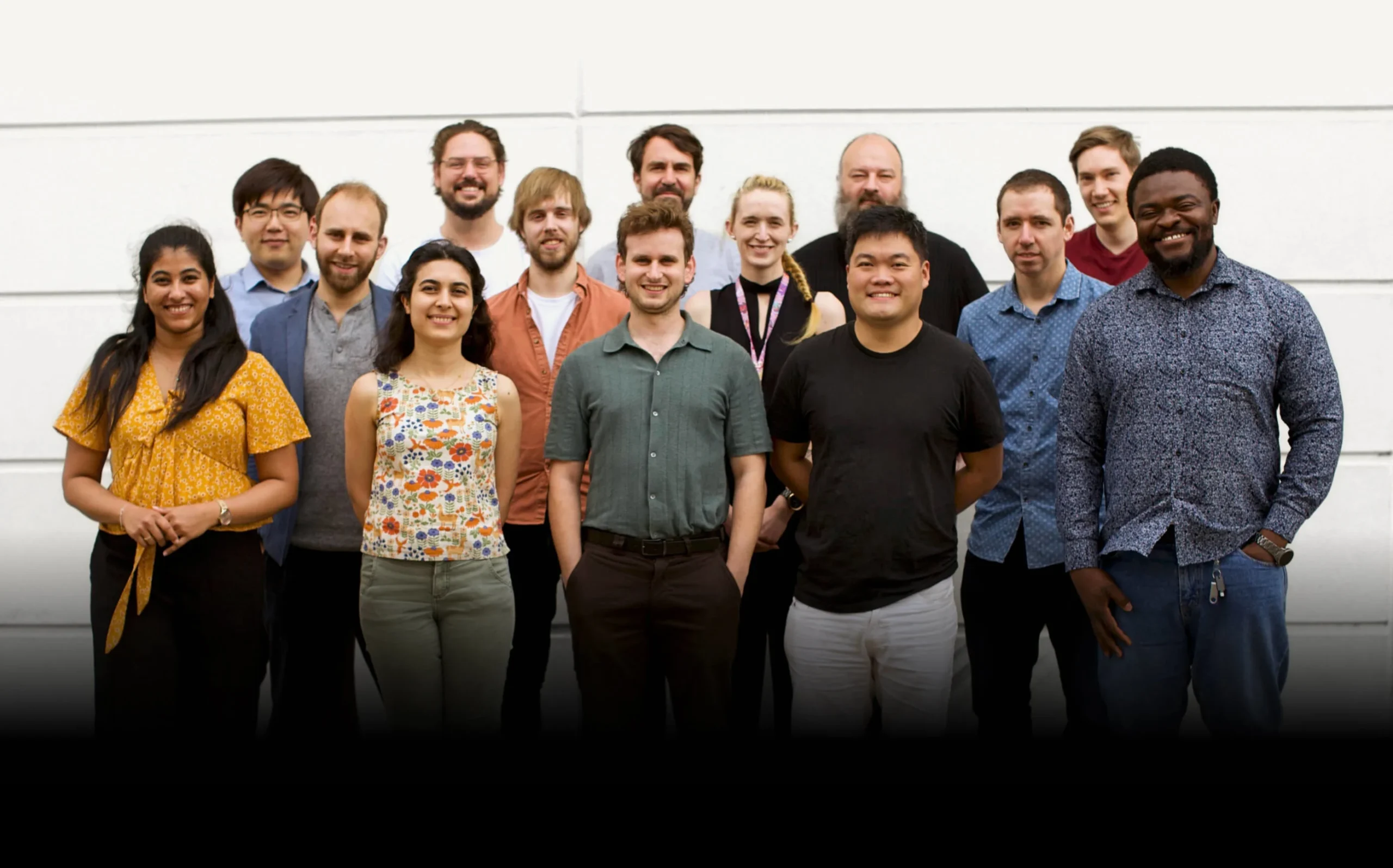
Cortical Labs was founded in Melbourne and is led by Hon Weng Chong, a medical doctor who serves as founder and CEO, and Brett Kagan, PhD, who serves as both Chief Scientific Officer and Chief Operations Officer. The leadership team also includes Chief Technology Officer David Hogan and Chief Hardware Officer Andrew Doherty. Investors in the company include Horizons Ventures, Blackbird Ventures, LifeX Ventures, Radar Ventures, and In-Q-Tel, the strategic investment arm of the US intelligence community, a participant that underscores the national security and defence dimensions of biological computing alongside its civilian research and commercial applications.
The company’s stated mission is to transform the world through human computing. It is a phrase that is easy to dismiss as marketing language until you consider what is actually being built in the Melbourne data centre where technicians top up the computers with cerebrospinal fluid every morning. Cortical Labs is not incrementally improving an existing category of technology.
It is creating a new one: a form of intelligence that learns from experience the way biological organisms do, that consumes energy at a tiny fraction of what silicon systems require, that can serve as the most human-relevant possible substrate for medical and pharmacological research, and that is now accessible to any developer with a browser and a research question. The full implications of that will take years, possibly decades, to fully understand. But the company that is forcing that reckoning already exists, is already operating, and is already open for business.