

Sokin Raises $50M Series B to Build a Unified Global Payments Infrastructure
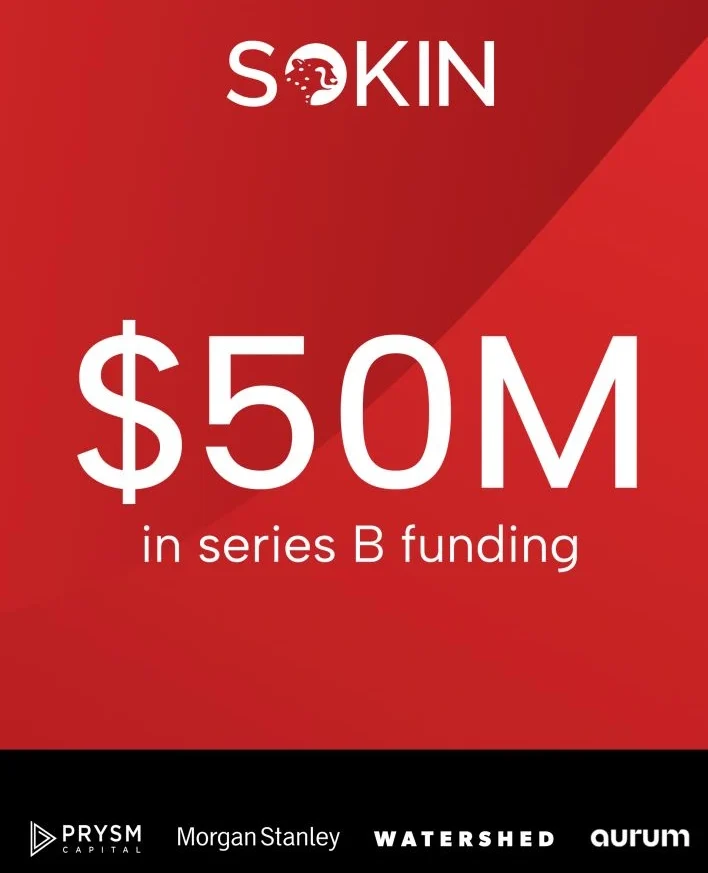
London-based fintech company Sokin has raised US$50 million in a Series B round, valuing the business at US$300 million, as it accelerates its ambition to build a unified global platform for business payments. The round was led by Prysm Capital, with participation from Watershed Ventures and continued support from Morgan Stanley Expansion Capital and Aurum Partners, following a year of rapid scaling and strong commercial momentum.
Founded with a mission to remove the borders, barriers and burdens of international payments, Sokin has positioned itself as a next-generation global payments infrastructure provider, helping companies move money faster, operate more efficiently and scale across international markets without friction. The company says its role is to empower businesses “at home and abroad” by replacing fragmented legacy systems with modern financial rails built for a borderless economy.
Fixing the Slow, Fragmented Infrastructure Behind Global Payments
Cross-border business payments remain one of the most complex categories in financial services. Despite advancements in consumer fintech, global B2B payments continue to rely on slow, multi-intermediary networks that create delays, high FX costs and a lack of transparency. For companies operating internationally, processing invoices, reconciling payments or managing treasury across currencies often involves long settlement times, high transaction fees, limited visibility into payment status, complex compliance requirements and disconnected banking systems.
Sokin’s platform was built to address these structural weaknesses. Its technology enables enterprises to automate accounts payable and receivable, optimize foreign exchange flows, manage multi-currency treasury operations and integrate embedded finance into existing workflows. By unifying previously siloed systems, Sokin removes friction from international trade and gives businesses a single platform to support global operations.
The company says its goal is “to build what’s next in global payments and banking”, a modern financial fabric that helps organisations move faster and scale with confidence.
A $50M Series B to Scale a Global Financial Infrastructure
Sokin’s new funding round comes after a year of significant growth, during which the company reported 100% year-on-year expansion across its platform. With businesses increasingly operating across borders and demanding faster, cheaper and more predictable payment processing. Sokin’s infrastructure has seen rising demand from customers across Europe, Asia, the Middle East and South America. The US$50 million Series B will be used to:
- Expand deeper across Asia, the Middle East and South America
- Strengthen Sokin’s regulatory footprint and banking network
- Advance its AP/AR automation, treasury and embedded finance capabilities
- Scale its global platform to support modern enterprises at higher volumes
For Prysm Capital, the lead investor, Sokin represents a growing category of fintechs modernising the core infrastructure that powers international commerce. Global businesses increasingly expect the same level of speed and user experience in B2B payments that consumers have come to expect from mobile wallets and instant banking. Sokin’s platform, with its unified architecture, is designed to meet that demand.
A Unified Platform for AP/AR, Treasury, FX and Embedded Finance
Sokin’s platform offers a broad suite of tools that integrate into a company’s financial operations:
- Accounts Payable & Receivable Automation: Automates repetitive workflows, improves reconciliation and enhances visibility into business cash flow.
- Global Payouts & Collections: Supports multi-country transfers with faster settlement and transparent tracking.
- Multi-Currency Wallets & Treasury Tools: Enables businesses to manage balances, optimise FX, and control currency exposure in real time.
- Embedded Finance Capabilities: Allows enterprises and platforms to embed global banking and payment services directly into their products.
- Unified Cross-Border Payment Rails: Replaces fragmented correspondent banking networks with an integrated infrastructure designed for speed and transparency.
Sokin’s value proposition lies not only in making payments faster, but in removing operational complexity altogether, something traditional banks have struggled to deliver.
Expanding Across High-Growth Global Markets
As globalisation accelerates, businesses are expanding across regions where financial infrastructure varies widely in maturity and speed. With this, the demand for reliable and scalable B2B payments infrastructure has surged. Sokin is now doubling down on three key growth markets:
- Asia: Home to the world’s fastest-growing B2B commerce corridors. Businesses require financial solutions that work seamlessly across diverse regulatory environments.
- Middle East: A rapidly emerging hub for global finance and cross-border trade. Digital transformation and open banking reforms make it ripe for modern fintech solutions.
- South America: High cross-border friction and volatile FX markets make the region a strong fit for Sokin’s unified treasury and payments tools.
By expanding its regulatory licensing and banking partnerships, Sokin aims to position itself as a global backbone for international B2B commerce.

A Year of Momentum and a Pathway to Global Scale
Sokin’s rapid progress underscores a broader trend: global enterprises are demanding financial infrastructure that is faster, more transparent and far more connected than what traditional financial institutions offer today. As supply chains expand, remote workforces grow and digital business models scale globally, outdated systems can no longer support modern operations.
The company’s Series B round provides the fuel needed to meet this demand. By strengthening its banking network, expanding geographically and deepening its product capabilities, Sokin aims to solidify its position as a global leader in business payments infrastructure.
Sokin stands out in a competitive fintech landscape because it is attacking the backbone of global business rather than peripheral features. While many fintechs focus on front-end user experience or niche financial tools, Sokin is rebuilding the infrastructure itself, the pipes through which international business flows.
Its unified platform approach gives it a strategic advantage in a market that has long been underserved by legacy institutions. The $50M raise and $300M valuation indicate strong investor conviction, but the real test will be execution at scale across complex regulatory environments. If Sokin succeeds, it may become one of the defining payments infrastructure companies of the next decade, especially as cross-border commerce becomes the default rather than the exception.