


Cauldron Ferm: Making Biomanufacturing Affordable at Industrial Scale
Estimates from McKinsey suggest that up to 60 percent of the physical inputs to the global economy could, in theory, be produced biologically. Food proteins, industrial chemicals, cosmetic ingredients, fuels, materials, pharmaceuticals: all of these could, in principle, be manufactured using living microbes rather than mined from the earth or synthesised from petrochemicals. The promise of precision fermentation, the process of engineering microorganisms to produce specific target molecules, has captivated scientists, investors, and policymakers for years.
The obstacle has never been biology. It has always been economics. Making fermentation-derived products at the volumes and price points that can genuinely compete with conventional alternatives has remained stubbornly out of reach for most of the industry. Cauldron Ferm, a biomanufacturing company based in Orange, New South Wales, Australia, was founded specifically to solve that problem.
What Is Cauldron Ferm?
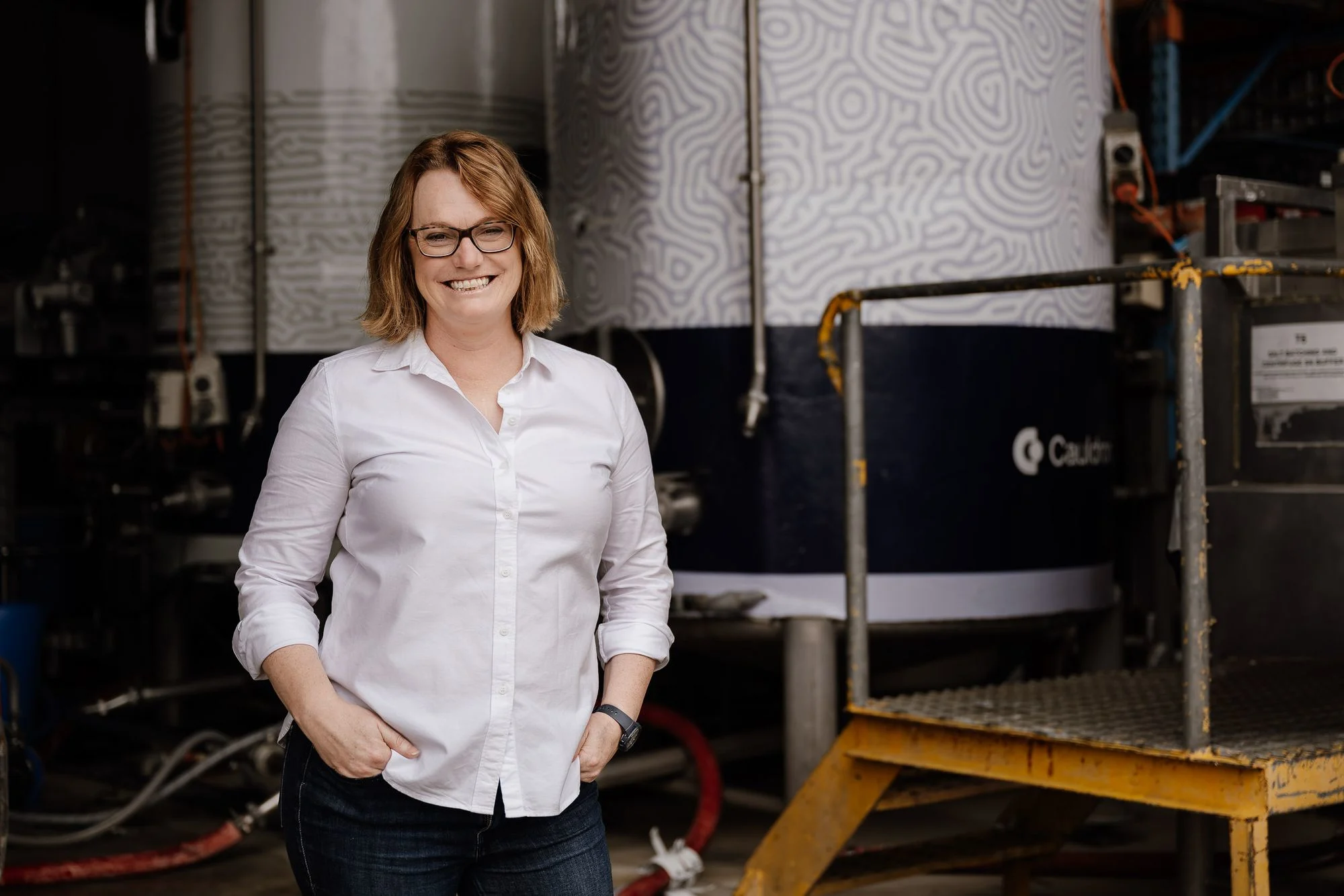
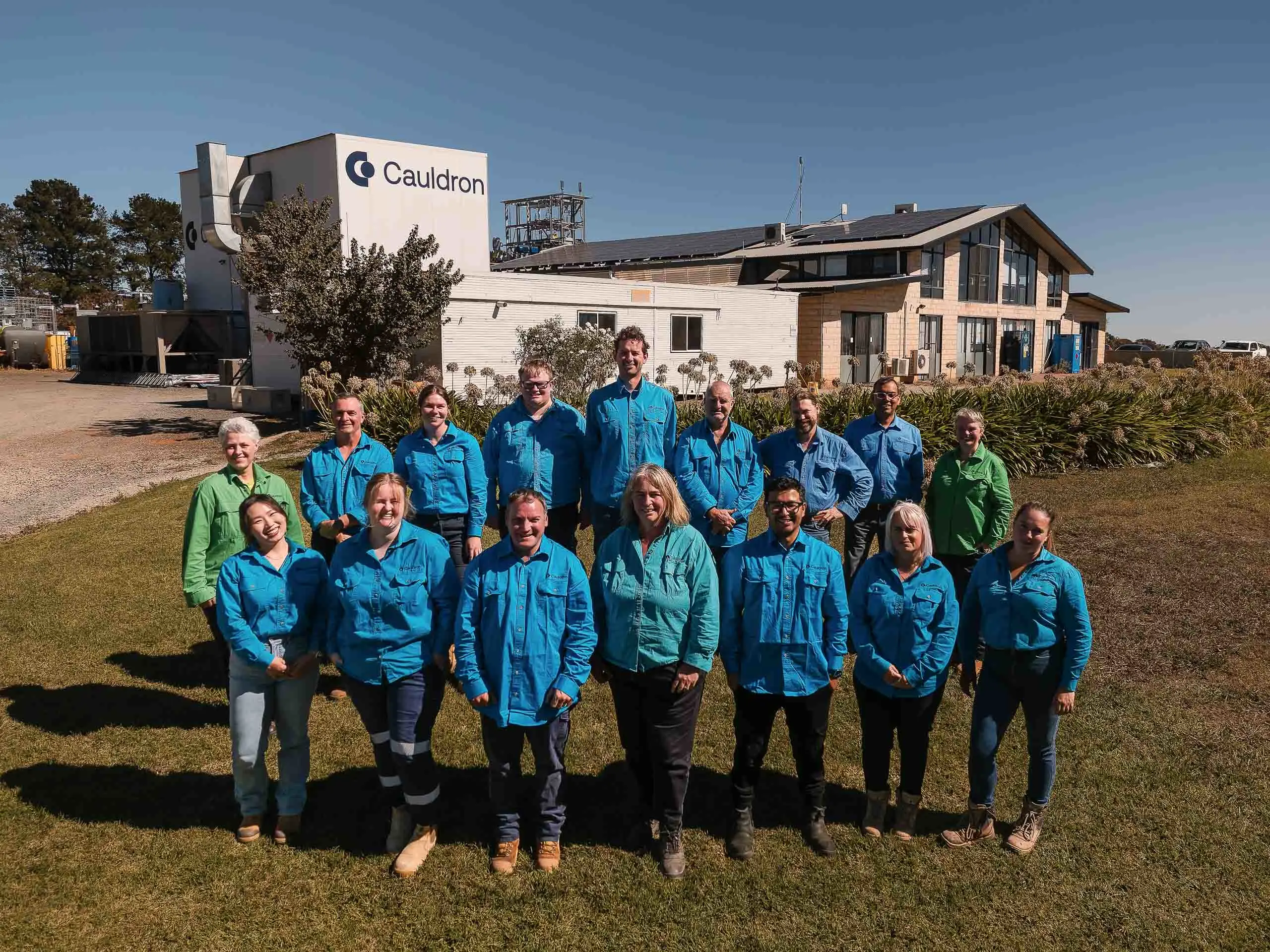
Cauldron is an advanced biomanufacturing company that has developed and commercialised a proprietary technology it calls hyper-fermentation. Founded in 2022, and drawing on more than four decades of continuous fermentation research and development and over a decade of hands-on manufacturing experience, the company is building what it describes as the foundational infrastructure for the bioeconomy: the industrial-scale production capacity that allows precision fermentation products to move from scientific breakthroughs in the lab to commercially viable products on the market.
Unlike many biotechnology companies that develop novel organisms or molecules and then struggle to find a path to cost-competitive production, Cauldron’s core business is the manufacturing layer itself. The company partners with precision fermentation companies that have already developed their engineered microorganisms and target products, and it applies its hyper-fermentation platform to produce those products at dramatically lower cost and higher efficiency than conventional fermentation methods permit. In this sense, Cauldron is not competing with the companies developing new bio-based ingredients and materials. It is enabling them to reach the market.
The Problem Cauldron Is Solving
To understand why Cauldron matters, it is necessary to understand the fundamental economic barrier that has held back the precision fermentation industry. The dominant method for industrial fermentation is fed-batch processing, in which a bioreactor is inoculated with a microbial culture, fed nutrients over a period of days, harvested at the end of the cycle, then sterilised and restarted from scratch. This process is inherently inefficient. It is discontinuous by nature, meaning that each cycle involves significant downtime for cleaning, sterilisation, and restart. It requires very large vessels, often in the range of 300,000 to 500,000 litres, to achieve the economies of scale needed to bring costs down.
A single mega-facility of this kind requires well over 100 million dollars in capital expenditure before it produces a single unit of product at commercially competitive cost. The result is that most precision fermentation products remain stuck in a price band that makes them viable only for high-margin, low-volume markets such as pharmaceuticals and specialty chemicals, while the vast mainstream applications in food, feed, fuels, and commodity materials remain economically inaccessible.
Continuous fermentation, in which the bioreactor runs indefinitely rather than in discrete cycles, is the theoretical solution. It is more productive, more energy-efficient, and more capital-efficient than fed-batch. The problem is that continuous fermentation has historically been plagued by two technical failures that have prevented it from becoming mainstream at industrial scale.
The first is contamination: unwanted microorganisms infiltrate and grow in the ferment, disrupting production. The second is genetic drift: the genetic make-up of the microbial population gradually changes over time, reducing or eliminating production of the target molecule. These two problems have been studied for decades. Cauldron’s team of scientists, over more than four decades of accumulated research, has solved both of them.
How Hyper-Fermentation Works?
Cauldron’s hyper-fermentation technology rests on two proprietary innovations that together address the contamination and genetic drift challenges that have historically made continuous fermentation impractical at scale.
ACE Media
The first innovation is ACE media, a fully defined nutritional medium optimised to the microgram for each specific microorganism. The composition of the media is precisely calibrated to provide exactly what the target microorganism needs to thrive, while creating conditions that naturally suppress the growth of unwanted contaminants. Cauldron has built a library of ACE media recipes covering most commercially relevant organisms, which means the platform can be adapted to a wide range of client microorganisms without requiring each new engagement to develop a media formulation from scratch.
Proprietary Bioprocess and Operating Protocols
The second innovation is a set of proprietary bioprocess protocols that promote genetic stability in the microbial population over extended continuous runs. By maintaining the population in a highly productive steady state and managing the conditions that drive genetic drift, Cauldron’s process allows the continuous fermentation to be sustained for long periods with consistent productivity, harvesting more frequently and at larger volumes than fed-batch methods permit. The result is a continuous process that, as Cauldron describes it, operates like an assembly line for maximum efficiency.
Together, these two innovations unlock the productivity and efficiency advantages that continuous fermentation has always theoretically offered but could never reliably deliver. The gains are substantial. Compared to fed-batch methods, hyper-fermentation drives significant increases in volumetric productivity, meaningful reductions in electricity and water consumption, lower labour costs due to the continuous rather than cyclic nature of the process, reduced sterilisation frequency and associated utilities costs, and dramatically lower capital expenditure requirements because smaller, more efficient equipment can achieve the same output that fed-batch requires massive vessels to produce.
Cauldron estimates that its technology reduces production costs by 30 to 50 percent relative to conventional fermentation approaches, and the company has already demonstrated true industrial-scale continuous fermentation for synthetic biology strains at 10,000-litre scale, the first company in the world to do so.
Cauldron’s Services: From Lab to Industrial Scale
Cauldron’s commercial offering is structured as a three-stage biomanufacturing-as-a-service pathway designed to take a client’s precision fermentation product from laboratory validation through to commercial-scale production.
The first stage, FermaFit, involves technology transfer and an evaluation of technical compatibility between the client’s microorganism and Cauldron’s hyper-fermentation platform. The company rapidly assesses the organism’s compatibility with ACE media, confirms technical fit at lab scale, and protects the client’s intellectual property throughout the process. FermaFit is designed to answer the foundational question quickly and cost-effectively: can hyper-fermentation work for this organism and this product?
The second stage, FermaValidate, transitions successful candidates to 10,000-litre scale to optimize productivity and generate the techno-economic data needed to project output and cost of goods at 100,000-litre industrial scale. This stage produces a detailed analysis that allows clients to understand precisely what the economics of commercial production will look like before committing to full-scale capital deployment.
The third stage, FermaGrow, is commercial-scale production at industrial scale, delivering the volume and price parity that allows a precision fermentation product to compete in mainstream markets. This is the stage where Cauldron’s technology translates directly into competitive advantage for its clients, enabling bio-based products to reach price points that were previously achievable only through conventional industrial processes.
The industries Cauldron serves through this pathway span food proteins, functional ingredients and nutraceuticals, cosmetics, advanced materials, industrial chemicals, and fuels. The common thread is that all of these sectors have viable precision fermentation candidates that have been blocked from mainstream adoption primarily by the cost of manufacturing.
Recognition, Funding, and Strategic Partnerships of Cauldron
Cauldron’s progress has attracted significant recognition from both the investment community and independent evaluators of technological innovation. The company raised a $9.5 million AUD Series A in early 2024, followed by a $13.25 million Series A2 round announced in March 2026, led by Main Sequence Ventures, Asia-Pacific’s largest dedicated deep tech venture firm, with participation from Horizons Ventures, SOSV, and NGS Super, one of the largest pension funds in Australia. Total funding now stands at $26 million.
In parallel, Cauldron has secured meaningful non-dilutive government support. The Australian government awarded the company $4.3 million through its Industry Growth Program, the largest grant in that program’s commercialisation and growth stream at the time. The Queensland Government has backed the development of a first-of-a-kind biomanufacturing facility.
In December 2024, the United States Department of Defense awarded Cauldron $1.76 million to plan a US-based commercial-scale facility, a significant endorsement of both the technology’s strategic importance and Cauldron’s credibility as a global operator. The company has also been backed by In-Q-Tel, the strategic investment arm of the US intelligence community, whose interest underscores the national security dimensions of domestic biomanufacturing capacity.
On the recognition front, Cauldron was named a 2025 Technology Pioneer by the World Economic Forum, placing it alongside a global community of innovators identified for their potential to drive real-world impact. Most recently, in March 2026, Fast Company named Cauldron to its annual list of the World’s Most Innovative Companies, ranking it ninth among the most innovative Asia-Pacific companies of 2026, and the company was covered by TechCrunch in connection with its Series A2 announcement.
The company has also featured in a McKinsey report titled “Ingredients for the Future: Bringing the Biotech Revolution to Food,” which highlighted Cauldron’s process efficiencies as an example of the step-change potential to spur the precision fermentation industry forward.
The Bigger Picture: Why Cauldron’s Timing Is Critical?
Cauldron operates at the intersection of several urgent global trends. Supply chain fragility has become a defining concern for governments and corporations alike, with 80 percent of organisations reporting supply chain disruptions in 2024. Precision fermentation, by enabling domestic production of critical inputs from biological processes rather than geographically concentrated mining or petrochemical operations, is a direct response to that fragility. Decarbonisation pressures are accelerating demand for bio-based alternatives to fossil-derived chemicals and materials.
And the convergence of advances in synthetic biology, AI-assisted strain development, and computational bioprocess optimization is generating a pipeline of engineered organisms capable of producing valuable molecules more efficiently than ever before, but those organisms remain commercially stranded without the manufacturing infrastructure to produce them at cost.
Cauldron’s technology is that infrastructure. The company is not betting on a single product category or a single customer. It is building the horizontal layer that makes the entire precision fermentation sector commercially viable. Led by co-founder and CEO Michele Stansfield and supported by CTO David Weiner, a biotech industry veteran with prior experience at Solugen and BASF, Cauldron is positioned at a moment when the demand for exactly what it offers, lower-cost, industrial-scale, continuous biomanufacturing capacity, is accelerating rapidly on multiple fronts simultaneously. For anyone seeking to understand where the bioeconomy is heading and who is building the foundations that will make it real, Cauldron Ferm is a company worth watching very closely.