

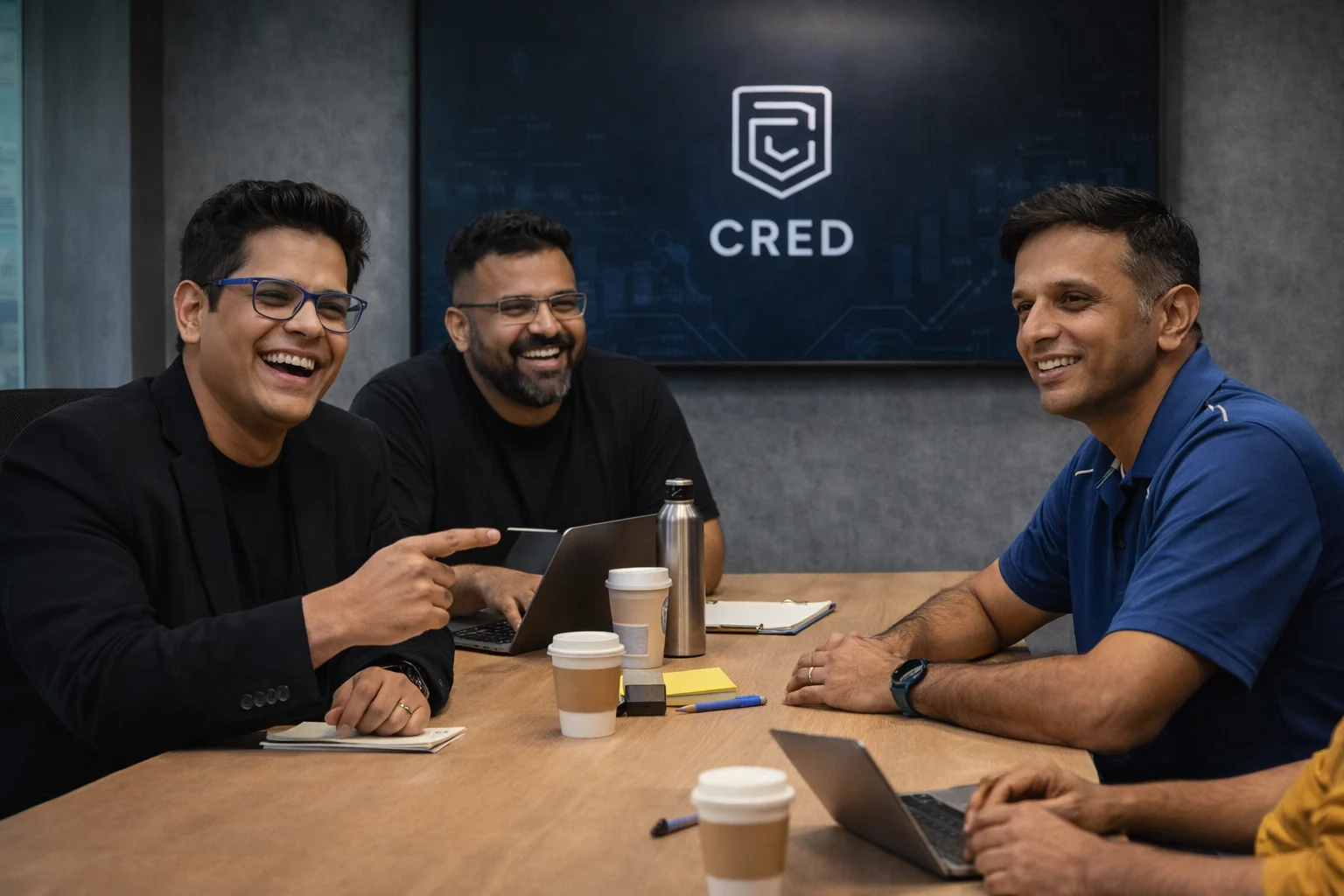
How Startups Engineer Attention in an Algorithm-First World?
The thirty-second television spot had a clean logic to it. You bought airtime on a channel with a large audience, you put your message in front of those people, and some percentage of them bought your product. And most of them saw your brand. Great branding, woohoo! This equation was never perfect, but it was legible. You knew roughly where the attention was, you rented access to it, and you measured the result in sales. That model is not failing slowly. It is failing categorically. And the startups that have figured out what replaces it are not running smarter ad campaigns. They are building fundamentally different systems for capturing and compounding attention.
The attention economy has always existed. What changed is who controls distribution. Television networks controlled it once. Search engines controlled it for a decade. Social platforms control it now, and the mechanism of control is not editorial judgment. It is algorithmic. Instagram does not decide what 400 million daily active users see because a programmer curated a list. It decides through a system that has learned, from billions of signals, what any given user is most likely to engage with in the next ten seconds.
The consequence for brands is severe: the audience is no longer waiting for your ad between programs. It is being served a continuous, personalised feed that your content either earns a place in, or does not. There is no longer an alternative route that money can simply buy.
Why Is Campaign Thinking Structurally Broken?
The traditional agency model was designed for a media environment that no longer exists. Campaigns have a start date and an end date. They require months of strategy, production, approval cycles, and post-campaign evaluation. By the time the results are in, the cultural moment the campaign was designed to enter has moved on. This is not a critique of the people inside traditional agencies. Many of them are talented. It is a critique of the architecture. A model built around long production cycles and fixed media buys cannot iterate fast enough to stay relevant inside a system where the algorithm’s preferences shift weekly and user behaviour shifts daily.
The deeper problem is that campaigns are built around messages, and the algorithm does not care about your message. It cares about behaviour. Whether someone stops scrolling. Whether they watch more than three seconds. Whether they comment, share, save. Whether they send it to someone. A campaign optimised for message delivery can score zero on every one of these behavioural signals and still technically run.
A piece of content built for the algorithm, on the other hand, might not contain a single explicit product claim and still generate ten million impressions because it made someone laugh, feel seen, or want to argue. These are different creative disciplines. The second one requires a fundamentally different kind of company to produce it.
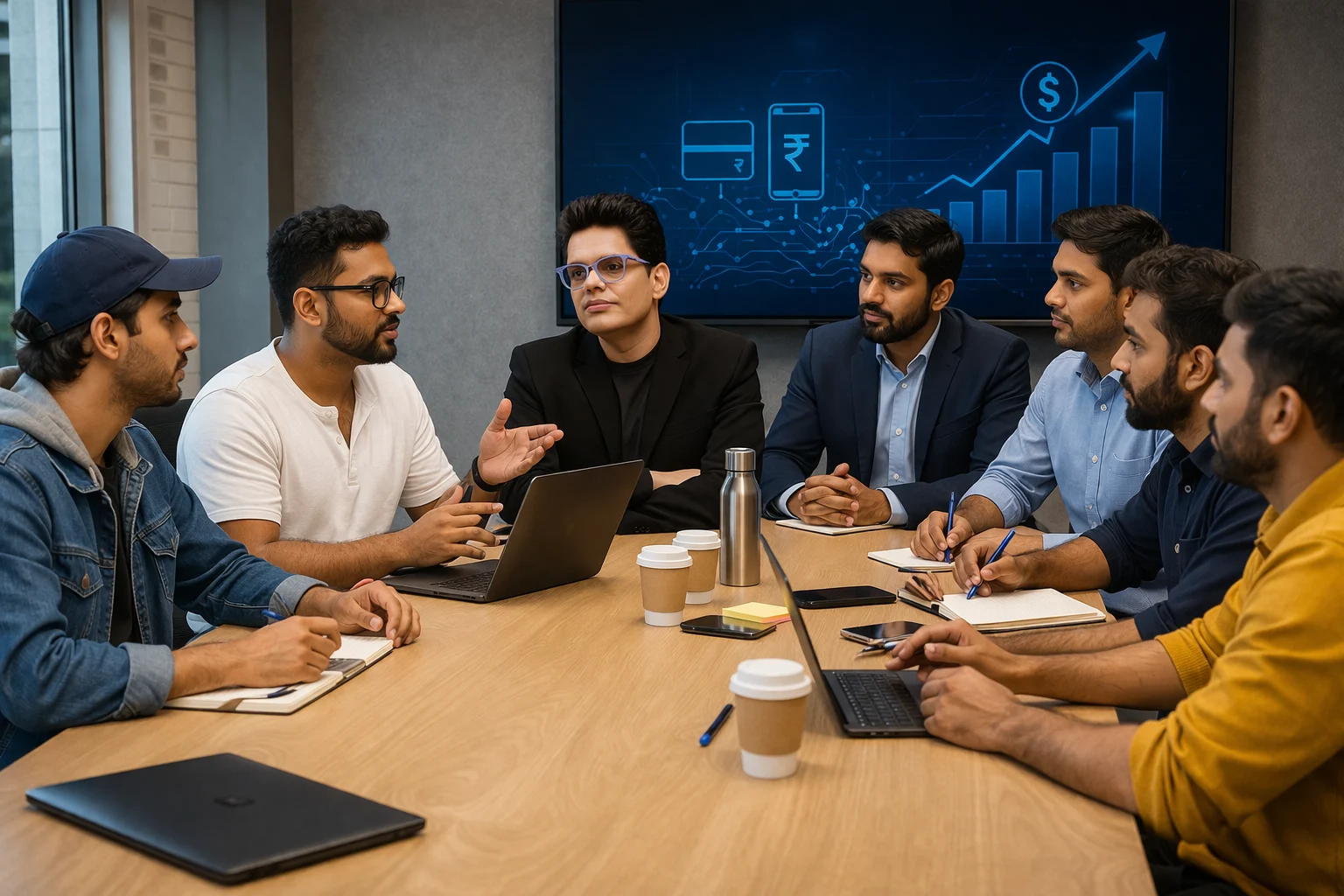
The New Growth Stack: Storytelling, Algorithms, AI
The clearest framework for understanding how attention now compounds is what might be called the New Growth Stack. It has three layers, and each layer enables the next.
- Story (Captures Attention): Content that stops the scroll. Earns the first three seconds. Creates a reason to watch, share, or return. Culturally native, not corporate. Storytelling is the top of the funnel and it has to work on its own terms before anything else matters.
- Algorithm (Distributes Attention): Organic reach, recommendation systems, search, and social feeds are the distribution layer. Content that generates strong behavioural signals gets amplified without additional spend. Algorithmic distribution is free media which is earned and cannot be bought.
- AI (Scales Attention): AI compresses the cost of creative production, enables rapid iteration, and multiplies the volume of content a lean team can produce. It does not replace creative judgment. It removes the bottlenecks that previously limited how fast creatives can be tested and deployed.
The critical insight is that these three layers must work in sequence. AI-generated content that has no storytelling logic does not earn algorithmic distribution. Powerful storytelling that ignores platform-native formats does not reach the algorithm’s amplification threshold. And without AI accelerating the feedback loop, the iteration speed required to learn what works in any given platform context is simply not achievable for most organisations. The stack only functions when all three layers are operating together.
Moonshot: What a Culture Lab Looks Like in Practice!
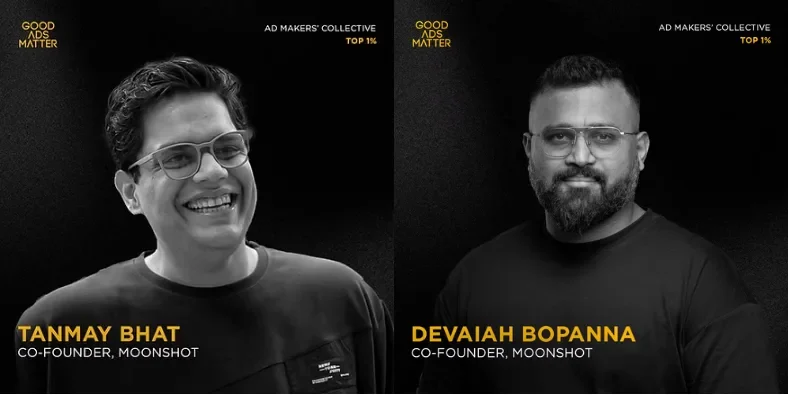
The clearest case study of what the New Growth Stack produces when it is operating at full capacity is Moonshot Media, the creative agency founded in 2023 by Tanmay Bhat and Devaiah Bopanna. Bhat spent a decade building one of India’s largest YouTube audiences across gaming, tech, and pop culture content before entering advertising. Bopanna began his career as a copywriter at Ogilvy India, moved through DDB Mudra and Lowe Lintas, then spent years at AIB building branded content for the internet specifically.
What they brought together was not an advertising agency that learned digital. It was an internet-native creative operation that decided to apply its understanding of algorithmic behaviour to brand problems. Every AIB video was going viral and hence every startup chose AIB for brand integration.
The result behaves less like a production company and more like what Storyboard18 described as a culture lab. The work Moonshot has produced in two years does not feel like advertising trying to be viral. It feels like content that happens to contain a brand, because the creative brief starts from audience behaviour rather than brand message. Consider the CRED campaign that first put Moonshot on the map: the Rahul Dravid spot reimagined the most famously composed cricketer in Indian sports history as furious, road-raging, and chaotically aggressive. The line “Indiranagar ka gunda hoon main!” crossed one million views within an hour of release.
It became a meme format. It generated parodies. It earned organic distribution across platforms it was never placed on, because the creative insight, the gap between Dravid’s public persona and his character in the film, was sharp enough to produce genuine surprise.
That surprise is the mechanism by which algorithmic distribution gets unlocked. Platforms amplify content that produces strong and rapid engagement responses. Strong and rapid engagement responses are produced by content that surprises people. The creative brief and the distribution strategy are the same brief.
The Swiggy Instamart “Chawal” campaign for which Moonshot won two golds and two silvers at the Good Ads Matter Awards India 2025 operates on similar logic. It is not a spot about fast delivery. It is a piece of humour built around a cultural truth so specific to the Indian household experience that it spread because people recognised themselves in it and wanted to share the recognition.
The Dr. Agarwal Eye Hospital campaign with Sachin Tendulkar, the Disney+ Hotstar IPL work, the Muthoot FinCorp coverage, the Swiggy pieces: each of these demonstrates a consistent methodology. The content is designed for the context in which it will be consumed, which is a feed, watched on a phone, in competition with everything else that feed is showing that person at that moment. It earns its place through cultural specificity, tonal surprise, and emotional precision rather than through media spend.
The Critical Questions the New Model Has Not Answered
It would be intellectually dishonest to describe algorithm-first content strategy as an unambiguous improvement without examining its failure modes. Three questions deserve honest consideration.
The first is whether optimising for algorithmic signals produces content that is genuinely persuasive or merely engaging. Engagement and purchase intent are correlated but not identical. A campaign that generates enormous algorithmic reach because it is funny may not move anyone closer to buying the product. The Moonshot work for CRED is an interesting case: CRED’s brand has enormous recall and considerable affection among its target demographic partly because of these campaigns, but brand affection and user acquisition are different metrics. The question of whether the New Growth Stack produces bottom-funnel outcomes at the same rate it produces top-funnel awareness remains empirically open for most brands running this playbook.
The second question is whether virality weakens brand depth over time. Content designed to spread rapidly and broadly by definition targets the widest possible emotional common denominator within its intended audience. The specific cultural precision that makes Moonshot’s work effective is a form of constraint: it is precise for one cultural context. As AI enables the production of more content at lower cost, the temptation is to increase volume at the expense of specificity. Content that spreads without depth of meaning builds recognition without conviction.
The third question is whether AI will eventually commoditise the creative judgment that currently differentiates operations like Moonshot. If the cost of producing culturally resonant content falls to near zero because AI can generate it at scale, the advantage currently held by teams with exceptional cultural instincts narrows. The counter-argument is that cultural instinct, the ability to identify the exact gap between expectation and reality that produces genuine surprise in a specific audience, is not a production capability. It is a judgment capability. And judgment is not what AI currently replicates.

What Startups Should Actually Build for?
The practical implication for startups, which is where attention engineering matters most because startups cannot afford to lose, is that marketing strategy needs to be rebuilt around the New Growth Stack architecture rather than around campaigns. This means hiring or partnering with people who understand platform-native creative before hiring people who understand media buying. It means building iteration infrastructure, the ability to produce, test, and respond to content performance on weekly cycles, before building production infrastructure. And it means finding creative partners who start from culture and work toward brand rather than starting from brand and reaching for culture.
The startups that will compound their growth fastest over the next five years will not be the ones with the largest advertising budgets. They will be the ones that have built content systems capable of earning algorithmic distribution consistently, at the volume that continuous content publishing requires, with the cultural intelligence that makes audiences choose to spread the content further than any paid placement could reach. That is not a marketing function. It is an engineering function. The companies that understand that distinction, and build accordingly, have a structural advantage that money alone cannot close.