

How Manus AI reached $100M ARR in just 8 months & why Meta bought it for $2B ?
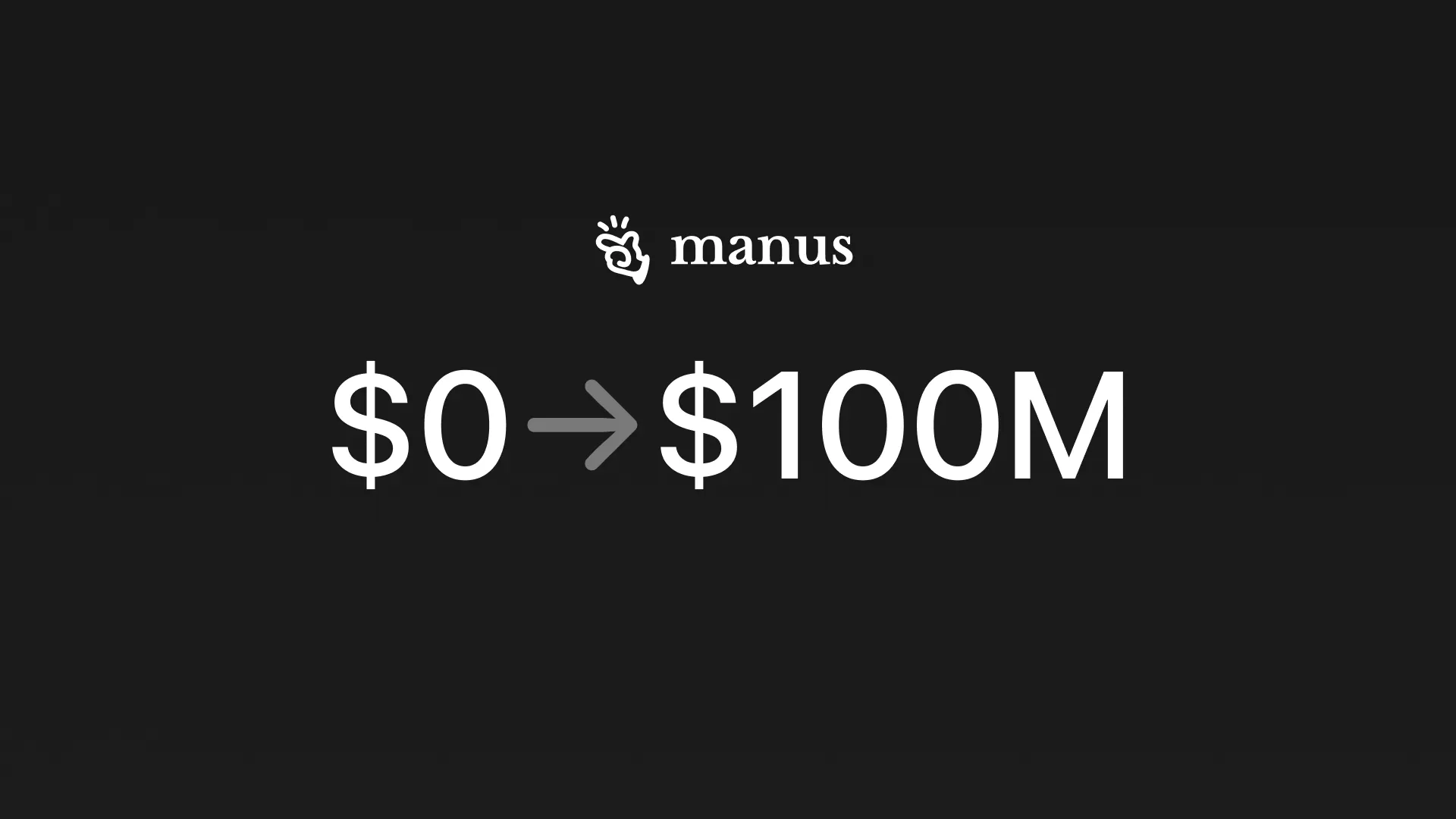
The Rise of a General AI Agent that turned automation into a business. Manus did something very few AI companies have managed in the post-ChatGPT era. It translated user fascination into sustained revenue at extraordinary speed. Within just eight months of launch, Manus AI reportedly crossed $100 million in annual recurring revenue, a pace that immediately placed it among the fastest-scaling AI products ever built. Shortly thereafter, the company was acquired by Meta in a deal valued at $2 billion, marking one of the most consequential AI acquisitions of the year.
The numbers alone are eye-catching, but they do not explain why Manus AI succeeded where many AI tools plateau. To understand the acquisition, it is necessary to look beyond growth metrics and examine how Manus reframed what an AI product could do, moving from passive assistance to active execution.
What Makes Manus AI Different From Chatbots and Copilots ?
Most AI tools introduced over the past two years have followed a familiar pattern: respond to prompts, generate content, assist with narrow tasks. Manus took a fundamentally different approach. It positioned itself as a general AI agent, a software designed to act on behalf of the user, in addition to answering questions.
Rather than stopping at suggestions, Manus AI can browse the web, conduct multi-step research, draft emails, prepare presentations, operate inside third-party tools like Slack, and coordinate workflows across applications. The defining promise is simple but powerful: turn thoughts into actions. In practice, this means users delegate intent. The agent figures out how to get the job done.
This shift, from conversational AI to operational AI, proved critical. Users were not just experimenting; they were replacing real work.
Manus AI features that drove adoption & willingness to pay
Manus AI’s rapid revenue growth was not driven by a single viral feature, but by a tightly integrated suite of capabilities that aligned with real workflows. Its browser operator allows the agent to navigate websites autonomously. Its research tools synthesize information across sources. Email and document features let it execute follow-through. Slide creation and design tools push it into knowledge-worker territory, while integrations like Slack embed the agent directly into daily operations.
Crucially, these features were not offered as isolated tools. They were orchestrated through a single agentic interface, allowing users to assign complex objectives rather than manage fragmented automation. That cohesion made Manus feel less like software and more like a digital collaborator, one that could justify a subscription at scale.
How Manus AI Monetized So Quickly ?
Crossing $100M ARR in under a year requires more than interest; it requires consistent conversion and retention. Manus benefited from a clear value proposition: time saved translated directly into economic value. For individuals, it reduces cognitive load. For teams, it compresses cycles that previously required multiple tools or roles.
Unlike many AI products that struggle to move users from free experimentation to paid usage, Manus AI was positioned as a work replacement and not a novelty. That framing lowered friction around pricing. Users were not paying for AI output; they were paying for outcomes. This distinction matters, especially in enterprise and professional contexts where ROI is scrutinized.
Why Meta Choses to Buy Manus AI ?
Meta’s acquisition of Manus is best understood in the context of platform control. AI agents are increasingly viewed as the next interface layer, sitting between users and the digital world. Whoever owns that layer influences how work is done, how data flows, and which ecosystems benefit.
While Meta has invested heavily in foundation models and AI research, building a production-ready, revenue-proven agent platform from scratch would have taken time. Manus arrived with traction, a refined product philosophy, and a user base already accustomed to agent-driven workflows. For Meta, the acquisition accelerates its position in a future where AI executes intent across platforms rather than just generating content.
The deal also signals confidence that agents (not standalone chatbots) will define the next phase of AI adoption.
The Strategic Implications for the AI Market
The trajectory of Manus challenges a widely held assumption: that general AI agents would be too complex or unreliable to monetize early. Instead, the company demonstrated that users are willing to trust agents when the scope is clear, the feedback loops are tight, and the outcomes are visible.
This has implications far beyond Meta. Software vendors, productivity platforms, and enterprise toolmakers now face a question: will users interact with your interface, or will an agent do it for them? Manus suggests the latter is not only possible, but commercially viable.
Delegation of Manus AI
Perhaps the most important contribution of Manus AI is conceptual. It helped normalize the idea that software can accept delegation rather than commands. This is a subtle but profound shift. Delegation implies autonomy, responsibility, and trust. All these qualities are traditionally reserved for human collaborators.
If this model continues to spread, it could reshape how software is designed. Interfaces may become less about configuration and more about intention. Products may compete not on features, but on how reliably they act on behalf of users.

What’s next for Manus AI from Meta ?
Under Meta’s ownership, Manus is likely to be scaled, integrated, and extended across broader ecosystems. The challenge will be preserving the clarity and execution-first mindset that fueled its growth while adapting to the complexity of a larger platform strategy.
Regardless of how the integration unfolds, Manus AI has already left a mark. It proved that AI agents are a present-day business and not a future abstraction.
The success of Manus AI highlights a turning point in AI adoption. The market is moving away from tools that assist and toward systems that act. Meta’s acquisition suggests that control over AI agents (the layer that executes intent) may become as strategically important as owning the underlying models. If so, Manus AI will be remembered not just for its growth, but for helping redefine how humans delegate work to machines.