


Top 10 AI Agents for Enterprises Driving Intelligent Automation
Enterprises are entering a new era of automation powered by intelligent AI agents. These systems go far beyond traditional chatbots or scripted automation tools. Modern AI agents can understand context, make decisions, integrate across enterprise software, and execute complex workflows autonomously.
From IT service management and HR operations to sales, finance, and customer support, AI agents are quickly becoming digital employees that work around the clock. They reduce operational friction, improve accuracy, and unlock entirely new levels of productivity.
In this curated list by The Futurism Today, we explore the top 10 AI agents that enterprises are actively adopting to transform how work gets done.
1. Microsoft Copilot Studio
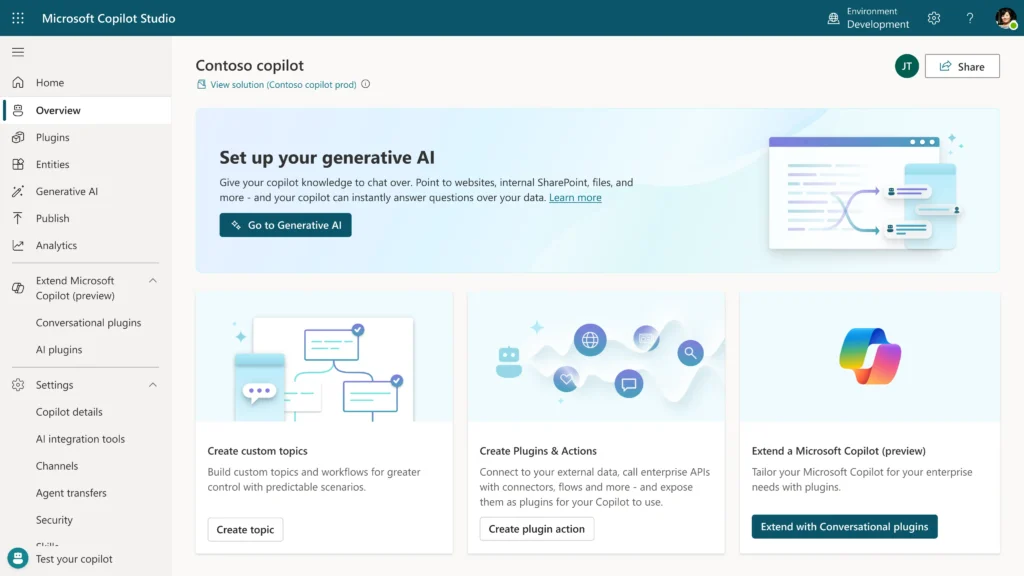
Built by Microsoft, Copilot Studio enables enterprises to create customized AI agents that integrate deeply across Microsoft’s ecosystem including Teams, Power Platform, Dynamics 365, and Microsoft 365.
How Copilot Studio Enables Intelligent Enterprise Agents?
Copilot Studio allows organizations to design AI agents capable of handling employee requests, automating internal processes, securely accessing enterprise data, and executing actions across business applications through a low-code environment. Its tight integration with existing Microsoft tools makes adoption seamless for enterprises already operating within the Microsoft ecosystem, while its AI-driven reasoning enables agents to perform increasingly complex tasks over time.
2. CrewAI
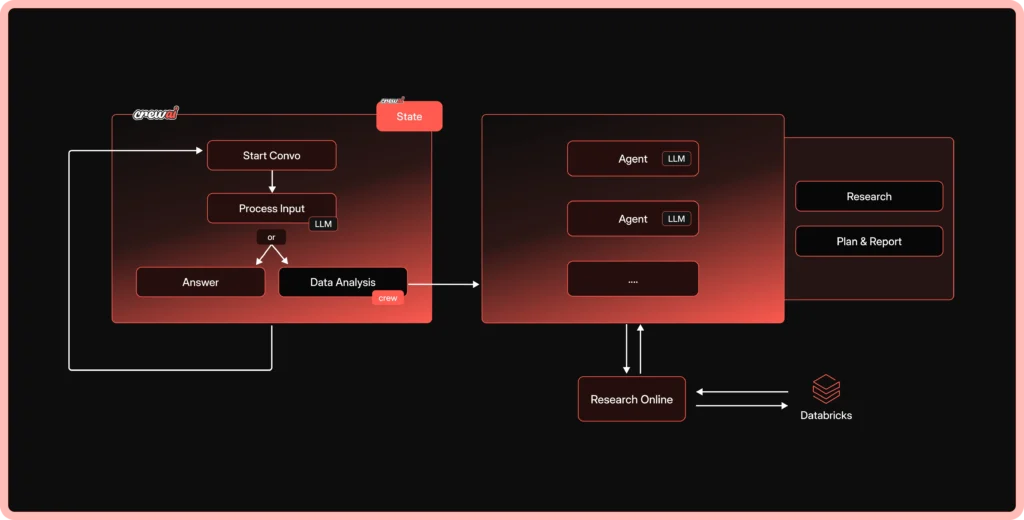
CrewAI is an emerging enterprise AI framework designed around the concept of multiple AI agents working collaboratively to complete complex tasks.
How CrewAI Creates Collaborative AI Workforces?
Instead of relying on a single AI system, CrewAI structures workflows using specialized agents that communicate with each other to plan, research, execute, and verify tasks. This multi-agent approach mirrors how human teams operate, making it especially powerful for enterprise projects such as market research, data analysis, software development, and content workflows. Enterprises can orchestrate entire processes through intelligent collaboration rather than linear automation.
3. UiPath Autopilot
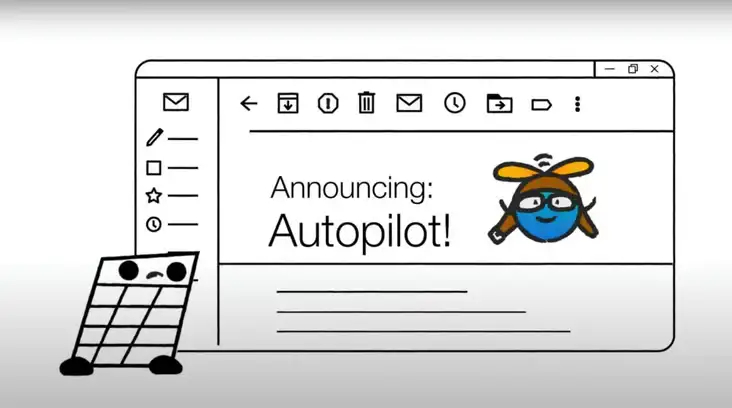
UiPath Autopilot is the intelligent automation agent built by UiPath, representing the evolution of robotic process automation into AI-powered enterprise agents.
How UiPath Autopilot Transforms Traditional Automation?
Autopilot blends generative AI with UiPath’s RPA foundation, enabling enterprises to describe tasks in natural language and instantly convert them into automated workflows. It can automate document processing, employee requests, financial operations, and supply chain processes with minimal manual setup. By combining AI reasoning with proven automation infrastructure, Autopilot dramatically accelerates enterprise automation at scale.
4. Moveworks
Moveworks is an enterprise AI platform focused on automating employee operations across IT, HR, finance, and workplace services.
How Moveworks Acts as an Intelligent Digital Support Agent?
Moveworks’ AI agents understand employee intent, resolve issues autonomously, and integrate with enterprise systems such as ServiceNow, Workday, and Salesforce. These agents can troubleshoot IT problems, process HR requests, and manage operational workflows in real time. By continuously learning from interactions, Moveworks improves accuracy while significantly reducing manual ticket volumes and operational bottlenecks.

5. IBM watsonx Orchestrate
IBM watsonx Orchestrate is the enterprise AI orchestration platform developed by IBM.
How watsonx Orchestrate Coordinates Enterprise AI Agents?
This platform allows organizations to deploy AI agents that perform specific business tasks while orchestrating them across complex workflows. With pre-built skills and deep enterprise integrations, watsonx Orchestrate automates processes across HR, procurement, finance, and customer service. Its focus on governance, security, and enterprise-grade reliability makes it particularly attractive for large and regulated organizations.
6. Salesforce Einstein
Salesforce Einstein is the AI intelligence layer embedded across Salesforce’s enterprise cloud ecosystem, created by Salesforce.
How Einstein Turns CRM Data Into Autonomous AI Agents?
Einstein powers AI agents that automate sales workflows, predict customer behavior, generate insights, and assist service teams in real time. These agents continuously analyze CRM data to recommend actions, personalize customer engagement, and improve revenue forecasting. By embedding AI directly into daily business operations, Einstein enables enterprises to move from reactive decision-making to proactive, AI-driven strategies.

7. Vertex AI Agent Builder
Vertex AI Agent Builder is part of Google’s enterprise AI platform developed by Google.
How Vertex AI Enables Custom Enterprise AI Agents?
This platform allows enterprises to build, deploy, and scale AI agents connected to internal knowledge bases, data sources, and business applications. Organizations use it to create customer service agents, internal assistants, analytics agents, and automated workflow systems. Its deep integration with Google Cloud infrastructure and advanced AI models makes it ideal for data-intensive enterprise environments.
8. Workato
Workato is an intelligent automation and integration platform focused on connecting enterprise systems through AI-driven workflows.
How Workato Bridges AI Decisions With Real Business Actions?
Workato enables AI agents to execute actions across thousands of enterprise applications by combining automation, integrations, and AI intelligence. Enterprises use it to automate approvals, synchronize data, manage onboarding, and orchestrate revenue operations. Its strength lies in turning AI insights into immediate operational outcomes across disconnected systems.

9. Decagon
Decagon is an enterprise AI startup focused on building autonomous AI agents for customer operations.
How Decagon Automates Customer Support at Scale?
Decagon’s AI agents handle support tickets, resolve customer issues, and learn continuously from historical data and interactions. These agents integrate with CRM and helpdesk platforms, allowing enterprises to scale customer service without increasing human workload. By automating repetitive and complex customer interactions, Decagon improves response times while reducing operational costs.

10. Zapier AI Agents
Zapier AI Agents are built by Zapier, bringing intelligence to one of the world’s most widely used automation platforms.
How Zapier AI Agents Democratize Intelligent Automation?
Zapier AI Agents allow users to describe workflows in natural language and automatically create multi-step automation across more than 6,000 applications. Enterprises use these agents for marketing operations, lead management, internal workflows, and data synchronization. By removing technical complexity, Zapier makes AI-driven automation accessible across teams and departments.
AI agents are rapidly becoming the foundation of modern enterprise operations. From deeply integrated platforms like Microsoft Copilot Studio and Salesforce Einstein to collaborative multi-agent systems such as CrewAI and powerful orchestration tools like UiPath Autopilot and Workato, enterprises now have intelligent digital workers capable of transforming productivity at scale.
These AI agents are enabling smarter workflows, faster decision-making, and more resilient business operations.
AI agents are one of the most important enterprise technology shifts of this decade. Organizations that adopt and strategically deploy these systems today will be best positioned to lead in the intelligent automation era.
Read more: How to Build an AI Agent?