

Why Does This Acquisition of Weavy AI Matters ?
Figma Acquires Weavy AI and with that move, the design world takes another sharp turn toward generative media.
The deal, reportedly valued at over $200 million, marks one of Figma’s most significant steps since its acquisition attempt by Adobe fell through. But instead of slowing down, Figma has doubled down, shifting its focus from being a UI/UX design tool to becoming a full-fledged creative operating system for the modern enterprise.
Why is this important? Because design today extends far beyond static screens. Teams are building interactive videos, AI-generated imagery and adaptive media experiences. And they need platforms that evolve just as quickly. By integrating Weavy’s generative AI capabilities, Figma is signalling its intent to make AI a first-class citizen inside the design process, not a plugin or afterthought.
What Weavy AI Brings to the Table ?
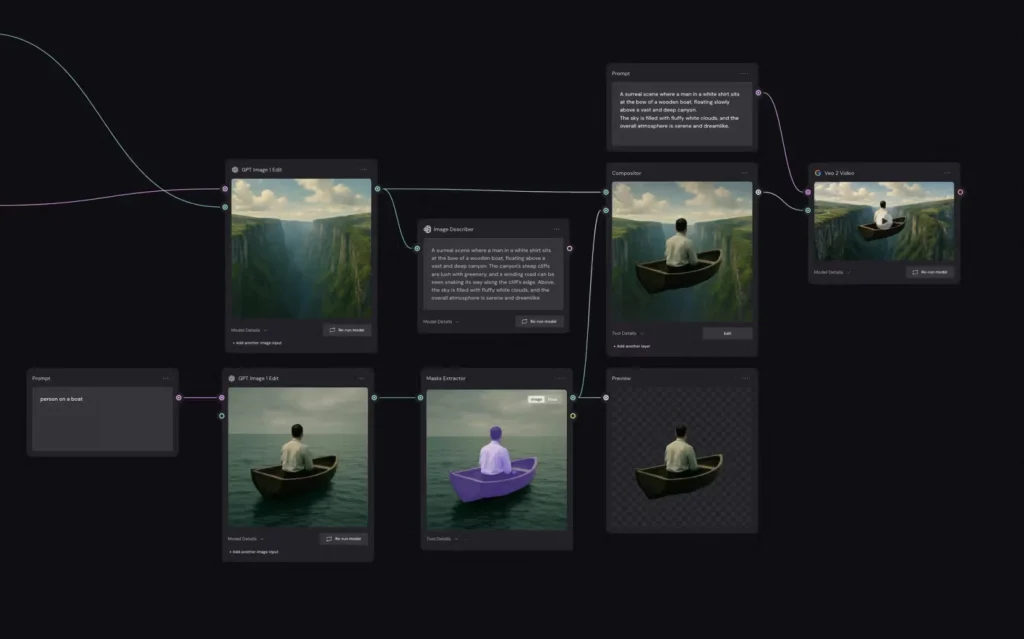
Founded as a deep-tech media startup, Weavy developed a node-based AI engine that lets creators connect multiple generative models: image, text, audio and motion, inside one interactive canvas. This technology allows teams to:
- Generate media assets in real time
- Seamlessly edit or animate them
- And keep every output aligned with brand or project guidelines
The acquisition means that soon, designers using Figma could create and iterate videos, graphics and marketing assets directly within the platform, powered by Weavy’s advanced AI models.
In simpler terms: what used to require half a dozen creative tools might now live inside Figma. For creators, agencies and startups, that’s transformative. For the industry, it’s a clear sign that Figma Acquired Weavy AI not just for technology, but for vision.
Strategic Implications for Creators and Teams
With Figma Acquiring Weavy AI, the company is stepping into a broader creative space once dominated by tools like Adobe After Effects, Canva and Runway. This acquisition positions Figma as a bridge between structured design systems and fluid creative storytelling. Now, teams that once collaborated only on wireframes or UI mockups will be able to:
- Generate social videos and animations;
- Experiment with AI-assisted concepting;
- And visualize brand experiences end-to-end, from static UI to dynamic media.
The timing couldn’t be more perfect. As enterprises embrace AI for marketing and product design, there’s rising demand for platforms that combine creativity with governance and collaboration, something Figma has long excelled at.
Collision of AI and Design is a bigger trend
The acquisition fits a broader pattern in the creative tech landscape. Over the last 18 months, the industry has seen a surge in AI-first design tool acquisitions, from Adobe’s Firefly rollout to Canva’s Magic Studio and Runway’s creative automation suite.
What makes Figma Acquiring Weavy AI stand out is the philosophy behind it. Rather than building an AI layer for gimmicks, Figma is embedding it into the creative workflow itself, empowering users to think, prototype and produce within one unified interface.
It’s not just a feature race, it’s a redefinition of creative infrastructure. The result: fewer tool handoffs, faster ideation cycles and a creative process that feels almost conversational.
How Figma Plans to Integrate Weavy’s Technology ?
According to reports, Weavy’s core engineering team will join Figma’s San Francisco office, helping integrate its generative media technology into both Figma and FigJam over the coming year. Early internal demos hint that users could soon:
- Convert storyboards into AI-generated motion clips
- Use text prompts to populate design assets
- visualize entire campaign mockups through AI-powered automation
This integration will be gradual but transformative. Once complete, this acquisition of Weavy AI may set a new standard for collaborative, AI-native design platforms, a category that didn’t truly exist before 2025.
From Frames to Motion. Creating With AI in Real Time
When Figma Acquires Weavy AI, it’s more than an acquisition, it’s a statement. A statement that the future of design is fluid, generative and deeply collaborative. The move reflects Figma’s broader ambition: to dissolve the boundaries between imagination and execution.
Figma’s acquisition of Weavy may mark the moment design software stopped being static and creativity became dynamic by default. As the lines blur between design, AI and media, one thing is certain, “Figma Acquiring Weavy AI” will be remembered not just as a business move, but as the spark that redefined what it means to design in the age of intelligent creativity.