


Arcee AI Advances Open-Weight Language Models for Edge and Cloud
As artificial intelligence becomes embedded across industries, a growing shift is underway in how foundational AI models are built and deployed. While closed proprietary systems from major technology companies have dominated early adoption, developers and enterprises are increasingly seeking alternatives that offer transparency, flexibility, and efficiency. At the center of this movement is Arcee AI, a research-driven AI company focused on creating world-class performance-per-parameter language models that can operate anywhere from IoT devices to large-scale data centers.
Arcee AI’s mission reflects a broader trend toward open-weight AI systems that organizations can own, customize, and deploy without relying solely on external APIs. Rather than chasing scale for its own sake, the company emphasizes efficiency, modularity, and real-world usability. This approach enables powerful AI capabilities while keeping infrastructure costs manageable and supporting diverse deployment environments, from edge computing scenarios to enterprise cloud platforms.
At the core of Arcee AI’s product lineup is the Trinity family of language models. Trinity is designed as a modular set of open-weight models that maintain consistent capabilities across different sizes. This allows developers to build applications that scale smoothly as computational resources grow, without rewriting systems or redesigning workflows. Whether running on small local devices or powerful data center clusters, Trinity models are built to deliver strong reasoning abilities, long-context understanding, and structured output support.
The Trinity platform is positioned as a practical alternative to closed foundation models that often come with usage limitations, unpredictable costs, and restricted customization. By offering open weights, Arcee AI allows organizations to audit models, fine-tune them on proprietary data, and deploy them in secure or offline environments. This flexibility is particularly valuable in regulated industries such as healthcare, finance, and government, where data privacy and system control are critical.
Beyond Trinity, Arcee AI maintains a growing open-source catalog of models and development tools. This ecosystem includes lightweight models optimized for low-resource environments as well as utilities designed to enhance training efficiency and performance. Tools such as distillation frameworks and model evolution systems allow researchers and developers to improve model capabilities without requiring massive computational budgets. This commitment to open research reinforces Arcee AI’s goal of democratizing access to high-quality AI systems.
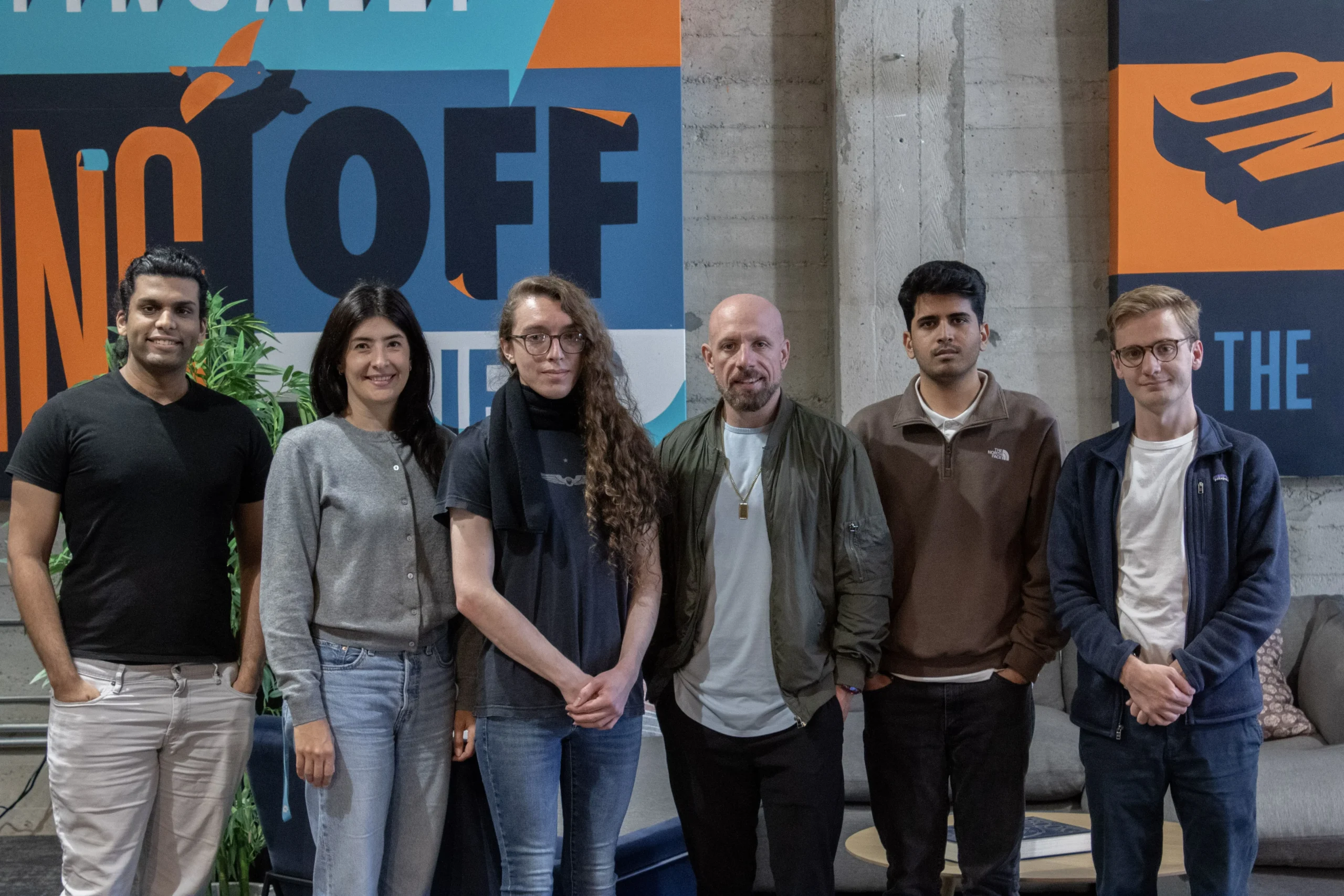
Arcee AI: Optimizing AI Performance Without Massive Model Scale
The company’s focus on performance per parameter addresses one of the most pressing challenges in modern AI: the rising cost and energy consumption of large models. As models grow into the hundreds of billions or even trillions of parameters, running them becomes prohibitively expensive for many organizations. Arcee AI’s optimization-driven approach seeks to deliver comparable intelligence with fewer active parameters, enabling faster inference, lower power usage, and more accessible deployment across a wider range of hardware. This emphasis is especially relevant for edge computing, where AI is increasingly used in real-time applications such as industrial monitoring, robotics, smart devices, and autonomous systems. In these environments, connectivity may be limited and power resources constrained. Open-weight, efficient models that can operate locally are essential for reliability and responsiveness. Arcee AI’s technology bridges this gap by supporting both compact edge deployments and large-scale enterprise infrastructure.
Arcee AI’s research arm continues to explore advanced model architectures, long-context reasoning improvements, and multimodal capabilities. The company actively publishes research insights and collaborates with developers to push the boundaries of what open-weight models can achieve. This blend of foundational research and practical engineering positions Arcee AI as both a technology innovator and a real-world AI infrastructure provider.
The broader AI ecosystem is increasingly recognizing the importance of open models. Enterprises are becoming wary of vendor lock-in, unpredictable API pricing, and opaque model behaviors. Open-weight systems allow organizations to retain ownership of their AI pipelines while tailoring models to their specific needs. This shift mirrors earlier transitions in software infrastructure, where open-source technologies eventually became the backbone of enterprise systems.
Arcee AI’s approach aligns with this long-term evolution. By focusing on modular, efficient, and openly accessible models, the company is helping lay the groundwork for a more decentralized AI landscape where innovation is not confined to a handful of large corporations. Developers can experiment freely, startups can build cost-effective AI products, and enterprises can integrate AI into mission-critical workflows without sacrificing control.
Another key advantage of Arcee AI’s model ecosystem is its adaptability. Open-weight models can be fine-tuned for specialized domains such as legal analysis, scientific research, customer service automation, and code generation. This enables organizations to create highly customized AI systems that outperform generic models in specific tasks. As AI adoption matures, this domain-specific optimization is expected to become increasingly important.

The rise of hybrid AI deployments also plays into Arcee AI’s strengths. Many organizations are moving toward architectures that combine on-premise infrastructure with cloud resources. Open-weight models can operate seamlessly across these environments, allowing companies to balance performance, cost, and compliance requirements. Arcee AI’s technology is designed to support this hybrid future, ensuring consistent AI behavior regardless of where models are hosted.
While closed AI platforms will likely continue to play a role in the ecosystem, the momentum behind open-weight and modular AI systems is building rapidly. Governments, enterprises, and research institutions are increasingly funding open AI initiatives to promote transparency and reduce dependency on proprietary systems. In this context, companies like Arcee AI are emerging as key contributors to the next generation of AI infrastructure.
As generative AI becomes a foundational layer of digital transformation, the demand for efficient, controllable, and adaptable models will only grow. Arcee AI’s focus on performance per parameter, open-source tooling, and cross-environment deployment places it at the forefront of this movement. Rather than competing solely on scale, the company is prioritizing accessibility and real-world practicality, which may ultimately prove more impactful as AI adoption spreads across industries.
Arcee AI represents a critical shift in how foundational AI systems are being designed for the real world. As organizations demand greater transparency, efficiency, and ownership over their AI infrastructure, open-weight models will play a central role in the next phase of AI adoption. By prioritizing performance per parameter and modular deployment across edge and cloud environments, Arcee AI is helping build a more accessible and sustainable AI ecosystem that extends beyond closed proprietary platforms.