

Gravis Robotics Raises €19M to Bring Autonomous Excavation to Global Construction
Gravis Robotics, a Zurich-based deep-tech startup building autonomous technology for earthmoving machinery, has raised €19 million (USD $23 million) in new funding to accelerate its global rollout and expand partnerships with OEMs, contractors and heavy-equipment dealers. The round was co-led by IQ Capital and Zacua Ventures, with participation from Pear VC, Imad (the CVC of Nesma & Partners), Sunna Ventures, ARMADA Investment AG and Holcim.
The investment represents one of the most significant funding rounds in construction robotics this year, highlighting rising demand for automation amid global labor shortages, safety pressures and increasing project complexity. The mission Gravis Robotics is ambitious yet straightforward: turn any earthmoving machine into a robot.
Solving Construction’s Labor, Safety and Productivity Crisis With Robotics
The construction industry faces chronic challenges such as skilled labor shortages, hazardous work environments and stagnant productivity levels. This makes automation a critical priority for contractors and infrastructure operators worldwide. Earthmoving, which represents a substantial portion of global construction activity, remains heavily dependent on manual operation and susceptible to human error, delays and safety risks.
Gravis Robotics aims to address these issues through a plug-and-play autonomy platform that can be installed on existing fleets. Rather than waiting for fully autonomous heavy machinery to be built from scratch, Gravis gives contractors the ability to retrofit autonomy onto existing excavators, accelerating adoption and reducing capital expenditure.
This retrofit-first approach allows companies to deploy autonomous capabilities without replacing their entire fleet, a model that resonates across cost-sensitive construction markets.
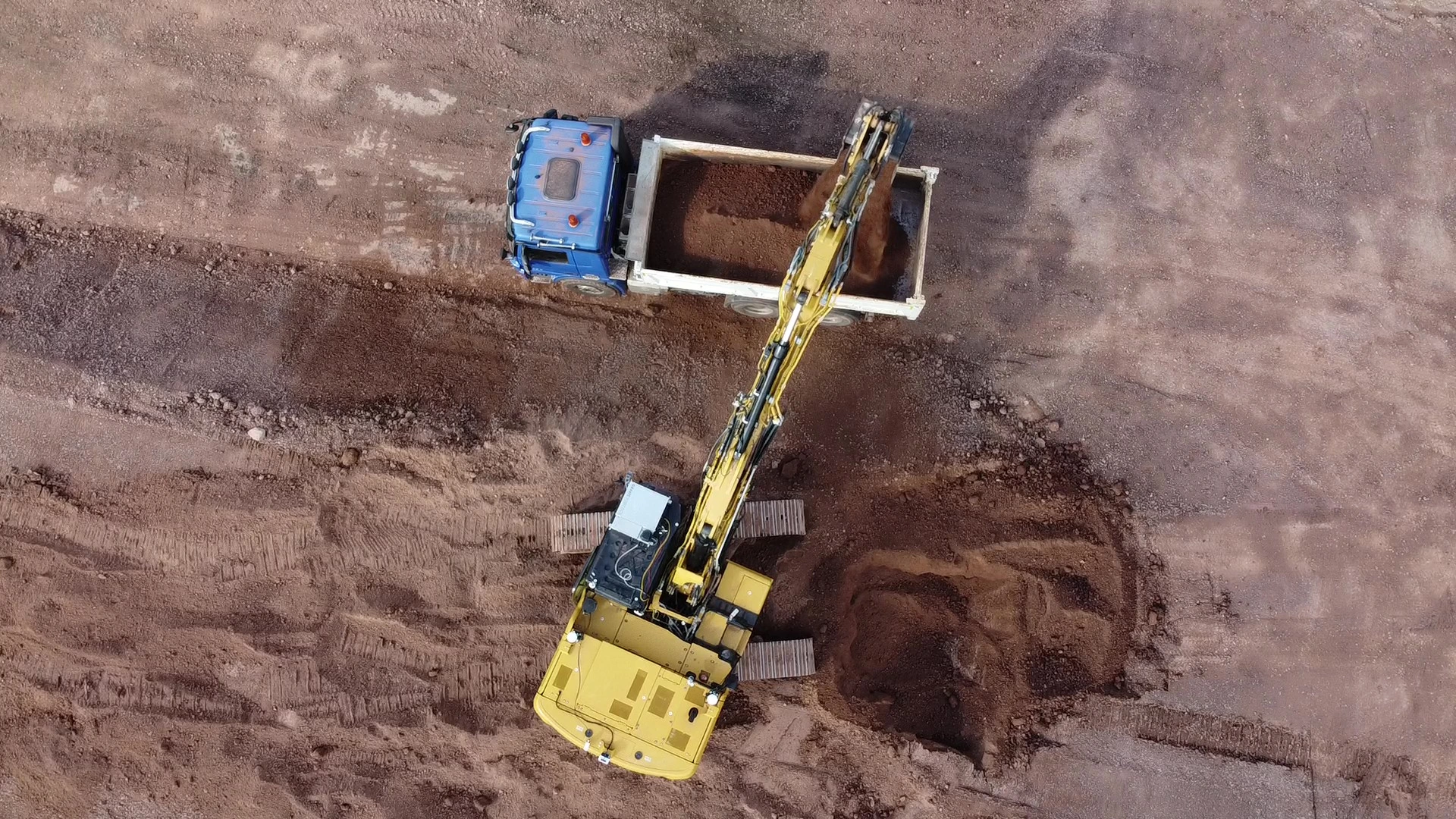
Rack: Turning Any Excavator Into a Fully Autonomous Machine
At the core of the technology of Gravis Robotics is its hardware: Rack, a modular hardware unit designed to be mounted onto any brand or model of excavator. Rack integrates sensors, compute modules, connectivity and the interface required to convert conventional machines into autonomous robots. Gravis describes Rack as a system that enables “superhuman productivity,” offering:
- High-precision digging and grading
- Repeatable and consistent excavation quality
- Real-time environmental perception
- Operator-free execution of routine tasks
- Compatibility across OEM brands, sizes and machine generations
Rack’s modularity is key to the strategy of Gravis: by making autonomy accessible through retrofits, the company removes barriers to adoption and speeds up deployment across large fleets.
Slate: The Software Intelligence Layer Powering Autonomy
Complementing the hardware is Slate, the software stack of Gravis for planning, perception and machine intelligence. Slate allows autonomous machines to:
- Understand complex construction environments
- Follow predefined plans and excavate with centimeter-level precision
- Adjust behavior in real time based on site conditions
- Coordinate multiple machines across a site
- Safely stop or re-route based on hazards
Slate acts as the command center, giving project managers the ability to orchestrate autonomous tasks, monitor progress and integrate excavation workflows into broader site management systems.
Together, Rack and Slate form a full-stack autonomy platform. This combination of hardware, software and operational analytics positions Gravis as one of the few companies capable of providing end-to-end robotic excavation.
Building a Global Network of OEM, Contractor and Dealer Partnerships
Gravis Robotics is actively collaborating with the world’s largest equipment manufacturers and construction companies. According to its announcement, the company has been onboarding new partnerships across the United States, Middle East and Europe, with the latest funding enabling deeper integration with OEMs, large contractors and regional distributors.
The strategic investor base reflects this ecosystem approach. The participation of Holcim, one of the world’s largest building materials companies. Imad, the corporate venture arm of Nesma & Partners, a major engineering and construction giant, demonstrates strong industry buy-in.
Such partnerships are critical for scaling autonomy in construction. Unlike consumer robotics, earthmoving requires coordination with machine manufacturers, job-site data, safety regulations, service networks and operator training. The model of Gravis positions it as a foundational technology provider across all these layers.
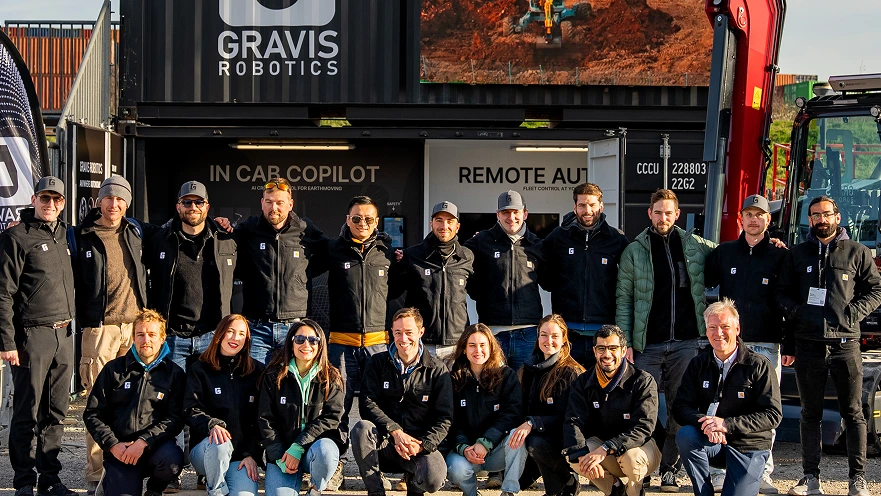
A Global Rollout Strategy Fueled by Deep-Tech Investment
With fresh capital, Gravis Robotics plans to:
- Expand into the US market, which is undergoing rapid automation due to infrastructure spending and labor shortages
- Grow its engineering and deployment teams
- Scale integration with OEM partners
- Strengthen dealer networks for distribution and servicing
- Accelerate pilot deployments across Europe, North America and the Middle East
The diversity of the investor group, spanning industrials, venture capital, strategic corporates and construction leaders, signals that the industry views autonomous excavation as an immediate competitive advantage.
The ability of Gravis Robotics which is to retrofit existing machinery also gives it a unique opportunity to scale rapidly in markets where buying brand-new autonomous equipment is cost-prohibitive.
Shaping the Future of Autonomous Construction
As construction costs rise and project timelines tighten, automation is increasingly seen as essential infrastructure. Robotic excavation improves precision, reduces fuel consumption, enhances worker safety and enables 24/7 operation. All of these are the attributes that traditional manual operation cannot consistently match.
Gravis Robotics sits within a growing wave of companies redefining heavy-equipment operation using AI and robotics. With demand growing for automated earthmoving in mining, infrastructure, utilities and industrial development, the company is well-positioned to become a category leader. Its long-term vision is clear: make autonomous excavation the new standard, not a premium feature.
€19 million funding of Gravis Robotics underscores how quickly construction is shifting toward autonomy and the company’s retrofit-first model gives it an advantage in a market dominated by aging fleets and tight margins. Rack and Slate form one of the more mature full-stack approaches in the autonomous machinery sector, but scaling globally will test the company’s ability to standardize performance across varying OEM systems, local regulations and environmental conditions.
If Gravis can maintain reliability and safety across diverse job sites while keeping retrofit costs competitive, it has the potential to become the defining autonomy layer for the next generation of construction equipment.