

Helical Is Building a Virtual Lab for the Future
The Bottleneck in Modern Drug Discovery
Drug discovery has always been a process defined by time, cost, and uncertainty, where even the most promising hypotheses can take years to validate and billions of dollars to translate into viable therapies, and despite decades of technological progress, the core workflow remains heavily dependent on physical experimentation, iterative testing, and fragmented data systems that limit the speed at which scientific insights can be generated and validated.
While advances in computational biology and machine learning have introduced new tools for analyzing biological data, these tools often exist in isolation, requiring significant expertise to integrate into usable workflows, which creates a gap between what is theoretically possible with AI and what can be practically achieved in day-to-day research environments, leaving scientists constrained not by imagination but by the limitations of existing systems.
From Models to Systems: A Missing Layer
Helical is positioning itself within this gap, focusing not on building yet another model but on creating the application layer that transforms bio foundation models into usable, reproducible systems for scientific discovery. The distinction is important because while foundation models have demonstrated the ability to predict protein structures, analyze genomic data, and simulate biological processes, they often remain tools rather than systems, requiring researchers to manually orchestrate workflows, validate outputs, and connect disparate components.
Helical’s approach is to unify these capabilities into a cohesive platform where hypotheses can be tested in silico with the same rigor and repeatability expected from physical experiments, effectively turning computational biology into a structured, end-to-end process rather than a collection of isolated techniques.
The Idea of a Virtual AI Lab
At the center of Helical’s vision is the concept of a virtual lab, an environment where scientists can design experiments, run simulations, and analyze results entirely within a computational framework that operates at the speed of inference rather than the pace of traditional laboratory work. This shift is not simply about replacing physical experiments but about augmenting them, enabling researchers to explore a far larger space of possibilities before committing to costly and time-consuming validation processes.
By providing a system where biological hypotheses can be tested rapidly and iteratively, Helical aims to reduce the friction between idea and insight, allowing scientists to focus on higher-level problem solving rather than the mechanics of experimentation.
Reproducibility as a Core Principle
One of the most significant challenges in both traditional and computational biology is reproducibility, where results can vary based on experimental conditions, data quality, or methodological differences, creating uncertainty that slows down progress and complicates collaboration. Helical addresses this by embedding reproducibility into the core of its platform, ensuring that experiments conducted within its virtual lab can be consistently replicated and validated across different contexts.
This is particularly important in an era where AI-generated insights must be trusted not just for their novelty but for their reliability, and by structuring workflows in a way that preserves consistency, Helical is attempting to bring a level of rigor to computational experimentation that aligns with the standards of traditional scientific research.
Bridging Scientists and AI Systems
A recurring challenge in the adoption of AI within scientific research is the gap between domain expertise and technical implementation, where biologists and chemists may not have the computational background required to fully leverage advanced models, while data scientists may lack the domain knowledge needed to interpret results effectively.
Helical’s platform is designed to bridge this divide by abstracting the complexity of underlying models and presenting them within an interface that aligns with how scientists think and work, enabling researchers to interact with AI systems as tools for hypothesis testing rather than as technical artifacts that require extensive configuration. This shift is critical for scaling the impact of AI in drug discovery, as it allows a broader range of scientists to engage with computational methods without being limited by technical barriers.
The $10M Signal: Turning Vision Into Infrastructure
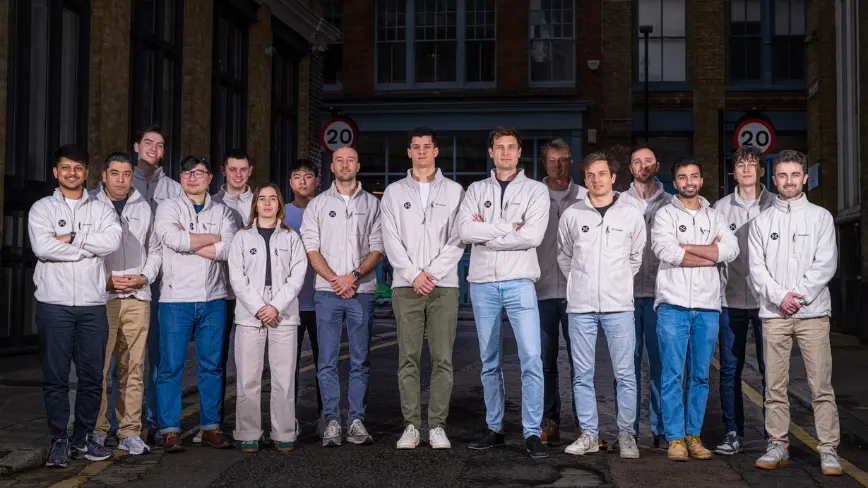
Helical’s $10 million seed funding round represents an early but meaningful step in building out the infrastructure required to support its vision of a virtual AI lab, with the capital expected to be used to expand its platform capabilities, refine its integration with bio foundation models, and scale its presence within the pharmaceutical and biotech ecosystem.
While funding alone does not guarantee success, it reflects a growing recognition among investors that the next phase of AI in drug discovery will be defined not by individual models but by systems that can operationalize those models within real-world workflows, and in this context, Helical’s focus on the application layer positions it within a critical segment of the emerging bio-AI landscape.
Industry Context: The Rise of Computational Biology Platforms
The broader industry context in which Helical operates is one of rapid convergence between biology and computation, where advances in sequencing technologies, data generation, and machine learning are creating unprecedented opportunities to understand and manipulate biological systems. Companies across the biotech and pharmaceutical sectors are increasingly investing in computational approaches to accelerate discovery, reduce costs, and improve success rates, but the effectiveness of these approaches depends on the ability to integrate data, models, and workflows into coherent systems.
Helical’s platform can be seen as part of this evolution, where the focus shifts from individual breakthroughs to the infrastructure that enables those breakthroughs to be applied consistently and at scale.
From Experimentation to Iteration at Scale
One of the most profound implications of Helical’s approach is the shift from experimentation as a linear process to iteration as a continuous cycle, where hypotheses can be generated, tested, refined, and retested in rapid succession within a virtual environment.
This capability has the potential to significantly accelerate the pace of discovery, as it allows researchers to explore a wider range of possibilities and identify promising directions more quickly than would be possible through traditional methods alone. By compressing the feedback loop between idea and validation, Helical is contributing to a model of scientific research that is more dynamic, data-driven, and responsive to new information.
The Future of Drug Discovery Is Computational
As the pharmaceutical industry continues to grapple with rising costs, long development timelines, and high failure rates, the need for more efficient and scalable approaches to discovery becomes increasingly urgent, and computational platforms like Helical offer a pathway toward addressing these challenges by enabling more informed decision-making earlier in the research process.
While physical experiments will remain an essential component of drug development, their role may shift toward validation rather than exploration, with virtual labs serving as the primary environment for hypothesis generation and testing. This reconfiguration of the discovery pipeline has the potential to reshape not only how drugs are developed but also how scientific research is conducted more broadly.
A Platform That Could Redefine Scientific Workflows
Helical’s ambition extends beyond improving individual aspects of drug discovery to redefining the workflows that underpin scientific research, creating a system where data, models, and experimentation are seamlessly integrated into a unified platform that supports continuous learning and iteration. This vision aligns with a broader trend towards platformization in technology, where value is created not just through individual features but through the ecosystems they enable, and in the context of biology, this means building systems that can adapt to new data, incorporate new models, and evolve alongside the science they support.
Helical represents an important step toward making AI a practical and reliable tool for scientific discovery, moving beyond isolated breakthroughs to create systems that can be integrated into everyday research workflows, and in doing so, it highlights a future where the boundaries between biology and computation become increasingly fluid, opening new possibilities for how we understand and interact with living systems.