

Focused Energy and the Race to Turn Laser Fusion Into Commercial Power
Fusion energy has been thirty years away for sixty years. The joke is familiar because for most of that period it was accurate: the physics were understood, the promise was vast, and the engineering gap between laboratory demonstration and commercial power generation remained so wide that serious timelines could not be stated with a straight face. That period ended on December 5, 2022, when the National Ignition Facility at Lawrence Livermore National Laboratory produced 3.15 megajoules of fusion energy from 2.05 megajoules of laser input, becoming the first experiment in human history to achieve net energy gain from a controlled fusion reaction.
The scientists who proved it possible were the founders of Focused Energy. On May 27, 2026, Focused Energy announced a $240 million Series A, the largest fully secured Series A in the history of the global fusion industry, to turn that proof into a power plant.
The Science Is Proven. The Question Is Engineering Speed.
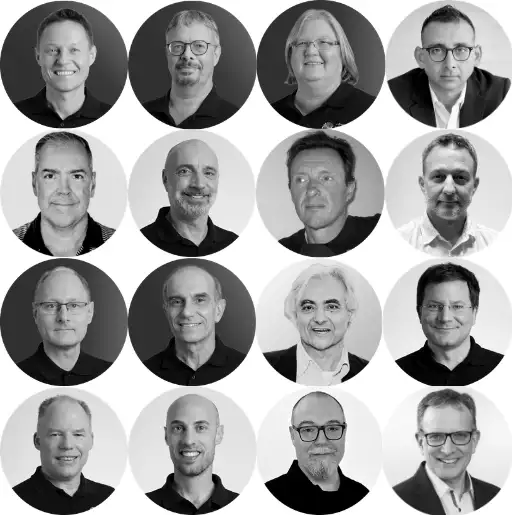
Focused Energy was founded in 2021 as a spin-out from Technische Universität Darmstadt by Thomas Forner, CEO, and Prof. Markus Roth, CSO, alongside a team of physicists and engineers who had spent their careers at the frontiers of laser and fusion science. The company’s founding premise distinguishes it from much of the fusion landscape: the science of laser-driven inertial fusion is not a hypothesis to be tested. It is an experimental result. The team that founded Focused Energy helped prove it.
The sequence of milestones that underpins this claim is specific. In 2021, Focused Energy’s founders and scientists contributed to achieving ignition at NIF, the point at which a fusion reaction produces enough energy to sustain itself. In 2022, the same facility achieved net energy gain, producing more energy from the fusion reaction than the laser energy delivered to the fuel target. These are not incremental improvements on a pathway toward a goal. They are the goal’s scientific foundation, demonstrated at the world’s most advanced laser facility, by the people who are now building its commercial successor.
The Physics That Makes Laser Fusion Different From Every Other Approach
Laser fusion, or Inertial Confinement Fusion, works by using powerful laser beams to compress and heat a small fuel capsule of Deuterium-Tritium to the temperatures and pressures found at the centre of stars. When compression is sufficient, the fuel ignites. The energy released vastly exceeds the laser input required to trigger the reaction. Crucially, this is the only fusion approach to have experimentally demonstrated net energy gain. All other fusion concepts, including tokamaks such as ITER, are still working toward that threshold. Laser fusion crossed it in 2022, which is why the engineering argument for the laser pathway is stronger than it has ever been.
LightHouse and Pearl: The Architecture Built for Commercial Power
Understanding why Focused Energy is not simply recreating the NIF at commercial scale requires understanding the specific innovations in its two core technology platforms. The NIF was designed as a scientific instrument, not a power generator. It was built to achieve ignition, not to do so repeatedly, economically, or at the throughput that a grid-connected power plant demands. Focused Energy’s engineering programme is aimed precisely at the gap between what NIF proved was possible and what a commercial power plant requires.
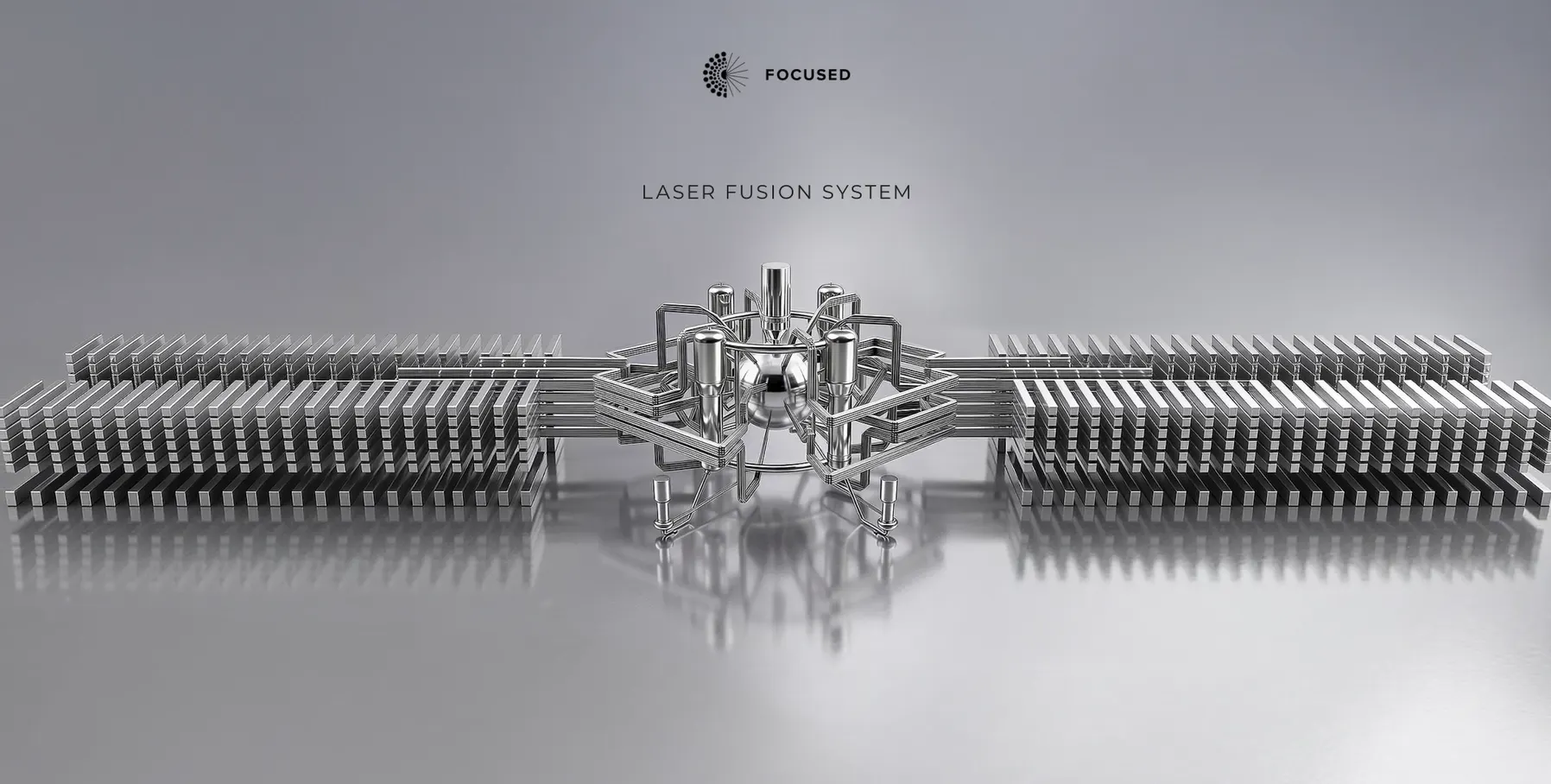
- LightHouse Architecture (The Commercial Fusion Reactor Architecture): Focused Energy’s proprietary power plant architecture is based on the laser fusion approach proven at NIF, but redesigned for manufacturability, reliability, and scalability. LightHouse uses a modular design in which all components can be mass-produced and easily shipped, creating the highest serviceability of any fusion system architecture. Direct Drive laser configuration improves energy coupling efficiency. Modularity enables power plant-grade reliability that a monolithic bespoke facility like NIF cannot achieve. Each module can be independently serviced, upgraded, and replaced, making the system practical to operate rather than merely theoretically functional.
- Pearl Fuel System (Precision Engineered Fusion Fuel Capsules): Focused Energy operates one of the only dedicated fusion fuel target laboratories in the world. Its proprietary Pearl fuel capsules use Deuterium-Tritium, sourced from seawater and lithium, and are precision-engineered at approximately 4mm in diameter for mass production. The design delivers a claimed 30x improvement in fusion energy output per shot compared to the NIF’s existing indirect drive fuel system. DT fuel is the only fusion fuel experimentally proven to achieve ignition and net energy gain. The Pearl system translates that proven fuel chemistry into a manufacturable, repeatable format suitable for commercial operation at the shot frequencies a power plant requires.
The company has also signed a $40 million agreement with Amplitude, a leading high-energy laser company, to develop the next generation of high repetition rate laser systems specifically for inertial fusion energy applications. Shot repetition rate, the frequency at which the laser can fire and a new fuel target be loaded, is one of the primary engineering parameters that separates a scientific facility from a power plant. The Amplitude partnership is directly targeted at closing this gap.
“The successful financing round confirms our scientifically grounded laser fusion approach, which has taken Focused Energy from startup to the world’s leading laser fusion company in just four years. With the new capital, we can further expand our lead in laser fusion.” – Thomas Forner, CEO and Co-founder, Focused Energy
$240M Series A: The Record Round That Positions Germany at the Centre of Fusion
The May 27, 2026 announcement represents the largest fully secured Series A in the history of the global fusion industry. The round was oversubscribed, with investors from Germany, Europe, Asia, and the Gulf region, including potential future customers of fusion energy. The investor roster combines strategic industrial capital, sovereign innovation funding, and existing institutional investors in a configuration that reflects both the scale of the ambition and the breadth of backing it has attracted.
Six investors. Strategic, sovereign, and institutional. All committed to the full build-out.
- RWE AG: Germany’s largest energy company. Strategic investor and industrial partner. Provides the Biblis nuclear site and regulatory expertise for the first power plant.
- SPRIND: German Federal Agency for Disruptive Innovation. Sovereign backing for breakthrough technology with national strategic significance.
- European Innovation Council Fund: EU-backed deep tech investor. Follows EIC’s earlier support for Focused Energy as a flagship European fusion company.
- Hessen Kapital: State of Hessen investment vehicle. Strategic investment in regional economic anchor projects at Biblis.
- Futury Capital: Deep tech and sustainability-focused venture fund. European institutional backing for the engineering programme.
- Prime Movers Lab: US-based lead investor from prior rounds. Continued commitment as the company transitions from seed-stage to Series A scale.
The RWE partnership is the most strategically consequential element of the round. RWE is not merely a financial investor: it is providing the Biblis nuclear power plant site in Hesse, Germany, where Focused Energy plans to build the world’s first commercial laser fusion power plant. The Biblis site comes with existing nuclear-grade infrastructure, a grid connection, and RWE’s decades of regulatory expertise in nuclear facility operation.
The combination of an industrial partner who already owns the site, a state government that is actively co-investing, and a federal innovation agency backing the programme as a national strategic priority creates a project environment that is materially different from most fusion ventures, which face site acquisition, grid connection, and regulatory clearance as entirely separate and sequentially dependent challenges.
Biblis: Where the World’s First Laser Fusion Power Plant Will Be Built
Nearly all of the $240 million will be invested at Biblis, the site of a former RWE nuclear power plant in Hesse, Germany. The choice of site is not incidental. Biblis already has the nuclear-grade infrastructure, the grid connection, and the regulatory history that building a new energy facility on a greenfield site would require years and hundreds of millions of additional capital to establish.
By locating the first commercial laser fusion power plant at a former nuclear site, Focused Energy is compressing the development timeline significantly while simultaneously embedding the project within German industrial and energy infrastructure in a way that strengthens both its political support and its supply chain access.
The political endorsements attached to this announcement are extraordinary in their breadth and specificity. Boris Rhein, Minister-President of Hesse, described the announcement as a great step toward making Hessen a leading location for laser fusion research and development. Kaweh Mansoori, Hessian Minister of Economics, noted that international capital is deliberately flowing into southern Hesse as a signal of confidence in Germany as a location for key technologies.
Ekaterina Zaharieva, EU Commissioner for Start-ups, Research and Innovation, described Focused Energy as a compelling example of how scientific excellence can be transformed into industrial leadership. Nicola Beer, Vice-President of the European Investment Bank, framed the decision to anchor industrial operations in Europe as a strong signal about Europe’s capacity to compete globally in future technologies. Rafael Laguna de la Vera of SPRIND called building the first commercial fusion reactor the most important moonshot mission of the 21st century.
The Broader Fusion Race and Where Laser Fusion Stands
Focused Energy operates in a competitive and well-funded fusion landscape. Commonwealth Fusion Systems is pursuing a compact tokamak approach with its SPARC device. TAE Technologies is developing a Field-Reversed Configuration approach. General Fusion has built a magnetized target fusion programme. Helion Energy has secured a power purchase agreement with Microsoft for 2028 delivery. Each of these companies is pursuing a different physics pathway to the same goal, and each faces the same fundamental challenge: closing the gap between scientific proof of concept and commercially viable power generation.
Focused Energy’s argument for the laser fusion pathway rests on the single most important data point in the fusion industry: it is the only approach to have demonstrated net energy gain in a controlled experiment. Every other fusion concept is working toward a scientific milestone that laser fusion has already cleared. This does not guarantee that laser fusion will be the first approach to reach commercial generation, but it does mean that the engineering programme Focused Energy is executing is building on a proven scientific foundation rather than validating an unproven one.
As Prof. Markus Roth, co-founder and CSO, framed it: those who scale now can set the global technological, regulatory, and economic standards. In the laser fusion context, Focused Energy is the one doing the scaling.
Thomas Forner’s summary of what the $240 million enables is precise: the capital will go into advancing the technology, systematically building supply chains within the European fusion industry ecosystem, and creating the equity contribution required to unlock public hub financing. Focused Energy is not treating this as a research grant. It is treating it as construction capital for the first phase of an industrial programme. The fusion industry has had many research milestones.
Focused Energy is attempting to be the company that turns them into megawatts on the grid before the end of the decade following the breakthrough that proved fusion was possible. The world’s most important proof of concept is four years old. The engineers who proved it are now building the power plant.