


Mykor: The UK Climate-Tech Company Developing Low-Carbon Construction Materials
How Mykor’s Mycelium-Based Technology Works?
Mykor is developing construction materials using fungal biotechnology, industrial waste streams, and biofabrication techniques as an alternative to conventional carbon-intensive building products. At the core of the company’s technology is mycelium, the root-like structure of fungi that naturally binds organic matter together as it grows. Mykor combines mycelium with industrial residues and other bio-based feedstocks to create engineered building materials designed for insulation and structural applications. Rather than relying on energy-intensive manufacturing processes commonly associated with concrete, bricks, and synthetic insulation products, the company uses biological growth processes to form materials with lower embodied carbon.
This approach aligns with growing efforts across the construction sector to reduce emissions generated during the production of building materials. Mykor’s broader objective is not simply to create sustainable alternatives but to develop products capable of matching or exceeding traditional construction materials in performance, safety, and durability. As regulators, developers, and builders face increasing pressure to decarbonize the built environment, biofabrication technologies such as mycelium-based materials are attracting growing attention as potential solutions.

Mykor’s Low-Carbon Construction Materials and Applications
The construction industry accounts for a significant share of global carbon emissions, with both operational energy use and embodied carbon from building materials contributing heavily to environmental impact. Mykor’s products are designed to address this challenge through low-carbon insulation systems and bio-based construction materials that can be integrated into modern building projects. The company emphasizes thermal performance, acoustic insulation, fire safety, and material efficiency as core product characteristics. These factors are increasingly important as building regulations evolve toward stricter sustainability and energy-efficiency requirements. Construction firms today are seeking products that are capable of improving building performance over their operational lifespan.
Mykor’s technology is particularly notable because it utilizes industrial waste streams as feedstock. By converting residues that might otherwise be discarded into useful construction materials, the company participates in a broader circular economy model where waste becomes a manufacturing resource. The company positions its products as alternatives to traditional masonry systems and timber-frame construction. If adopted at scale, biofabricated materials could help reduce dependence on some of the most carbon-intensive elements within the building sector while supporting new forms of sustainable construction.
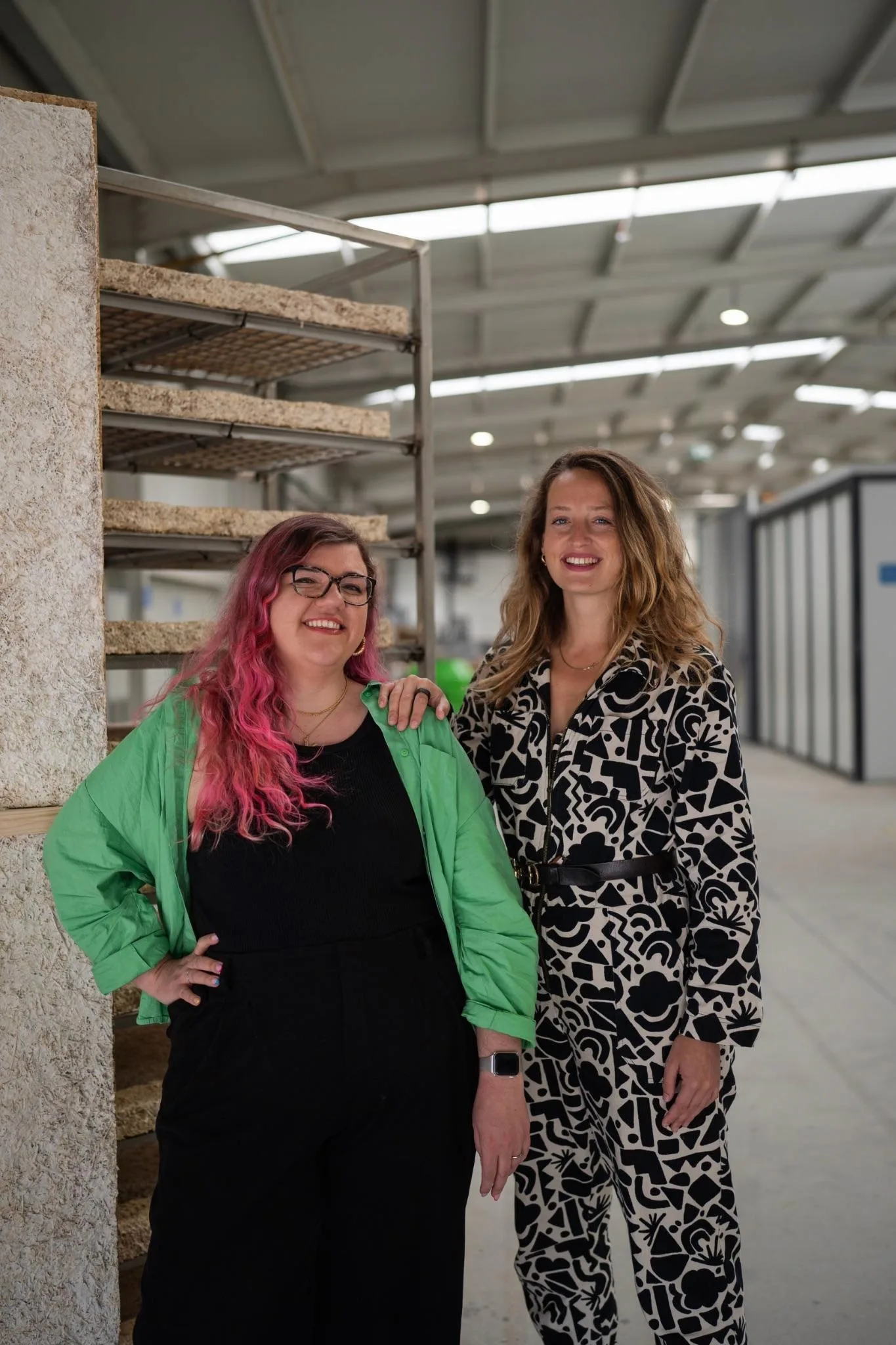
Mykor Raises £4 Million to Scale Biofabrication Technology
Mykor recently secured £4 million in funding to accelerate commercialization and scale production of its bio-based construction materials. The investment reflects growing investor interest in climate-tech companies addressing emissions within the built environment, one of the largest and most difficult sectors to decarbonize globally. Unlike many climate solutions focused on energy generation or transportation, Mykor targets emissions embedded directly within building materials themselves. This area is receiving increasing attention because embodied carbon is expected to account for a growing share of building-related emissions as operational energy efficiency improves.
The new funding will support the company’s efforts to expand manufacturing capabilities, advance product development, and accelerate market adoption. Scaling remains one of the most important challenges for biofabrication startups, as innovative materials must demonstrate consistent performance, regulatory compliance, and economic competitiveness before widespread deployment becomes feasible. Investor confidence suggests there is growing recognition that future construction systems may depend on fundamentally different materials and manufacturing approaches. Mykor’s biofabrication platform places it within a rapidly emerging category of startups attempting to rethink how construction materials are produced from the ground up.

Mykor’s Role in Decarbonising the Construction Industry
The significance of Mykor extends beyond any single product category. The company is part of a broader movement exploring how biotechnology can contribute to industrial decarbonization by replacing resource-intensive manufacturing with biological production systems. Construction is a particularly important target because buildings account for roughly 40% of global carbon emissions when both operational and embodied emissions are considered together. As governments introduce stricter environmental standards and developers seek lower-carbon alternatives, demand for sustainable building materials is expected to increase significantly. The challenge is ensuring these materials can meet the performance expectations of modern construction while remaining commercially viable.
Mykor’s emphasis on fire safety, insulation performance, structural reliability, and circular material sourcing suggests a strategy focused on practical adoption rather than sustainability claims alone. Success in the construction industry ultimately depends on whether builders, architects, and regulators trust new materials to perform consistently in real-world environments.
If biofabrication technologies continue advancing, companies like Mykor could play an important role in reshaping how buildings are designed and constructed. The future of sustainable construction may depend not only on reducing emissions from existing materials but on developing entirely new material categories inspired by biology itself. Mykor is tackling one of climate technology’s most challenging opportunities by addressing emissions embedded within construction materials. If its mycelium-based biofabrication platform can scale successfully, it could help expand the range of commercially viable low-carbon materials available to the construction industry.