


Lux Aeterna Raises $10M to Build Reusable Satellite Fleet
Denver based space technology startup Lux Aeterna has raised $10 million in seed funding to develop what it describes as the world’s first reusable satellite platform. The round was led by Konvoy, with participation from Decisive Point, Cubit Capital, Wave Function Ventures, Entropy Industrial Capital, Venture Science, Heroic Ventures, and Riptide Ventures, along with existing investors including Space Capital, Dynamo Ventures, and Channel 39 Ventures.
The funding will support the continued development of the company’s reusable satellite architecture and preparation for its first demonstration mission scheduled for early 2027. Lux Aeterna is positioning its technology as a way to fundamentally change how satellites are deployed, operated, and recovered in orbit.
The company’s approach reflects growing interest in reusable infrastructure across the space industry as organizations seek to reduce costs and increase flexibility in orbital operations.
Building the First Reusable Satellite Fleet
Lux Aeterna’s central concept is a fleet based model of reusable spacecraft designed to operate in orbit and then return safely to Earth for refurbishment and redeployment. The company argues that most satellites today follow what it describes as a “launch and burn” model, where spacecraft are deployed once and then eventually destroyed during atmospheric reentry or left as orbital debris.
This model results in billions of dollars in hardware being lost after each mission. Lux Aeterna’s platform aims to address this inefficiency by creating satellites that can survive reentry, be recovered, and fly again on future missions.
The company’s spacecraft architecture is designed to support multiple mission cycles while maintaining reliability and operational flexibility. By introducing reuse into satellite platforms, Lux Aeterna hopes to establish a circular model for orbital operations.

Lux Aeterna’s Delphi Spacecraft and the 2027 Demonstration Mission
Lux Aeterna’s first spacecraft, known as Delphi, represents the company’s flagship platform for reusable satellite missions. Delphi combines a modular satellite bus with a flight proven conical heat shield designed to protect the spacecraft during atmospheric reentry. The vehicle is engineered to survive the high temperatures and stresses associated with returning from orbit. After reentry, the spacecraft can be recovered, inspected, and refurbished for another mission cycle.
According to the company, its inaugural demonstration mission scheduled for the first quarter of 2027 has already been fully booked. The mission is expected to validate the performance of the reusable satellite platform and demonstrate the feasibility of returning orbital hardware safely to Earth.
If successful, this approach could introduce a new operational model for satellite missions where hardware can be reused instead of replaced.
How Reusable Satellites Could Change Orbital Economics?
Reusable launch vehicles have already transformed the economics of space transportation. Companies such as SpaceX have demonstrated that rockets capable of multiple flights can significantly reduce the cost of reaching orbit. Lux Aeterna is attempting to apply a similar concept to satellites themselves. By allowing spacecraft to return from orbit and be redeployed, reusable satellite platforms could reduce the cost of building and launching new spacecraft for each mission.
This model could also provide additional benefits beyond cost reduction. Returning spacecraft to Earth allows engineers to analyze hardware after missions, upgrade payloads, and iterate on technology more rapidly. Such capabilities may be particularly valuable for organizations operating in sectors where technological evolution occurs quickly, including advanced communications, space manufacturing, and national security missions.
Supporting Defense, Commercial, and Space Manufacturing Customers
Lux Aeterna’s platform is designed to serve customers across defense, intelligence, commercial space, and emerging in orbit manufacturing sectors. These industries often require reliable access to orbit combined with flexibility in mission design. Reusable satellite platforms could allow organizations to deploy payloads more rapidly and conduct post mission analysis on hardware that returns to Earth. For defense and intelligence agencies, the ability to retrieve and inspect spacecraft may offer strategic advantages in mission evaluation and technology validation.
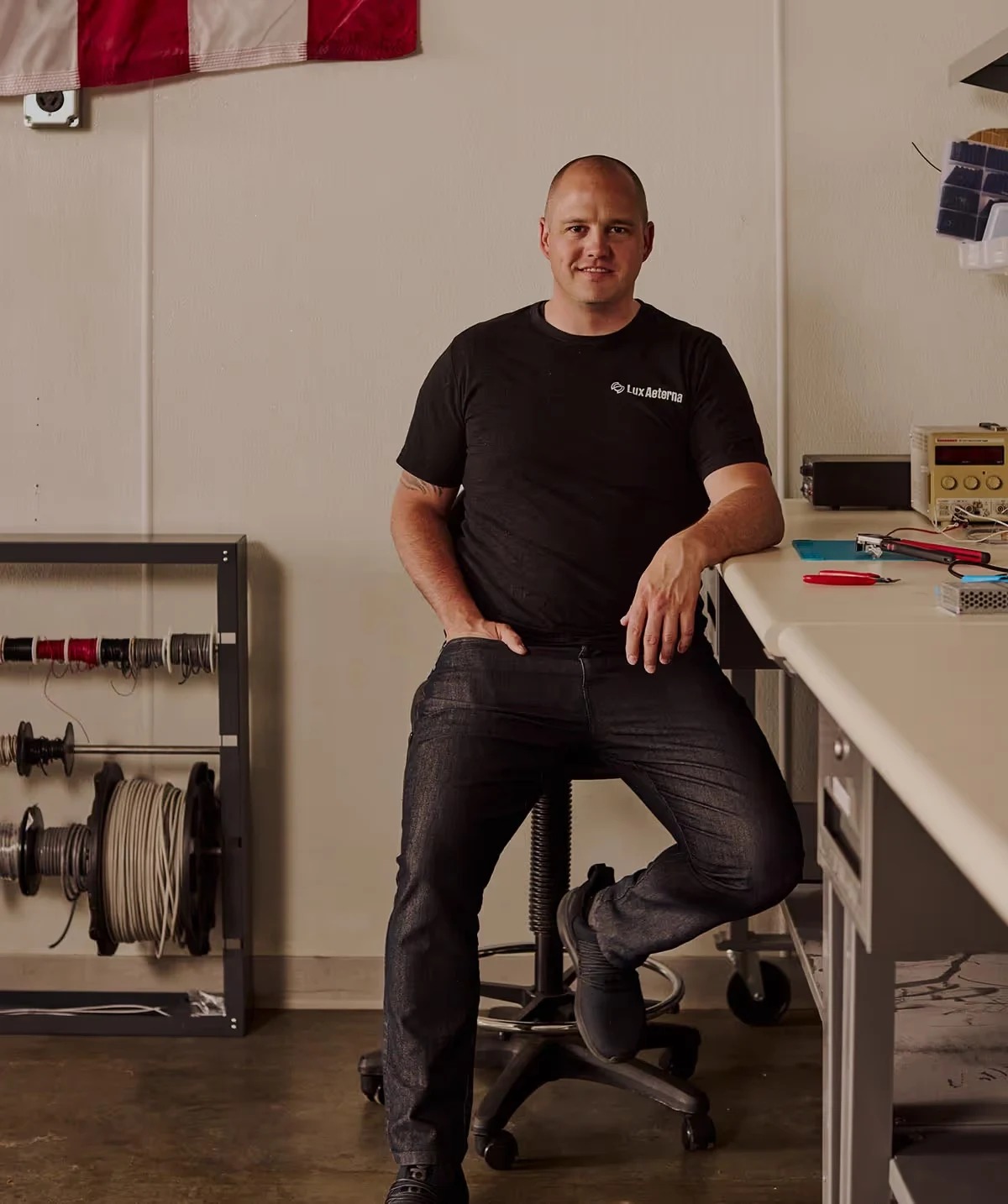
The company’s fleet based model is also designed to scale alongside the growing launch ecosystem. As launch providers increase the frequency of missions, reusable spacecraft could help maximize the value of each launch opportunity. Lux Aeterna’s engineering facility in Denver serves as the center for design, testing, and development as the company prepares for its first orbital mission.
The Future of Reusable Space Infrastructure
The space industry is undergoing rapid transformation as new launch systems, satellite networks, and in orbit manufacturing technologies expand the scope of space based operations. While launch vehicles have become increasingly reusable, most spacecraft remain single use assets. Companies exploring reusable spacecraft concepts are attempting to close this gap by extending reusability beyond rockets to the satellites themselves. If such platforms prove viable, they could help establish a more sustainable and economically efficient space ecosystem.
Lux Aeterna’s approach represents one attempt to introduce reusability into orbital operations at scale. By combining reusable spacecraft with a fleet based operational model, the company aims to build infrastructure that supports the next generation of space missions.
The development of reusable satellite platforms could mark an important shift in how orbital infrastructure is designed and operated, potentially enabling a more sustainable and flexible future for space operations.