


Top 10 Netherlands Tech Startups Making Waves in 2026
The Netherlands continues to occupy an important position in Europe’s technology ecosystem, combining strong research institutions, a sophisticated digital economy and a growing base of startups working across artificial intelligence, healthtech, energy, fintech, quantum technology and advanced engineering. Dutch tech companies raised €1.9 billion across 65 funding rounds in the first half of 2026, placing the country sixth in Europe by capital raised during the period. Healthtech was the most active sector by deal count, while semiconductors, quantum technology and energy also attracted significant investment.
At the same time, the Dutch ecosystem is facing an important transition. The State of Dutch Tech 2026 report highlighted the country’s difficulty in converting its strong technology base into companies that consistently achieve international scale, particularly in capital-intensive sectors. That makes the next generation of startups particularly interesting.
The companies featured in this list span long-duration energy storage, precision medicine, business identity, telecommunications, energy optimization, fintech, quantum security, industrial AI, biotechnology and healthcare. They represent a selection of Dutch technology businesses whose innovations, funding momentum, commercial traction or international ambitions make them particularly worth watching in 2026.

10 Netherlands Tech Startups to Watch in 2026
1. Ore Energy
Ore Energy is an Amsterdam- and Delft-based energy technology company developing iron-air batteries designed to store renewable electricity for multiple days. Founded in 2022 by Aytaç Yilmaz and Bas Kil, the company is tackling one of the biggest challenges created by the expansion of wind and solar power: storing electricity when renewable generation is high and delivering it back to the grid when generation falls.
Its technology uses abundant materials including iron, water and air rather than relying on lithium or other scarce battery materials, with systems designed to provide up to 100 hours of energy storage. Ore Energy’s approach is particularly relevant to European energy systems facing increasing grid congestion and the need for longer-duration storage.
The company reached several important milestones in 2026. It completed a 100-hour iron-air battery pilot at EDF’s R&D facility in France under the European StoRIES programme and announced an agreement with Budget Thuis to deploy 1 GWh of multi-day energy storage in the Netherlands, beginning with a committed 400 MWh phase planned for 2028.
In August 2026, Ore Energy announced a $43 million Series A, equivalent to approximately €38 million, led by Plural and HV. The financing is intended to accelerate the transition from proven pilot technology toward commercial-scale deployment. With a technology built around inexpensive and widely available materials and a clear connection to Europe’s renewable-energy transition, Ore Energy is positioning itself as a potential Dutch contender in the rapidly developing long-duration energy-storage market.
2. Kynexis
Kynexis is a Naarden-based clinical-stage biotechnology company developing precision therapeutics for cognitive disorders affecting the brain. Launched in 2023 by Forbion and Ysios Capital, the company is built around the scientific work of researchers including Robert Schwarcz and Carol Tamminga and is led by CEO Kees Been, an experienced neuroscience and biopharmaceutical executive.
Kynexis is developing KYN-5356, an oral small-molecule inhibitor of KAT-II, an enzyme involved in producing kynurenic acid, which the company believes plays an important role in cognitive dysfunction. Its initial target is cognitive impairment associated with schizophrenia, an area where there are currently no approved medicines specifically treating the cognitive symptoms.
The company launched with €57 million in Series A financing led by Forbion, with participation from Ysios Capital and Sunstone Life Science Ventures. Kynexis has since moved KYN-5356 through early clinical development and is now conducting a Phase 2 study involving approximately 150 adults with cognitive impairment associated with schizophrenia.
In August 2026, the company announced a €40 million Series A extension led by Novartis Venture Fund, bringing total Series A financing to €97 million. Existing investors Forbion, Ysios Capital and Sunstone also participated, while Novartis Venture Fund joined the board. Kynexis said the new financing would support completion of its Phase 2 study, preparation for registrational trials and expansion of the programme into additional cognitive disorders, including Alzheimer’s disease. Topline Phase 2 results are expected by the end of 2026.
3. Duna
Duna is an identity-fintech company with operations in Amsterdam and Berlin, building infrastructure designed to make it easier for businesses to establish trusted digital identities online. Founded in 2023 by former Stripe executives Duco van Lanschot and David Schreiber, Duna’s central proposition is to create a digital passport for every business that can eventually evolve into a shareable identity network and make business onboarding dramatically simpler.
Its current AI-native platform helps banks, fintech companies and other regulated organizations manage know-your-business, know-your-customer, customer due diligence and anti-money-laundering processes. The company says customers including Plaid, CCV, Moss, Bol and SVEA Bank have achieved significant improvements in onboarding speed and productivity using its platform.
Duna first raised €10.7 million in a seed round led by Index Ventures in May 2025, with backing from a notable group of technology executives and founders. In February 2026, the company announced a €30 million Series A led by CapitalG, Alphabet’s independent growth fund, with existing investors Index Ventures and Puzzle Ventures participating. The financing brought total funding to more than €40 million and is being used to expand Duna’s enterprise capabilities and develop compliant, auditable AI infrastructure.
The company’s opportunity is becoming more significant as financial institutions deal with increasingly complex regulation while AI simultaneously makes fraud more sophisticated. By turning business identity and compliance into reusable digital infrastructure, Duna is attempting to address a foundational problem in the global B2B economy rather than simply creating another fintech application.
4. Firstly
Firstly is an Amsterdam-based telecommunications startup developing a global mobile-data service built around eSIM technology. Founded in September 2023 by Gauthier Thierens and Vince Vissers, the company was created around a simple proposition: provide travelers with basic mobile connectivity for free while allowing users to upgrade to faster or more flexible plans when needed.
Firstly automatically connects users to available mobile networks and removes the need to buy and swap physical SIM cards or deal with traditional roaming charges. Its free service supports essential activities such as WhatsApp, messaging and email, while paid plans provide higher speeds, international calling and flexible monthly options.
The company raised €1.1 million in pre-seed funding when it launched, followed by a €5.1 million seed round in October 2024. The seed round was accompanied by a partnership with Uber, allowing Firsty users to access high-speed connectivity for selected apps globally.
During 2025, the company expanded its proposition with international calling and monthly plans and launched a web application and API, while partnerships with companies including Belfius, Tourlane, Mastercard and Grab broadened its distribution opportunities. Firsty reached another major milestone in January 2026 when it surpassed one million users.
Its business model is interesting because it challenges the traditional relationship between mobile connectivity and telecom operators, treating data access increasingly as a software service rather than a conventional carrier product. With global travel continuing to generate demand for simple and affordable connectivity, Firsty is attempting to build a new consumer-facing layer between travelers and the fragmented international mobile-network ecosystem.
5. Eddy Grid
Eddy Grid is a Utrecht-based energy technology startup developing software that optimizes renewable energy assets such as solar farms, wind turbines and battery systems in real time. Founded in 2023 by Sam Rohn and his team, the company uses algorithms to determine when and how energy assets should operate or trade on electricity markets, with the objective of maximizing revenues while helping manage increasingly complex power systems.
Its technology becomes particularly relevant as renewable generation and battery storage are increasingly combined behind single grid connections, creating more complicated optimization problems for asset owners. Eddy Grid has grown rapidly since its founding and says its systems now manage more than 500 MW of renewable energy and storage capacity, making it the largest independent energy optimizer in the Netherlands.
The company raised €1.5 million in 2024 before securing a €7.5 million financing round in May 2026, backed largely by existing investors including Graduate Ventures and Volve Capital. Tech.eu records total funding at €9 million across two rounds. Eddy Grid reported nearly 900% revenue growth in 2025 and expects further substantial expansion in 2026, while remaining cash-flow positive.
The company currently operates in the Netherlands and Belgium and is preparing to enter Germany, giving its technology a larger European market in which to prove its scalability. As Europe’s electricity grids become increasingly decentralized and renewable-heavy, software that can coordinate generation, storage and market participation could become just as important as the physical infrastructure itself, placing Eddy Grid in an increasingly important part of the energy transition.
6. Klearly
Klearly is an Amsterdam-based fintech company developing payment technology designed specifically for small and medium-sized businesses, particularly restaurants and hospitality operators. Founded in 2023, the company is led by CEO Sam Koekoek, alongside a leadership team including Chief Commercial Officer Geus Walder, COO Eva Rosa Bian and Chief Strategy Officer Edan Dil.
Klearly’s platform allows businesses to accept contactless payments directly through smartphones using Tap to Pay technology, reducing the need for dedicated card terminals while integrating with existing ordering and point-of-sale systems. The company has focused heavily on hospitality, where fast payment processing during busy periods can have a direct impact on customer experience and operational efficiency.
Klearly raised €2.1 million in pre-seed funding in 2023 and €6 million in seed funding in January 2025 before announcing a €12 million Series A in January 2026. The latest round was led by PayPal Ventures and included Italian Founders Fund, Antler Elevate, Global PayTech Ventures and Shapers, bringing total disclosed funding to approximately €20 million.
Klearly has already built a substantial customer base in the Netherlands, with more than 4,000 hospitality businesses reportedly using its technology, and the new financing is supporting expansion into Italy and Belgium. Its proposition reflects a broader shift toward software-defined financial infrastructure, where smartphones can increasingly replace specialized hardware. If Klearly can replicate its Dutch traction across Europe’s fragmented hospitality market, it could become an important challenger in the merchant-payments space.
7. Q*Bird
Q*Bird is a Delft-based quantum technology company developing secure communication infrastructure designed to protect sensitive data against current and future cyber threats. Founded in January 2022 by experts from QuTech and TU Delft, including Ingrid Romijn, Joshua Slater and Remon Berrevoets, the company specializes in Measurement-Device-Independent Quantum Key Distribution, or MDI-QKD.
Its Falqon product family is designed to use quantum physics to create secure cryptographic keys while addressing vulnerabilities associated with conventional QKD architectures. QBird’s technology is aimed at critical infrastructure, telecommunications, government, defense, ports and data centers, where long-term protection of sensitive communications is increasingly important as quantum computers develop.
The company has already moved beyond laboratory research into operational deployments. Its technology has been used in quantum-secure networks involving the Port of Rotterdam, a cross-border Belgium-Luxembourg connection and the Eurofiber QUEST project.
In January 2026, QBird secured €2.5 million in grant funding and €5 million in equity through the European Innovation Council Accelerator. The funding is supporting the NEXUS project, which aims to improve hardware efficiency, increase network density and develop the orchestration layer required for multi-operator quantum-secure networks.
QBird also launched its Falqon Key Manager in June 2026 and became a founding consortium partner of the Quantum Communication Fieldlab Rotterdam. As governments and businesses begin preparing for the potential security implications of quantum computing, QBird is working to turn quantum communications from a research concept into deployable European infrastructure.
8. Resoniks
Resoniks is a Dutch-Finnish industrial AI company headquartered in The Hague that uses acoustics and machine learning to automate quality control in manufacturing. Founded in 2022 by Felix Wassmann, Fabian Oberndorfer and Isaac Kargar, the company developed technology that can identify structural defects by analyzing the acoustic fingerprint produced when a component is struck. Cracks, pores and internal voids can generate subtle differences in sound that are difficult for humans or conventional inspection systems to identify consistently, but machine-learning models can be trained to recognize them.
Resoniks initially raised €2.65 million in a 2024 round led by Kvanted, with participation from Faber, EIT Manufacturing and European public funding. In 2026, the company moved toward a more scalable commercial offering with the launch of QCFlex, an automated acoustic inspection system designed to operate directly within production lines. The system combines a precision robotic hammer, calibrated microphones and application-specific AI models to inspect metal, composite and ceramic components in seconds.
It is designed to handle industrial conditions including vibration, temperature changes, humidity and dust, while supporting parts of up to 800 millimetres and 200 kilograms. Resoniks also raised a new seed investment led by SHIFT Invest and co-led by returning investor Kvanted in July 2026, although the amount was not publicly disclosed. The company is now moving beyond pilot projects toward large-scale industrial deployment. Its technology could be particularly valuable as manufacturers seek to identify defects earlier, reduce scrap and rework, improve production efficiency and address shortages of skilled inspection workers.
9. New Dawn Bio
New Dawn Bio is a Wageningen-based biotechnology startup developing what it describes as cultured wood, an alternative approach to producing timber without conventional logging. Founded in 2024 by Tom Clement and Kianti Figler, who serve as CEO and COO respectively, the company grows wood from tree stem cells inside bioreactors and guides those cells to form solid wood structures directly in the desired shape.
The approach is intended to address several inefficiencies in traditional timber production, where trees are grown for years before being harvested and processed into rectangular boards, beams or other products, resulting in substantial material waste. New Dawn Bio says its process could enable wood to be produced up to 10,000 times faster than conventional forestry while eliminating logging and reducing waste from sawing, routing, drilling and gluing.
In June 2026, the company closed an oversubscribed €2.1 million pre-seed funding round led by CapitalT, with participation from Norrsken Evolve, Ontdekkers Group and angel investors including Jelle Prins, co-founder of Cradle. The capital is being used to advance the company’s technology and expand its interdisciplinary R&D team across cell biology, materials engineering, physics and process engineering.
New Dawn Bio is initially targeting premium wood applications, where the economics may be more favorable, before potentially moving toward larger commodity markets. Its technology also has implications for forest conservation and carbon emissions. If the company can overcome the biological and manufacturing challenges associated with producing consistent, high-quality wood at commercial scale, it could open an entirely new category within the global materials industry.
10. Coforix
Coforix is an Eindhoven-based healthcare AI company developing an open, vendor-neutral platform that allows hospitals and healthcare organizations to deploy multiple AI models and agents through a single secure integration layer.
The company was founded in 2023 by Marcel Alberti and Harm-Jan Wessels as HealthSage AI and rebranded as Coforix in May 2026 as its platform evolved from an individual healthcare AI product into infrastructure connecting multiple clinical AI solutions. Alberti serves as CEO and co-founder, while Despoina Ioannidou is CTO and co-founder. The platform is designed around open healthcare standards including FHIR, SNOMED CT and ICD-10 and can connect AI solutions from different hospitals and vendors to existing electronic health-record systems.
Coforix originally raised €3 million in pre-seed funding in 2024 from Peak, Healthy.Capital, Rubio Impact Ventures, Jaap Maljers and Jeroen Tas. Since then, the company has developed products including its Smart Problem List Agent, No-show Agent and Clinical Data Transformer. The latter was launched as a beta API in February 2026 to extract structured, SNOMED CT-coded and FHIR-compliant information from unstructured clinical notes.
Coforix’s platform is already operating with healthcare organizations in the Netherlands and Belgium and maintains an office at Station F in Paris as part of its European expansion. Its approach addresses one of healthcare AI’s biggest practical challenges: individual models can demonstrate impressive results, but hospitals still face integration, security, validation and interoperability barriers. By creating a common infrastructure layer, Coforix is attempting to make clinical AI easier to deploy at scale while avoiding dependence on a single AI vendor.
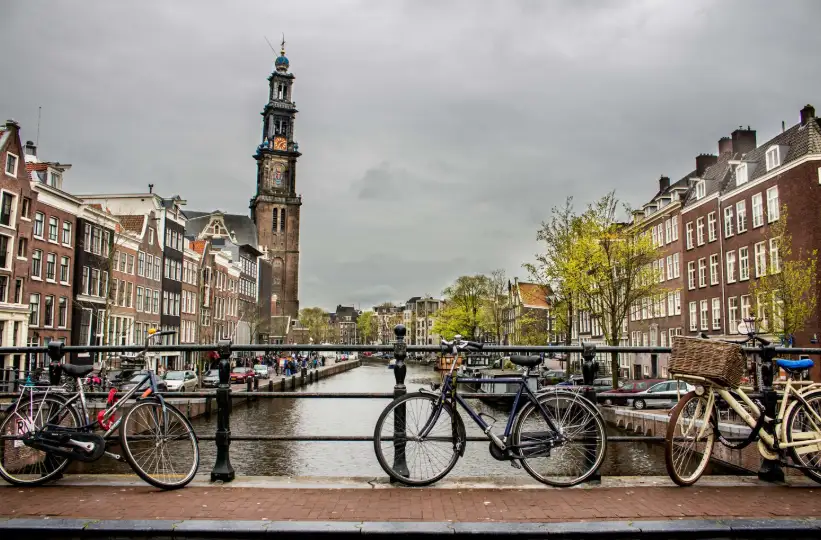
The Netherlands Is Building the Infrastructure for Its Next Tech Wave
The ten startups featured here highlight an increasingly diverse Dutch technology ecosystem. Energy storage, precision medicine, quantum security, fintech, AI-powered healthcare, industrial inspection and business identity may appear unrelated, but they share a common characteristic: each is attempting to solve a complex infrastructure problem with technology. That is particularly significant as the Netherlands works to convert its strong research and digital capabilities into globally scalable companies. The ecosystem attracted €1.9 billion across 65 funding rounds in the first half of 2026, while healthtech, semiconductors, quantum technology and energy all showed significant activity.
The challenge now is scale. The State of Dutch Tech 2026 report warned that although the Netherlands has a strong technology base and substantial investment, it still struggles to turn that advantage into international scale, particularly for capital-intensive companies. The startups on this list offer several different answers to that challenge. Some are developing globally relevant deep technologies, while others are using the Netherlands as a launchpad for European expansion. If more companies can successfully make the transition from promising technology to international market leaders, the Netherlands could strengthen its position not merely as a source of innovative startups, but as one of Europe’s most important technology scale-up ecosystems.