

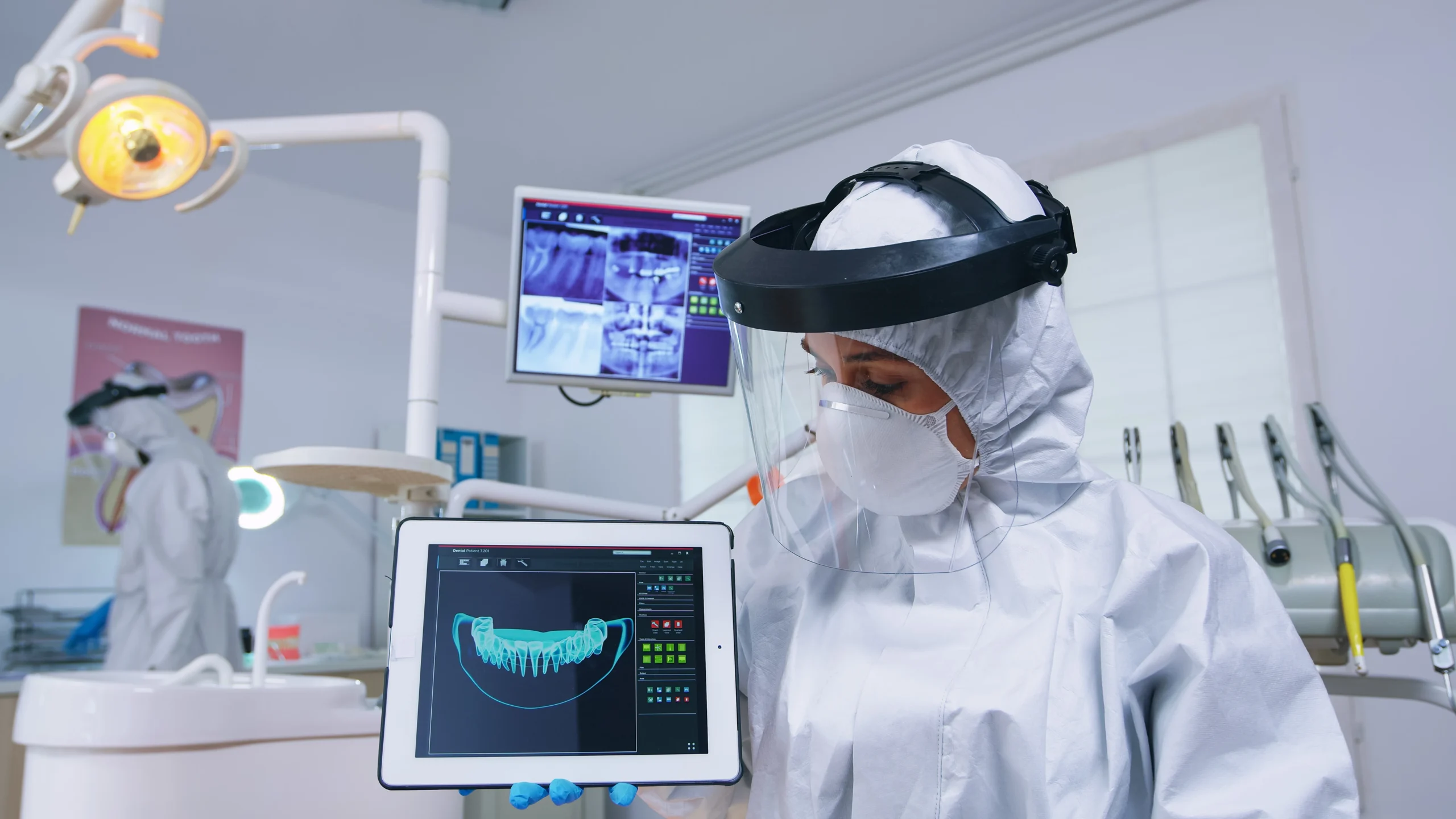
Top 10 AI Tools for Dentists in 2026
AI is no longer a future-facing concept for dentistry. These ten tools are actively changing how dentists diagnose, document, schedule, and run their practices right now.
Dentistry has always been a discipline where the quality of what a clinician can see determines the quality of what a patient receives. That simple fact is driving the fastest wave of technology adoption the profession has ever seen. AI tools that analyze radiographs, chart periodontal measurements, handle phone calls, automate billing, and manage multi-location operations are now embedded in daily clinical workflows at practices ranging from solo offices to the largest dental service organizations in North America.
The tools on this list span the full scope of what AI can do in a dental practice today: diagnostic imaging analysis, voice-powered clinical documentation, intelligent front-desk automation, and comprehensive cloud-based practice management. Each one was selected based on clinical validation, regulatory status, real-world adoption data, and the specificity of its value to dental professionals.
Here are the ten AI tools dentists are choosing in 2026.
1. Overjet
Best for: AI-powered radiograph analysis, insurance documentation, and DSO-scale diagnostic consistency
Overjet is the benchmark against which every other dental AI imaging platform is measured. The company holds more FDA clearances than any other dental AI firm, with nine cleared modules covering caries detection in both pediatric and adult populations, calculus detection, periapical radiolucency identification, automated dental charting, and AI-powered image enhancement. That regulatory depth is not a technicality. It reflects the clinical validation work required to prove that each module performs at the accuracy level the FDA demands before it can be used in clinical decision-making.
The platform’s flagship product, IRIS Smart Imaging, analyzes radiographs and overlays visual annotations directly on the image. These overlays highlight areas of concern, quantify bone loss in millimeters, outline caries with polygon-level precision, and generate documentation that supports insurance claims. Studies have shown Overjet’s periapical bone level analysis exceeds 85% sensitivity and specificity, and practices using the platform report up to five times faster insurance claim decisions because the AI-generated annotations provide the objective evidence insurers require.
In 2025, Overjet launched the Dental Clarity Network, a coalition of dental companies aimed at improving the relationship between dental payers and providers by standardizing the language of AI-annotated clinical findings. North American Dental Group, a 200-plus location DSO, added Overjet’s IRIS across all its practices, reflecting the confidence large organizations have placed in the platform’s consistency and accuracy at scale.
In March 2025, Overjet and CareStack jointly launched the Smart Dental Platform, combining Overjet’s FDA-cleared imaging AI with CareStack’s cloud-based practice management, creating an integrated solution that handles imaging, annotation, documentation, and operations in one environment.
2. Pearl
Best for: Real-time chairside pathology detection across 2D and 3D imaging
Pearl holds a distinction no other dental AI company can claim: it is the first and only firm to receive FDA 510(k) clearance for AI analysis of both 2D and 3D dental radiographic images. The journey to that milestone accelerated significantly in 2025 and into 2026, with FDA clearances for Second Opinion 3D (CBCT imaging), Second Opinion for panoramic radiographs (granted December 2025), automated bone level measurement in bitewing and periapical radiographs, and advanced precision segmentation for caries and periapical radiolucency detection.
The platform’s flagship product, Second Opinion, detects up to 18 distinct findings per image in real time at the chairside. These include caries, periapical radiolucencies, bone loss, calculus, defective restoration margins, fractures, root canals, crowns, bridges, and implants. Clinical validation studies report 94 to 95 percent accuracy in pathology detection, and the platform holds regulatory clearance in 120 countries, making Pearl one of the most globally accessible dental AI diagnostics tools available.
Pearl’s integration ecosystem spans more than 30 imaging and practice management systems, which means adoption does not require replacing existing hardware. The platform’s visual overlays are designed specifically for patient communication: when patients can see a clear, AI-annotated image showing exactly where a cavity sits or how bone loss appears at a specific tooth site, treatment acceptance rates improve materially.
Founded in 2019 by serial entrepreneur Ophir Tanz and backed by over $80 million in total funding following a $58 million Series B led by Left Lane Capital, Pearl has built the most credentialed position in dental AI diagnostics and continues to expand its clinical scope with each new FDA clearance.
3. Denti AI
Best for: AI-powered clinical documentation and voice-to-chart automation
Denti AI takes a different approach from the imaging-first platforms on this list. Rather than focusing exclusively on radiographic analysis, it combines imaging detection with voice-powered clinical documentation to address both the diagnostic and administrative burdens that slow dental teams down.
On the imaging side, Denti AI’s Detect and Auto-Chart modules scan radiographs, identify conditions, and propose entries directly into the patient chart, reducing the manual transcription step that typically follows diagnosis. The platform is FDA-cleared for its imaging analysis capabilities, positioning it as a clinically credentialed option for practices that want AI assistance spanning from image reading to chart completion.
The voice documentation component uses speech recognition and natural language processing to listen to clinician-patient interactions and automatically produce structured clinical notes. Rather than requiring a hygienist or assistant to manually key in findings after a procedure, Denti AI captures what is said in the operatory, formats it for the clinical record, and presents it for review. This dual approach, spanning image analysis and spoken word documentation, makes Denti AI one of the more complete single-tool options for clinical workflow efficiency.
For practices that want to address multiple documentation bottlenecks without layering in separate imaging AI and voice charting tools, Denti AI’s integrated approach offers a meaningful consolidation.
4. Videa (VideaHealth)
Best for: DSOs, large group practices, and clinical teams focused on diagnostic consistency and claims automation
VideaHealth has built a platform trusted by eight of the ten largest dental service organizations in North America, and it has been adopted by more than 50,000 dental professionals. That penetration at the top of the DSO market reflects the platform’s capacity to function reliably across hundreds of practice locations with different imaging hardware, varying clinical teams, and the consistency requirements that multi-location operations demand.
The platform’s AI focuses on preventive dentistry through early detection and predictive analytics, giving dental teams the ability to identify and plan treatment for conditions before they progress to more complex and costly interventions. Its diagnostic capabilities cover the primary pathologies that drive both clinical decision-making and insurance documentation, and the AI annotations are designed to support patient education alongside clinical workflow efficiency.
In 2025, VideaHealth was named to TIME’s Top HealthTech Companies for outstanding achievement in AI-powered diagnostics and imaging, and ranked number 28 on the Inc. 5000 list of the fastest-growing private companies in America. These recognitions reflect the rate at which the platform is scaling, driven by DSO adoption and the broader shift toward AI-verified diagnostic workflows.
VideaHealth also launched ClaimsAI, a purpose-built tool that automates dental claims processing, reduces denials, and eliminates manual billing work by connecting clinical AI outputs directly to revenue cycle management. More recently, the company launched Voice Notes, described as the first AI-powered ambient scribe built specifically for dentistry, extending the platform into clinical documentation alongside its imaging and billing capabilities.
5. Diagnocat
Best for: Comprehensive 2D and 3D diagnostic reporting, CBCT-heavy practices, implant planning
Diagnocat is the most diagnostically comprehensive AI platform on this list. Where many dental AI tools focus on 2D radiographic analysis, Diagnocat was built from the ground up to handle both 2D and 3D imaging, and its CBCT analysis capabilities are unmatched in terms of the number of conditions it can detect. The platform identifies over 40 conditions on 2D images, including panoramic X-rays, bitewings, and periapical radiographs, and over 60 conditions on 3D CBCT scans. Those conditions include not only standard dental pathologies but rare findings and non-dental observations like sinus and bone structure abnormalities that other platforms do not screen for at all.
A peer-reviewed study published in December 2025 analyzed 147 CBCT scans and 4,704 tooth positions on the Diagnocat platform. Tooth-level AI accuracy exceeded 99% for most categories, sensitivity was highest for missing teeth at 99.3% and endodontic treatments at 99.0%, and full-scan perfect agreement was achieved in 82.3% of cases. These are among the strongest independent validation results any dental AI platform has published.
In October 2025, Diagnocat received FDA clearance for the US market, formalizing its entry into North American dentistry after years of clinical deployment across Europe and beyond. The platform has now screened over 10 million teeth worldwide.
Diagnocat’s additional capabilities include automated STL model generation from CBCT data, which bridges the diagnostic report directly to implant planning and surgical guide production, and a browser-based viewing system for CBCT and intraoral scans that eliminates the need for specialized local software. For practices operating implant programs, performing complex endodontic cases, or running imaging centers serving specialist referrals, Diagnocat provides a level of diagnostic depth that no other platform on this list matches.
6. Arini
Best for: AI-powered front-desk phone automation and appointment scheduling
Arini addresses a problem that diagnostic AI tools do not touch: the phones. Research from the American Dental Association’s Health Policy Institute indicates that 38% of new patient calls go unanswered during business hours, and 80% of callers who reach voicemail do not call back. For a practice receiving 60 to 80 calls per day, that translates to meaningful lost revenue every single week.
Arini is an AI receptionist built exclusively for dental practices. It answers calls in under 300 milliseconds, accesses real-time schedule availability from the practice management system, and books appointments without requiring human intervention. The platform understands dental-specific terminology, appointment types from prophylaxis to emergency treatment, provider-specific scheduling rules, and insurance plan nuances at a depth that general-purpose AI phone systems cannot replicate.
The practical integration coverage is broad: Arini connects natively with Dentrix, Eaglesoft, Open Dental, Denticon, CareStack, and Cloud9, writing booked appointments directly to the PMS without a manual transfer step. After-hours coverage is a key use case, since industry data shows 45% of patient calls arrive outside normal business hours. Arini picks up those calls, books the appointment, and sends a confirmation without requiring any staff involvement.
Industry analysis of practices implementing AI receptionists reports 25x to 72x ROI primarily driven by converting previously missed calls into booked appointments. For a practice where each new patient is worth several hundred to several thousand dollars over a care relationship, recovering even a fraction of the calls that would otherwise go to voicemail produces returns that dwarf the cost of the tool.
7. Dentrix
Best for: Comprehensive practice management for established US dental practices of all sizes
Dentrix from Henry Schein One is the most widely used dental practice management system in the United States, with an installed base spanning practices of every size from solo offices to multi-location groups. Its longevity in the market, more than 30 years of continuous development, has produced a system with exceptional breadth: appointment scheduling with visual calendar management, electronic insurance claims and eClaims workflows, prescription management, patient records, billing and collections, and clinical charting with color-coded visualization.
Dentrix Smart Image technology automatically associates 2D and 3D diagnostic images with CDT codes, connecting clinical imaging to financial and documentation workflows in one step. This integration reduces manual data entry at the front desk and creates a more direct line between what the dentist sees on the X-ray and what gets submitted to insurance.
On the AI side, Dentrix’s integration ecosystem is one of its greatest assets. The platform integrates with dozens of third-party AI tools, including Overjet for imaging analysis, Arini and Weave for AI phone management, and a broad range of imaging, patient engagement, and analytics solutions. Rather than building every AI capability natively, Dentrix has positioned itself as the practice management backbone into which specialized AI tools plug, giving dentists flexibility to choose the best clinical AI tools while keeping all practice data in a single system.
For practices that have been on Dentrix for years, the AI integrations represent a practical path to adding advanced capabilities without migrating to a new platform. For new practices, Dentrix’s deep training ecosystem, wide talent pool of trained staff across the market, and extensive third-party support make it a reliable foundation for long-term practice operations.
8. Planmeca Romexis
Best for: Practices with Planmeca imaging hardware seeking a unified 2D, 3D, and CAD/CAM imaging platform
Planmeca Romexis is the imaging software platform built by Planmeca, the world’s largest privately held dental equipment manufacturer, with EUR 1.2 billion in annual revenue and exports to over 120 countries. Where most dental practices manage 2D X-rays, 3D CBCT imaging, and CAD/CAM workflows in separate software platforms with separate logins and separate data stores, Romexis unifies all of it in a single application.
At IDS 2025 in Cologne, Planmeca launched Romexis 7, featuring a new set of integrated AI-powered tools for streamlining clinical workflows. AI-assisted CBCT segmentation automatically identifies and segments key anatomical structures including teeth, nerves, jaws, airways, and sinuses, a process that previously required significant manual work from the clinician. AI motion correction addresses movement artifacts in CBCT scans, tracking and correcting subtle patient movement to restore image consistency without requiring a retake, which reduces radiation exposure and saves chair time. Tooth numbering automation eliminates a manual step that is simple in concept but time-consuming in practice across a full mouth series.
Romexis VR, introduced in the latest release, allows dentists to view and interact with 3D patient data in virtual reality. Implant planning in VR using libraries from over 130 implant manufacturers gives clinicians a spatial understanding of anatomy and prosthetic relationships that flat-screen viewing cannot replicate. Romexis integrates with over 100 dental practice management systems, making it accessible to practices not running Planmeca hardware across the board.
9. Bola AI
Best for: Voice-powered clinical documentation and hands-free periodontal charting
Bola AI does one category of work and does it better than any competing platform: voice-powered clinical documentation for dental practices. The platform has been trusted by over 10,000 dentists and hygienists who have collectively completed more than 3 million charts using its voice tools. That adoption scale, and a validated 9x ROI from a Heartland Dental case study, reflects the practical value the platform delivers in operatories every day.
The Voice Clinical Suite comprises three core products designed around specific workflow moments. Voice Perio is the flagship product for hygienists: it enables completely hands-free periodontal charting, allowing the hygienist to call out measurements verbally while Bola AI transcribes them directly into the patient chart with 99% accuracy. Patients hear their numbers called out during the appointment, a transparency that Bola’s own data shows increases treatment acceptance rates by 40%. For an eight-patient hygiene day, the platform saves four to eight minutes per visit, which adds up to a meaningful daily time saving across a full schedule.
Voice Restorative streamlines restorative documentation in the same hands-free manner, and AI Scribe transcribes spoken clinical notes into a consistent, professionally formatted record suitable for both clinical continuity and insurance claim support.
Bola integrates with Henry Schein One, Patterson Dental, Open Dental, and Curve Dental, among other major practice management systems. The platform is HIPAA compliant and has been designed to understand dental-specific terminology and accents without requiring the clinical team to learn special voice commands or adapt their natural speech patterns.
10. CareStack
Best for: Growing group practices and DSOs needing an all-in-one cloud platform with embedded AI
CareStack is the cloud-native dental practice management platform that growing group practices and DSOs keep finding when they outgrow the limitations of legacy on-premise systems. Trusted by over 2,500 practices and top-rated on G2 for dental practice management, CareStack has built one of the most complete cloud-based platforms in the market, covering scheduling, charting, billing, patient engagement, imaging, revenue cycle management, and communications in a single unified system.
The platform’s AI capabilities have expanded significantly. At the 2025 Chicago Dental Society Midwinter Meeting, CareStack showcased AI-powered automation for smarter scheduling and billing workflows, AI-led imaging with advanced clinical decision support, and AI-powered clinical note assistance that reduces documentation time for providers. The March 2025 Smart Dental Platform partnership with Overjet embedded FDA-cleared imaging AI directly into the CareStack environment, combining Overjet’s radiograph analysis with CareStack’s operations platform and giving practices a single login for both clinical AI and practice management.
CareStack’s VoiceStack product provides AI-enhanced VoIP phone management with real-time call transcription, missed call automation, and marketing attribution analytics, addressing the front-desk communication challenge from within the same platform as scheduling and billing. The addition of CareRevenue for revenue cycle management and a procurement tool for centralized supply ordering further extends the platform’s scope for multi-location operators.
With SOC 2 and ISO 27001 security certification and support for 55-plus integrations with third-party dental tools, CareStack provides enterprise-grade infrastructure for practices scaling beyond a handful of locations. For DSOs looking to replace multiple fragmented systems with one coherent platform that has AI built in rather than bolted on, CareStack is one of the most complete options available in 2026.
Why Are AI Tools for Dentists Important?
Dentistry sits at the intersection of a clinical discipline and a small business operation, and the pressures on both sides have increased substantially. Clinically, the expectation of diagnostic thoroughness has risen as patients become more informed and as insurance documentation requirements have grown more detailed. Operationally, staffing challenges, administrative overhead, and competition from larger group practices have made efficiency a survival issue for independent and small group practices.
AI addresses both sides of this equation. On the clinical side, AI imaging tools act as a second set of eyes that never fatigue, never misses an image because of familiarity bias, and applies consistent detection criteria across every radiograph, regardless of which provider is on shift or how many patients have already been seen that day. A study cited across the dental AI literature shows that the average dentist misses between 30% and 50% of radiographic caries on initial review. AI detection systems trained on millions of verified images consistently outperform unaided human reading on early-stage pathology, where early diagnosis translates directly into less invasive treatment and better patient outcomes.
On the operational side, AI handles tasks that previously required human attention but did not require human judgment. Answering a phone call and booking an appointment is a function any AI system can perform, but it requires a staff member’s time and attention that could be directed to patients physically present in the practice. Typing periodontal measurements from verbal callouts is a task that produces errors and takes hours of a hygienist’s week. Manually entering insurance documentation from clinical findings is a step that delays claim submission and introduces transcription mistakes. AI eliminates the friction at every one of these points without reducing the quality of the output.
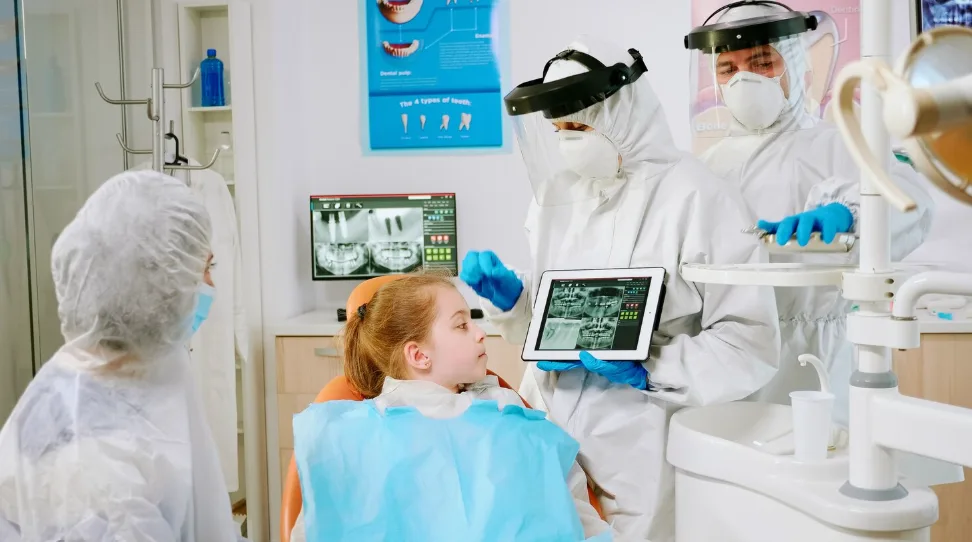
There is also the patient communication dimension. Patients who can see their X-ray with a clear, annotated overlay showing exactly where a cavity is forming, or who receive an AI-generated visual report of their periodontal bone levels, are patients who understand why treatment is being recommended. Case acceptance is consistently higher when patients can see objective, visually clear evidence of their own clinical status. AI tools that improve diagnostic visualization do not just help the dentist. They improve the patient’s engagement with their own care.
What Are the Key Functions of AI Tools in Dentistry?
Understanding what AI can and cannot do in a dental context helps practices make better decisions about where to invest. The tools on this list cover several distinct functional categories, each targeting a different part of the dental workflow.
Radiographic analysis and pathology detection is the most established AI function in dentistry. Platforms like Overjet, Pearl, and Diagnocat analyze X-rays in real time and identify findings that range from carious lesions at their earliest stages to bone loss, periapical pathology, calculus accumulation, and restoration defects. The clinical value is in the combination of speed and consistency: AI analysis takes seconds per image and applies the same detection criteria every time, providing a reliable baseline that the dentist then reviews, accepts, or overrides with their clinical judgment.
3D imaging analysis and CBCT interpretation extends AI into the most information-dense diagnostic modality in dentistry. Diagnocat and Planmeca Romexis both offer AI-assisted CBCT analysis that automatically segments anatomical structures, identifies pathologies across more than 60 conditions, and generates diagnostic reports from scan data that would otherwise require significant clinician time to work through manually. For implant planning and complex endodontic assessment, this function is transformative.
Voice-powered clinical documentation tackles the administrative burden that accumulates in every operatory visit. Bola AI and Denti AI both provide hands-free charting that captures clinical measurements and notes spoken during or immediately after a procedure and writes them directly to the patient record. This eliminates the retrospective documentation step that consistently introduces errors and consumes hygienist and assistant time that could be spent with patients.
AI-powered front-desk automation handles the patient-facing communications that generate revenue but consume staff capacity. Arini and CareStack’s VoiceStack both provide AI phone answering and appointment scheduling that operates 24 hours a day without requiring a human agent, capturing calls that would otherwise go to voicemail and converting them into booked appointments.
Insurance documentation and claims support is an area where AI creates direct financial impact. AI-generated annotations from imaging platforms provide the objective clinical evidence that insurers require to approve treatment, and they do so in a standardized format that reduces the back-and-forth of prior authorization and claim denial processes. Overjet’s annotations have been reported to speed up insurance decisions by a factor of five. VideaHealth’s ClaimsAI extends this further by automating the claims submission workflow itself.
Comprehensive practice management with embedded AI is the direction that platforms like Dentrix and CareStack represent. These are not AI tools in the narrow sense. They are complete operational environments that incorporate AI capabilities across scheduling, billing, communications, imaging, and clinical documentation, giving practices a single system that replaces the fragmented collection of tools that most offices currently manage.
Together, these functions cover the full scope of how AI is adding value in dental practices in 2026. The right combination of tools for any given practice depends on its size, patient volume, existing systems, and the specific workflow problems it needs to solve. But the direction is clear: AI is moving from a specialty add-on to a standard part of how dental practices operate, and the practices that integrate it thoughtfully will carry a meaningful clinical and commercial advantage for years to come.