


Monzo’s Growth Story: How a UK Digital Bank Is Building a Financial Super-App?
From Startup to Challenger Bank: The Rise of Monzo
When Monzo launched in 2015, UK banking was dominated by established institutions whose digital services often felt like extensions of legacy infrastructure. Monzo took a different approach, building its banking experience around a mobile app, real-time spending notifications, transparent transactions, and tools that helped customers understand where their money went.
The company received its UK banking licence in 2016 and gradually expanded from prepaid cards into full current accounts, savings, overdrafts, and business banking. Its distinctive coral-coloured cards, accessible design, and community-driven product development helped establish a recognisable consumer brand. That foundation has translated into substantial growth.
According to Monzo’s FY2026 annual report, the bank reached 15.2 million customers, generated £1.7 billion in revenue, and reported adjusted profit before tax of £172.6 million for the year ended March 31, 2026. Customer deposits increased to £25.7 billion, while monthly active users reached 10.4 million. These figures show how it has moved beyond its original identity as a challenger to traditional banks and become a major financial institution in its own right.

Beyond Digital Banking: How Monzo Built Its Business Model?
Monzo’s business model rests on a simple principle: make the everyday banking experience useful enough that customers choose to bring more of their financial lives onto the platform. Free personal and business current accounts provide the entry point, while savings accounts and Pots help users separate money for different goals, automate savings, and monitor spending. Faster Payments, salary notifications, spending insights, and card controls make the app part of customers’ daily routines. From there, Monzo generates revenue through several channels, including lending, interchange and payment activity, savings-related income, and paid subscription plans.
Its Monzo Extra, Perks, and Max tiers add benefits such as enhanced budgeting tools, selected subscriptions, insurance, and travel-related features, depending on the plan. The bank has also expanded into investments, pensions, and mortgage-related services, broadening the range of financial needs it can address. Its FY2026 report recorded 1.6 million customers with subscriptions and £1 billion in gross profit. This diversification matters because a bank that relies on a single revenue stream can be vulnerable to changes in interest rates or customer behaviour. By combining deposits, transactions, lending, and subscription income, Monzo is building a business in which deeper customer engagement can support more sustainable growth.
From Banking App to Financial Super-App: Monzo’s Expansion Strategy
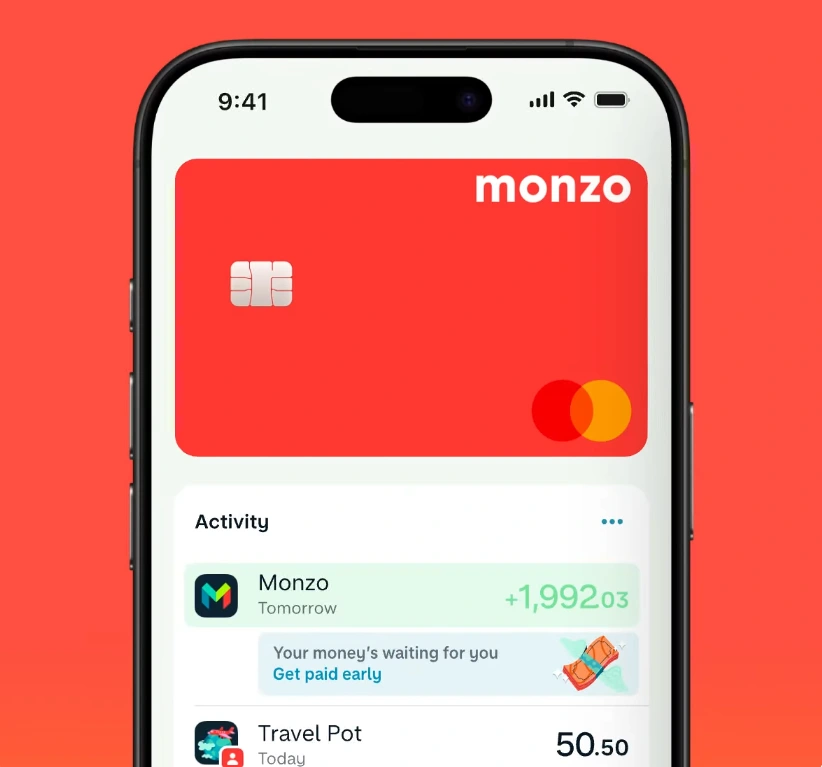
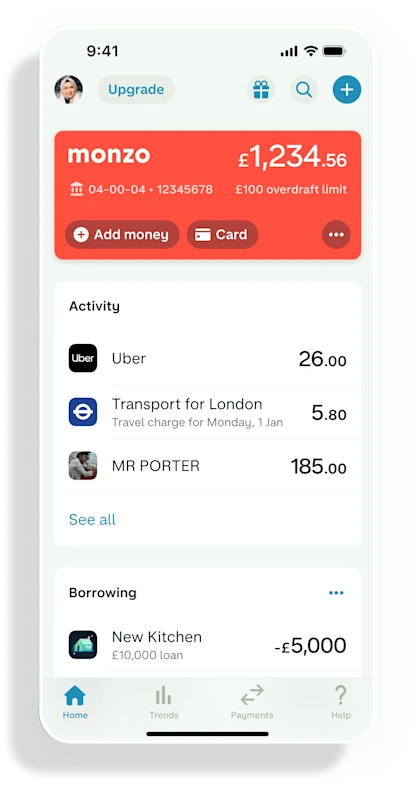
It’s next stage is about becoming the place customers turn to for more than payments and balances. Its app now connects everyday banking with savings, investments, borrowing, financial planning, and tools designed for small businesses. The company’s product strategy aims to reduce the need to move between separate providers whenever a customer wants to save, invest, manage a pension, or understand their spending. Monzo is also exploring how AI could make money management more personalized, helping customers understand their options and plan their finances while retaining safeguards around financial decisions.
Beyond the app, the company is expanding its geographic and product footprint. Its FY2026 annual report highlights the acquisition of mortgage broker Habito to strengthen its homeownership offering and the expansion into Europe through a banking licence from the Central Bank of Ireland. These moves indicate that Monzo sees room to grow both by serving more financial needs in the UK and by taking its digital banking model into new markets. The challenge is to expand without making the product feel complicated or undermining the trust that customers place in a regulated bank.
Can Monzo Become the Future of Digital Finance?
Monzo’s growth suggests that a digital bank can compete with established institutions while building a profitable business around customer experience and a wider range of services. But becoming a financial super-app requires more than adding products. Each new service introduces operational complexity, regulatory responsibilities, and the risk that customers may struggle to understand how different features fit together. Investments carry market risk, lending requires responsible underwriting, and international expansion demands local compliance and customer support. Monzo must also compete with traditional banks that are improving their own apps and fintech companies that specialise in individual financial services.
Its advantage is the relationship it already has with millions of customers and the opportunity to build new services around an existing account, transaction history, and daily habits. With 15.2 million customers and growing revenue across multiple financial categories, Monzo has established a strong base for that strategy. Whether it becomes a true financial super-app will depend on how effectively it connects these services into one coherent experience. Its long-term ambition is clear: to make money management feel less like navigating separate financial institutions and more like using one trusted platform that adapts to people’s lives.