

Indian Fintech Univest Has Added AI to Every Investment Decision
The Indian retail investor has never had more access to information, and has arguably never been more confused by it. With over 16 crore registered demat accounts as of 2025, a generational wave of first-time investors has entered the market over the past five years, drawn by the democratisation of trading platforms, the IPO boom, and the increasing visibility of equity investing in popular culture. But access to markets and access to meaningful guidance are not the same thing. Most retail investors face a specific, persistent problem: they can open a position quickly, but they cannot easily answer the questions that actually determine whether that position will work.
What is the right exit point on a stock that has fallen 20 percent? Is this a rotation moment or a hold? Should I add to a position that has been underperforming for six months? These are not questions that price charts or news feeds answer well. They are questions that require contextual analysis, applied specifically to the individual’s portfolio, at the moment the decision needs to be made. Gurgaon-based Univest was built on the conviction that solving this problem, giving retail investors the kind of contextual, actionable guidance that was previously available only to those with access to professional advisors, was the most important thing a stock market platform could do.
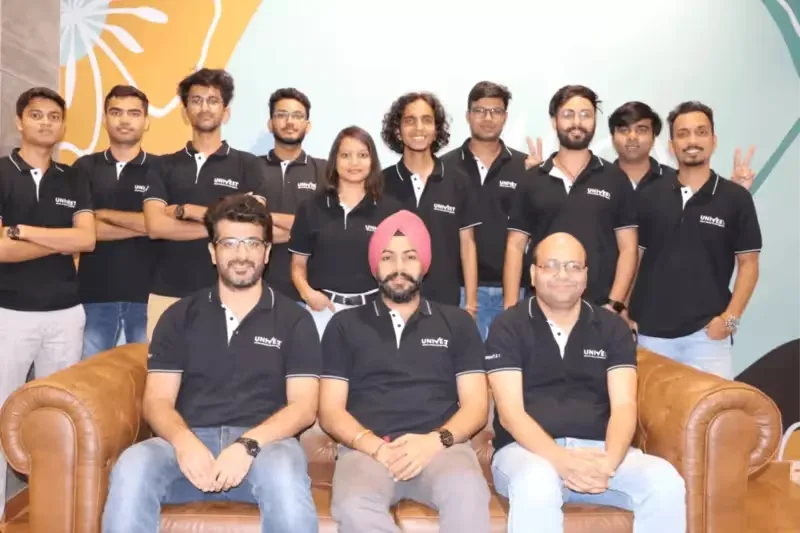
Founded and led by Co-founder and CEO Pranit Arora, Univest positions itself explicitly as an advisory-first stock market platform rather than simply a trading or brokerage application. The distinction matters. Most retail trading apps in India prioritise execution: fast order placement, low brokerage, portfolio tracking. Univest’s architecture starts from the advisory layer. Its SEBI registered Research Analysts, operating under Uniresearch Global Pvt. Ltd. with SEBI registration number INH000013776, generate actionable trade ideas across stocks, futures, options, and commodities, ideas that users can act on directly through Univest’s integrated brokerage infrastructure without leaving the platform.
The research team, led by Head of Research Yashpal Arora and carrying over 75 years of combined capital markets experience, has closed more than 2,964 trades on the platform. With over 50 lakh active users and the platform having been awarded No. 1 by Economic Times and recognised by Google’s Startup Accelerator programme in 2024, Univest has built a scale that reflects genuine product-market fit rather than merely aggressive user acquisition.
- 50L+ Active users on the Univest platform across India
- 2,964+ Trades closed by SEBI Reg. Research Analysts on Univest Pro
- 75+ Years of combined capital markets experience in the research team
- ₹99/mo Starting price for Univest Pro subscription plans

Beyond Brokers and Tools: Where Univest Fits in the Market?
The clearest way to understand Univest is to look at what it is not. It is not a discount broker optimising for execution speed and pricing, in the way platforms like Zerodha have defined the category. It is not a simplified investing interface focused on onboarding new users, as Groww has done effectively. And it is not a thematic investing layer like Smallcase, which structures portfolios but leaves decision-making largely to the user. Univest is attempting to operate at a different layer altogether, one that sits between information and action, where the real friction in retail investing actually exists.
This positioning matters because as India’s investing ecosystem matures, the bottleneck is no longer access to markets but the ability to navigate them. Execution has been commoditised. Information is abundant. What remains scarce is decision quality. Univest’s advisory-first model, now extended with an AI intelligence layer, places it in a category that is still being defined, one where platforms are judged not by how fast a trade can be executed, but by how effectively they can help users decide whether that trade should be made at all.
A Platform Built Across Every Layer of the Investment Journey
What distinguishes Univest’s product architecture from most retail platforms is its range. Most investing apps in India specialise: they are either brokers, or research providers, or screener tools, or mutual fund platforms. Univest has built all of these into a single experience, which is central to its advisory-first model. If a user receives a trade idea but must leave the platform to execute it, the friction of that transition dilutes the value of the idea. Univest’s one-click trade execution, integrated directly with the brokerage infrastructure of Univest Stock Broking Private Limited (SEBI Reg. No. INZ000317437, registered on NSE, BSE, and MCX), closes this loop. The advisory and the execution sit inside the same environment.
- Univest Pro: SEBI Reg. Research Analyst-backed trade ideas across equities, futures, options, and commodities. Four plan tiers: Pro Lite, Pro Plus, Pro Alpha, and Pro Super, each covering progressively broader instrument categories. Free 7-day trial with three unlockable ideas.
- Shark Portfolios: Real-time tracking of portfolio disclosures from India’s most closely watched institutional and individual investors, including Rakesh Jhunjhunwala and Associates, Radhakishan Damani, Mukul Agrawal, Ashish Kacholia, Government of Singapore, and Government Pension Fund Global.
- Screeners: A comprehensive suite covering top gainers and losers, 52-week highs and lows, FII and DII holding changes, fundamentally strong stocks, daily and weekly breakouts, volume shockers, golden crossovers, and oversold conditions, updated in real time.
- Mutual Funds: Direct mutual fund investing integrated within the Univest platform, allowing users to manage both equity and fund positions within a single portfolio view without switching between applications.
- IPO Access: IPO applications and tracking available directly through the platform, covering upcoming, ongoing, and recently listed issues, with research context from the Univest analyst team alongside subscription data.
- Indices and Sectors: Live tracking across major indices including Nifty 50, Nifty 500, Sensex, and sector-specific indices from Nifty IT to Nifty Energy, enabling users to orient individual stock decisions within broader market context.
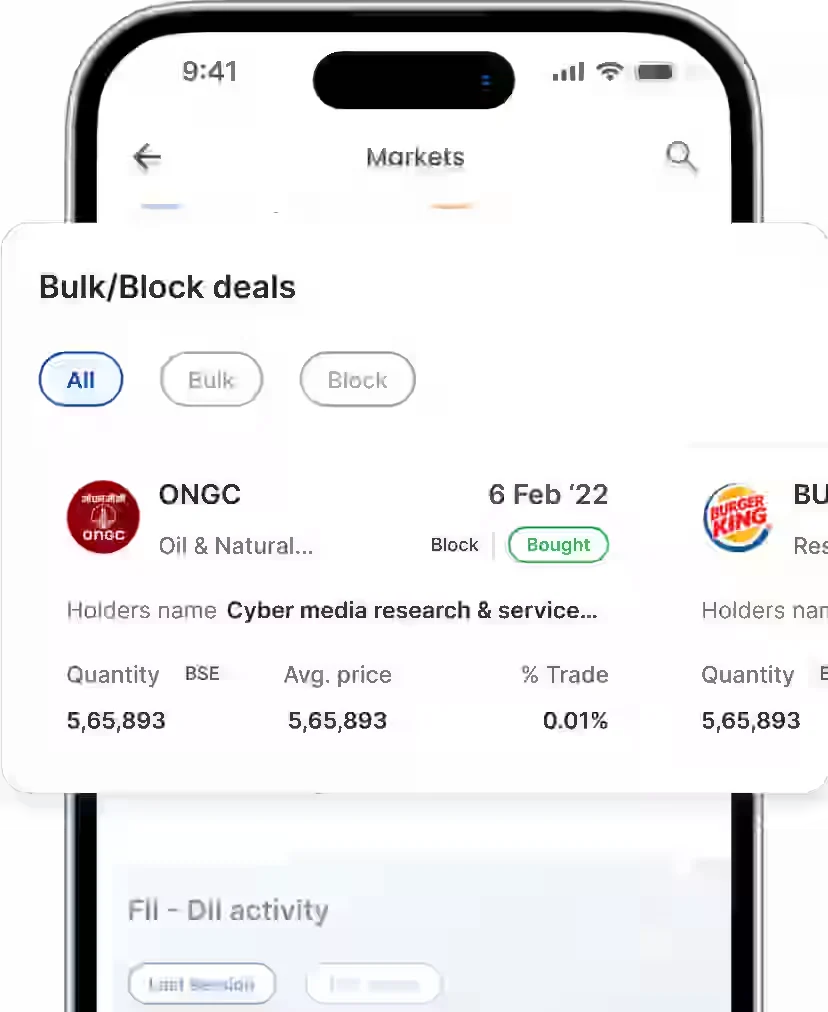
The Shark Portfolios feature deserves particular attention as a product differentiator. SEBI’s quarterly shareholding disclosure requirement means that the positions of India’s most successful investors, from Radhakishan Damani’s concentrated holdings worth over Rs. 1.26 lakh crore to Ashish Kacholia’s 49-stock portfolio worth over Rs. 2,300 crore, are public record.
The challenge for retail investors has never been access to this data; it has been the ability to track changes across dozens of portfolios in real time, understand the context of those changes, and act on them before the opportunity window closes. Univest’s Shark Portfolios aggregates, structures, and surfaces this data in an immediately usable format, turning a compliance requirement into a live intelligence feed. It is a product that could only exist on a platform that treats research as the primary value proposition rather than an add-on to an execution engine.
Univest Brain: An AI-Powered Push to Simplify Stock Market Decisions in India
The gap that Univest has always acknowledged, even as it built the research-advisory-execution stack described above, is the gap between population-level advice and individual-level clarity. A SEBI registered Research Analyst can identify a high-conviction stock idea. A screener can surface companies meeting specific technical or fundamental criteria. A Shark Portfolio tracker can show what Ashish Kacholia bought last quarter. But none of these tools can look at your specific portfolio, at this moment, and answer the question you are actually sitting with: the stock I bought at Rs. 450 is now at Rs. 320.
“While our SEBI Reg. Research Analysts provide actionable ideas on Univest, we know that investors still often have complex questions regarding their personal portfolios. Many are left searching for guidance: What is the outlook for this stock now that it is x% down? Should I rotate my holdings? Is this the right time to buy more? “ – Pranit Arora, Co-founder and CEO, Univest
Univest Brain is described by the company as an AI and advanced quantitative-powered intelligence layer, integrated directly into the Univest platform experience rather than offered as a standalone product. The architecture of this distinction matters. Most AI financial tools in the market today are general-purpose language models with some financial context added, or generic chatbots trained on public market data. They can discuss a company’s historical financials or explain what a P/E ratio means.
What they cannot do is reason about the specific intersection of a user’s portfolio position, current market conditions, and the quantitative signals that Univest’s research infrastructure already generates. Univest Brain is positioned as a tool that operates inside the Univest data environment, which means it has access to the quantitative signals, technical patterns, and research context that the platform’s SEBI registered analysts and algorithmic systems produce, applied to the specific stocks and positions the user is asking about.
Why is Context-Aware AI Structurally Different?
The distinction between Univest Brain and generic AI tools is not just about better answers, it is about where those answers are coming from. Most AI systems in finance operate on publicly available data and generalised models, which means their outputs are inherently disconnected from the user’s actual portfolio context and the proprietary signals that drive real trading decisions. Univest Brain, by contrast, is embedded within a closed system where research inputs, quantitative signals, and user portfolios intersect, allowing it to generate responses that are grounded in both market structure and individual exposure.
This raises an important question about the future of investment platforms. If intelligence layers become the primary interface through which users interact with markets, the competitive advantage will shift toward platforms that control both the data and the context in which that data is interpreted. At the same time, it introduces a new kind of dependency. As investors begin to rely more on AI-driven guidance, the line between assisted decision-making and delegated decision-making becomes less clear, and whether that shift improves long-term outcomes is a question that will only be answered over time.

The Real Problem Is Behaviour. Not Information!
What makes this problem particularly difficult is that it is not purely informational, it is behavioural. Retail investors rarely lose money because they lack access to data; they lose money because they struggle to act on that data with consistency and discipline. Fear during drawdowns, overconfidence during rallies, and hesitation at critical decision points often override even well-informed strategies. The market does not punish ignorance as much as it punishes inconsistency.
This is where systems like Univest Brain introduce a different kind of value. By responding to specific, situational questions in real time, the platform is not just providing analysis but reducing the psychological friction involved in decision-making. It acts as a stabilising layer between market volatility and user behaviour, helping investors move from reactive actions to more structured responses. In that sense, the intelligence layer is not just analytical infrastructure, it is behavioural infrastructure.
What This Means for the Indian Retail Investor?
India’s retail investing landscape in 2026 is characterised by a genuine tension. The infrastructure for market participation has never been more accessible: zero-brokerage accounts, mobile-first platforms, frictionless KYC, and the ability to buy a Nifty 50 ETF or an SME IPO from the same phone within minutes. But the quality of decision-making that retail investors apply to this access has not kept pace with the quality of access itself.
The data on F&O trading outcomes in India is sobering: SEBI’s own studies have consistently found that the vast majority of individual traders in the equity Futures and Options segment incur net losses. The problem is not a lack of ambition or a lack of market access. It is a lack of contextual, personalised, actionable guidance at the moment decisions are being made.
Univest’s product evolution, from a research-advisory platform to one that now layers AI-powered portfolio intelligence on top of SEBI-regulated research, represents a coherent response to this problem. The SEBI registered Research Analyst layer provides the regulatory credibility and the institutional research quality. The brokerage integration provides frictionless execution. The screeners and Shark Portfolios provide market intelligence and institutional positioning data. And now Univest Brain provides the personalised, question-answering intelligence layer that connects all of this to the specific situation of the individual user.
For the 50 lakh investors already on the platform, Univest Brain is an upgrade to the decision support available to them. For the much larger universe of Indian retail investors who are currently making portfolio decisions without structured guidance of any kind, it represents the most accessible version yet of the kind of contextual investment intelligence that has historically been available only to those wealthy enough to hire it.