

Designing for the Mass Investor: How Groww Simplified Investing in India?
In 2016, India had more than 400 million internet users and fewer than 20 million demat accounts. The gap between those two numbers was not a market failure. It was a design failure. The tools available to invest in India’s equity markets required a branch visit, a physical form, an agent with commission incentives that did not align with the investor’s interests, and a level of financial literacy that most working Indians had never been given the opportunity to build. The market was not inaccessible because Indians did not want to invest. It was inaccessible because every system surrounding it had been designed for professionals, not for people.
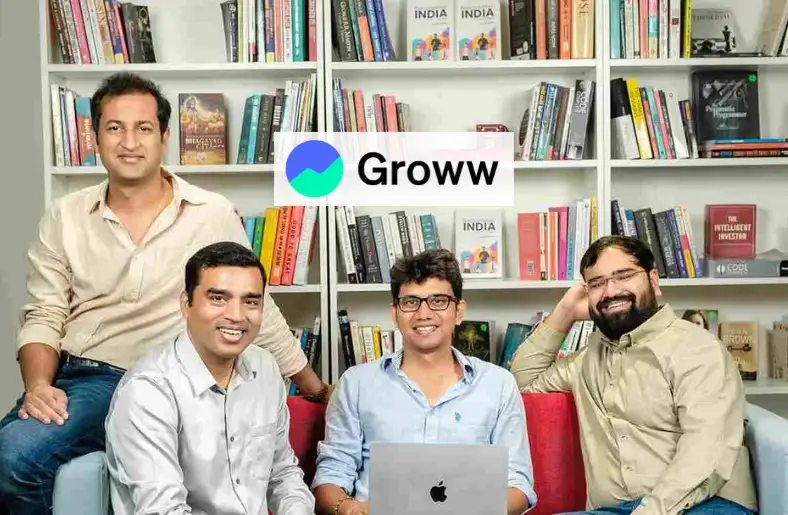
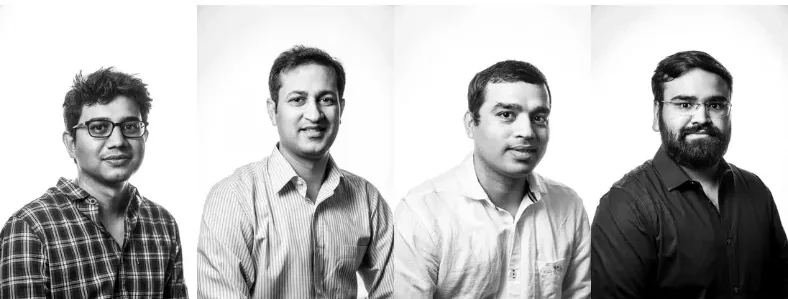
Lalit Keshre understood this problem from the inside. A senior product manager at Flipkart who had watched that company transform retail commerce by removing friction from a process that had previously required physical effort, he saw the same opportunity in financial services. In 2016, he resigned from Flipkart alongside three colleagues, Harsh Jain, Neeraj Singh, and Ishan Bansal, all engineers by training and all shaped by the same product-first instinct that had made Flipkart work.
They called the company Groww, began operations in 2017, and set out to do for investing what Flipkart had done for shopping: make it so easy that the absence of a reason not to start was the only thing standing between a first-time investor and their first investment.
The Product Philosophy That Changed Everything
The founding insight behind Groww was not a novel financial product. It was a design conviction. Every aspect of the existing investment experience, the KYC process, the fund selection interface, the account opening journey, the ongoing portfolio management view, had been built around operational requirements and regulatory compliance rather than around what a new, inexperienced, time-poor investor actually needed. Groww’s response was to start from the user and work backwards. The onboarding process was made entirely paperless, completable on a phone in under ten minutes.
Fund selection was built around plain-language descriptions of risk and return rather than technical fund metrics that required a financial background to interpret. The interface was clean, uncluttered, and deliberately stripped of the complexity that most financial apps wore as a badge of sophistication. As Keshre described it, the goal was to make finance feel like Swiggy: easy, safe, and fast.
The initial product was a direct mutual fund platform, allowing users to invest in mutual funds without a distributor or agent, which meant no commissions, no intermediary incentives, and no minimum investment sizes that locked out smaller investors. This was a genuine structural innovation for the Indian market, where the mutual fund distribution ecosystem had historically been dominated by agents earning trail commissions from regular plans.
Direct plans, which eliminated these commissions and returned the difference to the investor, existed but were difficult to access and even harder to navigate without guidance. Groww made them the default. The logic was simple: if the platform’s interests align with the investor’s, trust compounds over time. That trust became Groww’s most important growth mechanism.
- 12.6M Active clients as of June 2025 (India’s largest retail broker)
- 26%+ Market share among NSE-registered retail brokers as of mid-2025
- ₹1,824 Cr Net profit in FY2025, with 84.88% revenue CAGR from FY2023 to FY2025
- 19,004 Pin codes across India where Groww has active users, 900+ cities

From Complexity to Clarity: How Groww Transformed Investing in India?
The growth trajectory that followed Groww’s 2017 launch is best understood not as a funding story but as a product-market fit story with an unusual catalyst. The COVID-19 pandemic, which for most industries represented a crisis of demand, created an unexpected investment boom in India. Millions of working professionals, suddenly at home with time to reflect on their financial lives and with disposable income they could no longer spend on travel, dining, or entertainment, turned to the equity markets for the first time.
The economic uncertainty that the pandemic produced simultaneously underscored the inadequacy of savings accounts as a long-term wealth strategy, pushing first-time investors toward mutual funds and equities at a rate that no marketing campaign could have generated. Groww was the platform that had done the design work required to receive this wave. Its app was already in millions of hands. Its onboarding was already seamless. Its educational content was already helping users understand what an SIP was and why they should care.
The company’s response to this influx was to expand its product suite rapidly without compromising the design simplicity that had driven initial adoption. Stocks were added to the platform alongside mutual funds, allowing users who had started with SIPs to graduate to direct equity investing within the same interface they already trusted. IPO access followed, then ETFs, then Futures and Options for more experienced traders, then commodities, then fixed deposits and bonds, then digital gold.
Each addition was built with the same user-first logic as the original product: the question was not what Groww could technically offer, but what a mass-market Indian investor could actually use without feeling overwhelmed.
“We didn’t start with a flashy idea. We just wanted to solve one problem really well, make investing as simple as ordering food.” – Lalit Keshre, Co-founder and CEO, Groww
The platform’s milestones over this period tell the compounding story of that design conviction meeting a market that was ready for it.
- 2017 – Operations begin as a direct mutual fund platform. Entirely paperless onboarding. Zero commission on direct plans.
- 2019 – Series B funding round of $21.4M led by Sequoia Capital India and Ribbit Capital. Equity trading added to the platform alongside mutual funds.
- 2020 – Series C of $30M led by YC Continuity. COVID pandemic accelerates first-time investor wave across India. Groww becomes the primary beneficiary.
- 2021 – Series D of $83M led by Tiger Global values Groww at over $1 billion, making it India’s second fintech unicorn after Zerodha. Series E followed in October at $251M, valuing the company at $3 billion.
- 2023 – Groww enters asset management, launching Groww AMC. The move from distribution platform to fund house marks the company’s most significant business model expansion.
- 2025 – Series F funding of $200M at a $7 billion valuation. November IPO on NSE and BSE at Rs 100 per share, subscribed 17.6 times, listing at a 14% premium and touching a 24% intraday gain.

The Full Product Suite: What Groww Actually Offers in 2026?
Groww in 2026 is substantially more than the mutual fund platform it launched as. Its product architecture now covers every major investment category available to Indian retail investors, integrated within a single app that has maintained the UX simplicity of its original design despite the breadth of what sits beneath it.
- Stocks and Demat: Zero-cost account opening. NSE and BSE listed equities. Real-time P&L tracking. Intraday trading with one-tap execution. Stock screeners filtering by RSI, PE ratio, 52-week high/low, volume shockers, golden crossovers, and more.
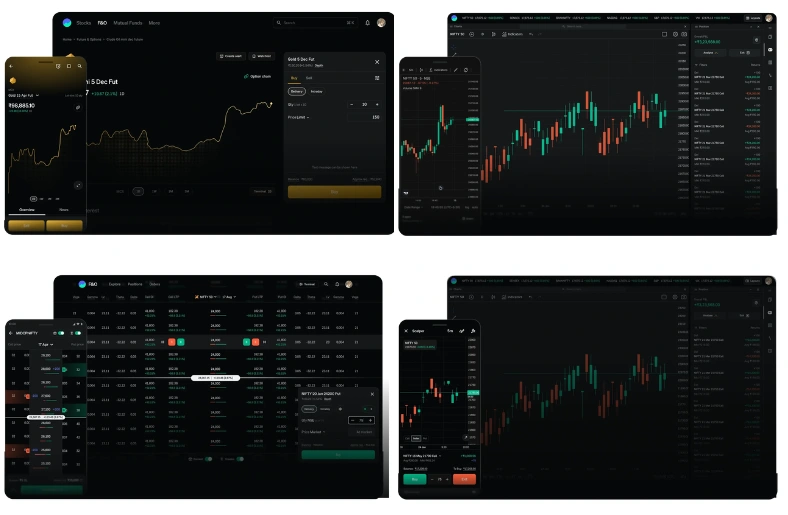
- Futures and Options: The Groww Terminal and 915 by Groww provide customisable F&O trading interfaces. Option chain analysis with payoff visualisation. Scalper mode for mobile. Commodities including crude oil, gold, silver, and natural gas on MCX.
- Mutual Funds: Direct plan investing at zero commission. SIP starting from Rs 500 monthly. Compare, track, and switch funds. Groww AMC’s own fund range including the Groww Nifty 50, ELSS, Gold ETF, and sector-specific funds. NFO tracking in real time.
- ETFs and IPOs: Full ETF marketplace across equity, debt, gold, silver, international, and index categories. IPO applications with real-time subscription tracking and GMP data. NFO access for new mutual fund launches.
- Fixed Income: Corporate bond IPOs. Fixed deposits and recurring deposits with interest rate comparisons across partner banks. Digital gold investing through gold ETFs and gold funds. A fixed income suite designed for conservative investor segments.
- Tools and Education: SIP, lumpsum, SWP, brokerage, margin, EMI, income tax, and EPF calculators. Groww Digest for curated market news. Groww Learn for financial education. FII/DII activity tracking. Sector performance dashboards.
The IPO: Groww Lists on the Markets It Helped Build
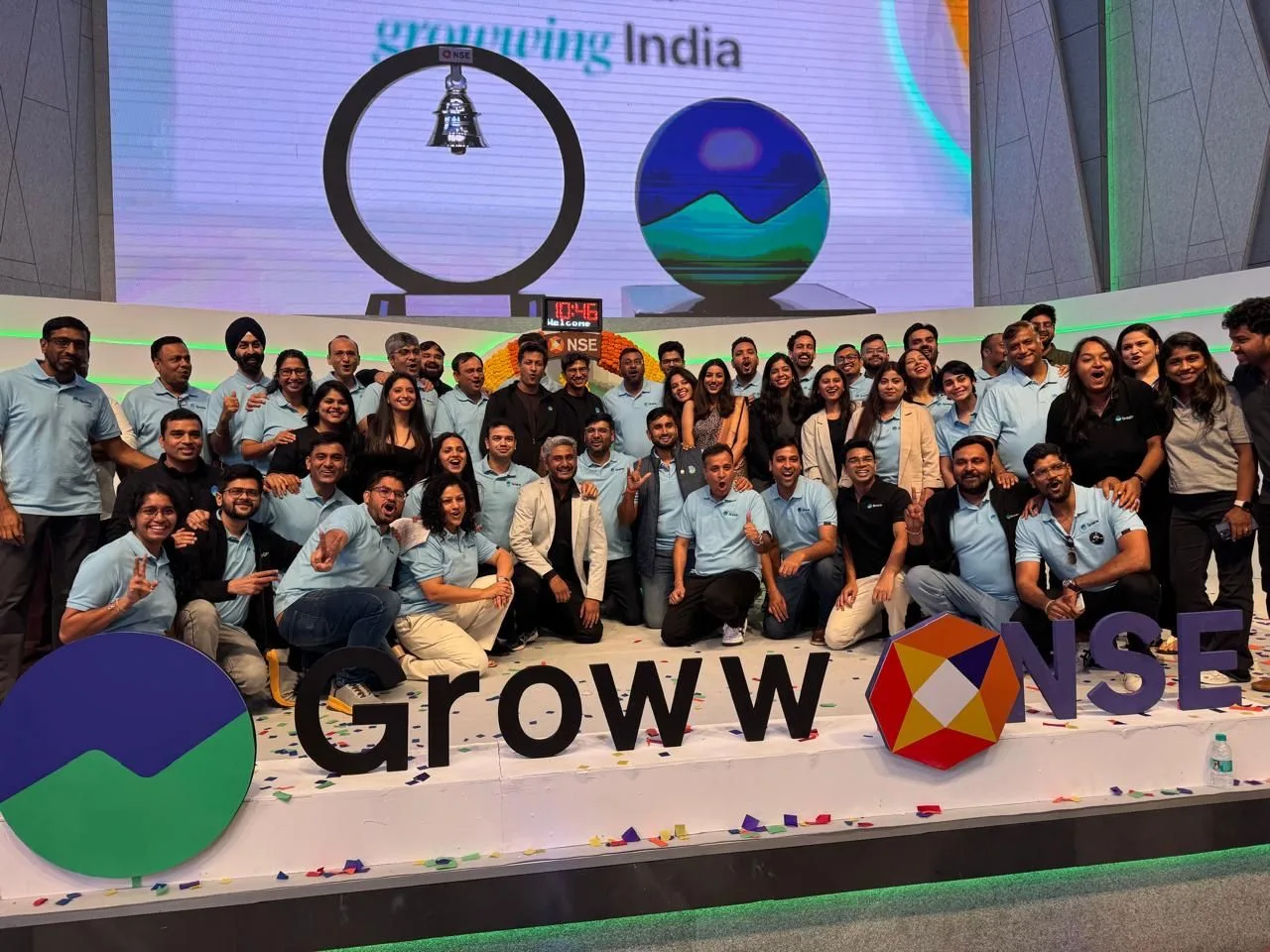
In November 2025, Groww became a listed company, completing a journey that had a quiet circularity to it: the platform that had enabled millions of Indians to participate in IPOs for the first time held its own IPO, allowing those same investors to buy shares in the company that had made investing possible for them. The IPO, priced at Rs 100 per share with a total issue size of Rs 6,632 crore, was subscribed 17.6 times overall, reflecting both the retail investor enthusiasm that Groww’s brand commands and the institutional confidence in a company that had delivered Rs 1,824 crore in net profit in FY2025 with revenue growing at a CAGR of 84.88 percent over the preceding two years.
- Listed at 14% premium on NSE and BSE. Touched 24% intraday gain.
- 17.6x IPO subscription. QIB, NII, and retail all oversubscribed.
- Rs 6,632 Cr Total IPO size. Fresh issue of Rs 1,060 Cr for cloud, brand, and NBFC capital.
- ~$12B Peak market cap in early post-listing sessions, overtaking Paytm parent.
The listing was significant for reasons beyond the financial metrics. Groww operates under its parent entity Billionbrains Garage Ventures Limited, and its stock market debut represented the first time a pure-play, mass-market retail investing platform had listed on the Indian exchanges, putting it in a position to be evaluated by the very investor community it had spent nine years cultivating. The proceeds from the fresh issue were earmarked for cloud infrastructure expansion, brand building, and strengthening the capital base of Groww Credit Services, its NBFC arm providing margin trading finance and small-ticket lending, reflecting a company that is now expanding horizontally into credit as well as vertically deepening its investing infrastructure.
Groww and the Rise of Retail Investors in India’s Fintech Boom
The number of demat accounts in India crossed 16 crore by June 2025. NSE’s active client base, which stood at approximately 5 million in March 2016 when Groww was being conceived, had grown tenfold to approximately 49 million by March 2025. Groww’s 12.6 million active clients represent 26 percent of that universe, making it not merely the largest broker in India but one of the primary engines of this expansion. The majority of Groww’s users are under 40 years old. Research consistently indicates that 80 percent of its users are first-time investors. It has active users across 19,004 pin codes, reaching into Tier 2, Tier 3, and rural India in ways that the traditional branch-based investing infrastructure never approached.
This geographic and demographic reach is not accidental. It is the direct output of a design philosophy that treated the first-time investor in a small city, who had never spoken to a financial advisor and had no prior context for what a mutual fund was, as the primary user rather than an edge case. Vernacular language support, a financial education library built around simple explanations rather than technical definitions, and an onboarding flow that removed every unnecessary step were not features added after launch. They were the founding product logic.
Groww has also entered asset management directly, with Groww AMC now offering its own family of funds spanning large cap, value, ELSS, arbitrage, overnight, liquid, dynamic bond, short duration, and multiple index and thematic ETF strategies. The move from distribution platform to fund manufacturer is the most strategically significant expansion in the company’s history, because it allows Groww to capture a portion of the AUM economics that previously flowed exclusively to established AMCs. It also deepens the platform’s integration with the investor’s long-term wealth journey: a user who begins with a Groww-distributed SIP in a third-party fund can eventually migrate to a Groww-managed fund without leaving the ecosystem.
The nine-year arc from four engineers resigning from Flipkart with a conviction that investing should be as easy as ordering food, to India’s largest retail brokerage with 12.6 million active clients, Rs 1,824 crore in annual profit, and a public listing that valued the company at $12 billion at its peak, is a story about what happens when a product team takes the hardest user experience problem in a large market and refuses to accept that complexity is inevitable. India’s retail investing revolution did not happen because markets became more accessible. It happened because Groww made the front door wide enough for everyone to walk through.