


Bedrock Robotics Is Teaching AI to Build
From Self-Driving Cars to Autonomous Construction
For years, the biggest ambition in autonomous vehicles has been teaching machines to understand and navigate public roads. Bedrock Robotics is taking many of the same technological principles and applying them to an environment that may be even less predictable: the construction site. Founded in 2024 by Boris Sofman, Kevin Peterson, Tom Eliaz, and Ajay Gummalla, the San Francisco-based company brings together experience from robotics and autonomous driving, including work at Waymo, to address one of construction’s most persistent problems: the shortage of skilled equipment operators.
Sofman previously co-founded Anki Robotics, while Peterson, Gummalla, and the wider founding team bring experience developing autonomy for complex real-world environments. The company’s premise is straightforward. Construction needs to move faster as demand grows for housing, energy infrastructure, factories, and data centers, but the industry’s workforce is not expanding at the same pace. Instead of designing an entirely new fleet of autonomous machines, Bedrock is developing technology that can upgrade existing heavy equipment.
Its system is designed to give machines the perception, planning, and control capabilities required to operate around changing terrain, obstacles, trenches, people, and other equipment. That makes construction an interesting next step for autonomy. A road vehicle largely follows an established network of lanes and traffic rules, while an excavator must actively reshape an environment that changes every time it moves. Bedrock’s technology is therefore being built around what the company calls “Physical AI for Builders,” combining environmental understanding, machine learning, safety systems, operational precision, and real-time intelligence.
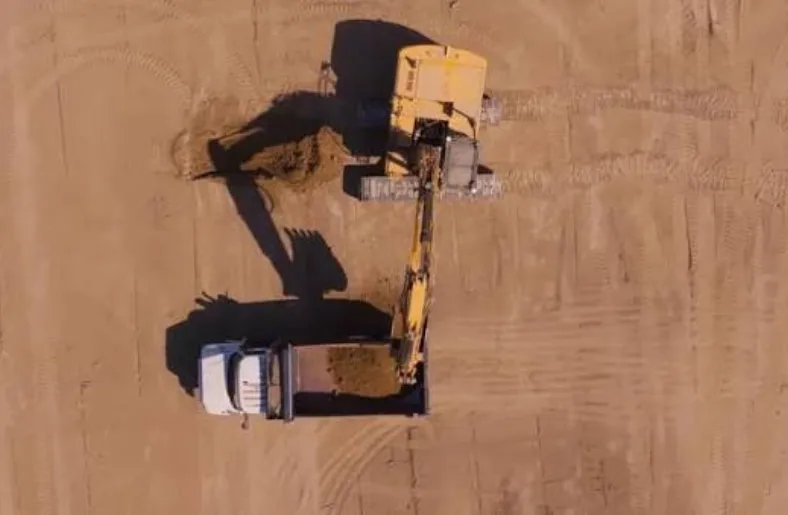
Thanks to Bedrock Robotics, the Robots Are Coming for the Construction Site
Bedrock’s immediate focus is heavy equipment, particularly excavators, where autonomy can take over repetitive but highly demanding earthmoving tasks while allowing skilled workers to supervise broader operations. The company’s flagship Bedrock Operator is designed as a retrofit system, meaning contractors can bring autonomy to equipment they already own rather than replacing entire fleets with purpose-built robots. Sensors and onboard computing allow the machines to perceive their surroundings and understand where they are operating, while Bedrock’s machine-learning systems help translate construction plans into physical actions.
The technology is designed to recognize and navigate features such as hills, trenches, boulders, and other obstacles, while maintaining the precision required to execute earthwork according to a project’s plan. Bedrock also emphasizes that the system becomes more capable through experience, with the company saying its models are trained on tens of thousands of hours of field data and projects across the country.
The resulting proposition goes beyond simply making an excavator drive itself. Bedrock wants autonomous equipment to become part of a larger construction workflow, eventually allowing machines to coordinate around shared objectives. An excavator could clear a trench, a haul truck could remove material, and a dozer could subsequently backfill the area, with autonomous systems coordinating the sequence.
That system-level approach is one reason the company sees autonomy as a force multiplier for construction rather than merely a labor-replacement technology. The company has already demonstrated its systems on commercial projects, and in 2026 announced fully autonomous excavators operating on construction sites in partnership with Sundt Construction, Champion Site Prep, and Zachry Construction.
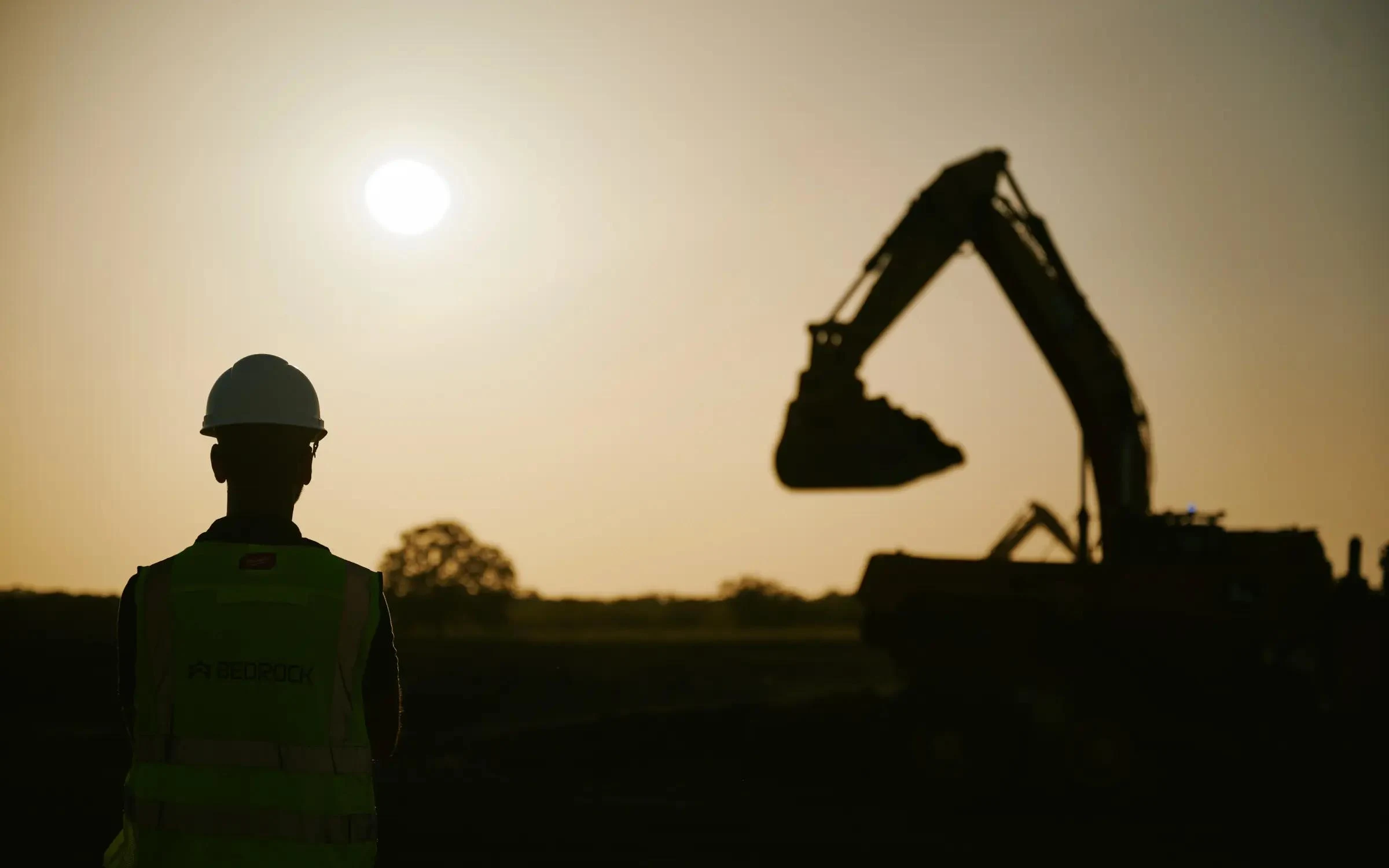
From Waymo to Excavators: The Race to Automate the Physical World
Bedrock’s rise reflects a much larger shift taking place across robotics and artificial intelligence. After years of investment in autonomous driving, the technology industry is increasingly looking beyond roads toward mines, warehouses, farms, factories, defense systems, and construction sites. The underlying attraction is similar across these industries: physical work generates enormous economic value, yet many environments remain difficult to automate because machines must perceive unpredictable surroundings and make decisions safely in real time.
Construction may be particularly compelling because the machines involved are already highly capable. An excavator does not need a new mechanical body to become autonomous; it needs an intelligent control layer that can understand its environment and operate its existing hydraulic and mechanical systems. That is the opportunity Bedrock is pursuing.
In February 2026, the Bedrock Robotics raised $270 million in Series B funding at a $1.75 billion valuation, bringing total funding to more than $350 million. The round was co-led by CapitalG and the Valor Atreides AI Fund, with participation from existing and new investors including 8VC, Eclipse, Xora, and NVentures, NVIDIA’s venture capital arm. The size of the round is significant because it signals that investors increasingly view construction autonomy as part of the broader physical-AI opportunity rather than a niche construction technology.
Bedrock’s longer-term ambition is considerably larger than autonomous excavators. The company envisions fleets of machines working together, with autonomy becoming an infrastructure layer for construction sites. If that vision succeeds, the construction site of the future could look less like a collection of individually operated machines and more like a coordinated robotic system, with humans overseeing increasingly autonomous fleets. The question is no longer whether AI can understand a road. Bedrock is betting that it can learn how to reshape the world around it.