


London-Based Jack & Jill AI Is Making Hiring Candidates and Finding Jobs Smoother
What Is Jack & Jill AI?
Recruitment has traditionally worked like a marketplace where both sides are expected to do most of the searching themselves. Candidates browse thousands of job listings, tailor applications, and wait for responses, while recruiters sift through CVs, LinkedIn profiles, inbound applications, and sourcing databases. Jack & Jill AI is trying to replace that model with two AI agents working on opposite sides of the market.
Founded in London in March 2025 by CEO Matthew Wilson and CTO Saaras Mehan, the company has built Jack, an AI career agent for professionals, and Jill, an AI recruiting agent for companies. Jack learns about a candidate’s experience, skills, ambitions, preferences, and the kind of opportunity they would consider. Jill does something similar from the employer side, learning what companies actually need beyond the requirements written in a conventional job description.
When the two systems identify a strong match, they can facilitate a direct introduction between the candidate and the relevant decision-maker. The company says its platform had grown to more than 380,000 professionals and over 5,000 companies by September 2026, positioning it as an emerging alternative to traditional job marketplaces.
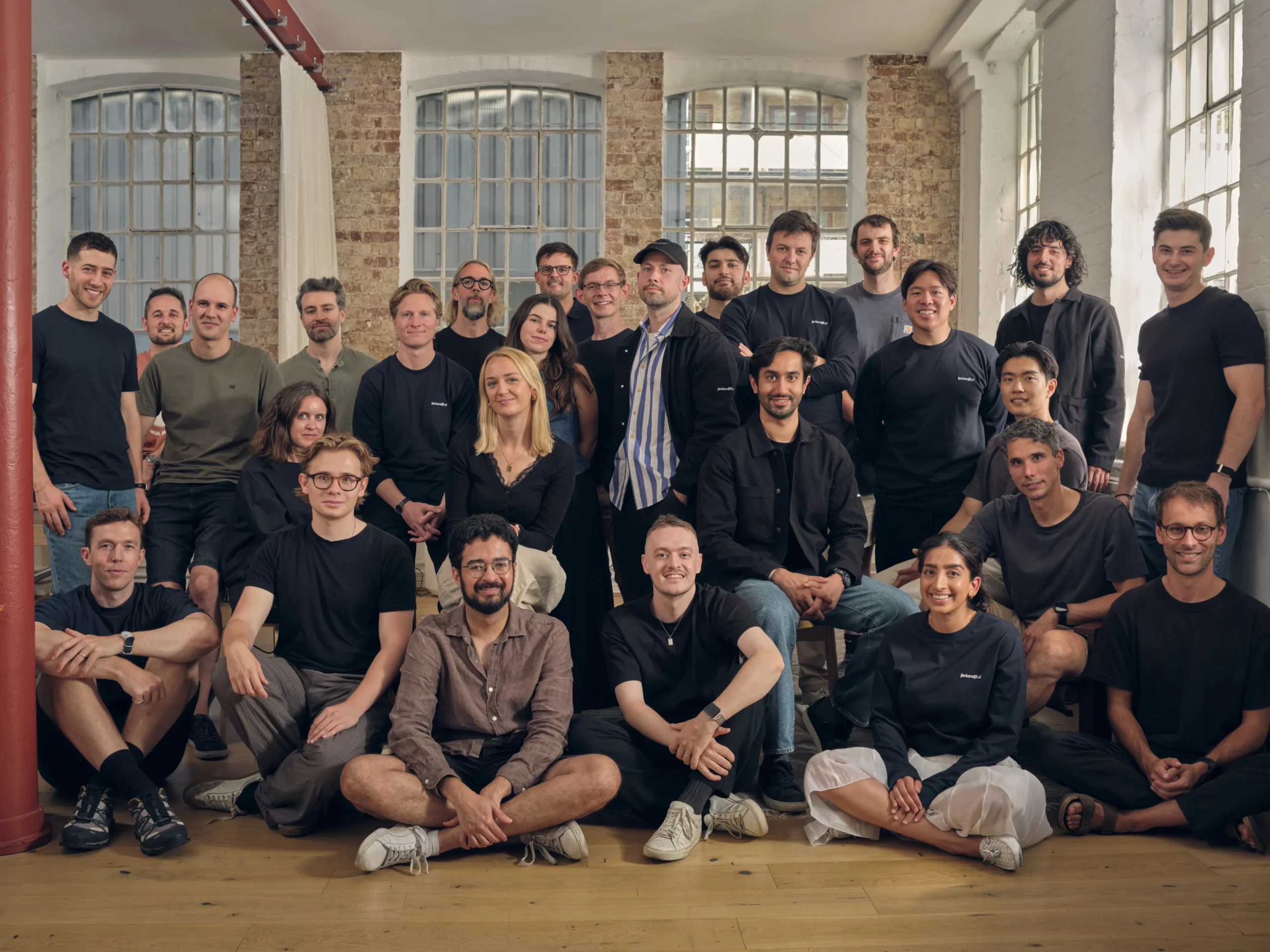
Jack: The AI Career Agent That Has Helped 385,000+ Professionals
Jack is designed to work as an always-on career agent rather than a conventional job-search website. Instead of asking candidates to repeatedly search for vacancies and submit applications, Jack builds an understanding of what a person wants from their next career move and identifies opportunities that match their profile.
The distinction is important because many potential candidates are not actively looking for jobs at any given moment. Someone may be interested in moving companies, changing roles, increasing their compensation, or exploring a different industry without spending hours searching job boards. Jack is designed to remain connected to those preferences and surface relevant opportunities when they appear.
The company says more than 385,000 professionals have already used Jack, while its platform has reviewed more than 11 million potential job matches. Jack is free for candidates, with Jack & Jill instead charging companies when a successful hire is made. That creates an incentive for the platform to focus on the quality of the match rather than simply maximising the number of applications generated.
Jill: The AI Hiring Agent That Has Worked With 5,350+ Companies
On the other side of the marketplace is Jill, an AI recruiting agent designed to help companies identify relevant candidates without relying entirely on traditional sourcing and screening workflows. Jill can understand a company’s hiring requirements and search for professionals whose experience and career preferences make them potentially suitable, even when those candidates are not actively applying for the position. This changes the economics of recruitment because companies no longer have to wait for candidates to discover their job advertisements.
Instead, the platform can proactively identify people who may be interested and create an introduction when the match is strong. Jack & Jill says Jill has worked with more than 5,350 companies, while the platform has facilitated more than 25,000 interviews and is now facilitating roughly 5,000 interviews a month. The two-agent architecture is what makes the model particularly interesting: Jack has context about the candidate that a traditional CV may not capture, while Jill has context about the employer that may never appear in a job description. When those two pools of information are connected, recruitment becomes a matching problem rather than a mass-application problem.

Will AI Agents Make LinkedIn, Indeed and Naukri Obsolete?
Jack & Jill’s ambition raises a bigger question about the future of recruitment platforms. LinkedIn, Indeed, Naukri and other established marketplaces have built enormous networks by helping candidates find jobs and employers find candidates, but their fundamental model still depends heavily on users searching, browsing, applying, posting, and responding. AI agents could change that behaviour by becoming the interface between people and opportunities.
Instead of a candidate opening a job board every morning, an agent could continuously evaluate opportunities against their preferences. Instead of a recruiter waiting for applications, an agent could continuously identify suitable people and establish contact. Jack & Jill’s $20 million seed round in 2025, followed by a $40 million Series A led by Air Street Capital in September 2026, shows that investors see significant potential in this approach. The challenge, however, will be scale, trust, accuracy, and maintaining a high-quality marketplace as the number of candidates and companies grows.
If Jack and Jill can consistently produce better matches while reducing the friction of recruitment, the company may not need to make LinkedIn or traditional job boards obsolete. It could instead make the act of manually searching them feel obsolete.