


Velocity Wants to Turn Stablecoins Into Corporate Financial Infrastructure
The Problem: Why Corporate Money Still Moves Slowly
For all the sophistication of modern commerce, the infrastructure moving money between businesses remains surprisingly fragmented. A company operating across several countries may have to manage multiple bank accounts, currencies, payment providers, liquidity pools, foreign exchange relationships, and settlement schedules, with money frequently moving through systems that were designed around banking hours and geographic boundaries. Cross-border settlement can introduce delays, FX costs, prefunding requirements, and trapped liquidity, forcing finance teams to keep capital positioned in advance simply because they cannot be certain when the next payment will settle.
Velocity was founded around the idea that stablecoins can address some of these structural problems without requiring businesses to abandon traditional finance. Founded in 2025 by Eric Queathem, the company is building an enterprise-first platform that connects stablecoin networks with the banking and financial infrastructure companies already depend on. Its argument is not that every corporate treasury should suddenly become a crypto operation. Instead, stablecoins can operate underneath the existing financial experience, allowing capital to move continuously while the complexity of blockchain infrastructure remains largely invisible to the end user.
Velocity’s platform is designed to let companies hold, move, and settle funds across banks, blockchains, and borders through a unified financial layer. That matters because the potential advantage of stablecoins is not simply that a transaction can happen on a blockchain. It is that money can become programmable, available around the clock, and capable of moving across financial networks without being constrained by the same operating schedules as conventional banking rails.

Velocity’s Solution: How Stablecoins Could Rewire Corporate Finance
Velocity is turning that thesis into three interconnected parts of its platform: payments, settlement, and treasury. For payment companies, its infrastructure can support real-time settlement and help move funds between card networks, processors, banks, and blockchain-based rails. For global businesses, Velocity provides tools for moving fiat and stablecoins internationally, managing liquidity, reducing FX friction, and avoiding the need to pre-fund accounts simply to ensure that money is available when a transaction arrives.
For treasury teams, the platform brings fiat and stablecoin balances into a unified operating environment and connects with existing treasury-management and enterprise-resource-planning systems. Velocity also offers programmable regulated wallets, institutional custody, liquidity access, and automated best-execution routing, positioning stablecoins as one component of a broader financial infrastructure rather than a standalone crypto product.
The company’s approach is particularly focused on making stablecoin infrastructure compatible with existing financial operations. Businesses can continue interacting with familiar banking and treasury systems while Velocity handles the underlying movement between fiat accounts, stablecoins, banks, FX providers, and digital-asset networks. The potential result is a financial system where settlement can continue on weekends and outside traditional banking cutoffs, while companies gain greater control over where capital sits and when it moves. That proposition is attracting significant backing.
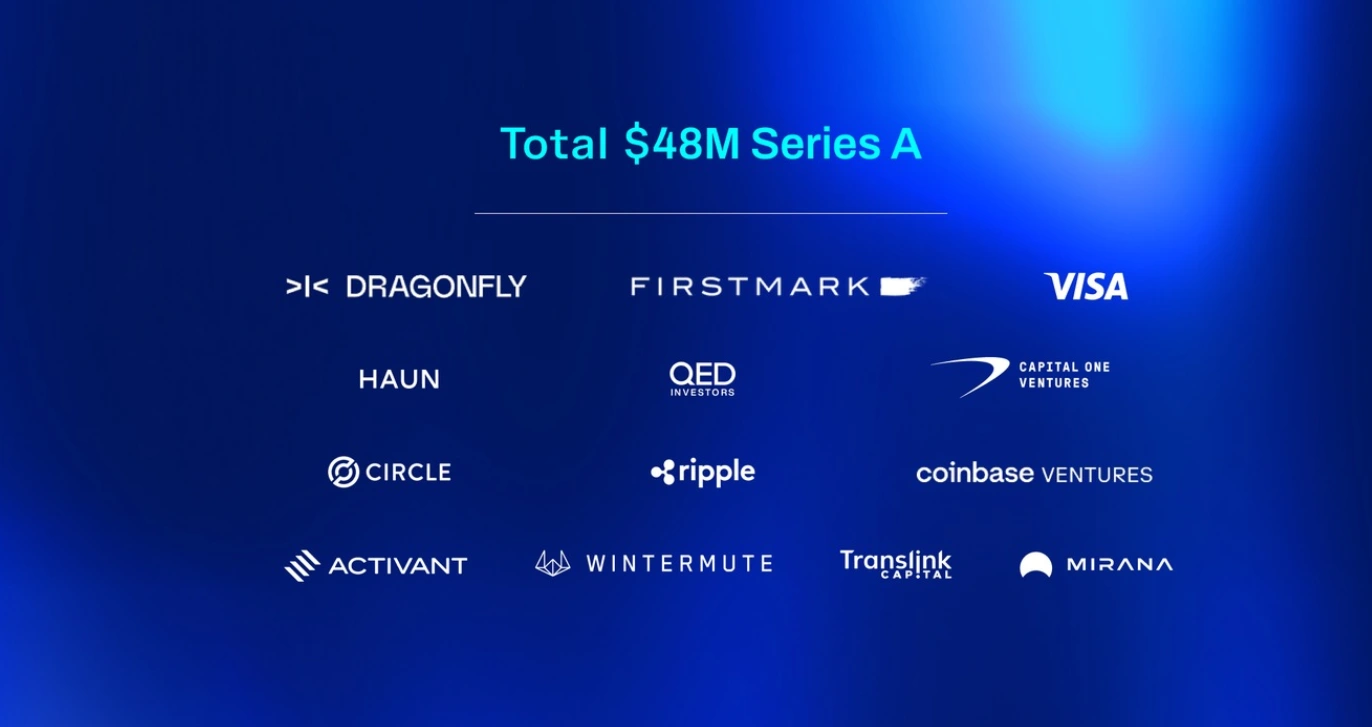
In July 2026, Velocity raised a $38 million Series A led by Dragonfly and FirstMark, with participation from Activant Capital, Capital One Ventures, QED Investors, Coinbase Ventures, Ripple, and Wintermute Ventures. In September, the company added another $10 million through a Series A extension backed by Visa Ventures, Circle Ventures, Ripple, Haun Ventures, Translink Capital, and Mirana Ventures, taking total Series A funding to $48 million.
The Bigger Bet: Can Stablecoins Become Invisible Financial Infrastructure?
Velocity’s most ambitious idea is that stablecoins will eventually become something businesses use without necessarily thinking about using them. The company is targeting issuers, acquirers, payment providers, financial institutions, and merchants, essentially placing itself between traditional finance and the emerging stablecoin economy. That positioning is important because enterprise adoption is unlikely to depend entirely on companies becoming comfortable with crypto wallets, blockchains, or token management. Instead, the infrastructure has to disappear behind familiar financial workflows.
A CFO should be able to manage liquidity, approve payments, monitor balances, and reconcile transactions without needing to understand which blockchain ultimately processed a movement of funds. Velocity is therefore betting on convergence rather than replacement, connecting regulated stablecoins with banks, payment networks, and existing treasury infrastructure. Its latest investors reinforce that direction. Visa brings one of the world’s largest payment networks, Circle brings deep expertise in regulated stablecoins, while Ripple and Haun Ventures add experience across institutional digital-asset infrastructure. The opportunity is substantial, but so are the challenges.
Enterprise financial infrastructure has demanding requirements around compliance, custody, liquidity, reliability, and regulatory coverage, particularly when money crosses jurisdictions. Velocity says its architecture is built around regulated partners, institutional custody, transaction monitoring, secure key management, and banking connectivity, with the platform targeting 99.999% uptime.
If stablecoins eventually become a standard mechanism for moving corporate capital, the winners may not necessarily be the companies issuing the tokens. They could be the infrastructure providers that make those tokens work seamlessly with everything that already exists. That is the space Velocity is trying to occupy. Its long-term ambition is to make global money movement feel less like a chain of separate banking processes and more like a continuous financial network, with stablecoins quietly powering the infrastructure underneath.