

Matsya 6000: India’s Ambitious Mission to Explore the Deep Ocean
What Is Matsya 6000 and Who Is Developing It?
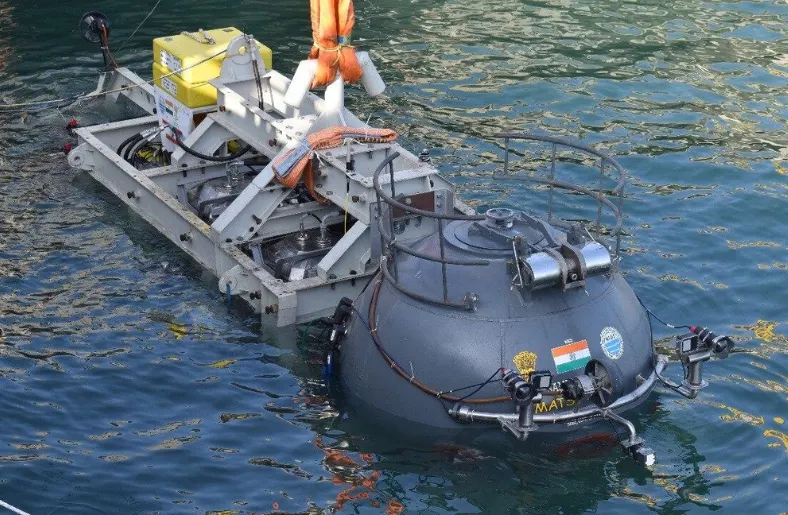
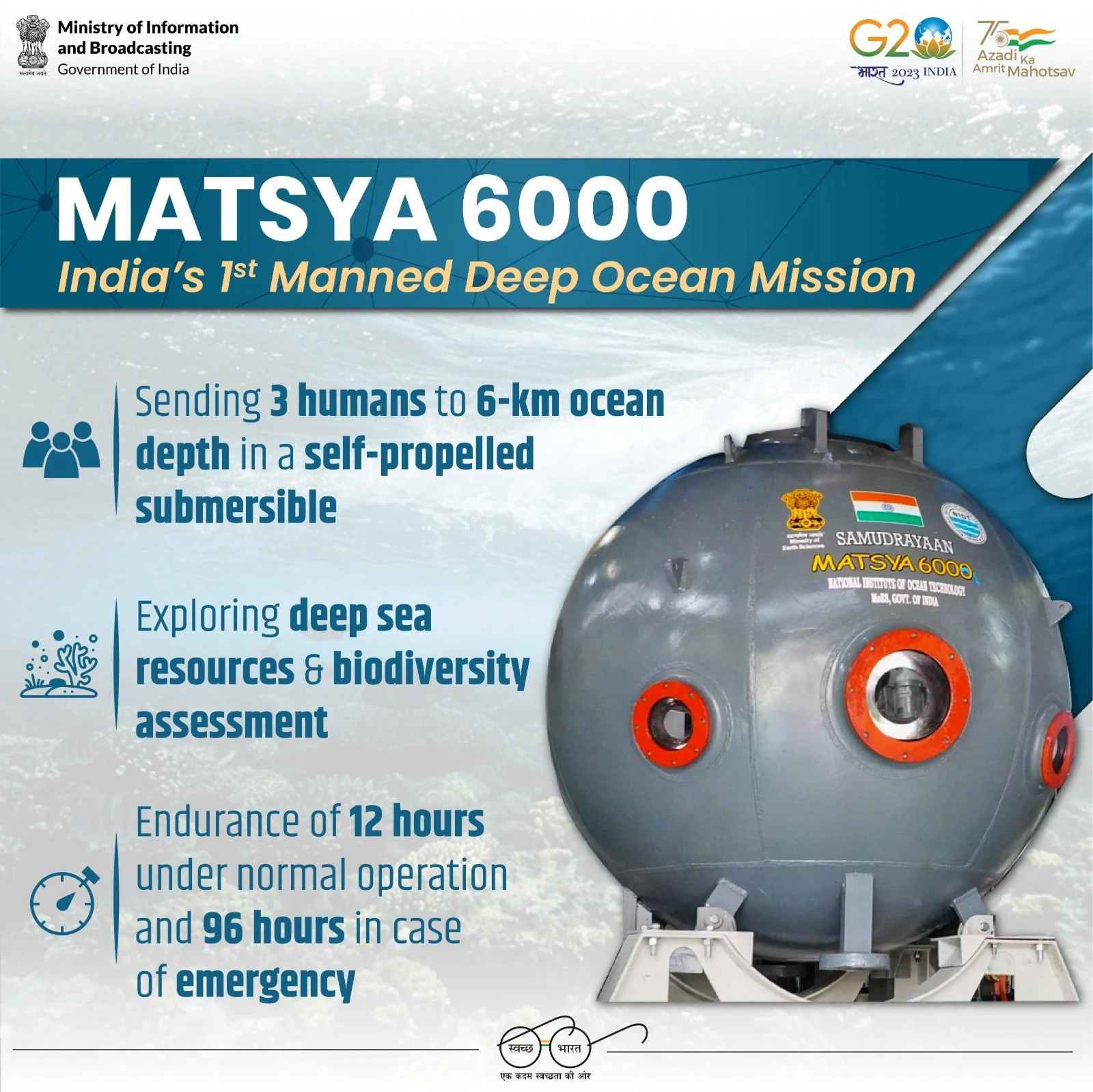
India is preparing to take its scientific exploration beneath the ocean surface with Matsya 6000, an indigenously developed human-occupied submersible designed to carry three people to a depth of 6,000 metres. Developed under the Samudrayaan project, Matsya 6000 is a key component of the Government of India’s Deep Ocean Mission, launched in 2021 under the Ministry of Earth Sciences. The mission aims to develop deep-sea technologies, study ocean resources and strengthen India’s capabilities in marine research.
The National Institute of Ocean Technology (NIOT), Chennai, is responsible for developing Matsya 6000. The project involves collaboration with the Vikram Sarabhai Space Centre (VSSC) of the Indian Space Research Organisation (ISRO), along with other Indian research and industrial partners. This collaboration brings together expertise in ocean technology, advanced materials, welding, navigation, communication and underwater engineering.
The Technology Behind India’s 6,000-Metre Deep-Sea Submersible
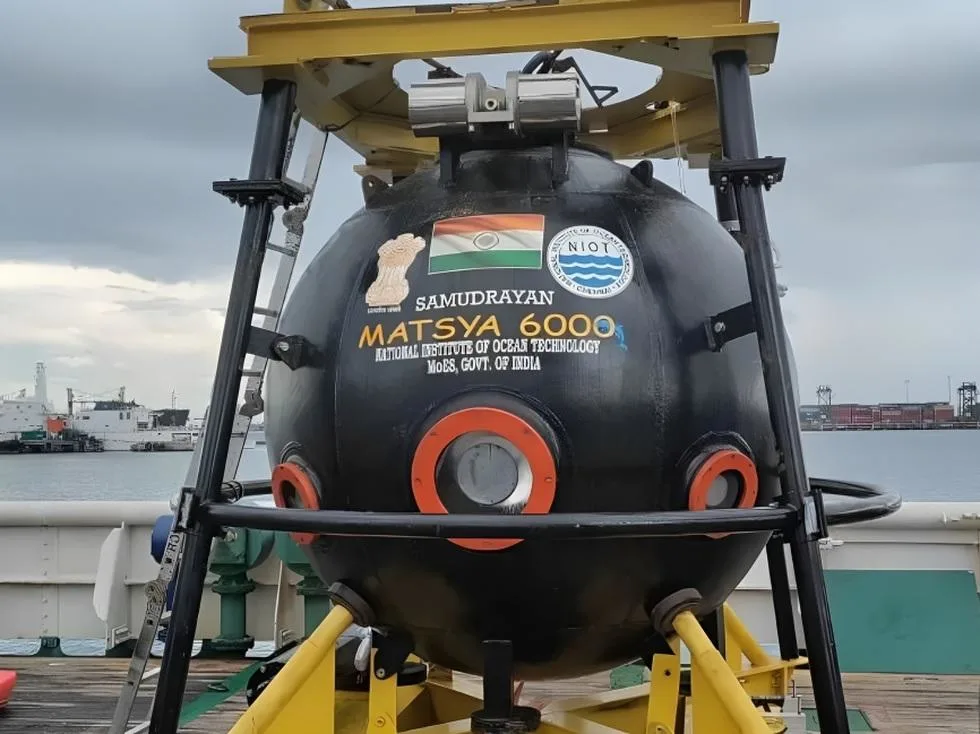
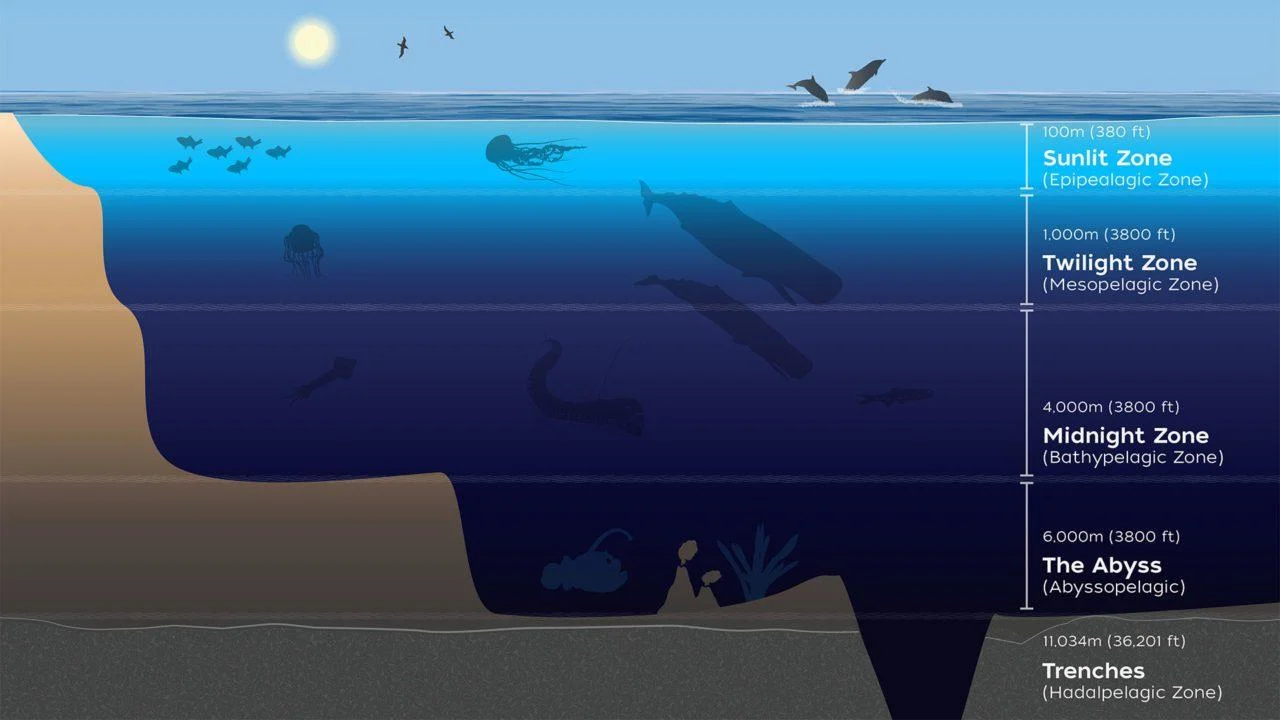
One of the most technically demanding components is the personnel sphere that houses the three-member crew. Designed by VSSC, the sphere measures approximately 2,260 millimetres in diameter and has an 80-millimetre-thick wall. It is manufactured using Ti6Al4V ELI-grade titanium alloy and is designed to withstand external pressure of up to 600 bar. At a depth of 6,000 metres, water pressure is approximately 600 times the atmospheric pressure at sea level. Maintaining normal atmospheric pressure inside the sphere is essential for the crew’s survival.
Manufacturing this structure required specialised engineering. ISRO’s Liquid Propulsion Systems Centre contributed to the development of a high-penetration electron beam welding process for joining the thick titanium sections. The structure also requires advanced non-destructive inspection to establish the integrity of its welded joints. Other technologies incorporated into Matsya 6000 include underwater acoustic communication, navigation systems, a high-density lithium-polymer battery, emergency ballast mechanisms and a human support and safety system. The vehicle is designed for an operational endurance of up to 12 hours, with emergency life-support provisions for up to 96 hours.
Matsya 6000: Development, Testing and Current Status
Testing has already begun. Matsya 6000 successfully completed wet and harbour trials at Larsen & Toubro’s shipbuilding facility in Kattupalli, near Chennai, during January and February 2025. These trials evaluated flotation, stability, manoeuvrability, propulsion, power, communication, control systems and crew safety arrangements. The Ministry of Earth Sciences reported in March 2026 that the vehicle’s design and system engineering had been completed. However, its 500-metre shallow-water dive was awaiting the integration of specially developed syntactic foam, which had encountered manufacturing defects. The ministry expected the material to arrive in India by the end of May 2026, with the dive scheduled for the last quarter of the year. A completed dive has not been established by the cited official update.
India’s Deep Ocean Mission and International Collaboration
India has also gained practical experience in deep-ocean human exploration through international cooperation. In August 2025, NIOT scientists participated in scientific expeditions aboard Nautile, a French deep-sea submersible developed by IFREMER. The Indian team gained operational experience at depths of up to 5,000 metres in the Atlantic Ocean. These expeditions provided experience relevant to the development and future operation of Matsya 6000.
Polymetallic Nodules: Nickel, Cobalt, Copper and Manganese
The mission has significant implications for India’s critical mineral exploration. The Central Indian Ocean Basin contains polymetallic nodules, potato-sized mineral deposits found on the seabed. These nodules contain manganese, nickel, copper and cobalt, metals used in batteries, electrical equipment, steel production and several industrial applications. According to a Ministry of Earth Sciences parliamentary reply in December 2025, an area of 75,000 square kilometres allocated to India by the International Seabed Authority has an estimated 366 million metric tonnes of polymetallic nodules. Their average composition includes 25.2 per cent manganese, 1.14 per cent nickel, 1.09 per cent copper and 0.14 per cent cobalt.
India’s Deep-Sea Mining Technology and Exploration
Matsya 6000 will support scientific observation and exploration of deep-sea resources. Mineral collection, however, requires a separate technology. NIOT has developed a robotic seabed mining system designed to collect and crush polymetallic nodules at depths of up to 5,500 metres. Its mobility and power systems were tested at 5,270 metres in the Central Indian Ocean in 2021. In 2024, more than 100 kilograms of cobalt-rich polymetallic nodules were collected from a depth of 1,173 metres in the Andaman Sea. Commercial deep-sea mining remains subject to international regulation, and the International Seabed Authority’s exploitation rules had not yet been finalised in the Ministry’s March 2026 statement.
₹4,077 Crore Investment in India’s Deep Ocean Mission
The Deep Ocean Mission has an approved financial outlay of ₹4,077 crore for five years. This funding covers six areas: deep-sea mining and human submersibles, ocean climate services, deep-sea biodiversity, ocean surveys and exploration, energy and freshwater from the ocean, and an advanced marine biology research station. The amount represents the overall mission budget, rather than the individual cost of Matsya 6000.
The Scientific and Strategic Importance of Matsya 6000
The mission also includes research on marine biodiversity and ocean conditions. Government-reported work includes the isolation of deep-sea microbes, surveys of seamounts and the identification of marine species. Other institutions, including the Indian National Centre for Ocean Information Services and the Centre for Marine Living Resources and Ecology, contribute to ocean observation and biological research.
Matsya 6000 represents a major engineering effort involving India’s ocean research institutions, space scientists, specialised manufacturers and industrial partners. Its successful completion and qualification for deep-sea operations will provide Indian scientists with a human-occupied vehicle capable of conducting research at depths of up to six kilometres. Alongside robotic exploration and mineral surveys, the project forms part of India’s long-term effort to build indigenous capabilities in deep-ocean science and technology.