

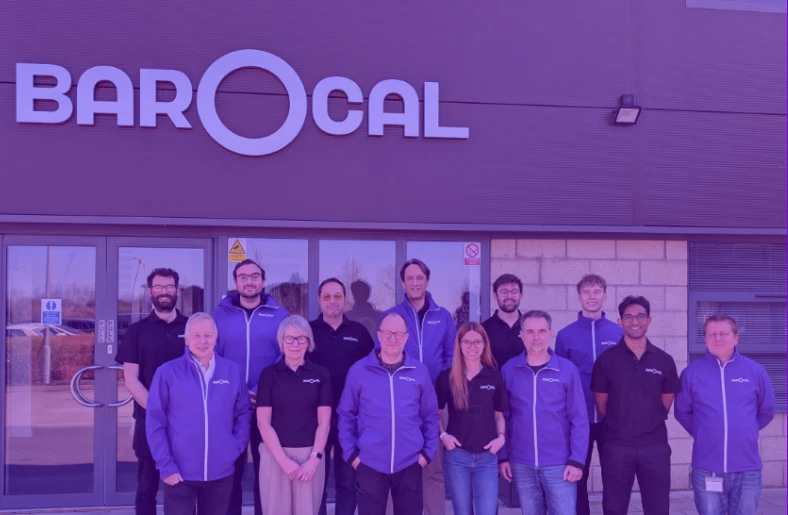
How Cambridge-Based Barocal Is Using a Solid Material to Reinvent Cooling From the Ground Up?
Cooling is one of the most consequential and least visible energy problems in the world. Refrigeration, air conditioning, data centre thermal management, and industrial process cooling collectively account for approximately 40 percent of global energy consumption. The technology at the heart of almost all of it, the vapour-compression cycle running on fluorinated refrigerant gases, has been the industry standard for over a century. It works. It also has two problems that are becoming increasingly unacceptable: the refrigerant gases it depends on have Global Warming Potentials hundreds to thousands of times greater than CO₂ when they leak, and the thermodynamic efficiency of the cycle is significantly lower than physics allows.
The world is cooling itself at enormous financial and environmental cost, using technology that was not designed for the energy and climate constraints of 2026. Barocal, a Cambridge-based deep tech company spun out of the University of Cambridge’s Materials Science department, was founded to replace it.
Fifteen Years of Cambridge Research That Changed What a Refrigerant Can Be
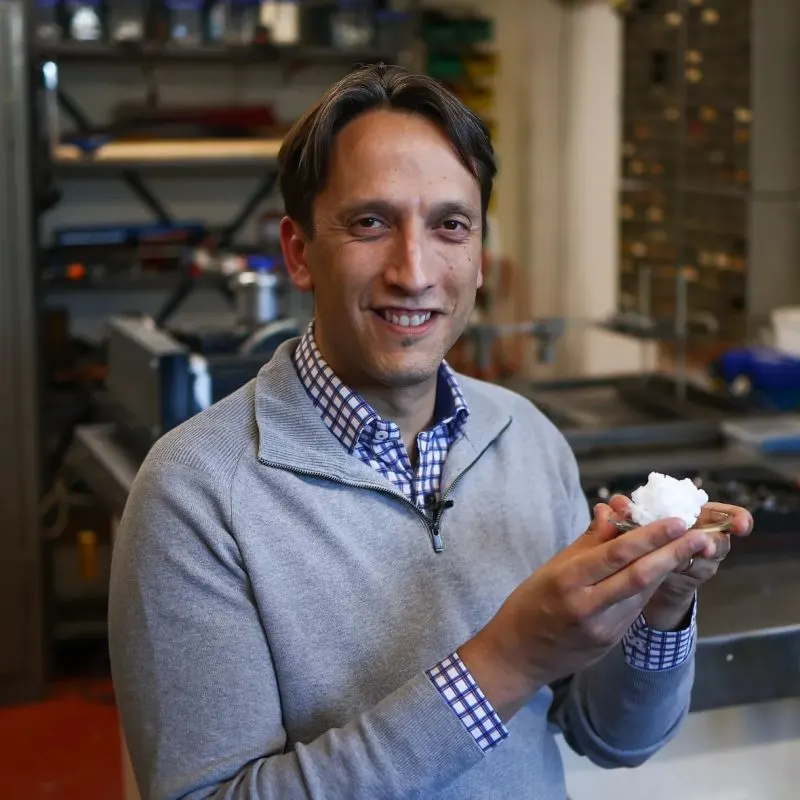
The origin of Barocal is inseparable from the work of its founder and CEO, Professor Xavier Moya, a materials scientist at the University of Cambridge whose research into caloric materials, substances that absorb and release heat in response to external stimuli, produced a series of discoveries that fundamentally changed the field. Moya’s work in magnetocaloric, elastocaloric, and electrocaloric effects spanned more than a decade before he identified barocaloric materials, solids that undergo colossal thermal changes when subjected to pressure, as the most commercially viable path to replacing refrigerant gases at industrial scale.
The insight was not obvious. Barocaloric materials had been studied academically but had never been considered seriously as practical refrigerants because conventional solids simply could not generate the thermal performance that gases achieve. Moya’s group at Cambridge spent over 15 years discovering a broad library of high-performance barocaloric materials and working through multiple generations of system designs to turn the material science breakthrough into a working cooling system.
The research foundation behind Barocal is not a single paper or a proof of concept. It is more than 15 years of work, multiple publications in Nature and Science, more than 10,000 citations in the academic literature, and a library of novel materials protected by intellectual property that took a decade to build. In 2025, the American Physical Society named Moya an APS Fellow, one of the most prestigious recognitions in physics, in acknowledgement of his contributions to the field. Barocal also won the TERA-Award Gold in 2025, was featured in the International Energy Agency’s Global Innovation Report, and has presented at ISH 2025 as part of the Advanced Materials Panel. These are not startup marketing credentials.
They are the outputs of sustained, peer-reviewed scientific work that has been independently evaluated by the most demanding audiences in materials science and energy research.
- 15+ Years of Cambridge University research underpinning the platform
- +100x Performance improvement of Barocal materials vs conventional solid refrigerants
- 10,000+ Academic citations for the research behind the technology
- 40% Share of global energy use addressable by Barocal’s cooling platform

The Barocaloric Effect: Why Pressure on a Solid Beats a Century of Gas-Based Cooling
To understand why Barocal’s technology represents a genuine step change rather than an incremental improvement, it helps to understand what a barocaloric material actually does and why it has taken this long to make it work at the performance level that commercial cooling requires.
When pressure is applied to certain solid materials, the molecular structure of those materials undergoes a phase transition that releases heat. When the pressure is released, the material absorbs heat from its surroundings to return to its original state. This pressure-driven thermal cycle is the barocaloric effect, and it is the physical mechanism that Barocal’s cooling system exploits.
The advantages over vapour-compression systems are structural: the solid material does not leak into the atmosphere because it never leaves the system, eliminating fugitive emissions entirely. It has zero Global Warming Potential and contains no PFAS compounds. Because the material is inexpensive and abundant rather than a specialised fluorochemical requiring industrial synthesis, the bill of materials for a Barocal system is fundamentally different from that of a conventional refrigeration unit.
Why Conventional Solids Could Not Do This Before Barocal?
Solid refrigerants have existed as a research concept for decades, but two problems made them commercially impractical. First, conventional caloric solids produced insufficient thermal performance: the temperature change generated by applying and releasing pressure was too small to be useful for most cooling applications. Second, the materials degraded over repeated cycling. Barocal’s library of novel barocaloric materials, developed over 15 years at Cambridge, overcomes both problems simultaneously.
The company’s materials achieve more than 100 times the performance of conventional solids, operating at pressure levels that are practical in a commercial system, and doing so across millions of cycles without material fatigue. That combination of performance, durability, and material cost is what makes the transition from laboratory curiosity to commercial product credible.
The system Barocal has built around its materials is designed from the ground up for modularity and scalability. Where gas-based systems require careful handling of pressurised refrigerant circuits and are difficult to modify or expand without specialist equipment, Barocal’s modular architecture allows the cooling capacity of a system to be adjusted by adding or removing modules without redesigning the core installation.
This modularity is not a convenience feature. It is what allows the same platform technology to address applications as different as a supermarket refrigeration cabinet and a hyperscale data centre without requiring fundamentally different engineering for each.
Four Applications, One Platform: Where Barocal’s Technology Goes to Work
The practical scope of what Barocal is building is best understood through its four target applications, each of which represents a significant and distinct cooling market where the limitations of gas-based systems are either becoming regulatory liabilities, operational cost problems, or both.
- Data Centre Cooling
-
-
- High-density thermal management without the refrigerant liability: AI infrastructure is driving exponential growth in data centre thermal load. Barocal’s system is engineered for high ambient temperature operation, integrates with existing thermal management infrastructure without major redesign, and uses solid materials that do not degrade over time. No material fatigue means no performance drift over the system’s operational life, a critical requirement for facilities running continuous uptime commitments.
-
- Process Cooling
-
-
- Modular, scalable, zero emissions industrial cooling: From pharmaceutical manufacturing to food processing to chemical production, industrial process cooling requires precise temperature control, continuous reliability, and increasingly, compliance with refrigerant emissions regulations that are tightening globally. Barocal’s modular architecture allows system capacity to be matched precisely to process requirements. Zero GWP and PFAS-free materials eliminate the regulatory exposure that HFC-based systems carry in regulated industrial environments.
-
- Refrigeration
-
-
- Consistent cooling, lower energy, smaller footprint: Commercial refrigeration for food storage, medical preservation, and retail cold chain is one of the largest sources of refrigerant emissions globally, because the seals and fittings of refrigeration systems degrade over time and leak continuously. Barocal’s solid-state approach eliminates this leak pathway entirely. A compact physical footprint makes integration into space-constrained retail and medical refrigeration environments practically viable.
-
- Comfort Cooling and Heating
-
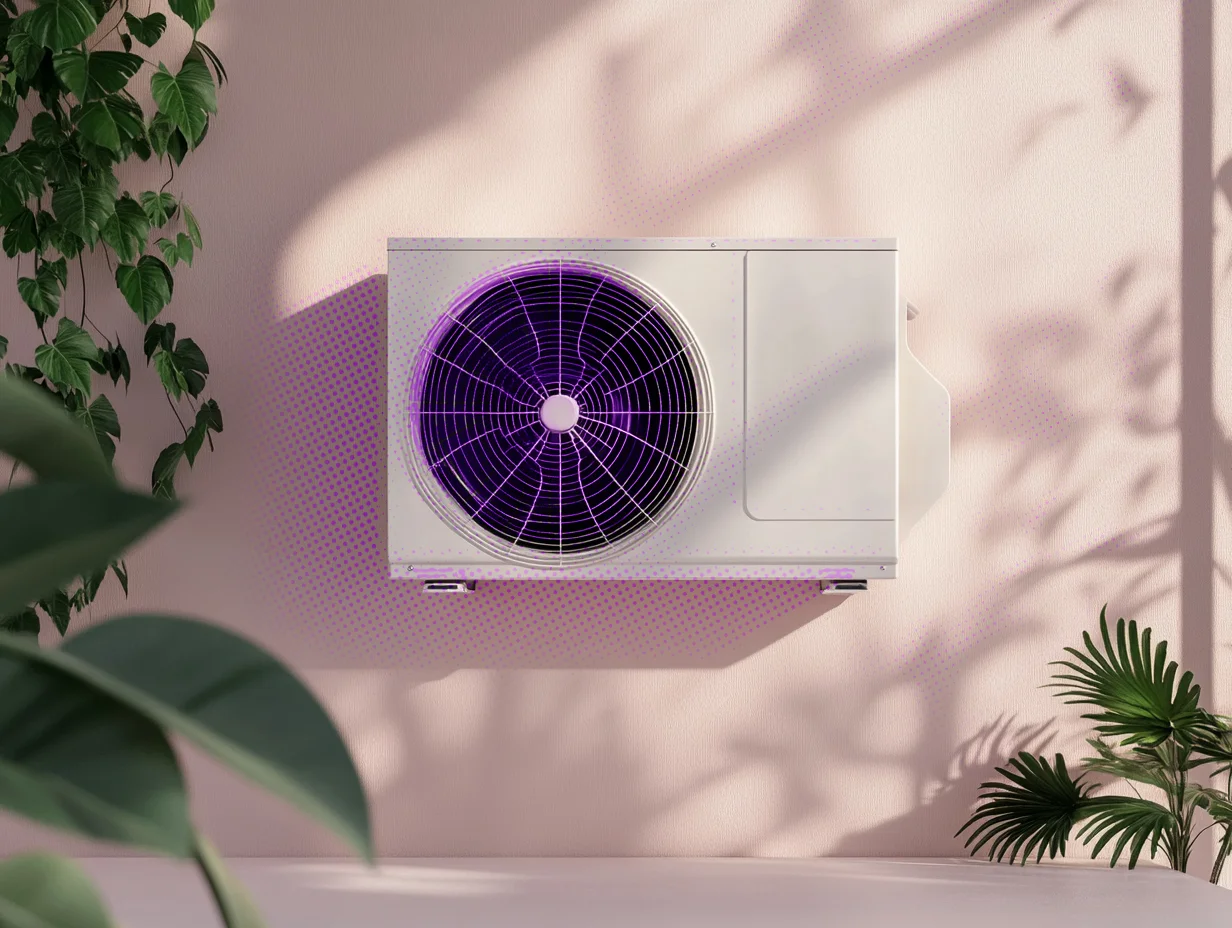
- HVAC with ultra-high efficiency and minimal noise: Residential and commercial HVAC accounts for a significant portion of the cooling sector’s total energy consumption and refrigerant emissions. Barocal’s system achieves ultra-high efficiency by leveraging colossal thermal effects in its materials, operates with low mechanical noise compared to compressor-based systems, and maintains strong part-load performance — the real-world operating condition in which most HVAC systems spend most of their time.
The breadth of these four applications is a reflection of the platform nature of the technology rather than an attempt to address every market simultaneously. The same barocaloric material and the same modular system architecture underpin all four verticals. What changes between applications is the configuration, the operating parameters, and the integration approach, not the fundamental technology. This is the commercial argument for a material science breakthrough over a point solution: once the material works, the incremental cost of addressing a new application is engineering, not science.
Backed by the Institutions That Back What the Cooling Industry Needs to Become
Barocal’s investor and partner profile reflects the specific nature of what it is building and where it sits in the deep tech commercialisation landscape. This is not a consumer software company where product-market fit can be established quickly and capital can be deployed at speed. It is a materials science company translating a decade and a half of academic work into a commercially deployable system, operating in a regulated industrial sector where the cycle from prototype to certified product is measured in years rather than months. The institutions backing Barocal understand that timeline and have selected the company specifically because of the quality of its scientific foundation. Backed By:
- Kiko Ventures
- Cambridge Enterprise
- Breakthrough Energy
- European Innovation Council
- Deeptech Labs
Kiko Ventures focuses specifically on climate technology and backs companies with the potential to deliver large-scale emissions reductions. Cambridge Enterprise is the commercialisation arm of the University of Cambridge and has a track record of identifying which university research programmes have genuine commercial potential. Breakthrough Energy, founded with the specific mission of backing climate solutions that can operate at global scale, has evaluated the barocaloric cooling approach against the alternatives and concluded that it merits backing.
The European Innovation Council’s €2.45 million EIC Accelerator grant, awarded through a competitive process that specifically evaluates technical risk, commercial viability, and market impact, provides both capital and institutional validation from the EU’s primary funding vehicle for high-risk, high-impact deep tech.
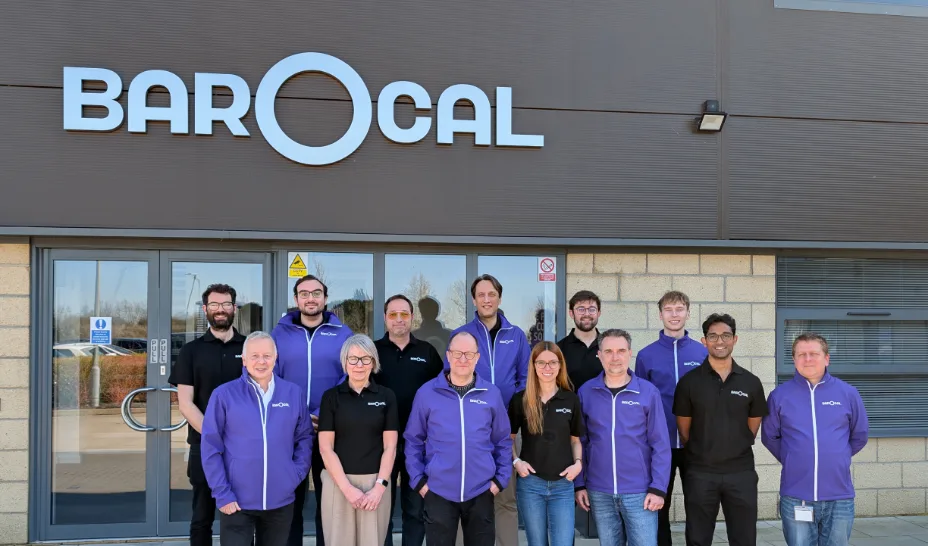
The team assembled around the technology reflects the same calibre. Garry Chambers, the Chief Product Development Officer, is the co-founder of Universal Biosensors and has developed manufacturing systems for global healthcare companies, bringing direct experience of what it takes to transition a technology from laboratory to manufacturing scale. Rowan Wilkie, the CFO, brings digital health, private equity, and public markets experience.
Tom Prescott, the Chairperson, spent his executive career as CEO of Align Technology, the company that makes Invisalign, scaling a deep tech product in a regulated healthcare market from startup to global leader. These are not academic advisors. They are operators with direct experience of the specific challenge Barocal faces: taking a materials science breakthrough through the engineering, regulatory, and commercial gauntlet that separates a promising result in a world-class laboratory from a product that changes an industry.
The cooling industry is at the beginning of a regulatory and commercial transition that has no precedent in its modern history. Fluorinated refrigerant gases are being phased down under the Kigali Amendment to the Montreal Protocol and the EU’s F-Gas Regulation, timelines that are now legally binding rather than aspirational. The industry needs an alternative that matches the thermal performance of gases, survives millions of operational cycles without degradation, is commercially viable at scale, and does not create new environmental liabilities in the process of eliminating existing ones.
Barocal’s 15 years of Cambridge research says the answer is solid. The TERA-Award, the IEA feature, the EIC grant, the APS Fellowship, and the backing of Breakthrough Energy collectively say the answer is credible. The question now is how fast a system that is built for modularity and scalability can reach the installed base that the climate constraints of the next decade require. Barocal is building the answer from Cambridge.