

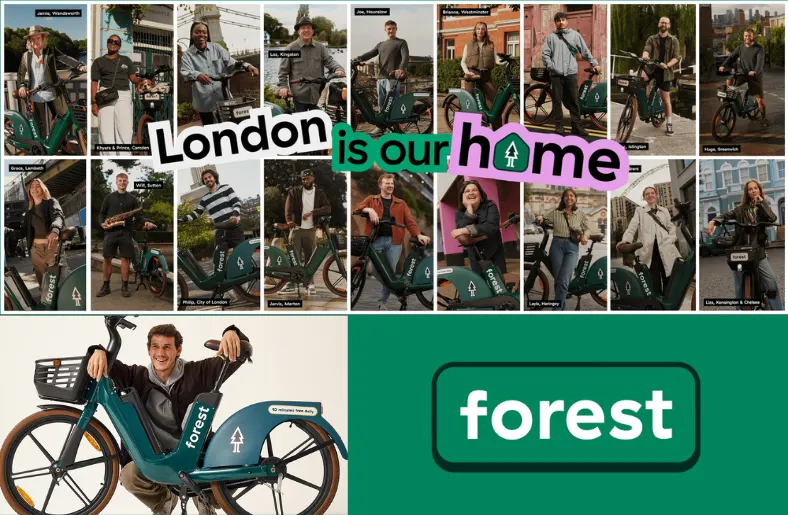
Born in London, Built for London: How Forest Became the Capital’s Most Trusted E-Bike
London’s relationship with cycling has always been complicated. The infrastructure has improved in patches, the culture has evolved in certain pockets, and successive mayors have committed to expanding the cycling network with varying degrees of follow-through. But the structural barrier has remained consistent: most Londoners do not own a bike, cannot store one in their flat, and would not want to deal with the maintenance of one even if they could. The shared bike has always been the theoretical solution to this problem.
The practical challenge has been building a shared bike scheme that Londoners actually trust, actually use, and actually prefer to the alternatives on a daily basis. Forest, the London-based micromobility company operating as HumanForest Limited, has spent five years doing exactly that. With 1.5 million registered users, two million rides completed every month across 18 London boroughs, a B Corp certification score of 98.5, and the largest continuous operating area of any shared e-bike provider in London, Forest is no longer a startup making a case for itself. It is the dominant operator in the world’s largest shared e-bike market, and it is only getting started.
Five Years of Building the City’s Cycling Infrastructure From the Ground Up
Forest entered London’s bike share market in 2020, at a moment when the city’s relationship with its streets was being renegotiated under lockdown conditions. What it brought that the existing schemes did not was a combination of specificity and ambition that proved to be the right formula for London’s particular geography. The company is a single-city operator by design rather than by limitation. Where competitors have spread operations across multiple European cities, Forest has concentrated everything, every hire bike, every parking bay, every operational decision, on London.
The consequence is a level of operational density and institutional knowledge that a multi-city operator cannot replicate. It knows which boroughs have the highest commuter demand. It knows where the rebalancing challenges are at peak hour. It knows where to place parking bays to maximise both usage and compliance. This depth of local knowledge has produced operational outcomes that are reflected in every metric the company reports.
- 1.5M Registered riders, 100% year-on-year growth
- 2M+ Journeys completed every month across London
- 18 London boroughs in which Forest currently operates
- 2,600+ Parking bays funded and installed across the capital
The 100 percent year-on-year growth in the user base is a number that deserves contextualisation. Doubling the registered user count of a consumer transport service, in a market where the major competitors are established and well-funded, is not an outcome that happens through marketing spend alone. It reflects a product that is performing well enough that existing users recommend it, return to it, and build it into their travel habits rather than treating it as an occasional novelty.
The 2 million monthly journeys across 18 boroughs represent a level of utilisation per bike that Forest’s CFO Jose Eluchans described as the company’s core metric: every Forest e-bike should generate more trips than any other shared bike on the street. That level of utilisation is not just a business metric. It is the environmental and spatial justification for occupying public space with shared mobility infrastructure in one of the world’s most contested urban environments.
The most recent landmark in Forest’s geographic expansion was its appointment as sole operator in Richmond upon Thames, following a competitive tender process. The Richmond win extended Forest’s continuous operating area to become the largest of any shared e-bike provider in the capital, connecting zones that were previously at the edge of existing coverage and creating a contiguous cycling corridor that substantially increases the utility of the service for cross-borough journeys.
The Tube strike that occurred in the weeks surrounding the funding announcement provided an unplanned but vivid demonstration of the strategic role that Forest now plays in the capital’s transport network: rides surged 30 percent on strike days, with Londoners who could not use their usual route turning to Forest as a practical, immediate alternative rather than a lifestyle choice.
The Sustainability Architecture That Separates Forest From Every Competitor
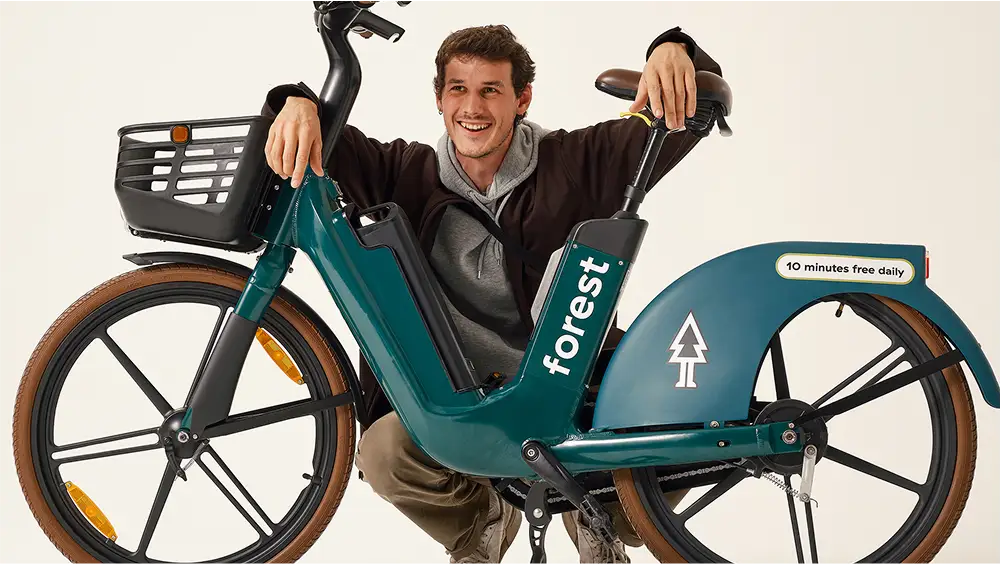
The word sustainability is used so liberally in the mobility sector that it has largely ceased to carry meaning. Forest uses it differently, because it earned the right to. The company has operated on 100 percent renewable electricity since its first day of operations in 2020: the bikes, the batteries, and every vehicle in its service fleet run on zero-emissions energy. This is not a target for 2030, a percentage offset, or a net-zero aspiration. It is the operational baseline from which the company has never deviated.
The B Corp certification, with a score of 98.5, reflects an independently verified assessment of that commitment across the full range of environmental and social performance criteria that the B Impact Assessment covers. The Verra certification, which Forest holds as the only e-bike operator to have achieved it, provides an additional independent validation of its environmental claims.
- Zero Emissions Since Day One: Every Forest e-bike, battery, and service vehicle has run on renewable electricity since the company launched in 2020. Not a target. Not an offset. The operational baseline from the beginning.
- B Corp Certified (Score 98.5): One of the highest B Corp scores in the UK mobility sector, independently verified across environmental, social, governance, and community impact criteria.
- Verra Certified: The only e-bike operator in the world to hold Verra certification for verified carbon impact claims. An independently audited standard that goes beyond self-reporting.
Forest’s community commitments extend well beyond its operational sustainability. The company partners with The Great Reserve for its reforestation programme, which gives the brand its name and its operating logic: every ride contributes to planting and protecting actual trees. It has partnered with The Rivers Trust on a dedicated fundraising fleet of river-themed e-bikes in London. It works with the Sight Loss Council and Thames Reach, reflecting a community orientation that goes beyond environmental impact into social inclusion.
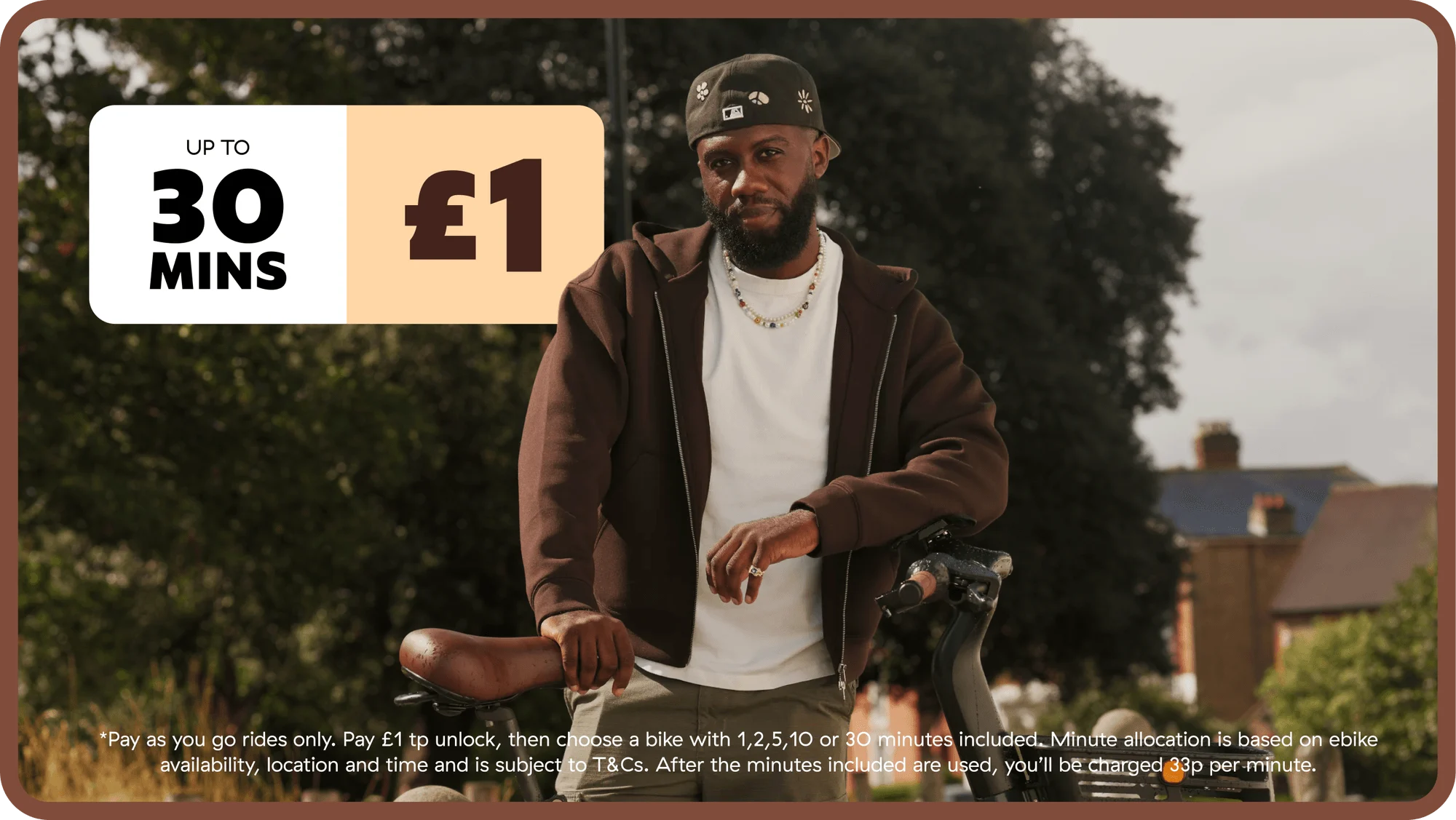
The Friends of the Forest programme offers discounted rides to students, key workers, pensioners, and other groups for whom cost is a genuine barrier to accessing sustainable transport. The aggregate impact of the free ride minute programme is substantial: since 2021, Forest has gifted 110 million free cycling minutes to Londoners, and offers up to 30 free minutes per day to every user, making it the most accessible shared e-bike service in the city by pricing structure.
- Free Minutes Gifted: 110M Free cycling minutes given to Londoners since 2021. The most generous free-ride programme of any shared e-bike operator in the UK.
- Daily Free Allowance (30 Mins): Every Forest user receives up to 30 free cycling minutes per day, making the service genuinely accessible regardless of income.
£40 Million Series B: What It Is, Who Backed It, and Why OKAI’s Involvement Changes Everything
On April 28, 2026, Forest announced a further £27 million in funding, completing its Series B round at a total of £40 million. The completion of this round, which built on £13 million raised in earlier tranches of the same round, reflects sustained investor conviction in a company that has continued to grow its user base, its geographic footprint, and its operational efficiency simultaneously. The round was structured with both equity and asset-backed debt components, reflecting the capital requirements of a business that needs to fund physical infrastructure, bikes and parking bays, alongside technology and operational expansion.
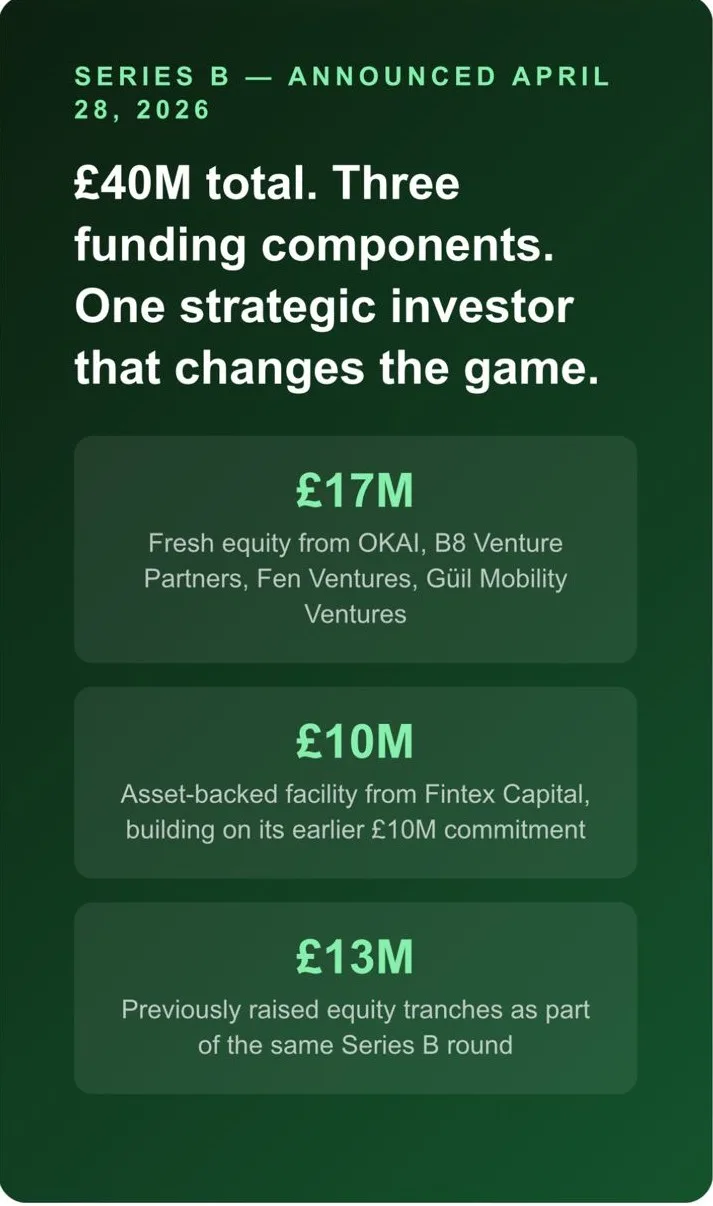
The most strategically significant element of this round is the participation of OKAI as an equity investor. OKAI is Forest’s e-bike manufacturer, and its decision to take a minority stake in Forest represents a sector first: no shared e-bike operator has previously had its manufacturing partner become a shareholder. The implications of this structural alignment extend well beyond the capital it brings. As a shareholder rather than merely a supplier, OKAI now has a direct financial interest in Forest’s operational performance, which means the design and build decisions it makes for Forest’s fleet will be shaped by what actually happens to those bikes on London’s streets.
Forest’s ground-level operational data, the wear patterns, the maintenance requirements, the performance characteristics that emerge from millions of real-world rides, will feed directly into the design of future hardware. Mr Jiangtao Lu, CEO of OKAI, described the relationship as one of collaboration and co-creation rather than supply. Forest’s input into the bike design and manufacturing process, based on what it is seeing on the ground in London, will help set new standards for e-bike quality and performance.
For a market where bike quality and reliability are primary drivers of user trust and operational efficiency, this feedback loop is a durable competitive advantage.
“Our objective is that every Forest e-bike should generate more trips than any other shared bike on the street. That level of utilisation is not just a business metric. It is how we justify our existence in a city with competing uses for public space.” – Jose Domingo Eluchans, CFO, Forest
What £40 Million Buys: Infrastructure, Technology, and London’s Cycling Future?
The capital from the Series B is being deployed across three concurrent priorities. The first is continued expansion of Forest’s physical infrastructure across London, adding new parking bays, extending service into boroughs that are not yet covered, and deepening operational density in the boroughs where demand is highest. The 2,600 parking bays Forest has already funded represent a significant contribution to London’s cycling infrastructure, and the Series B will accelerate that programme.
Parking infrastructure is one of the most consequential determinants of shared e-bike usability: a service without reliable, conveniently located parking generates complaints, compliance failures, and user frustration that can undermine growth regardless of how good the bike itself is.
The second priority is technology and app development, with a specific focus on parking compliance and safety features. The parking compliance challenge in micromobility is well documented: bikes that are left obstructing footpaths, driveways, or dropped in locations that make them inaccessible for the next user are a source of friction with both local authorities and the public.
Forest’s investment in in-app guidance, computer vision, and geofenced parking enforcement reflects a recognition that the long-term permission to operate in urban public space depends on demonstrating that the service can be managed responsibly. The third priority is ongoing operational investment to support the continued growth of the rider base, supply chain resilience through the OKAI partnership, and the recruitment capacity to maintain service quality at scale.
Blair McDougall MP, Minister for Small Business and Economic Transformation, offered the clearest articulation of why Forest’s growth matters at a policy level: the company is exactly the kind of ambitious, innovative, and high-growth business the UK wants more of, bringing in investment, creating jobs, and boosting the economy.
For a government that has committed to both industrial strategy and the decarbonisation of urban transport, a company that is profitable, growing, operating on renewable energy, certified by independent sustainability standards, and scaling domestic cycling infrastructure at pace is not a policy aspiration. It is a live proof of concept. Forest’s next chapter, backed by £40 million and by a manufacturing partner now aligned as an investor, will be written entirely on London’s streets.