

How Windmill is automating HR performance reviews with AI?
Rethinking how employee performance is captured and understood
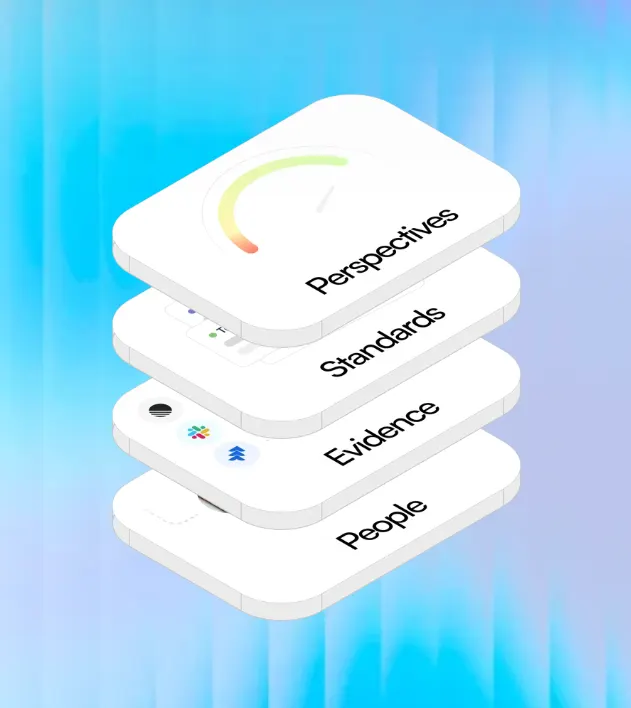
Performance reviews inside most organizations are still shaped by fragmented inputs, delayed feedback cycles, and subjective recall. Managers depend on scattered notes, occasional check-ins, and memory rather than structured, continuous data. This creates gaps between actual employee contributions and what gets documented. Windmill positions itself directly within this gap by introducing what it calls a context graph for people, designed to continuously capture and connect signals about employee performance. Instead of relying on episodic evaluation, the system builds an ongoing record of work, feedback, and interactions, allowing HR teams and managers to access a more complete and cited understanding of individual and team performance.
From isolated feedback to a continuous performance layer
The core shift introduced by Windmill lies in moving from isolated feedback events to a continuous performance layer. Features such as performance reviews, one-on-ones, pulse surveys, and continuous feedback are not treated as separate HR processes but as interconnected inputs feeding into a unified system. This structure allows organizations to track how feedback evolves over time rather than viewing it as static snapshots. Managers gain visibility into patterns instead of isolated incidents, while employees benefit from a clearer representation of their contributions. The system attempts to reduce ambiguity by attaching context and references to feedback, making performance discussions less dependent on interpretation and more grounded in recorded data.
The role of AI in structuring and interpreting workplace signals
What makes this system operationally scalable is the integration of AI across these inputs. Windmill’s approach is not limited to automation of forms or summaries but extends to interpreting signals across different interactions. AI agents assist in organizing feedback, identifying trends, and generating structured insights that would otherwise require manual synthesis. This includes summarizing one-on-one conversations, highlighting recurring themes in feedback, and supporting calibration processes across teams.
The goal is to reduce the cognitive load on managers while ensuring that no significant input is overlooked. By structuring unorganized data into coherent narratives, the platform attempts to bring consistency to performance evaluation without removing human judgment entirely.
Why the $12M funding signals more than capital expansion
Windmill’s recent $12 million seed funding round reflects a broader interest in systems that can make workforce data more actionable rather than just measurable. While funding announcements often highlight growth ambitions, in this case it points to increasing demand for tools that address long-standing inefficiencies in HR workflows. Investors are not just backing automation but the idea that employee performance can be represented as a continuously evolving dataset. This aligns with a larger shift in enterprise software where static reporting is being replaced by dynamic systems that update in real time.
The funding provides Windmill with the capacity to expand its product capabilities, but more importantly, it validates the relevance of its approach in a market that has struggled with fragmented HR tools.
Positioning within the broader HR tech ecosystem
The HR technology landscape is crowded with tools focused on engagement, analytics, and performance management, yet many operate in isolation. Windmill’s positioning attempts to bridge these functions by acting as a connective layer rather than a standalone tool. Its integrations with existing workplace systems allow it to pull data from multiple sources, reducing the need for duplicate inputs. At the same time, its science-backed approach and calibration features suggest an emphasis on consistency and fairness in evaluations. By consolidating feedback mechanisms into a single system, the platform aims to address one of the key limitations in HR tech, which is the lack of continuity across different stages of employee assessment.
What this approach means for the future of performance reviews
The model introduced by Windmill reflects a broader shift in how organizations may approach performance evaluation in the coming years. Instead of periodic reviews that attempt to summarize months of work, the focus is moving toward systems that document performance as it happens. This has implications not just for HR teams but for organizational transparency and employee accountability. Continuous documentation can reduce bias, improve clarity, and create a more consistent basis for decision-making.
At the same time, it raises questions about how much data is necessary and how it should be interpreted. Windmill’s approach suggests that the future of performance reviews will depend less on isolated evaluations and more on structured, continuously updated context.
Windmill is addressing a real structural problem in HR systems, but its long-term impact will depend on how effectively organizations adopt continuous feedback without turning it into constant surveillance. The idea of a context graph for people is compelling, yet its success will rely on maintaining a balance between visibility and trust.