


Meet DOJO AI, The All-in-One AI Marketing Platform
The Fragmentation Problem in Modern Marketing
Modern marketing teams operate across a growing number of platforms, tools, and channels, from paid advertising and email campaigns to social media, analytics dashboards, and CRM systems, creating an environment where data is abundant but rarely unified, and where decision-making often depends on stitching together insights from disconnected sources. This fragmentation introduces both operational inefficiencies and strategic blind spots, as teams spend significant time aggregating data, interpreting performance, and coordinating actions across systems that were never designed to work together seamlessly.
The result is a workflow that is reactive rather than proactive, where insights arrive too late, experimentation cycles are slow, and optimization is constrained by the limitations of human bandwidth. As marketing becomes increasingly data-driven and performance-oriented, the need for systems that can unify, interpret, and act on this data in real time has become more pronounced, highlighting a gap that traditional marketing stacks struggle to address.
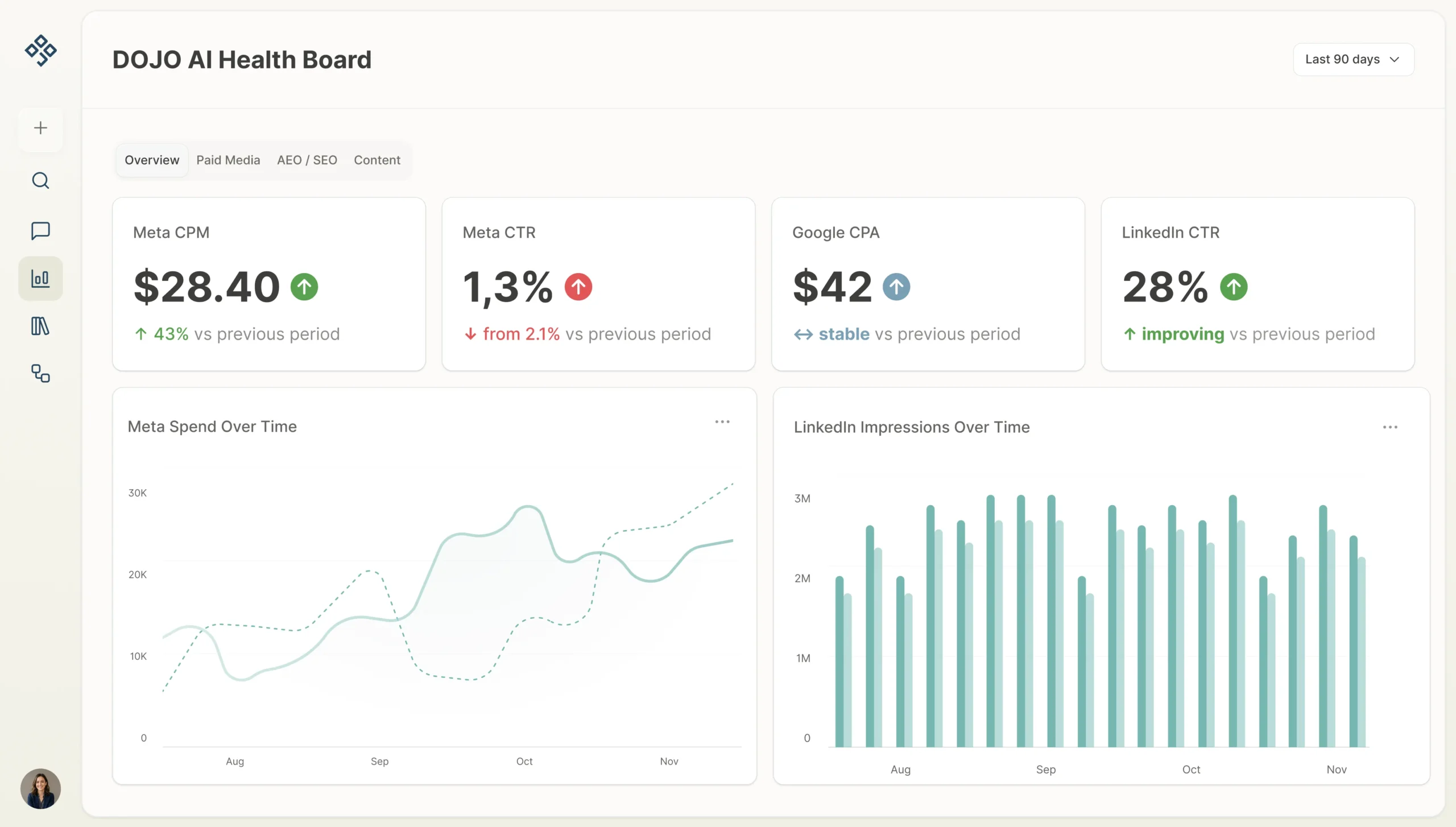
DOJO AI’s Core Idea: An Intelligent Marketing System
DOJO AI is built around the concept of an “intelligent marketing system,” where all marketing data is unified under a single intelligence layer and managed by a coordinated set of AI agents that can analyze, decide, and execute across different functions. Instead of relying on separate tools for analytics, campaign management, and optimization, the platform integrates these capabilities into a cohesive system that operates continuously, enabling teams to move from fragmented workflows to a more streamlined, automated approach.
The use of AI agents is central to this model, as each agent is designed to handle specific tasks such as performance analysis, campaign adjustments, and strategic recommendations, working together to create a system that can adapt to changing conditions in real time. This approach reflects a broader shift in how software is being designed, where the focus is moving from static tools to dynamic systems that can operate autonomously while still allowing human oversight and control.

DOJO AI Raises $6M to Build the Future of Marketing Automation
DOJO AI’s $6 million funding round represents a significant step in the development of its platform, providing the resources needed to expand its capabilities, refine its AI models, and accelerate adoption among businesses looking to modernize their marketing operations.
The investment signals confidence in the idea that marketing is evolving from a function managed by teams of specialists into a system that can be orchestrated by intelligent software, where the role of humans shifts from execution to supervision and strategy. By focusing on the integration of data, intelligence, and automation, DOJO AI is positioning itself within a growing category of platforms that aim to redefine how marketing is executed, moving beyond incremental improvements to existing tools and toward a more fundamental rethinking of the marketing stack.
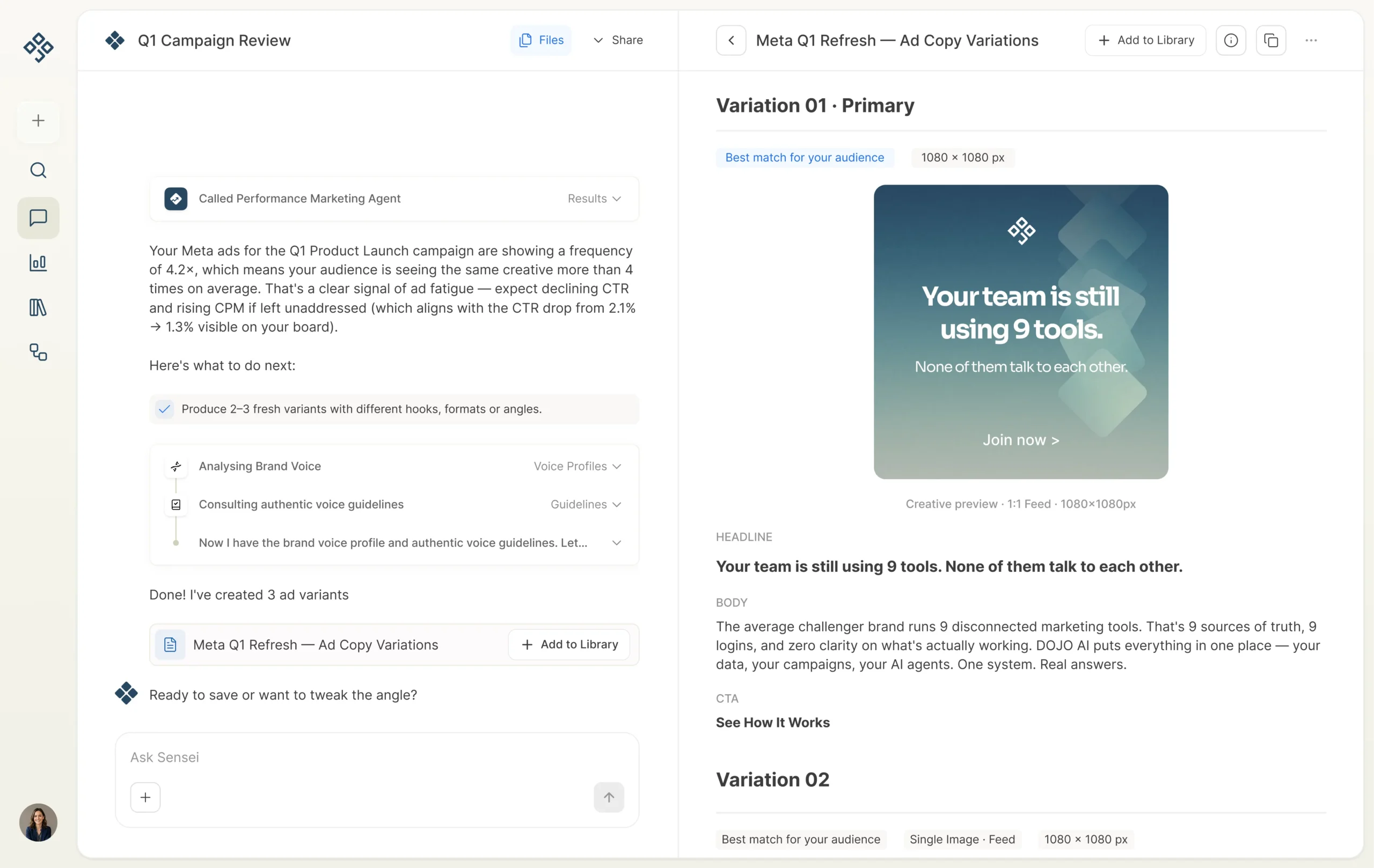
From Teams to Systems: The Future of Marketing Execution
What DOJO AI ultimately represents is a transition from marketing as a collection of roles to marketing as a system, where the emphasis is on coordination, speed, and continuous optimization rather than on manual execution of individual tasks. This shift raises important questions about how marketing teams will evolve, as the capabilities traditionally distributed across analysts, campaign managers, and strategists become increasingly embedded within software.
While it is unlikely that human expertise will become obsolete, the nature of that expertise is likely to change, with greater emphasis on guiding and interpreting the outputs of intelligent systems rather than performing the underlying tasks directly. As businesses continue to seek more efficient and scalable ways to manage their marketing efforts, platforms like DOJO AI offer a glimpse into a future where the boundaries between tools, teams, and workflows are redefined, creating systems that are not only more efficient but also more adaptive to the complexities of modern digital ecosystems.