

Why ATMOS Space Cargo Could Change the Future of Space Manufacturing?
The Missing Half of Space Logistics
The commercial space industry has made significant progress in reducing the cost of launching payloads into orbit, with reusable rockets and private launch providers dramatically increasing access to space, but one critical part of the equation remains underdeveloped, the ability to reliably and efficiently bring materials back to Earth. While sending satellites, experiments, and cargo into orbit has become more accessible, returning those assets, especially at scale, is still complex, expensive, and limited to a handful of specialized providers.
This asymmetry creates a structural bottleneck in the development of space-based industries, particularly in areas such as microgravity manufacturing, where the value of production depends not only on what can be created in orbit but on how those products can be transported back to Earth. Without scalable return capabilities, the economic potential of these industries remains constrained, limiting innovation and slowing the transition from experimental projects to commercial operations.
ATMOS’s Core Idea: Building the Return Layer for Space
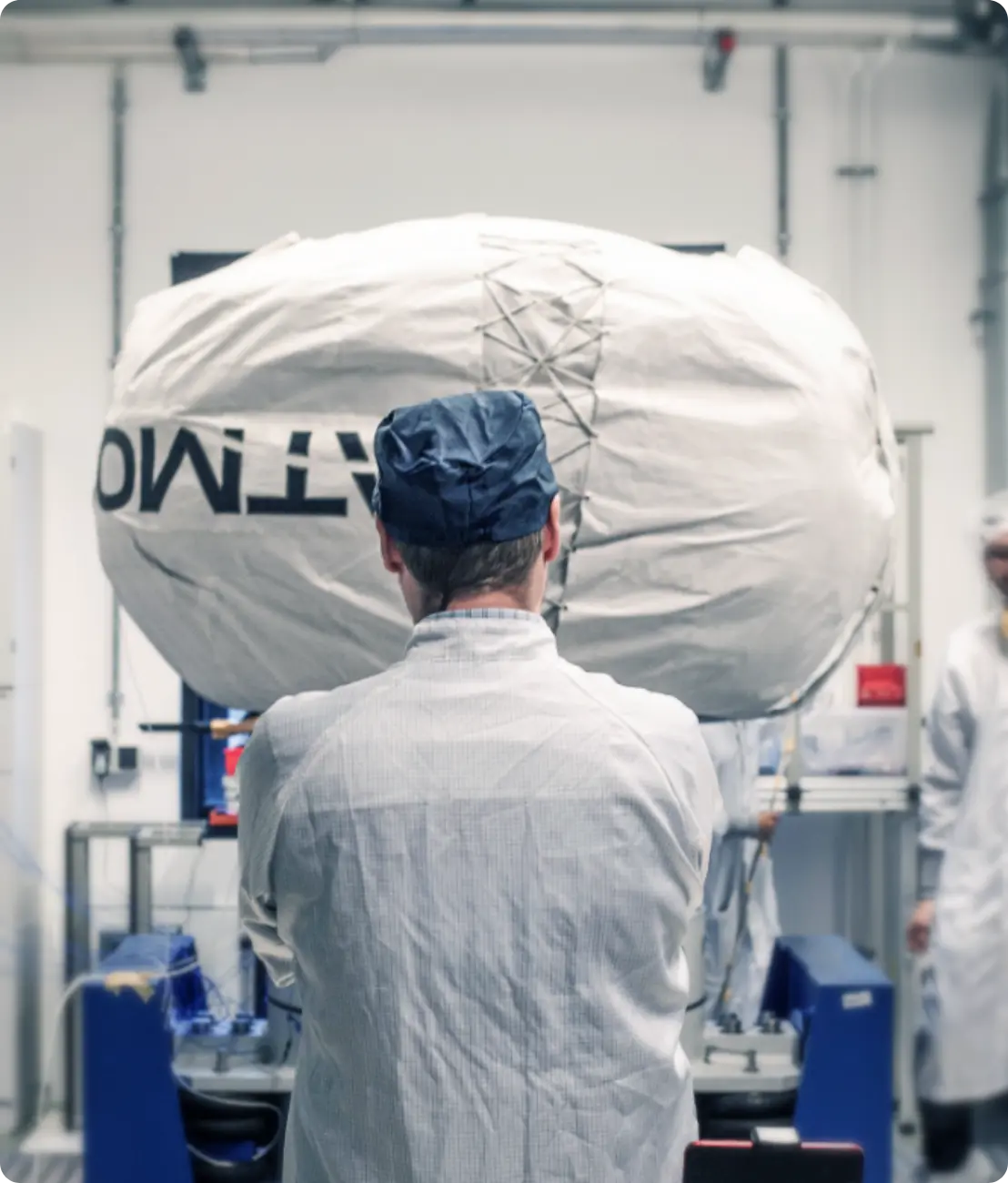
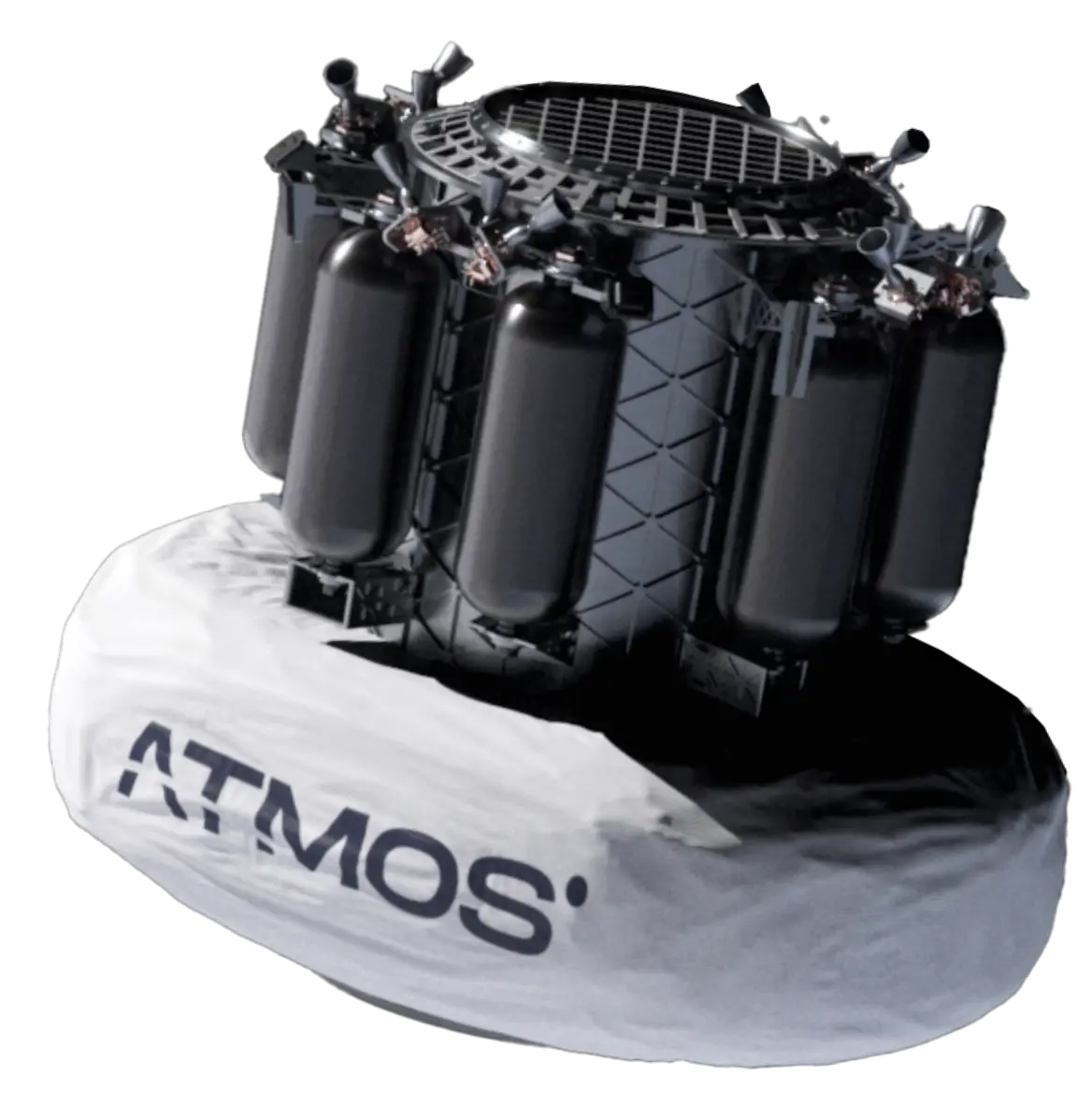
ATMOS Space Cargo is built around the idea of addressing this gap by developing space capsules specifically designed for the return of cargo from orbit, creating a dedicated infrastructure layer for reentry that complements existing launch capabilities. The company’s approach focuses on designing and manufacturing capsules capable of returning a wide range of payloads, from small experimental samples to larger commercial cargo, enabling a level of flexibility that is currently lacking in the market.
By providing a system that can handle different payload sizes and mission profiles, ATMOS aims to make return logistics more accessible and scalable, supporting a broader range of use cases across the space economy. This focus on reentry as a standalone capability reflects a shift in how space infrastructure is being developed, where different components of the value chain are being specialized and optimized rather than treated as secondary features of larger systems.

Microgravity as a Service: Unlocking New Industrial Possibilities
One of the most significant implications of ATMOS’s technology lies in its ability to support microgravity environments on demand, offering durations ranging from a few hours to several months in orbit, which opens up new possibilities for research and manufacturing that are not feasible under Earth’s gravitational conditions. Microgravity enables the production of materials and biological products with unique properties, from advanced pharmaceuticals to high-performance materials, but the challenge has always been the ability to conduct these processes reliably and bring the results back to Earth.
By combining microgravity access with return capabilities, ATMOS is positioning itself as an enabler of a new category of space-based industries, where production is not just an experimental activity but a commercial one. This model transforms space from a destination into a production environment, where the ability to operate in microgravity becomes a competitive advantage rather than a technical curiosity.
From Demonstration to Deployment: ATMOS’s Path to Market
ATMOS plans to enter the market with a demonstration mission in 2025, a milestone that represents a critical step in validating its technology and proving its ability to operate within the demanding conditions of spaceflight and atmospheric reentry. Demonstration missions play a crucial role in the space industry, as they provide the data and confidence needed to move from concept to commercial deployment, particularly in areas where reliability and safety are paramount.
For ATMOS, this initial mission will not only test its capsule design and reentry capabilities but also serve as a signal to potential partners and customers that its technology is ready to support real-world applications. As the company progresses beyond this stage, its ability to scale operations and establish partnerships with launch providers, research institutions, and commercial clients will be key factors in determining its long-term success.
Building the Infrastructure for a Circular Space Economy
The emergence of companies like ATMOS reflects a broader shift toward the development of a circular space economy, where materials and products can move between Earth and orbit in a continuous loop rather than being limited to one-way missions. In this model, space is not just a place for observation or exploration but a fully integrated part of the economic system, where manufacturing, research, and logistics operate across different environments.
The ability to return cargo efficiently is a foundational requirement for this vision, as it enables the flow of goods and data that underpins commercial activity. By focusing on this capability, ATMOS Space Cargo is contributing to the creation of an infrastructure layer that supports the broader evolution of the space economy, enabling new business models and expanding the range of activities that can be conducted in orbit.

The Future of Space Manufacturing: Beyond Earth-Based Constraints
ATMOS’s approach highlights a fundamental shift in how manufacturing is conceptualized, moving beyond the constraints of Earth-based environments to explore the possibilities offered by space. As technologies for accessing and operating in orbit continue to advance, the ability to leverage microgravity for production could lead to the development of materials and processes that are not achievable on Earth, creating new opportunities across industries such as pharmaceuticals, materials science, and electronics. The challenge will be to integrate these capabilities into a scalable and economically viable system, where the costs of operating in space are balanced by the value of the products being created.
ATMOS’s focus on return logistics addresses a key part of this equation, providing a pathway for bringing the benefits of space-based production back to Earth and making them accessible to a wider range of applications. As the space industry continues to evolve, the companies that can bridge the gap between orbit and Earth will play a central role in shaping its future, and ATMOS is positioning itself as one of those connectors.