

How Renewable Metals Is Tackling the Lithium-Ion Waste Problem?
The global transition to electric vehicles and renewable energy has created a new kind of dependency, one that is not immediately visible but deeply structural, and that dependency is on the continuous supply of critical battery metals such as lithium, nickel, cobalt, copper, and manganese, materials that are not only expensive and geopolitically sensitive but also environmentally costly to extract through traditional mining processes. As adoption accelerates, the industry is beginning to confront a paradox: the technologies designed to decarbonise the planet are themselves dependent on resource-intensive supply chains that carry their own environmental footprint, and more importantly, a rapidly growing volume of end-of-life batteries that are not being efficiently reintegrated into the system.
The lithium-ion battery, central to everything from EVs to grid storage, does not disappear after use, and without effective recycling infrastructure, it risks becoming one of the defining waste challenges of the clean energy era, creating both an environmental liability and a missed economic opportunity in the form of unrecovered high-value materials.
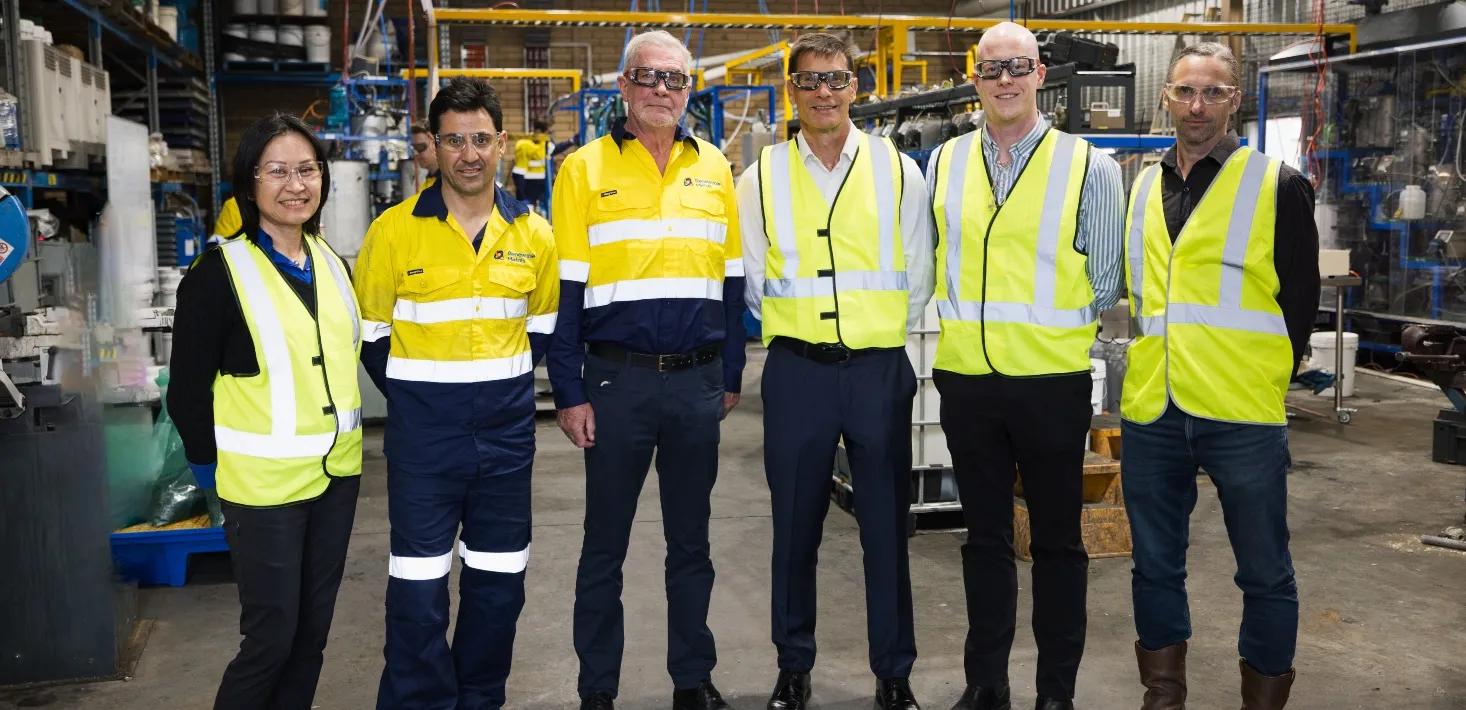
Renewable Metals positions itself directly within this gap, approaching battery recycling not as a secondary clean-up process but as a primary source of critical minerals, effectively reframing waste as a resource stream that can reduce dependence on mining while stabilising supply chains. The company’s core innovation lies in its alkali-based recycling process, a method developed from decades of metallurgical expertise in Western Australia, where refining nickel and cobalt through alkali systems has long been established practice, and this background allows Renewable Metals to apply a fundamentally different approach to battery recycling compared to conventional hydrometallurgical or pyrometallurgical methods.
Instead of relying on high-temperature or multi-step chemical processes that can be energy-intensive and generate secondary waste, the alkali process is designed to recover nearly all valuable metals with fewer steps, lower costs, and significantly reduced environmental impact, while avoiding the creation of problematic byproducts such as sodium sulfate, which has historically limited the sustainability of other recycling methods. This positions the company not just as a recycling solution provider but as a potential redefinition of how critical minerals are sourced in a circular economy where the boundary between extraction and recycling becomes increasingly blurred.
Renewable Metals Raises Series A Funding
In 2026, Renewable Metals raised $12 million in a Series A funding round, a development that reflects growing investor recognition of battery recycling as a strategic layer within the broader energy transition rather than a peripheral activity, and the capital is expected to support the scaling of its technology, expansion of pilot operations, and deeper integration into the global battery supply chain, where partnerships with manufacturers, recyclers, and energy companies will be critical to establishing a closed-loop system.
This funding moment is not just a validation of the company’s approach but also an indicator of how the market is evolving, as stakeholders across the EV and energy ecosystem begin to recognise that long-term sustainability depends not only on producing more batteries but on ensuring that the materials within those batteries can be efficiently recovered and reused at scale. As regulatory pressure increases and lifecycle emissions become a central metric in evaluating clean technologies, solutions that can demonstrably reduce the carbon footprint of material sourcing are likely to gain both commercial and policy-driven momentum.

Recycling as the Next Layer of Energy Infrastructure
What makes Renewable Metals particularly relevant in this context is not just its process innovation but the broader implication of what it represents for the future of energy infrastructure, where recycling is no longer an afterthought but a foundational component of system design, integrated from the outset rather than appended at the end of the lifecycle. The shift toward circular supply chains is not optional but inevitable, as the scale of battery deployment makes linear consumption models economically and environmentally unsustainable, and companies that can operationalise this shift at industrial scale will play a defining role in how the next phase of the energy transition unfolds.
Renewable Metals is positioning itself as one of those companies, building not just a recycling technology but a new perspective on how materials flow through the clean energy ecosystem, where value is continuously retained rather than periodically extracted and discarded, and while the path to large-scale adoption will depend on execution, partnerships, and regulatory alignment, the direction it represents is clear: the future of energy is not only about how we generate power, but how we sustain the materials that make that generation possible.