


10 Singapore Tech Startups You Should Be Watching in 2026
Singapore ranked fourth globally in the 2024 Global Innovation Index. In 2026, the results of that ranking are showing up in the work these companies are doing.
The Singapore startup market raised US$4.6 billion across 472 deals in 2025. What is more telling than the total is the direction of the capital: late-stage deals rose to 33.3% of volume, which reflects investors concentrating on companies with revenue visibility rather than early-stage bets. Budget 2026 added S$1 billion to the Startup SG Equity program, extending government co-investment from early-stage deep tech into growth-stage companies. And in May 2026, Google Cloud launched an AI startup innovation corridor connecting Singapore to Silicon Valley, naming H3 Zoom among the regional companies it had helped scale.
The ten companies below cover a range of sectors and funding stages, from a $30 million physical AI infrastructure play to a $250,000 construction AI startup competing with US tools that have not been built for Southeast Asia. All ten are Singapore-based companies with substantial operations in the country, and all are building products or technology from Singapore into regional or global markets.

1. Ropedia
Founded in the second half of 2025 by Zhaoxi Chen (CEO), Fangzhou Hong (CTO), and Ziwei Liu (Chief Scientist, also an Associate Professor at Nanyang Technological University), Ropedia is headquartered in Singapore with an additional office in Mountain View, California. In July 2026, the company announced the close of a $22 million pre-Series A, bringing total funding to $30 million across two rounds. The earlier $8 million round drew angel investors with connections to Google, Andreessen Horowitz, NVIDIA, and Amazon. The latest round was led by venture investors with deep experience in AI, enterprise technology, and infrastructure across Southeast Asia.
Ropedia builds data infrastructure for physical AI, meaning the robots and embodied AI systems that operate in the real world rather than on screens. The specific problem the company has identified is straightforward: robots cannot learn physical tasks from internet text the way language models learn language. A robot learning to assemble electronics or handle tools needs structured records of how human beings actually perform those tasks in real-world settings, with synchronized data on hand position, full-body motion, camera angle, depth, audio, and timing.
The company’s hardware product, HOMIE (Human-centric Omni Interaction and Experience), is a wearable crown-shaped capture device that records first-person video, depth, movement, and audio as people perform physical tasks. Ropedia processes that information into training material and delivers it through its Xperience-10M dataset and customized services to companies developing robots and embodied AI systems.
The company has begun mass production of HOMIE to supply technology partners and commercial clients. Capital from the latest round will expand data collection fleets across Southeast Asia and North America and support the US engineering team in Mountain View.
The honest assessment: physical AI is a category with real momentum, but the distance between collecting high-quality human motion data and having robots that perform reliably in unstructured environments is a long one. Ropedia is building a necessary layer. Whether it becomes the foundational dataset provider for the physical AI era or one of several competing data infrastructure providers depends on how the robotics market evolves and how quickly Ropedia can scale its collection network.
2. Kast
Founded in 2024 by Raagulan Pathy, the former Singapore chief of Circle Internet Group, Kast raised $80 million in a Series A in March 2026, co-led by QED Investors and Left Lane Capital. Existing investors Peak XV Partners, HSG (formerly Sequoia China), and DST Global Partners also participated. The company had raised $10 million in a round co-anchored by Peak XV and HSG the year before.
Pathy built Kast after his time at Circle, where he directly observed both the infrastructure limitations of traditional cross-border payments and the growing adoption of stablecoin settlement among businesses operating across currencies. Kast is building stablecoin-based financial services for individuals and businesses that operate across borders. The product allows users to hold, send, and spend money in stablecoins without the hidden fees, currency conversion friction, and exposure to currency depreciation that conventional international banking introduces.
The broader market is moving in the direction KAST is betting on: stablecoins are increasingly being used not just for crypto trading but for cross-border payments, dollar-denominated accounts, and everyday financial services. KAST’s combination of more than one million users, nearly $5 billion in annualised transaction volume, and rapidly growing revenue gives the company unusually concrete evidence for its stablecoin-fintech thesis at this stage.
3. Sapient Intelligence
Founded in 2024 by Wang Guan (CEO) in Singapore, with research operations in San Francisco and Beijing, Sapient Intelligence raised $22 million in a seed round in January 2025 at a valuation above $200 million, with investors including Vertex Ventures and CMBC. Total funding now stands at $33.1 million, with additional investors including Linear Capital, Jafco, and Sumitomo.
Sapient is building toward artificial general intelligence through a different architectural path than scaling language models. The company’s Hierarchical Reasoning Model (HRM) is a brain-inspired design for solving complex reasoning tasks with very few parameters and very little training data. Where frontier language models use hundreds of billions of parameters, the HRM operates at approximately 27 million parameters while demonstrating strong performance on hard reasoning challenges. The model does not rely on large-scale pretraining or chain-of-thought scaffolding to reach its results.
In July 2025, Sapient open-sourced the HRM, which brought it significant attention from the AI research community and established a reference point for evaluating the architecture’s claims against independent testing. The open-source release is the most meaningful validation point available: researchers outside Sapient have been able to run and evaluate the model rather than relying on the company’s own benchmarks.
Sapient is still a research-stage company with 11 employees, and the gap between a genuinely promising architecture and a system that changes how AI reasoning works at commercial scale is one that every architecture-focused AI lab faces. Wang Guan’s inclusion on Forbes’ list of influential figures in AI reflects the credibility the architecture has earned.
4. Dyna.AI
Founded and headquartered in Singapore, Dyna.AI closed an undisclosed eight-figure USD Series A in March 2026, led by Lion X Ventures with advisory support from OCBC Bank’s Mezzanine Capital Unit. The round also included participation from ADATA, a Taiwan-listed technology company, a Korean financial institution, and a group of finance veterans.
The company positions itself as an enterprise AI solutions provider focused on regulated financial services environments, and its commercial approach is built around what it calls Results-as-a-Service: measurable revenue outcomes rather than technology deployment as the deliverable. The practical distinction is meaningful in enterprise AI sales, where technology pilots frequently produce dashboards without producing business outcomes. Dyna.AI’s agentic AI solutions target the gap between AI pilots, which most financial institutions have run, and fully operational systems that deliver measurable business results, which most have not yet achieved.
The investor composition reflects the target market directly: OCBC Bank’s advisory involvement and participation from a Korean financial institution signal that the company’s banking and financial services deployment credentials are being validated by institutions in the sector rather than claimed from the outside. The company’s presence at Singapore FinTech Festival 2025 and subsequent Series A within three months of that event reflects the commercial acceleration that followed.
5. HeyMax
Founded in 2022 by Joe Lu (CEO) and co-founders who include former Meta engineers, HeyMax raised $2.6 million in a seed round led by January Capital in July 2025, with participation from Tenity, Ascend Angels, XA Network, and strategic angel investors including the founder of OnLoop and the former Airbnb Southeast Asia Managing Director.
HeyMax is building what it describes as Asia’s leading open loyalty ecosystem. The platform allows consumers to earn Max Miles from over 500 businesses and redeem them for flights or transfer them to 25 airline and hotel partners, with no fees and no expiration dates. Since launch, over 50,000 users have earned more than 50 million Max Miles and redeemed over 10,000 flights. Merchant partners include Amazon Singapore, Apple, Grab, NTUC FairPrice, and Shopee. In July 2025, HeyMax acquired krip, Hong Kong’s leading fintech platform for credit card benefit aggregation, and in November 2025 launched in Hong Kong with a Cathay Pacific partnership.
The commercial rationale for HeyMax in the Southeast Asian market is structural: consumers in the region hold multiple credit cards across multiple bank loyalty programs that do not talk to each other, which means rewards accumulate in fragmented accounts and frequently expire unused. HeyMax’s single Max Miles currency attempts to solve that fragmentation by sitting across all of them.
A collaboration with Visa introduced the Card Maximiser, allowing consumers to track spending across all Visa-branded cards in real time. The company’s acquisition strategy (krip) alongside organic growth across two markets in twelve months reflects a pace that the seed funding alone does not explain, which suggests the founders are moving faster than the capital might imply.
6. SimpleAI
SimpleAI raised $15 million in financing in July 2026, comprising $5 million in seed equity and a $10 million debt facility, for an acquisition-led growth strategy in the enterprise software market. The company is headquartered in Singapore.
SimpleAI’s approach is worth noting because it differs from the company-building model most startup lists cover. Rather than building a single AI product and scaling it organically, SimpleAI is pursuing AI-powered acquisitions of existing software-as-a-service businesses: identifying SaaS companies with established customer bases, integrating AI automation and agentic capabilities into those products, and using the efficiency gains to expand margins and product value simultaneously. The debt facility is the operational structure that makes the acquisition model work: equity funds the intelligence layer, and debt finances the actual purchases.
This is an unusual model at seed stage, and the honest uncertainty is whether a small team can execute software acquisitions and AI integration simultaneously without either the M&A process or the product development suffering. The model has worked at larger scales, notably in private equity software rollups, but those operations typically have significant operational support infrastructure that a seed-stage company does not yet have. The investor thesis rests on the founders’ ability to identify acquisition targets with strong customer retention and sufficient pricing power to absorb the AI integration investment.
7. Wenti Labs
Wenti Labs is a Singapore-based construction AI startup that has raised $250,000 in early-stage funding from Aurum Investments, SMU Institute of Innovation and Entrepreneurship, and The Gear. The company has three employees. Its competitors, as identified by PitchBook, include Trunk Tools and Civils.ai, both of which are US-based construction AI companies that have raised significantly larger rounds.
The product addresses a specific and chronically underserved problem in construction project management: translating the enormous volume of unstructured project documents, RFIs, submittals, change orders, drawings, and correspondence into structured, searchable, and actionable project intelligence. Construction projects generate more documentation than almost any other business context, and that documentation is rarely organized in ways that allow project teams to find the information they need at the moment they need it. Wenti Labs is building AI tools to change that.
At $250,000 raised with three employees, Wenti Labs is among the earliest-stage companies on this list by a significant margin, and the honest limit of what can be said about it is correspondingly narrow. The competition from better-funded US tools is real. The Southeast Asian construction market, where documentation practices and contract structures differ from US norms, is the territory where a Singapore-based company has structural context advantages that Trunk Tools and Civils.ai do not. Whether that advantage is enough to build a defensible business before better-funded competitors arrive is the central question.
8. ChemT Biotechnology
Founded and headquartered in Singapore by Dr. Jie Sun (CEO) and Dr. Ling Wu (President), ChemT Biotechnology raised $5 million across 18 months: $1 million in angel investment and a $4 million seed round closed in June 2026, led by Wavemaker Ventures with co-investment from SEEDS (an arm of SG Growth Capital, the investment platform of EDB and Enterprise Singapore). Additional investors included Wavemaker 360 Health, Draper University Ventures, and Temasek Life Sciences Accelerator.
ChemT is building the intelligence layer for biomanufacturing. The problem it targets is specific and commercially significant: biologics, the complex protein-based drugs that include antibody therapies and advanced cancer treatments, are extraordinarily difficult to manufacture at scale. Development timelines stretch for years, manufacturing processes that work at small scale frequently break when production is scaled up, and yields are often unpredictable in ways that neither the science nor the engineering team can anticipate in advance. Every one of these problems drives up the cost of advanced medicines and slows their availability to patients.
The company’s core platform is CelMo, an AI-driven virtual cell system trained on proprietary biological sequencing data and validated through laboratory experiments. CelMo simulates how cells respond to manufacturing conditions, genetic changes, and environmental stresses, tracking biological processes including growth, metabolism, and stress response to build a dynamic picture of cell behavior.
The practical output is the ability to predict, before expensive physical experiments, how changes to a manufacturing process will affect cell behavior and product yield. ChemT’s flagship small molecule product, Chemplify, applies the same approach to T-cell manufacturing for advanced cancer therapies and has demonstrated 50% faster development timelines, three times the scalability, and 60% lower costs in its documented results. The Temasek Life Sciences Accelerator’s participation signals institutional biotech validation.
9. H3 Zoom
Founded and headquartered in Singapore, led by CEO Shaun Koo, H3 Zoom closed an oversubscribed $3.6 million Series A in 2026, led by JRE Ventures (the corporate venture capital arm of East Japan Railway Company), with participation from SGInnovate and M7 Holdings. The company was also named by Google Cloud as one of the Southeast Asian startups its accelerator programs had helped scale internationally, with H3 Zoom part of a cohort that collectively raised $6.6 billion and created 11,300 jobs.
H3 Zoom has built an AI-powered inspection and asset intelligence platform that replaces traditional manual inspection methods for buildings and regulated infrastructure. The traditional process for inspecting a high-rise building facade, for instance, involves rope access technicians descending the exterior of the building, conducting visual inspections of limited areas at significant cost and risk, and producing reports based on what they could see from their position at a given moment.
H3 Zoom replaces this with drone-based data capture combined with AI-assisted defect analytics: the drone collects comprehensive imagery and sensor data across the full exterior, and the AI platform processes that data to identify defects, classify their severity, and produce structured reports that asset owners and operators can act on.
The Singapore market is a natural starting point: the country’s aging building stock, strict regulatory inspection requirements, and ongoing infrastructure development create high and consistent demand for inspection services. East Japan Railway Company’s investment via JRE Ventures reflects a genuine use case: railway infrastructure requires continuous inspection of tracks, bridges, tunnels, and stations that presents the same constraints as building inspection, specifically the difficulty of conducting comprehensive coverage of large physical assets efficiently and safely. The $3.6 million Series A will fund product development and Asia expansion.
10. Sharpa
Founded in 2024 and headquartered in Singapore, Sharpa is an AI robotics company building full-stack Physical AI systems for real-world automation. Its technology stack combines Wave, a 22-degree-of-freedom dexterous robotic hand with tactile sensing; North, a 67-DoF full-body humanoid robot; and CraftNet, a vision-tactile-language-action model designed for fine manipulation.
North made its public debut at CES 2026, where Sharpa demonstrated autonomous manipulation over four consecutive days, including a 30-plus-step paper windmill assembly, precision object handling, card dealing, and continuous ping-pong rallies. The company says North is designed for service, retail, food and beverage, manufacturing, and other industrial environments where robots must manipulate objects rather than simply move through space.
Sharpa’s Singapore strategy is becoming increasingly commercial. In April 2026, the company announced partnerships with ASTAR, JTC, and Grab. The JTC partnership will deploy North robots in Punggol Digital District across retail and F&B use cases, while the ASTAR collaboration focuses on robotic capabilities for future port operations. Sharpa is also expanding its Singapore workforce and using the country as its global headquarters and deployment base.
The important question is whether Sharpa can move from impressive demonstrations to reliable, economically viable autonomous work at scale. That is the central challenge for every humanoid robotics company: laboratory performance is one milestone; completing repetitive commercial tasks for entire shifts without human intervention is another. Sharpa’s emphasis on tactile sensing, dexterous manipulation, and real-world deployments gives it a differentiated technical approach, but the commercial economics of general-purpose robotics remain to be proven.
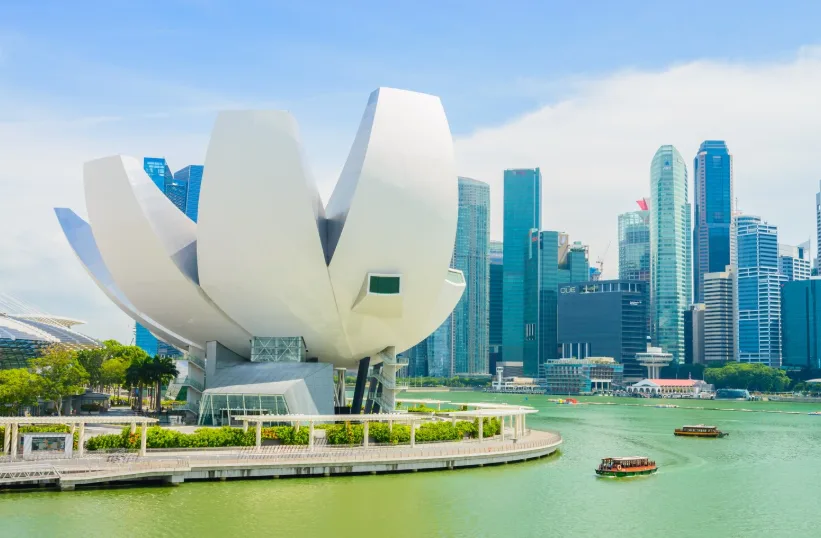
Singapore’s Structural Advantage: Why These Companies Are Building Here
The ten companies on this list span physical AI data infrastructure, stablecoin payments, AI reasoning architecture, enterprise financial services, consumer loyalty, construction AI, biomanufacturing, building inspection, and consumer fintech. That breadth is not random. It reflects a specific combination of structural advantages that Singapore has built over decades and that the 2025 and 2026 budget cycles have strengthened.
The first is institutional credibility. Singapore’s government agencies, including EDB, EnterpriseSG, and the MAS, are active participants in the startup ecosystem as investors, regulators, and customers. ChemT Biotechnology’s SEEDS co-investment and H3 Zoom’s SGInnovate participation reflect government capital validating private sector investment. Kast’s stablecoin operations benefit from MAS’s early engagement with digital asset regulation. Sapient Intelligence’s open-source HRM release connects to NTU’s world-class AI research ecosystem, with co-founder Ziwei Liu maintaining his position as an NTU associate professor alongside his company role.
The second is geographic positioning. Every company on this list is building with Southeast Asian expansion as the default trajectory. Kast launched cross-border financial products. HeyMax acquired a Hong Kong company and is expanding across Asia. H3 Zoom’s Series A investor is East Japan Railway, a signal that the platform is already positioning for Japan and broader Asian infrastructure markets.
Ropedia’s physical AI data collection is expanding across Southeast Asia alongside North America. Singapore’s combination of English language operations, proximity to the world’s fastest-growing consumer markets, and regulatory predictability makes it uniquely suited as the headquarters from which to build regional and then global companies.
The third is the quality of the investment community. The investors behind these companies, Vertex Ventures, QED Investors, Left Lane Capital, Wavemaker Ventures, Temasek Life Sciences Accelerator, JRE Ventures, and Peak XV, are not making bets based on Singapore’s reputation. They are making bets based on specific technical and commercial evidence. When Temasek backs a biomanufacturing startup and East Japan Railway backs a drone inspection platform, the investment reflects due diligence from institutions that can evaluate the claims. That quality of investor discipline in the market is what separates Singapore’s startup ecosystem from ecosystems where capital chases narrative rather than evidence.
None of that guarantees that any company on this list will succeed. What it creates is an environment where the ones that deserve to succeed have a meaningful chance to find out.