

Chai Discovery: The San Francisco AI Company Designing New Molecules for Drug Discovery
What Does Chai Discovery Actually Do?
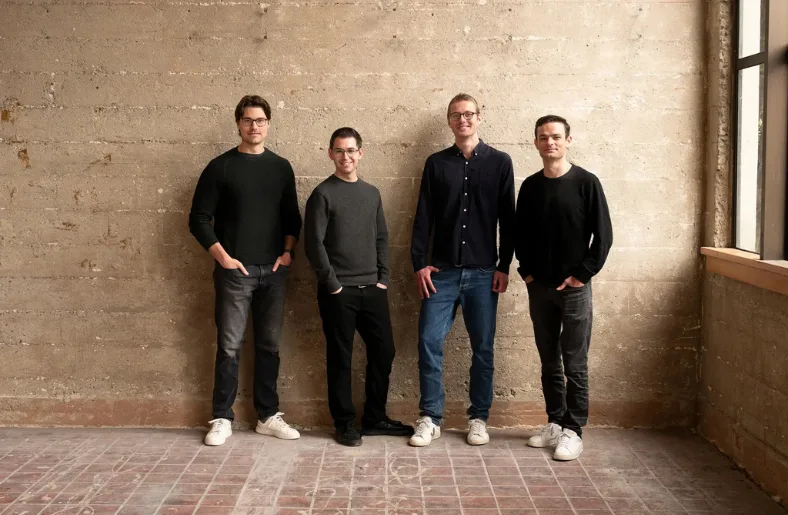
Chai Discovery is building what it describes as a computer-aided design suite for molecules, with the ambition of bringing the precision, speed, and scalability associated with modern engineering into drug discovery. Founded in 2024 by Joshua Meier, Jack Dent, Matthew McPartlon, and Jacques Boitreaud, the San Francisco-based company develops AI models that learn biological structure and interaction and use that understanding to generate molecular designs from scratch.
Rather than treating AI simply as a tool for predicting whether an existing molecule might work, Chai Discovery is building models intended to help scientists create entirely new candidates for specific biological problems. Its platform can work with molecular structures and sequences, including public or private structures and predicted structures, and is designed to help researchers investigate targets that can be particularly difficult for conventional discovery approaches. This includes challenging membrane proteins, small or buried epitopes, non-immunogenic regions, antigen states associated with agonism or antagonism, and targets involving chemical modifications such as glycans.
The company says its platform can achieve double-digit success rates for antibody designs and more than 50% success rates for miniproteins, potentially allowing researchers to move from computational design toward characterization without relying on massive high-throughput screening campaigns. Chai’s commercial ambitions are already visible through relationships with major pharmaceutical companies including Eli Lilly and Pfizer, while more recent collaborations with Novartis, argenx, and Bristol Myers Squibb indicate that its technology is being incorporated into real-world biologics discovery programs.

Chai Discovery’s Approach to Antibody Engineering
Antibodies are among the most important tools in modern medicine because they can recognize biological targets with extraordinary specificity, but discovering a useful antibody has historically involved large experimental libraries, screening, and repeated rounds of optimization. Chai Discovery is attempting to move much of that process into the computational environment by treating antibody development as a molecular engineering problem.
Its approach combines generative modeling with an understanding of three-dimensional biological structure, allowing researchers to specify characteristics such as antibody format, framework sequence, target structure, epitope, species specificity, or cross-reactivity and then generate candidate molecules designed around those constraints. That distinction matters because a successful therapeutic antibody needs to do considerably more than bind to a target. It must also have properties that make it developable as a drug, including appropriate stability and other biochemical characteristics.
Chai’s research indicates that its models can design full-length monoclonal antibodies rather than only smaller antibody fragments, while experimental structural analysis has shown close agreement between certain designed molecules and their computational predictions.
In a November 2025 technical report, Chai researchers reported that more than 86% of tested full-length monoclonal antibodies had strong developability profiles comparable to therapeutic antibodies. The work also demonstrated applications involving functional antibodies designed to mediate GPCR agonism and highly specific antibodies targeting tumor-associated neoepitopes. The broader goal is to reduce the distance between an AI-generated molecular concept and something that can actually enter experimental validation, particularly for biological targets that conventional approaches struggle to reach.

Chai-2: Chai Discovery’s AI System for Generating Novel Antibodies From Scratch
The clearest expression of Chai Discovery’s philosophy is Chai-2, its generative system for de novo antibody design. Released in June 2025, Chai-2 was presented as a major step toward generating antibodies without starting from an experimentally identified binder. The company tested the system across 50 targets and reported a greater than 15% experimental hit rate, with the process from computational generation through synthesis and characterization taking roughly two weeks in the reported experiments.
The significance is not simply that an AI system can propose protein sequences, but that those proposals can be designed around specific biological targets and then tested experimentally without first conducting enormous screening campaigns. Chai-2 combines multimodal generative modeling with all-atom structure prediction, allowing it to reason about molecular geometry and generate novel, epitope-specific binders. The system can work with different antibody formats, including monoclonal antibodies, VH-VL antibodies, and VHHs, while allowing researchers to specify target epitopes and other design criteria.
Chai Discovery later reported that Chai-2 could extend beyond simple binding toward drug-like, full-length antibodies against challenging targets, with cryo-EM experiments supporting the atomic accuracy of its structural predictions. By July 2026, this technology had become a central part of Chai’s commercial story. The company raised $400 million in Series C funding at a $3.8 billion valuation, led by Index Ventures alongside Kleiner Perkins, Sequoia Capital, and Dimension, with participation from a broad group of new and existing investors.
Chai said the financing would accelerate its work on AI-driven molecular design, while its latest Chai-3 model was already showing improvements in target success rates and binding affinity. The trajectory suggests that Chai Discovery is moving toward a broader vision in which drug discovery becomes increasingly programmable: scientists define the biological problem and desired molecular behavior, while AI generates and evaluates potential solutions.