


Meet Queue: The Startup Building the Pharmacy of the Future with AI and Robotics
The Billion-Dollar Problem Hidden Behind the Pharmacy Counter
Modern pharmacies are facing an operational crisis that extends far beyond long waiting lines. Prescription volumes continue to rise as populations age and chronic diseases become more prevalent, yet pharmacies across the United States are experiencing staffing shortages, increasing workloads, and mounting financial pressure. Many pharmacists now spend much of their day performing repetitive dispensing, labeling, verification, and inventory tasks instead of providing the clinical guidance patients increasingly need. At the same time, pharmacy closures have reduced healthcare access in many communities, forcing patients to travel farther or wait longer for essential medications.
These operational inefficiencies affect not only business performance but also patient outcomes, particularly for individuals who depend on timely access to prescription drugs. As healthcare systems search for ways to improve efficiency without compromising safety, automation is emerging as a potential solution. Silicon Valley startup Queue believes the next major evolution in pharmacy will come from fully autonomous prescription fulfillment.
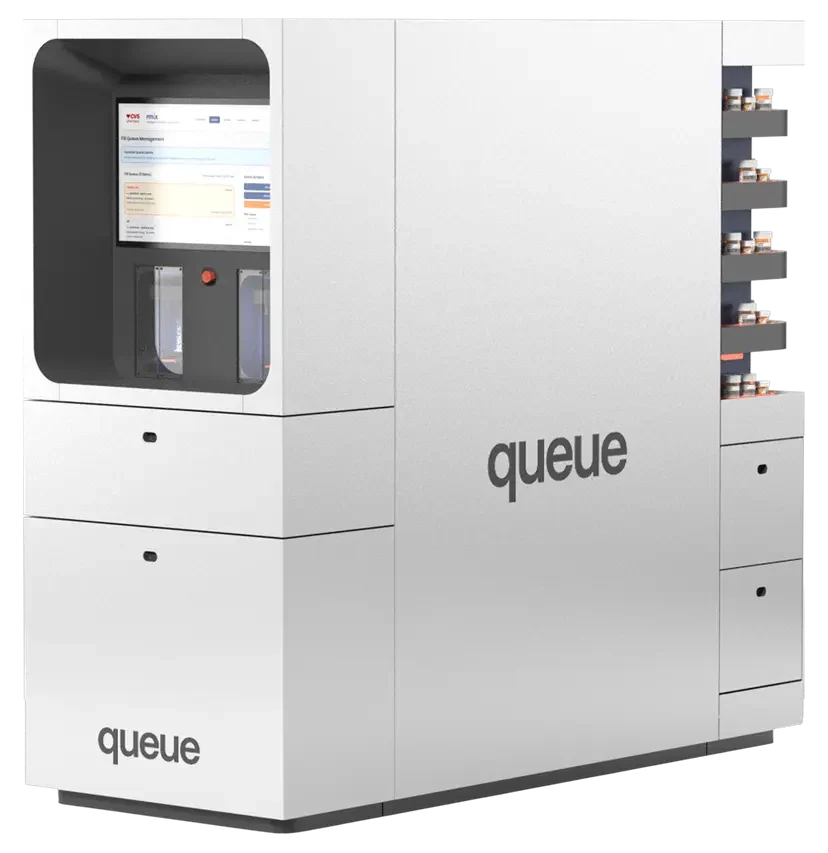
Inside Queue’s Vision for Autonomous Prescription Fulfillment
Queue describes itself as the world’s first fully autonomous robotic pharmacy, designed to move from sealed wholesale medication bottles to filled and verified prescription vials with zero human involvement during the dispensing process. Rather than automating only isolated steps, the company has engineered an end-to-end robotic workflow that integrates medication handling, dispensing, verification, and packaging into a single autonomous system.
The company’s objective is not to replace pharmacists but to redefine their role. By removing repetitive operational tasks, Queue aims to allow pharmacists to dedicate more time to medication counseling, identifying potential drug interactions, answering patient questions, and delivering the clinical expertise that machines cannot replicate. For patients, the system promises prescription fulfillment in 60 seconds or less, reducing wait times while making medication access available whenever needed. Founded by Nick Desai, previously CEO of Heal, and Joshua Liu, whose engineering experience includes Tesla, Waymo, and Zipline, Queue combines expertise in healthcare, robotics, and autonomous systems to address one of healthcare’s most persistent operational bottlenecks.
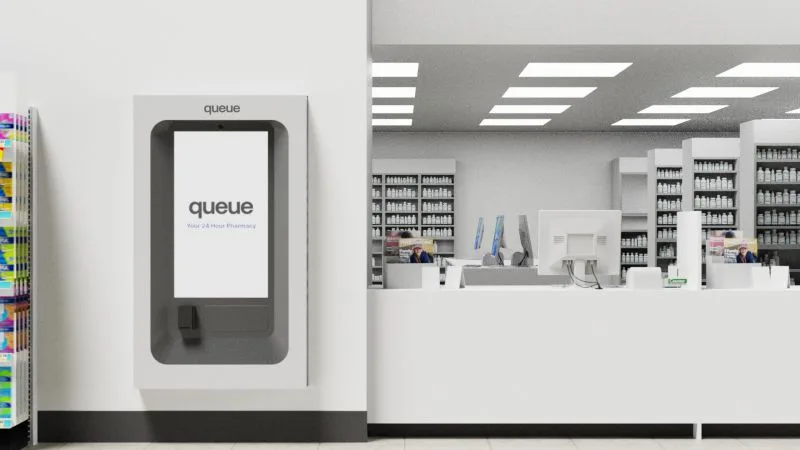
From Prototype to Every Neighborhood Pharmacy: Can Robots Earn a Place in Modern Healthcare?
The broader significance of Queue extends beyond pharmacy automation. Healthcare systems around the world are increasingly exploring how robotics and artificial intelligence can reduce administrative workloads while enabling medical professionals to focus on higher-value clinical care. Hospitals already use robotic systems in surgery, logistics, laboratory operations, and medication management. Pharmacy automation represents another logical step in this progression.
However, widespread adoption will depend on more than technological capability. Fully autonomous pharmacies must demonstrate exceptional reliability, regulatory compliance, patient safety, cybersecurity, and seamless integration with existing healthcare workflows. Building trust among pharmacists, healthcare providers, regulators, and patients will be just as important as improving operational efficiency.
If these challenges can be addressed, robotic pharmacies could fundamentally reshape how medications are dispensed. Instead of replacing healthcare professionals, systems like Queue may become intelligent infrastructure that handles repetitive operational work while enabling pharmacists to practice at the top of their profession. As healthcare demand continues to grow alongside workforce shortages, autonomous pharmacy technology could become an increasingly important component of future healthcare delivery.
Healthcare automation is increasingly shifting from administrative software to physical robotics. Queue demonstrates how autonomous systems can transform one of healthcare’s most repetitive operational workflows while preserving the critical role of pharmacists in patient care. If robotic pharmacies prove reliable at scale, they could help address workforce shortages, improve medication access, and redefine how pharmacy services are delivered in the years ahead.