

Kraken Robotics: Building the Next Generation of Autonomous Underwater Technology
The Company Bringing Intelligence to the Ocean Floor
While artificial intelligence and robotics have transformed manufacturing, aviation, and autonomous vehicles, the oceans remain one of the world’s most challenging environments for autonomous technology. GPS signals cannot penetrate water, visibility is often limited, communication is constrained, and extreme pressures make underwater operations both technically difficult and expensive. Yet governments, energy companies, researchers, and defense organizations increasingly depend on accurate information from beneath the surface for infrastructure inspection, seabed mapping, resource exploration, environmental monitoring, and maritime security.
Canadian marine technology company Kraken Robotics is developing the technologies that enable autonomous underwater vehicles to operate more intelligently in these demanding conditions. Specializing in advanced sensors, underwater imaging, energy systems, and robotic platforms, the company is helping transform underwater operations from slow, manually intensive missions into data-driven autonomous workflows powered by high-resolution ocean intelligence.
Three Technologies at the Heart of Kraken Robotics
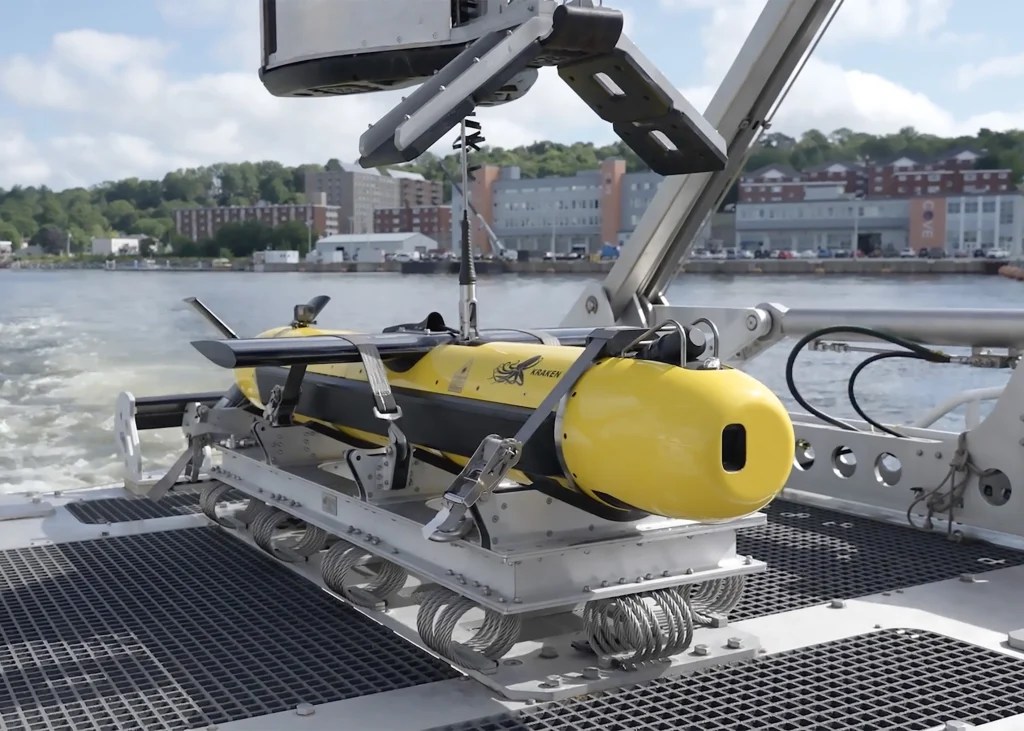
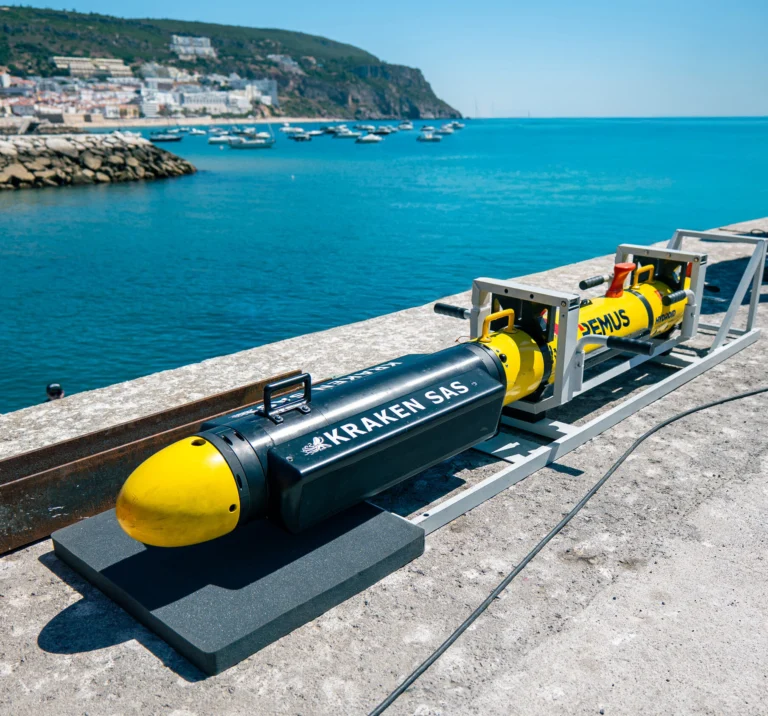
At the core of Kraken Robotics’ portfolio is Kraken SAS, one of the company’s flagship technologies based on Synthetic Aperture Sonar (SAS). Unlike conventional sonar systems, SAS combines multiple acoustic observations to generate exceptionally high-resolution images of the seabed while maintaining wide survey coverage. This enables underwater vehicles to identify small objects, inspect infrastructure, and produce detailed seabed maps with far greater clarity than traditional sonar technologies.
Complementing this imaging capability is KATFISH, a high-speed towed Synthetic Aperture Sonar platform designed for rapid seabed surveys across large areas. KATFISH enables military and commercial operators to perform mine countermeasure missions, infrastructure inspections, and offshore surveys with improved efficiency while maintaining extremely detailed imaging performance. Supporting these autonomous platforms are SeaPower Batteries, high-performance pressure-tolerant lithium-ion battery systems engineered specifically for underwater vehicles. By delivering reliable power under extreme subsea conditions, SeaPower enables longer-duration autonomous missions while supporting increasingly sophisticated underwater robotic operations.
From Sonar to Seabed Mapping: Solutions Built for the Underwater World
Beyond hardware, Kraken Robotics provides an expanding portfolio of integrated underwater surveying and inspection services. Its Synthetic Aperture Sonar survey capabilities enable highly detailed seabed mapping for defense, offshore energy, and scientific applications, while specialized sub-bottom imaging helps reveal geological structures beneath the seafloor that cannot be observed using conventional surface mapping techniques.
The company also offers LiDAR-based underwater mapping, acoustic coring, and advanced geospatial survey solutions that support infrastructure development, environmental monitoring, cable routing, offshore construction, and marine research. Together, these technologies allow operators to collect precise underwater data more efficiently than traditional survey methods, reducing operational costs while improving the quality and consistency of subsea intelligence. As digital twins and autonomous infrastructure become more common across marine industries, detailed underwater mapping is becoming increasingly important for long-term asset management and environmental analysis.
Why Defense, Energy, and Marine Science Are Betting on Kraken Robotics
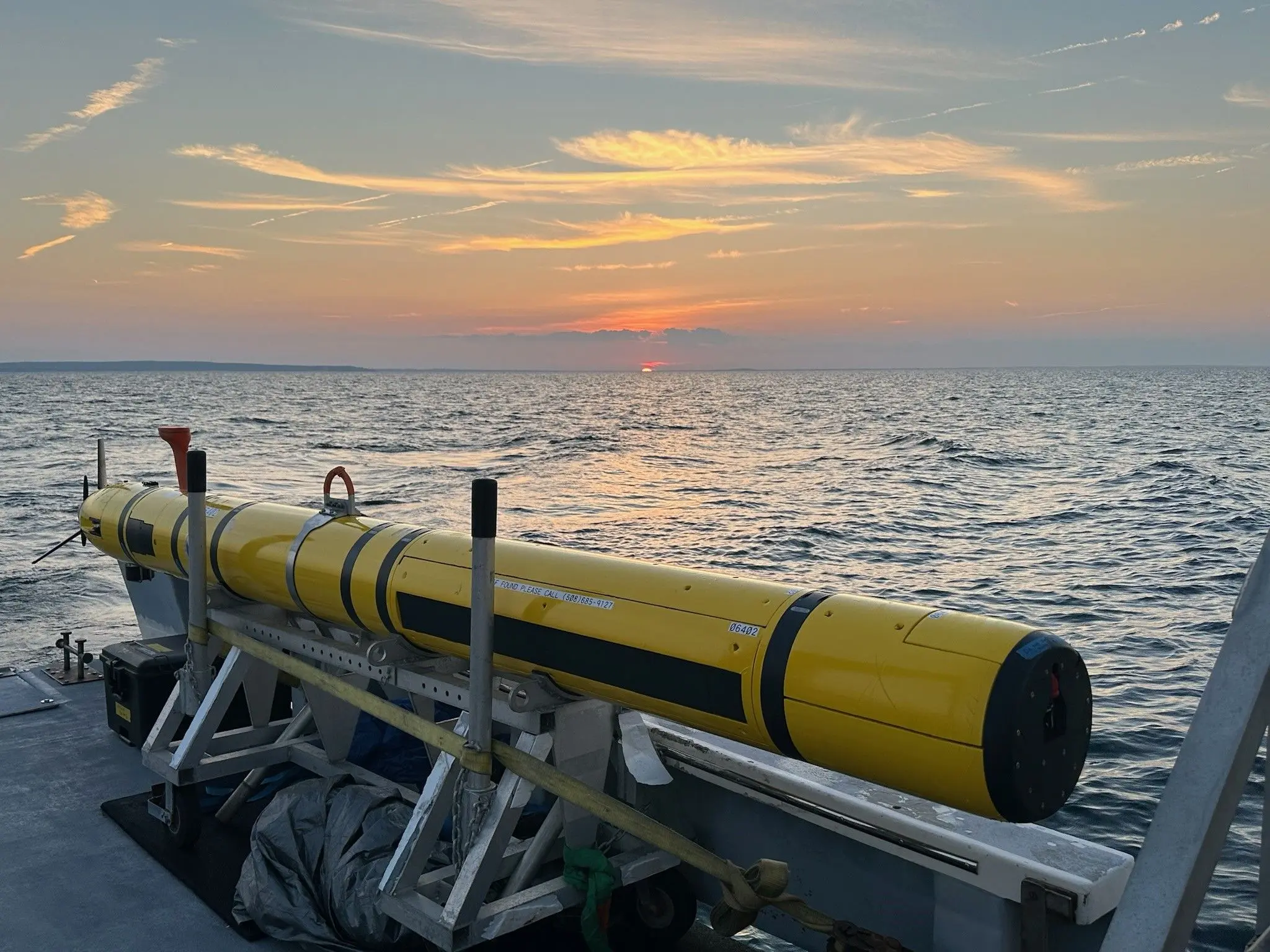
Kraken Robotics serves industries where underwater information has become strategically important. In defense, autonomous underwater vehicles equipped with high-resolution sonar support mine countermeasures, maritime surveillance, seabed intelligence, and protection of critical underwater infrastructure. As geopolitical attention increasingly shifts toward subsea cables, offshore assets, and naval operations, underwater robotics are becoming an essential component of modern maritime security.
The offshore energy industry relies on detailed subsea surveys for oil and gas infrastructure, offshore wind farms, pipelines, and underwater construction projects, where accurate mapping reduces operational risk and improves project planning. Marine scientists similarly use autonomous survey technologies to study ocean ecosystems, geological formations, and climate-related changes affecting the seabed. Across all three sectors, organizations are investing in technologies that collect higher-quality underwater data while reducing the need for costly manned operations.

Can Kraken Robotics Help Shape the Future of Ocean Intelligence?
The global ocean economy is becoming increasingly dependent on autonomous technologies capable of operating where humans face significant limitations. Underwater robotics, advanced sensing, artificial intelligence, and high-capacity energy systems are converging to create a new generation of intelligent subsea infrastructure capable of persistent observation, autonomous inspection, and continuous environmental monitoring.
Kraken Robotics is positioning itself at the center of this transformation by combining advanced sonar, robotic platforms, underwater energy storage, and geospatial intelligence into a comprehensive technology ecosystem. Rather than focusing solely on individual products, the company is helping establish the digital infrastructure needed for long-term autonomous operations beneath the ocean’s surface.
As nations expand offshore renewable energy, strengthen maritime security, protect critical infrastructure, and deepen scientific understanding of the oceans, demand for reliable underwater intelligence will continue to grow. In that future, companies capable of turning the ocean floor into a continuously observable digital environment may become as strategically important as those building autonomous systems in the skies.
The future of autonomy extends far beyond self-driving cars and aerial drones. The oceans remain one of the least digitized and least understood environments on the planet, creating enormous opportunities for companies developing intelligent underwater technologies. Kraken Robotics illustrates how advances in sonar, robotics, energy systems, and geospatial intelligence are laying the foundation for a future where autonomous machines continuously map, monitor, and protect the world’s underwater infrastructure and ecosystems.