

From Garbage to Green Fuels: Inside Wildfire Energy’s Waste-to-Energy Revolution
The Growing Challenge of Unrecyclable Waste
Recycling has become a cornerstone of modern waste management, but it addresses only part of the global waste problem. Every year, hundreds of millions of tonnes of municipal solid waste, industrial residues, agricultural biomass, and mixed plastics remain unsuitable for conventional recycling. Much of this residual waste ends up in landfills, where it occupies valuable land and releases methane, a greenhouse gas significantly more potent than carbon dioxide over the short term.
As urban populations expand and industrial activity grows, governments face mounting pressure to reduce landfill dependence while extracting greater value from discarded materials. Simply improving recycling rates is unlikely to eliminate the challenge because many waste streams are contaminated, chemically complex, or economically impractical to recycle.
This has created growing interest in technologies capable of converting unrecyclable waste into useful energy and industrial feedstocks. Australian climate-tech company Wildfire Energy is developing one such solution by applying advanced gasification to transform low-value waste into high-value energy products while supporting broader circular economy objectives.
Inside MIHG: The Waste Gasification Technology That Could Change Renewable Energy
Gasification is a thermochemical process that converts carbon-based materials into syngas, a mixture primarily composed of hydrogen and carbon monoxide. Unlike direct combustion, which burns waste to generate heat, gasification partially oxidizes feedstocks under carefully controlled conditions, producing a versatile gas that can later be converted into electricity, fuels, hydrogen, or chemicals. Conventional gasifiers, however, often struggle with operational complexity, feedstock variability, slag formation, and maintenance challenges when processing mixed waste streams.
Wildfire Energy has developed a proprietary process known as Moving Injection Horizontal Gasification (MIHG) to address many of these engineering limitations. Instead of relying on conventional oxygen injection designs, MIHG employs a moving oxygen injection system while the waste itself remains comparatively stationary. This configuration is intended to improve temperature control, increase feedstock flexibility, simplify reactor operation, and reduce many of the technical issues associated with traditional gasifiers.
The modular architecture also enables plants to be deployed at different scales depending on local waste availability, making the technology suitable for distributed waste management rather than only large centralized facilities. Validation work continues through the company’s pilot plant in Brisbane, providing operational data that supports commercialization and future industrial deployment.
Wildfire Energy: From Waste to Hydrogen, Electricity, and Sustainable Fuels
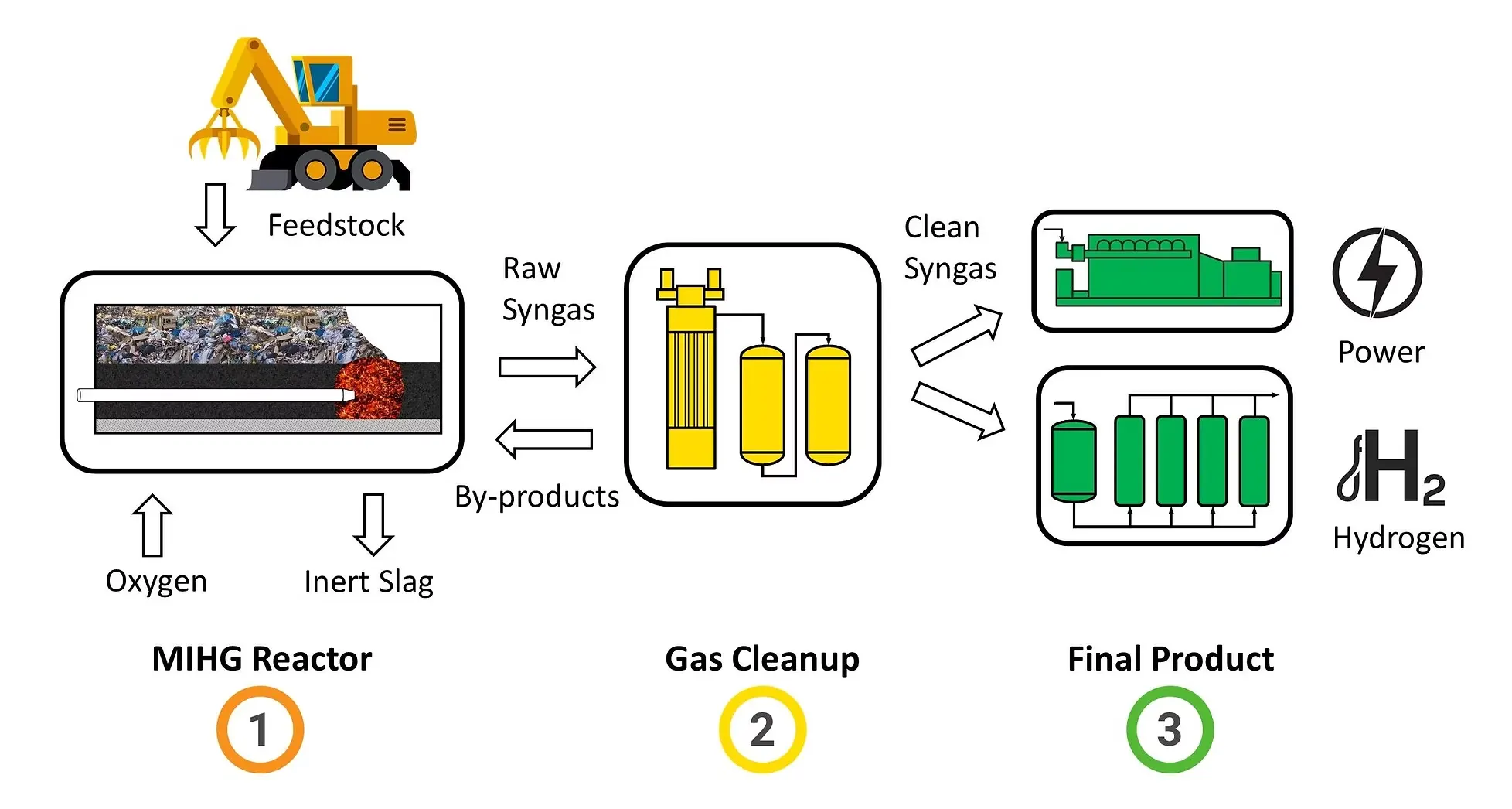
The value of Wildfire Energy’s technology lies in what the waste becomes after gasification. The MIHG process generates high-quality syngas that serves as a versatile intermediate feedstock for multiple downstream applications. The gas can be used directly for electricity generation or combined heat and power (cogeneration), allowing industrial facilities to simultaneously produce electricity and useful thermal energy with improved overall efficiency.
Beyond power generation, syngas creates opportunities for producing renewable hydrogen, a key energy carrier expected to support future decarbonization across transportation and heavy industry. It can also be converted into renewable methanol, sustainable aviation fuel (SAF), ammonia, and a range of industrial chemicals that currently rely heavily on fossil feedstocks. One particularly important capability is the platform’s ability to process mixed plastic waste that cannot easily be recycled mechanically, creating an alternative pathway for materials that would otherwise be destined for landfill or incineration.
By transforming diverse waste streams into valuable energy products and chemical feedstocks, Wildfire Energy is positioning waste as a resource rather than simply a disposal challenge.
Can Waste-to-Energy Become a Pillar of the Circular Economy?
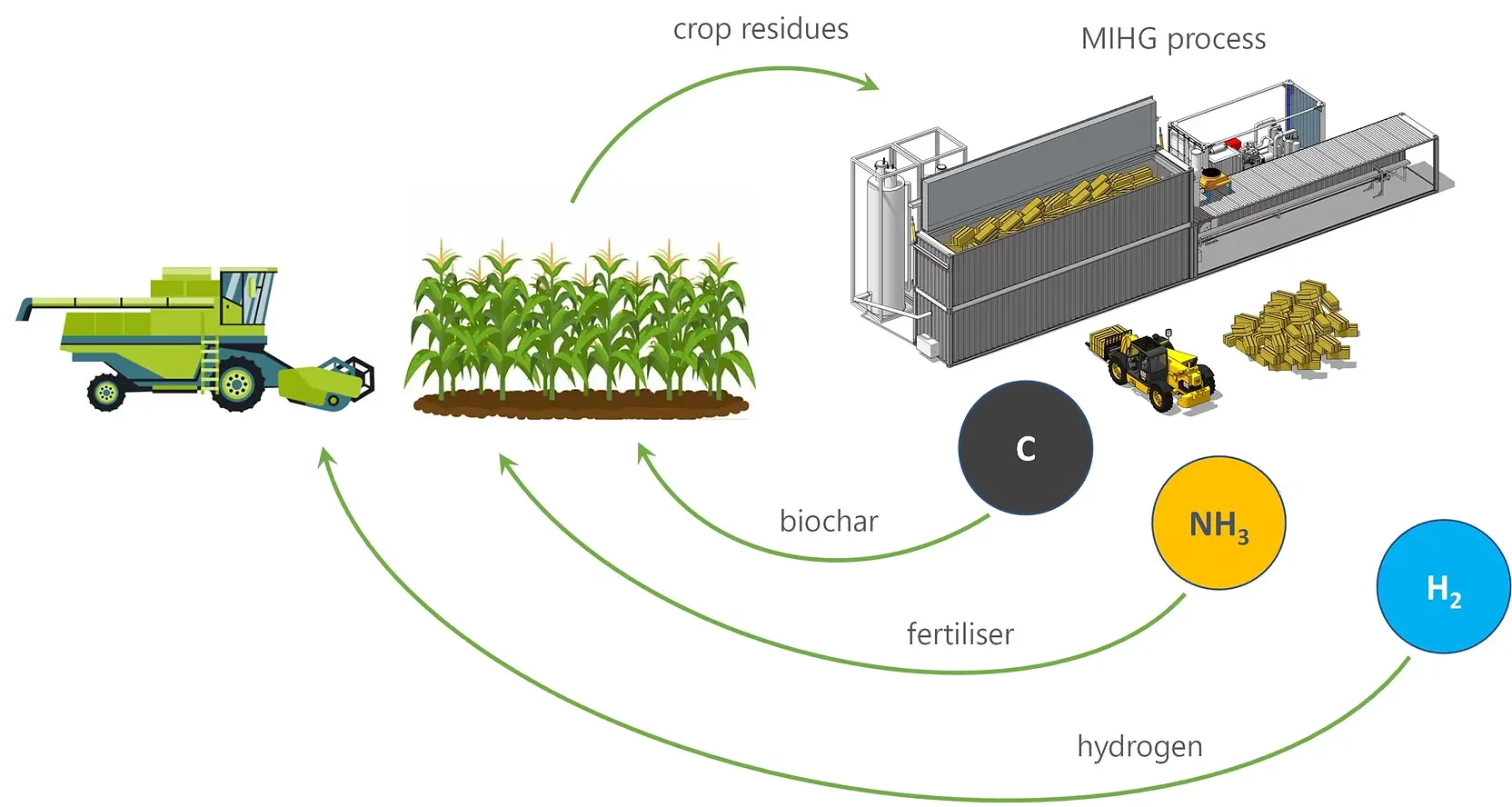
Waste-to-energy technologies are increasingly being viewed as complementary to recycling rather than competitors. While reusable materials should remain within recycling systems whenever possible, residual waste still requires environmentally responsible treatment. Converting these difficult waste streams into useful energy products can reduce landfill volumes, lower methane emissions, recover embedded carbon value, and contribute to more circular resource management.
Wildfire Energy’s broader vision extends beyond a single technology platform. Through initiatives including Project Proton, modular MIHG plants, industry partnerships, accelerator programs, and continued technology validation, the company is working toward commercial deployment across multiple markets. Its technology has also received recognition through grants and industry awards, reflecting growing interest in advanced gasification as part of future low-carbon infrastructure.
Commercial scale-up nevertheless remains a significant challenge. Waste-to-energy facilities require substantial capital investment, long-term feedstock agreements, regulatory approvals, and demonstrated operational reliability before widespread adoption can occur. Even so, as governments seek practical pathways to reduce landfill dependence while producing cleaner fuels and industrial feedstocks, technologies like MIHG could become increasingly important components of the global energy transition.
Rather than viewing waste solely as an environmental liability, Wildfire Energy is helping redefine it as a renewable carbon resource capable of supporting cleaner electricity, hydrogen production, sustainable fuels, and the emerging circular economy.
Recycling alone cannot solve the global waste challenge. Technologies that recover value from residual waste will likely become an essential part of future circular economies. Wildfire Energy’s MIHG platform illustrates how advanced gasification can transform difficult waste streams into low-carbon energy and industrial feedstocks. If the company succeeds in commercializing its modular approach at scale, it could help shift waste management from a disposal problem to a renewable resource opportunity.