

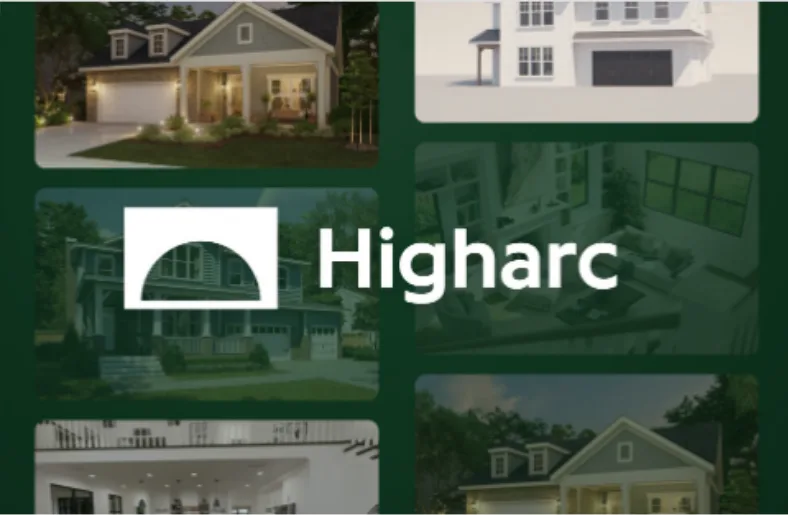
Higharc: Building the Future of Homebuilding With AI
Residential construction remains one of the world’s largest industries, yet much of the homebuilding process still relies on disconnected software, manual coordination, and repetitive administrative work. Architects, sales teams, estimators, procurement specialists, and construction managers often work across separate systems, creating delays, inconsistencies, and costly errors. Every design change can ripple through pricing, material requirements, permitting, and construction schedules, making collaboration increasingly complex as projects scale.
As artificial intelligence begins transforming engineering, manufacturing, and product design, homebuilding is emerging as another industry ready for software-driven automation. Higharc is addressing this opportunity through what it calls a Homebuilding Cloud, an integrated platform designed to connect the entire lifecycle of residential development. Rather than optimizing a single stage of construction, the company aims to create a shared digital environment where design, estimation, sales, procurement, and building all operate from the same source of truth.

Inside Higharc’s AI-Powered Platform: From Generative Design to Digital Home Models
At the core of Higharc’s platform is Studio, where builders create configurable home plans using intelligent digital design tools. Instead of maintaining static architectural drawings, Studio generates living digital home models that automatically update as layouts, dimensions, or specifications change. This reduces repetitive drafting work while helping teams maintain consistency across increasingly complex product portfolios.
Those digital models extend into Config, which allows builders to define configurable floor plans, structural options, and buyer selections while ensuring that every permitted combination remains technically valid. Complementing these capabilities is Photoreal, which produces high-quality visualizations of homes before construction begins, allowing builders and buyers to explore realistic renderings of design choices. Together, these tools create a unified digital foundation where design decisions, engineering requirements, and customer selections remain synchronized throughout the development process.

From Buyer Experience to Construction: How Higharc Connects Sales, Estimation, and Building?
Higharc’s broader platform extends beyond design into the operational side of homebuilding. Showroom enables prospective buyers to explore homes, customize layouts, and visualize available options through interactive digital experiences that connect directly to the underlying construction model. Because buyer selections remain linked to the digital home model, design changes can flow automatically into downstream processes without requiring extensive manual coordination.
The platform also incorporates AI-powered estimating capabilities that help suppliers and builders generate more accurate material quantities and project costs. Ready to Build supports production planning by preparing construction-ready documentation derived directly from approved home models, reducing the risk of inconsistencies between design and execution. Finally, Build helps coordinate construction activities using the same digital information generated earlier in the workflow. By connecting sales, estimating, procurement, and field operations, Higharc seeks to eliminate many of the information gaps that traditionally slow residential construction projects.
Higharc Raises $95M Series C to Scale AI Across the Homebuilding Industry
To accelerate this vision, Higharc has raised $95 million in Series C funding, providing additional capital to expand its AI-powered homebuilding platform and deepen its presence across the residential construction sector. The investment reflects growing confidence that software and artificial intelligence can modernize an industry that has historically lagged behind many others in digital transformation.
The opportunity extends far beyond improving design software. Homebuilders face ongoing pressures related to labor shortages, rising material costs, evolving buyer expectations, and increasing project complexity. Platforms capable of connecting every stage of development through shared digital models and intelligent automation could significantly improve efficiency while reducing costly errors throughout the construction lifecycle.
Homebuilding has long suffered from fragmented workflows and disconnected software. Higharc’s approach demonstrates how AI and shared digital models can unify design, sales, estimating, and construction into a single operational platform. If adoption continues to grow, the next major leap in residential construction may come from smarter software that coordinates every stage of the process. As generative AI, digital twins, and workflow automation continue advancing, the future of homebuilding may increasingly resemble advanced manufacturing, where every stakeholder operates from a continuously updated digital model. Higharc is positioning itself to become one of the platforms helping drive that transition.