


Sicona Battery Technologies Could Make EV Batteries Charge Faster and Last Longer
Why Are the World’s Best Batteries Hitting a Wall?
Lithium-ion batteries have powered the rise of smartphones, laptops, electric vehicles, and renewable energy storage for more than three decades. Yet despite continuous improvements, much of today’s battery industry still depends on graphite anodes, a technology approaching its practical performance limits. Automakers want electric vehicles that travel farther, charge faster, and maintain capacity over thousands of charging cycles, but squeezing additional performance from conventional lithium-ion designs has become increasingly difficult.
While solid-state batteries attract significant attention as a possible long-term successor, widespread commercial adoption remains several years away due to manufacturing complexity, cost, and scalability challenges. This has created growing interest in technologies that can improve existing lithium-ion batteries without requiring manufacturers to redesign their entire production infrastructure. Australian battery materials company Sicona Battery Technologies is pursuing exactly that opportunity by developing advanced silicon-carbon anode materials that integrate into current lithium-ion cell architectures while delivering meaningful performance improvements.
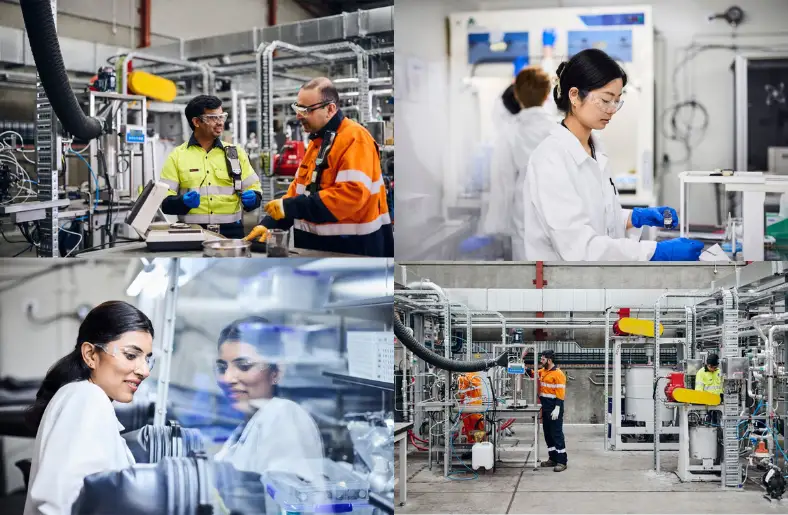
Why Every EV Maker Is Watching Silicon Anodes?
The anode plays a critical role in determining how much energy a lithium-ion battery can store and how quickly it can charge. Silicon has long been viewed as one of the most promising alternatives to graphite because it can theoretically store far more lithium ions. The challenge, however, is that pure silicon expands significantly during charging and discharging, causing mechanical degradation that reduces battery life.
Sicona’s approach centers on silicon-carbon (SiCx®) anode materials, which combine the high energy-storage potential of silicon with engineered structures designed to improve stability throughout repeated charging cycles. Rather than manufacturing complete batteries, the company supplies advanced anode materials that battery manufacturers can integrate into existing lithium-ion cell designs.
According to the company, its technology can increase battery energy density by more than 20% while improving charging rates by over 40% compared with conventional graphite-only batteries. Because the materials are intended to fit within current manufacturing processes, they offer battery producers a pathway to higher performance without abandoning established production lines. This compatibility makes silicon-carbon anodes particularly attractive as electric vehicle manufacturers seek practical improvements that can be deployed at industrial scale.

Can Sicona Battery Technologies Deliver Before Solid-State Batteries Arrive?
The race to develop next-generation batteries is increasingly becoming a contest between evolutionary improvements and revolutionary breakthroughs. Solid-state batteries continue to attract major investment because of their long-term potential for higher energy density and improved safety. However, significant engineering and manufacturing hurdles remain before they can be produced economically at global scale.
Companies like Sicona are taking a more immediate approach by improving the performance of conventional lithium-ion batteries already used throughout the automotive and energy storage industries. If silicon-carbon anode materials can deliver higher energy density, faster charging, and longer battery life while remaining compatible with existing manufacturing infrastructure, they could become an important transitional technology during the coming decade.
The opportunity extends well beyond electric vehicles. Higher-performance lithium-ion batteries are increasingly needed for consumer electronics, grid-scale energy storage, aviation, industrial equipment, and emerging mobility applications. As demand for batteries continues accelerating worldwide, improvements in battery materials may prove just as important as entirely new battery chemistries.

Whether silicon-carbon anodes ultimately become a long-term industry standard will depend on manufacturing scale, cost competitiveness, and real-world durability. Nevertheless, Sicona Battery Technologies demonstrates that the future of battery innovation may arrive not only through revolutionary new chemistries but also through smarter materials that unlock significantly better performance from the batteries already powering the global energy transition.
Companies like Sicona Battery Technologies are showing that advanced materials can significantly improve existing battery architectures while leveraging today’s manufacturing infrastructure. If silicon-carbon anodes achieve large-scale commercial adoption, they could help bridge the gap between current lithium-ion technology and the eventual arrival of solid-state batteries.