

Melbourne-Based Nutromics Is Developing Advanced Real-Time Diagnostic Technology
Diagnostics Today Are Delayed, Fragmented, and Reactive
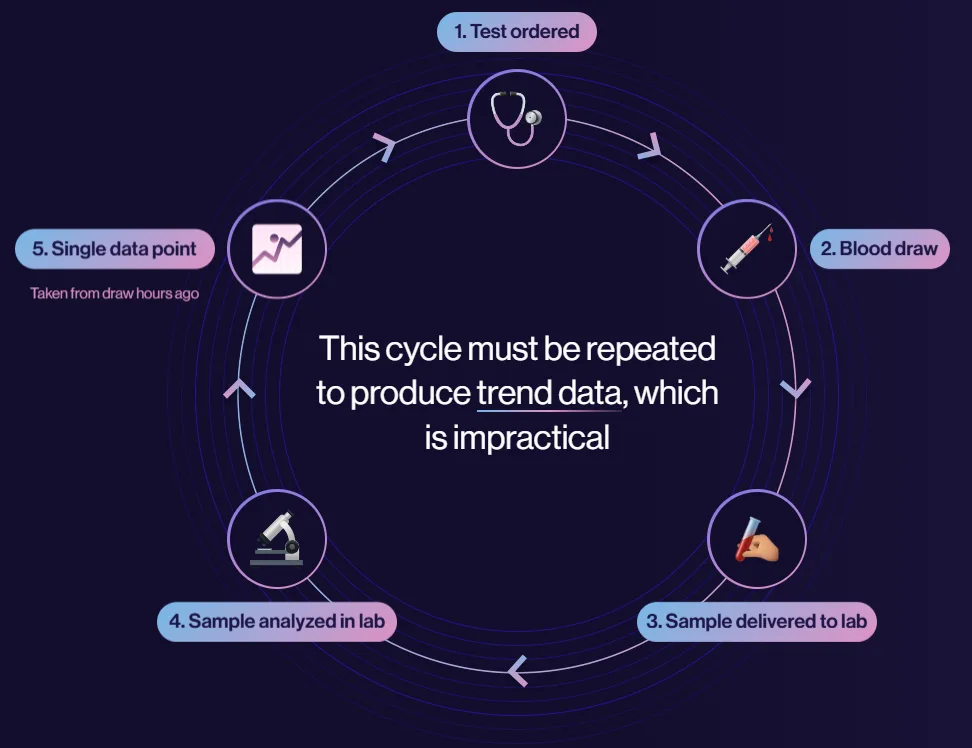
Modern healthcare systems still operate on a model that captures only fragments of what is happening inside the human body. Diagnostic tools such as blood tests, lab panels, and hospital monitoring systems provide periodic insights, often hours or days apart. These tools are clinically validated and widely trusted, yet they inherently create gaps between physiological changes and their detection. A patient’s condition can evolve significantly in the time between two tests, leaving clinicians to make decisions based on incomplete or outdated information. This becomes particularly critical in high-risk scenarios where timing directly influences outcomes. The existing diagnostic framework is therefore not limited by accuracy but by frequency and continuity.
Nutromics is built around addressing this limitation. Instead of improving individual tests, the company is attempting to change the structure of diagnostics itself. The goal is to replace intermittent measurement with continuous monitoring, creating a system where changes in the body are tracked as they happen rather than inferred after the fact. This represents a shift from reactive healthcare, where action follows symptoms, to a more responsive model where intervention can occur earlier.
The implications of this shift extend beyond clinical settings. For patients, it introduces the possibility of continuous visibility into their health status without requiring repeated hospital visits. For clinicians, it offers a more detailed understanding of disease progression, enabling decisions that are informed by trends rather than isolated data points. The challenge, however, lies in building a system that can deliver this level of insight reliably, without adding complexity or discomfort to the patient experience.
From Snapshots to Continuous Molecular Monitoring

Nutromics’ central idea is encapsulated in its lab-on-a-patch concept, a wearable device designed to sit on the skin and continuously monitor molecular signals. Unlike traditional wearables that focus on external metrics such as movement or heart rate, this approach targets biochemical markers within the body. These markers provide deeper insights into physiological processes, including drug levels, infection indicators, and cardiovascular signals.
The transition from snapshot-based diagnostics to continuous monitoring introduces a different way of understanding health. Instead of asking what a patient’s condition looks like at a specific moment, clinicians can observe how it evolves over time. This allows for the identification of patterns that would otherwise remain hidden. For example, fluctuations in a biomarker may indicate the early stages of a condition before symptoms become apparent. Continuous monitoring makes it possible to detect these changes and respond accordingly.
This approach also reduces dependence on patient compliance. Traditional diagnostics often require patients to schedule tests, visit clinics, and follow specific protocols. A wearable patch removes much of this friction by operating passively in the background. Data collection becomes an ongoing process that does not rely on active participation. This increases the likelihood of consistent monitoring, which is essential for accurate analysis.
However, the shift to continuous monitoring is not without its challenges. The system must maintain accuracy over extended periods, operate under varying conditions, and ensure that the data it generates is both meaningful and actionable. Nutromics’ approach suggests that these challenges can be addressed through a combination of advanced biosensing and machine learning.
How AI-Designed Biosensors Enable Real-Time Insights??
At the core of Nutromics’ technology are DNA-based biosensors known as aptamers. These molecules are engineered to bind to specific targets, allowing the system to detect and measure particular biomarkers. The design of these aptamers is supported by AI, which enables the identification of structures that can operate effectively within complex biological environments.
The integration of AI is critical not only in the design phase but also in the interpretation of data. Biological signals are inherently noisy, influenced by a range of factors including movement, temperature, and environmental conditions. The system must be able to distinguish between meaningful signals and background noise, ensuring that the data it produces is reliable. Machine learning models are used to filter and interpret these signals, translating them into insights that can be used by clinicians.
One of the key challenges in this process is maintaining stability over time. Continuous monitoring requires sensors that can operate consistently without degradation. This is particularly important in a wearable format, where the device must function under real-world conditions. Nutromics’ approach involves optimizing both the hardware and the underlying models to ensure that performance remains consistent.
The result is a system that can provide real-time insights into molecular activity, offering a level of detail that is not accessible through traditional diagnostics. By combining biosensing with AI, Nutromics is attempting to create a platform that bridges the gap between raw biological data and clinical decision-making.
Why Continuous Monitoring Could Change Clinical Decision-Making?
The introduction of continuous molecular data has the potential to reshape how clinicians approach diagnosis and treatment. In traditional settings, decisions are often based on limited data points, requiring clinicians to make assumptions about how a patient’s condition may have changed since the last measurement. Continuous monitoring reduces this uncertainty by providing a more complete picture of the patient’s state.
This has particular relevance in conditions where rapid changes occur. In critical care, for example, delays in detecting changes can lead to severe complications. Continuous monitoring allows for earlier identification of these changes, enabling more timely interventions. This can improve outcomes by addressing issues before they escalate.
The availability of real-time data also supports more personalized treatment. Instead of applying standardized protocols, clinicians can adjust treatments based on how a patient’s condition evolves. This is especially important in cases where responses to treatment vary significantly between individuals. Continuous data provides the feedback needed to make these adjustments effectively.
At the same time, the introduction of continuous monitoring raises new questions. Clinicians must interpret a larger volume of data, which requires tools and frameworks that can present information in a usable form. There is also a need to ensure that increased data does not lead to unnecessary interventions. The balance between responsiveness and overreaction will be a key factor in the adoption of such systems.
AU$3M CRC Funding Signals Focus on Sepsis Management
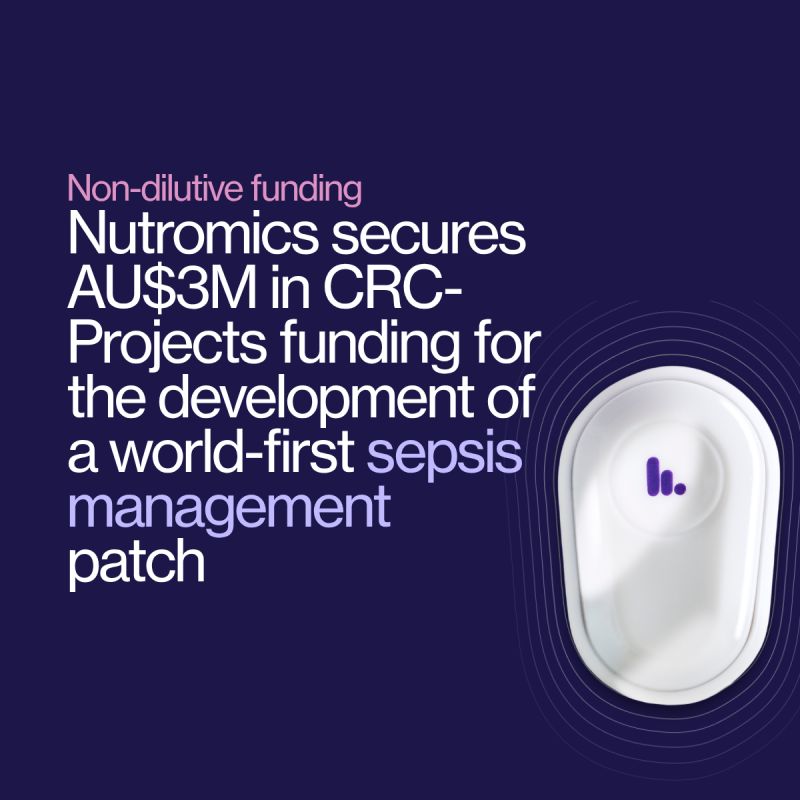
Nutromics’ AU$3 million CRC Projects funding is directed toward the development of a sepsis management patch, highlighting a targeted application of its technology. Sepsis is a condition where early detection is critical, as delays can significantly increase mortality risk. The ability to monitor relevant biomarkers continuously provides an opportunity to identify the onset of sepsis earlier than traditional methods allow.
The funding supports the advancement of this specific use case, enabling Nutromics to refine its technology in a high-impact area. It also reflects broader interest in solutions that can address time-sensitive medical challenges. By focusing on sepsis, Nutromics is demonstrating how its platform can be applied to conditions where continuous monitoring offers clear advantages.
Beyond the immediate application, the funding serves as validation of the underlying approach. It indicates confidence in the feasibility of continuous diagnostics and its potential to improve patient outcomes. For Nutromics, this represents an opportunity to move from concept to implementation, while building evidence that supports broader adoption.
From Antibiotics to Broader Clinical Applications
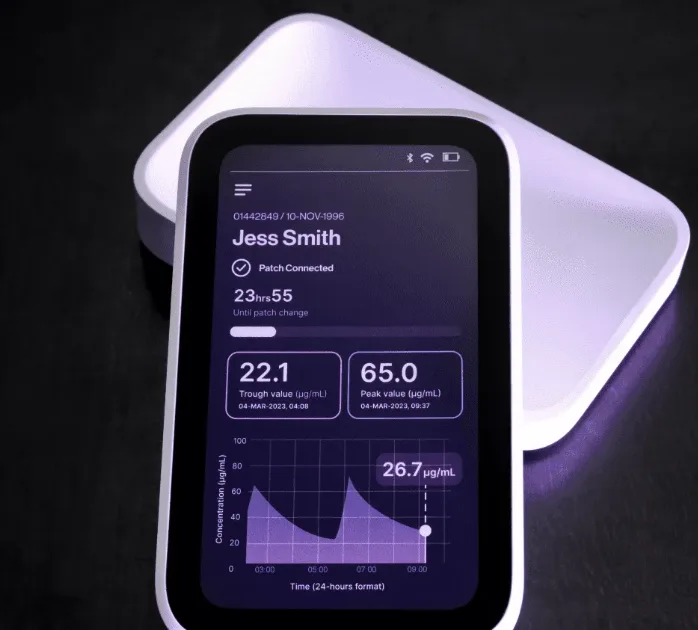
Nutromics’ initial focus on monitoring the antibiotic vancomycin provides a practical entry point for its technology. Vancomycin requires careful dosing to balance effectiveness with the risk of toxicity, making it a suitable candidate for continuous monitoring. By demonstrating the ability to track drug levels in real time, Nutromics can establish the reliability of its platform.
This application is part of a broader strategy that includes expansion into areas such as cardiology, triage, and other critical care scenarios. The underlying technology is designed to support multiple biomarkers, enabling a more comprehensive view of patient health. This multi-target capability is essential for addressing complex conditions that involve multiple physiological processes.
The broader vision involves creating a platform that can be integrated into various aspects of healthcare, from hospital settings to outpatient care. By providing continuous insights, the system has the potential to support a wide range of applications, including early diagnosis, treatment optimization, and long-term monitoring.
The challenge lies in scaling the technology while maintaining accuracy and reliability. Each application introduces new variables, requiring the system to adapt to different conditions and requirements. Nutromics’ approach suggests that this can be achieved through ongoing refinement of both the hardware and the underlying models.
What Continuous Diagnostics Could Mean for Healthcare Systems?
The adoption of continuous diagnostic systems has implications that extend beyond individual patients. It introduces a new layer of data into healthcare systems, which can improve efficiency and support better decision-making. Early detection of conditions can reduce the need for intensive treatments, lowering overall costs and improving outcomes.
At the system level, continuous monitoring can enable more proactive care models. Instead of responding to symptoms, healthcare providers can identify risks and intervene earlier. This has the potential to reduce hospital admissions and improve the management of chronic conditions.
However, the integration of such systems requires changes in infrastructure and workflows. Healthcare providers must adapt to new methods of data collection and analysis, ensuring that the information generated is used effectively. There are also considerations related to data privacy and security, particularly when dealing with continuous streams of sensitive information.
The success of technologies like Nutromics’ patch will depend on how well these challenges are addressed. Technical capability alone is not sufficient. The system must fit within existing healthcare frameworks while providing clear benefits that justify its adoption.
Nutromics is addressing a structural limitation in diagnostics by focusing on continuity rather than precision alone. The concept has strong clinical relevance, but its real impact will depend on how reliably it performs outside controlled environments and how effectively healthcare systems integrate continuous data into decision-making.