

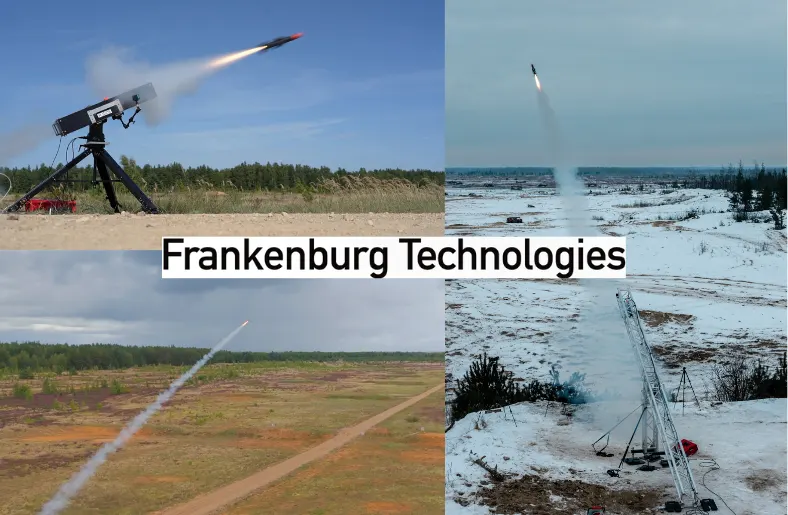
Can Frankenburg Technologies Make Missile Defence Cheap Enough for Drone Warfare?
The Rising Cost Problem in Modern Air Defence
One of the biggest challenges facing modern militaries is not a lack of defensive technology but the economics of using it. Across recent conflicts, relatively inexpensive drones have repeatedly forced defenders to deploy interceptor missiles that cost tens or even hundreds of times more than the threats they are designed to destroy. This creates an unsustainable equation. Adversaries can launch large numbers of low-cost unmanned aerial systems, while defenders risk exhausting both inventories and budgets trying to stop them. As drone swarms become more common and autonomous systems proliferate, military planners are increasingly searching for solutions that can scale economically.
The future of air defense may depend not only on whether a missile can hit its target but whether it can do so at a cost that makes sense in prolonged conflicts. This is the problem that Frankenburg Technologies is attempting to solve. The company believes missile defense must undergo the same transformation that drones themselves have experienced: moving from expensive, limited systems toward mass-manufacturable technologies that can be deployed at scale.

Frankenburg Technologies and the Push for Scalable Missile Production
Founded in Europe and headquartered in Tallinn, Frankenburg Technologies has built its strategy around changing the economics of missile defense. Rather than designing systems that prioritize maximum performance at any cost, the company focuses on affordability, manufacturing speed, and sovereign production. Its philosophy centers on the idea that future military readiness will depend heavily on how quickly defensive systems can be produced and replenished during periods of sustained conflict.
To support this vision, Frankenburg incorporates modular architectures, commercially available components, and containerized manufacturing approaches into its designs. The objective is to enable localized production close to the point of use while reducing dependence on complex global supply chains. This manufacturing-first approach differentiates the company from many traditional defense contractors whose production models were built for lower-volume procurement cycles. By emphasizing scalable production from the outset, Frankenburg is positioning itself as part of a broader movement within defense technology that treats manufacturing capacity as a strategic capability rather than simply an industrial process.
Mark I: The Company’s Flagship Counter-Drone Interceptor
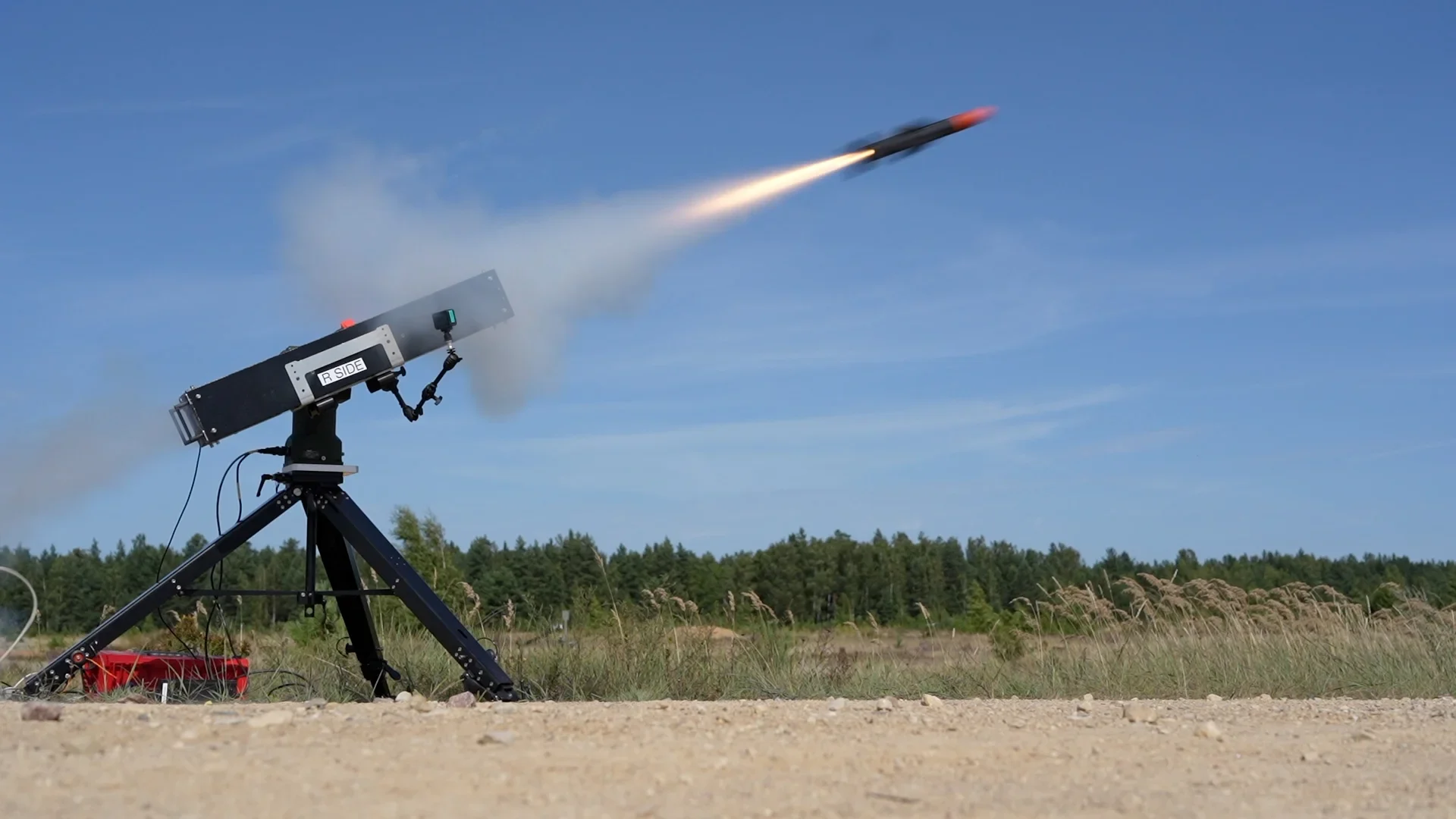
At the center of Frankenburg Technologies’ portfolio is Mark I, a guided missile specifically designed to counter low-flying unmanned aerial systems and drone swarms at short ranges. The company describes Mark I as the world’s smallest and lowest-cost guided missile, engineered from the beginning for large-scale local manufacturing. Unlike traditional interceptor systems that can be prohibitively expensive to deploy against small drones, Mark I is intended to provide a more economically sustainable defensive option.
The system reflects Frankenburg’s broader belief that missile defense should be measured by production scalability and deployment economics. According to the company, Mark I can significantly reduce interception costs compared to conventional man-portable air-defense systems while maintaining precision against aerial threats. As drone warfare continues evolving, systems like Mark I could become increasingly important for protecting military units, critical infrastructure, logistics hubs, and civilian assets from persistent aerial attacks.
Whether Frankenburg ultimately succeeds in reshaping missile defense remains to be seen, but its focus addresses one of the most pressing realities of modern warfare: the side that can produce and sustain defensive systems at scale may hold a decisive advantage. In a world increasingly defined by drone saturation, affordability could become just as important as firepower.
Frankenburg Technologies is tackling one of the most important challenges in defense today: making air defense economically sustainable in the age of drone warfare. If the company can successfully combine affordability, local production, and operational effectiveness, it could help redefine how militaries think about missile defense in the decades ahead.