

Vertical Aerospace Is Building the Future of Electric Air Taxis
How UK-Based Vertical Aerospace Is Pioneering Electric Aviation?
The aviation industry is entering a period where electrification could change not only how aircraft are powered, but also how people move between cities. UK-based Vertical Aerospace is positioning itself at the centre of that transition with a focus on electric vertical take-off and landing aircraft, or eVTOLs. Founded in 2016 by entrepreneur Stephen Fitzpatrick, the Bristol-based company is developing aircraft designed to combine the vertical take-off capabilities of helicopters with the efficiency of fixed-wing flight. The goal is to create a new form of advanced air mobility that can connect airports, city centres, regional destinations, and other locations without relying on conventional runways.
Vertical’s approach is focused on developing and manufacturing aircraft rather than becoming an air-taxi operator itself, allowing airlines, aircraft lessors, helicopter operators, and other customers to deploy the technology through their own networks. The company has built an extensive aerospace ecosystem involving major industry partners and has established certification and validation programmes with regulators in multiple markets. Its commercial ambitions are also substantial. Vertical currently reports around 1,500 aircraft in its pre-order book, representing a total pre-order value of approximately $6 billion.

Valo: The eVTOL Aircraft at the Heart of Vertical Aerospace
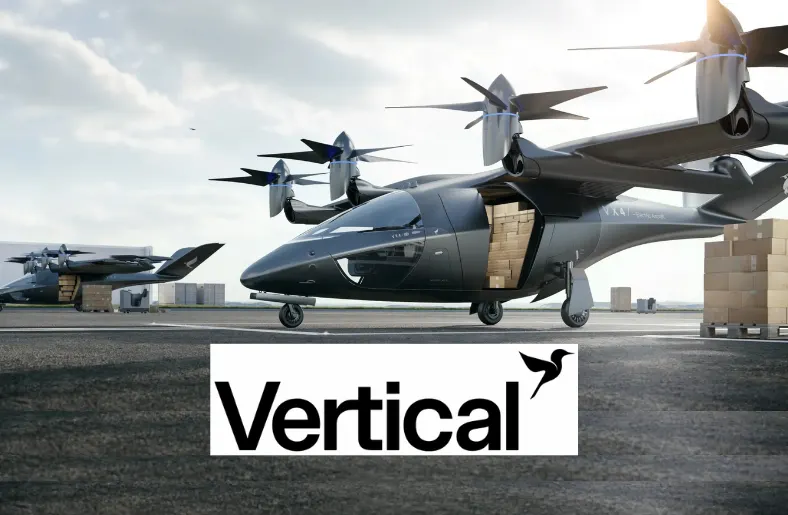
At the centre of Vertical’s strategy is Valo, its piloted electric vertical take-off and landing aircraft. The aircraft is designed to carry four to six passengers and combines electric propulsion with a winged configuration intended to deliver efficient forward flight after take-off. Vertical Aerospace says Valo is designed for a cruise speed of up to 150 mph, a range of up to 100 miles, and zero operating emissions.
The aircraft is intended to serve several different missions, including airport transfers, inter-city travel, regional connections, emergency medical services, and cargo transportation. Its design also reflects the reality that eVTOL aircraft need to do more than simply fly vertically. They must transition safely between vertical lift and efficient wingborne flight while meeting demanding aviation certification requirements.
Vertical has therefore invested heavily in flight testing, proprietary battery technology, electric propulsion, next-generation propellers, and flight-control systems. In June 2026, the company’s final full-scale prototype completed its first piloted flight, marking another important step in the development programme. Vertical Aerospace has also been progressing through transition testing, where the aircraft moves between vertical and wingborne flight.

From Flight Testing to Commercialization: What’s Next for Vertical Aerospace
The biggest challenge for Vertical Aerospace is no longer simply demonstrating that an electric aircraft can fly. The company now has to transform a working aircraft into a certified, manufacturable, commercially viable aviation product. That means completing the demanding certification process, proving safety across increasingly complex flight conditions, developing production capabilities, and building the infrastructure required to support future operations.
Vertical Aerospace says its flight-testing programme has already included tethered hover, thrustborne flight, wingborne flight, and transition testing, while its certification strategy involves the UK Civil Aviation Authority and other international regulators. Its commercial strategy is equally important. The company’s reported $6 billion order book includes customers and partners across markets such as the United States, Japan, Europe, and other regions, creating potential use cases ranging from airport connections and urban mobility to island-hopping and emergency response.
The company has also been expanding its technology and manufacturing ecosystem, including battery production capabilities and partnerships across propulsion, landing gear, avionics, and aerospace systems. The road ahead remains challenging because eVTOL manufacturers must overcome certification, infrastructure, battery performance, public acceptance, and production-scale hurdles simultaneously. Yet if Vertical Aerospace can successfully move Valo from flight testing through certification and into commercial service, it could help demonstrate that electric aircraft are not simply an experimental aviation concept but a practical new layer of transportation.