

Skan AI: The Startup Building a Context Layer for the Autonomous Enterprise
How Skan AI Is Powering the Next Generation of Enterprise AI Agents
AI agents are becoming increasingly capable of performing tasks, but knowing what to do is only part of the challenge. In large organizations, important workflows often depend on undocumented processes, employee decisions, exceptions, approvals, and interactions between multiple systems. Skan AI is focused on capturing this operational context by observing how work actually happens and translating it into a structured understanding that AI systems can use.
Its platform includes capabilities for process intelligence, operational blueprints, AI agents, and engineering intelligence, giving organizations a way to understand workflows before attempting to automate them. This is particularly important for enterprises where simply connecting an AI model to existing software does not guarantee that the system will understand how employees actually perform their jobs.
Skan’s approach is to map the reality of work first, identifying the steps, decisions, dependencies, and variations that make up a process. That intelligence can then support automation discovery, productivity optimization, operational excellence, and enterprise agentic workflows. The company is effectively positioning its technology as a context layer between enterprise operations and AI. Instead of asking organizations to redesign their processes around AI, Skan AI aims to give AI systems a better understanding of the processes that already exist.

Skan AI’s Funding, Growth, and Rise in Enterprise AI
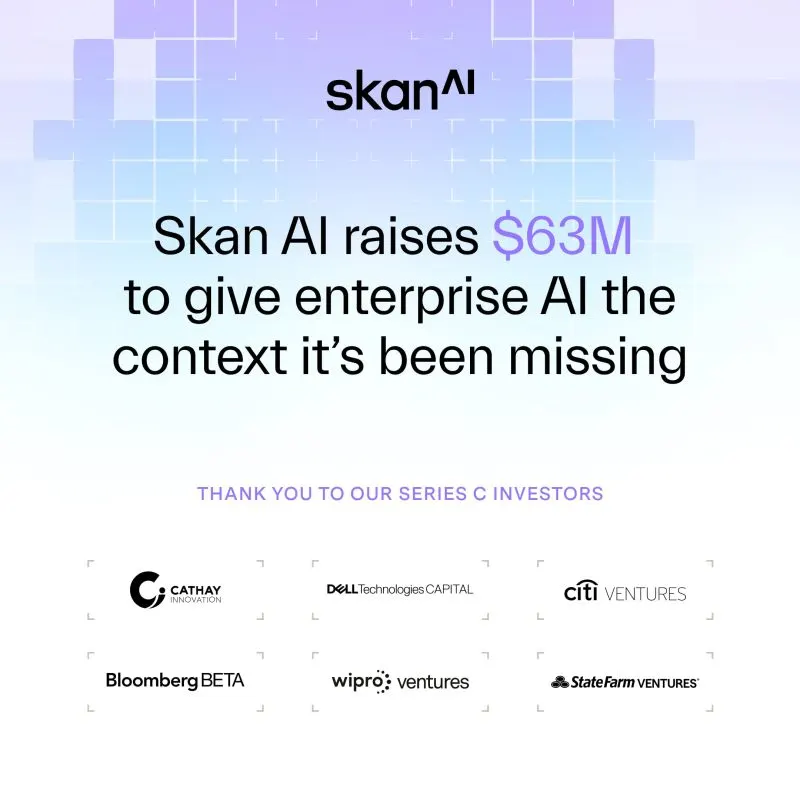
Skan AI’s approach has attracted significant investor interest as businesses move from experimenting with generative AI toward deploying autonomous systems across critical operations. The company has raised $63 million in Series C funding, providing capital to expand its platform and accelerate adoption among enterprise customers. The funding reflects a broader realization that the next phase of enterprise AI will require more than increasingly powerful foundation models. Companies also need systems capable of understanding their unique operating environments, internal processes, and institutional knowledge. Skan AI is targeting this gap by helping organizations create a detailed representation of how work flows through their businesses.
Its technology is designed for use across industries including financial services, insurance, healthcare, and technology, where workflows can involve significant complexity and regulatory requirements. In these environments, automation cannot simply execute a generic sequence of actions. It needs to understand the organization’s specific processes and account for exceptions and human decisions. Skan’s platform is therefore designed to help businesses discover where automation can create the most value while giving AI agents the operational intelligence required to work within real-world environments.
Its growth also comes at a time when enterprises are increasingly evaluating agentic AI as a way to move beyond productivity assistants toward systems that can complete entire workflows. The companies providing the context and infrastructure required to make those agents reliable could become an important part of the enterprise AI stack.
How Skan AI Could Transform Enterprise Automation in the Future
The long-term opportunity for Skan AI lies in making enterprise automation more intelligent and grounded in the reality of how organizations operate. Traditional automation often depends on predefined workflows that work well when processes remain predictable but struggle when employees encounter exceptions or make decisions that are difficult to encode in rigid rules. AI agents offer the possibility of handling more complex workflows, but they still need context to understand why certain decisions are made and what should happen when circumstances change. Skan AI’s process intelligence approach could provide that missing layer.
By continuously understanding how work is performed, organizations could identify processes that are suitable for automation, improve inefficient workflows, and give AI agents a richer operational foundation. This could eventually change how companies approach digital transformation. Instead of manually identifying individual tasks for automation, businesses could use AI to map entire operational environments and determine where human effort can be reduced or augmented. Financial institutions could potentially use it to understand complex operational processes, healthcare organizations could analyze administrative workflows, insurers could identify repetitive processes, and technology companies could optimize internal operations.
The biggest challenge will be turning workflow intelligence into measurable automation outcomes while maintaining security, privacy, accuracy, and human oversight. If Skan AI can demonstrate that its context layer makes enterprise agents significantly more capable and reliable, it could become an important piece of the infrastructure behind the autonomous enterprise. The future of enterprise AI may not depend solely on smarter models. It may depend on whether those models actually understand how businesses work.