


Why Are Businesses Turning to Vida for AI Agent Deployment?
The Rise of AI Agents in Modern Business
AI agents are rapidly moving from experimental tools into operational infrastructure across modern businesses. Companies are no longer using AI only for chatbots or isolated automation tasks. Increasingly, businesses want AI systems capable of handling conversations, executing workflows, interacting with software systems, managing customer communication, and performing operational tasks autonomously across multiple channels. This shift is creating demand for platforms that make AI agents easier to build, deploy, manage, and scale operationally. Vida Global positions itself inside this growing market as an AI Agent Operating System designed specifically for businesses seeking to operationalize AI agents across customer support, sales, scheduling, communication, and business operations.
The company’s platform enables organizations to create AI agents capable of calling, chatting, emailing customers, and executing complex workflows while integrating with broader operational systems. Its broader thesis is that AI agents are evolving into digital workers embedded directly into business infrastructure rather than functioning as standalone assistants layered onto existing software stacks. This reflects a larger enterprise technology transition where operational automation increasingly centers around autonomous AI-driven workflows rather than purely rules-based automation systems.
Why Are Companies Turning to Vida?
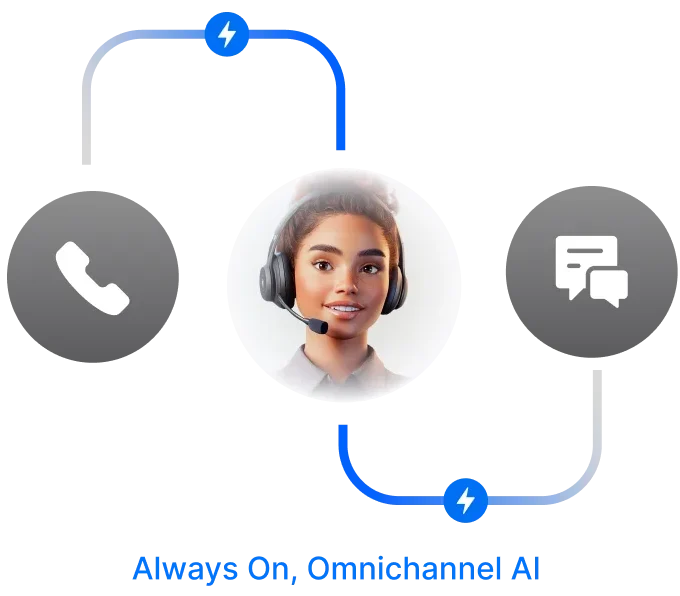
Businesses exploring AI agents often face operational fragmentation when trying to deploy automation across communication channels, workflows, customer systems, and business applications simultaneously. Many AI tools remain narrowly specialized, requiring companies to stitch together multiple platforms for voice interactions, messaging, integrations, workflow execution, and deployment management. Vida attempts to centralize these capabilities into a unified operational environment where businesses can manage AI agents more cohesively. The platform supports voice calls, chat interactions, email communication, workflow execution, and external system integrations through a single infrastructure layer. This is strategically important because companies increasingly want AI systems capable of functioning across operational environments rather than remaining limited to isolated customer support tasks.
The company also emphasizes resell capabilities, allowing agencies, telecom providers, SaaS companies, managed service providers, and BPOs to deploy and distribute AI agent infrastructure commercially. This creates a broader ecosystem strategy where Vida functions not only as enterprise software, but as operational infrastructure for businesses building AI-powered service layers for their own customers. Its focus across industries such as healthcare, insurance, legal services, hospitality, automotive, and financial services reflects how AI agents are gradually becoming relevant across sectors where communication-heavy workflows and repetitive operational coordination remain expensive and labor-intensive.

How Vida Helps Businesses Build and Scale AI Agents?
Vida provides infrastructure for building, deploying, managing, and scaling AI agents through integrations, workflow systems, and communication tooling designed for operational deployment environments. The platform supports integrations with systems such as Zapier, Google Calendar, SIP infrastructure, webhooks, and external enterprise platforms, allowing AI agents to interact with existing operational software stacks dynamically. This integration layer is particularly important because AI agents become significantly more useful when connected directly to scheduling systems, CRM environments, operational databases, customer records, and workflow tools rather than functioning only as conversational interfaces.
Vida’s support for voice-based AI interactions also positions it inside a growing category of conversational infrastructure platforms where AI agents increasingly handle inbound and outbound communication through phone systems in addition to messaging channels. Industries such as call centers, BPOs, healthcare providers, and service businesses continue relying heavily on voice workflows, making telephony integration strategically important for enterprise AI adoption. The company’s operational approach reflects a larger trend where AI agent platforms are evolving into orchestration systems capable of coordinating communication, workflow execution, and business logic simultaneously. Rather than functioning purely as chatbot builders, these systems increasingly resemble operational middleware connecting AI reasoning with enterprise workflows directly.
The broader implication is that businesses may eventually manage AI agents similarly to how they manage software applications or workforce infrastructure today.

Vida’s Vision for the Future of AI Automation
Vida reflects a broader shift happening across enterprise software where AI agents are gradually becoming operational infrastructure layers embedded directly into business processes. Earlier enterprise automation systems focused heavily on rules-based workflows and isolated process automation. AI agents introduce the possibility of more adaptive operational systems capable of handling communication, decision support, workflow execution, and customer interaction dynamically. This transition is particularly significant for service-heavy industries where large amounts of operational work still depend on repetitive communication and coordination tasks performed manually by human teams. AI agents capable of operating across phone systems, messaging environments, scheduling infrastructure, and business applications may eventually change how companies structure customer operations entirely.
Vida’s positioning around an “AI Agent Operating System” suggests a future where businesses manage fleets of specialized AI agents operating across departments, communication channels, and customer workflows simultaneously. In that environment, the operational challenge shifts from deploying isolated AI features toward coordinating large-scale AI workforce infrastructure effectively. At the same time, enterprise AI automation remains operationally sensitive. Businesses require reliability, integration flexibility, compliance controls, and workflow visibility before deeply embedding AI agents into customer-facing operations. The companies most likely to succeed will be those capable of balancing autonomous functionality with operational control and enterprise-grade infrastructure reliability. Vida’s long-term relevance will depend on whether AI agents become deeply integrated operational systems rather than temporary productivity experiments inside enterprise environments.
Vida is positioning itself inside one of enterprise AI’s fastest-growing infrastructure categories by focusing on operational AI agents rather than isolated conversational tools alone. The company’s future success will depend on whether businesses increasingly adopt AI agents as core operational systems embedded directly into communication and workflow infrastructure.