

China’s AI Stock Market Crash: What Happened to $480 Billion?
China’s AI and Semiconductor Stock Boom Unravels as $480 Billion in Market Value Disappears
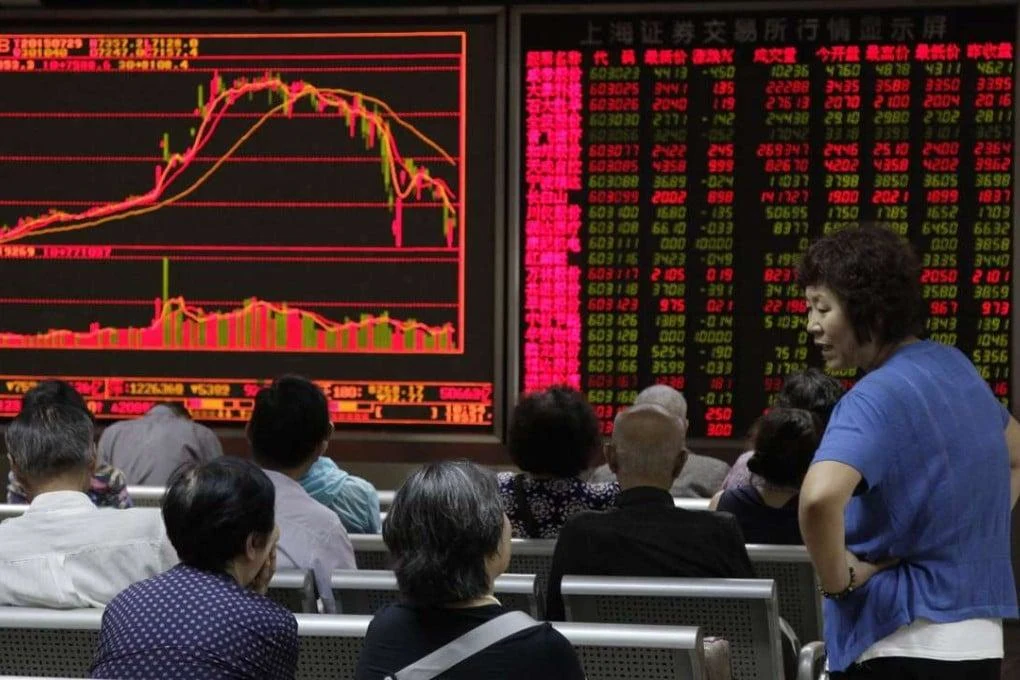
China’s artificial intelligence and semiconductor stocks have suffered a sharp reversal, with the Shanghai Stock Exchange’s STAR50 index falling approximately 40% in less than four months and erasing an estimated $480 billion in market capitalisation, according to a Reuters analysis published on October 26, 2026.
The decline has brought a two-year rally to an abrupt halt, exposing the risks associated with the extraordinary valuations investors had assigned to companies involved in artificial intelligence, robotics and semiconductor manufacturing. The sell-off gathered pace after the market reached its summer highs, with the STAR50 falling approximately 40% over the subsequent period. The index tracks 50 leading securities listed on Shanghai’s Science and Technology Innovation Board, commonly known as the STAR Market, selected principally on the basis of market value and liquidity.
Although its constituents include companies from several technology-related industries, semiconductor and AI businesses have played a significant role in the recent rally. The broader CSI300 index, which represents major companies listed in Shanghai and Shenzhen, has also declined approximately 20% from its June peak. The estimated $480 billion represents the reduction in the combined market value of the companies represented by the STAR50, rather than money withdrawn from the Chinese economy or an equivalent amount of realised investor losses.
Market capitalisation is calculated using share prices and outstanding shares; its decline reflects the lower prices at which investors value companies, while individual investors incur actual losses when they sell below their purchase prices. The scale of the correction has also complicated Beijing’s efforts to encourage households to invest in equities and support technology-sector financing.
The steepest declines have affected companies that attracted considerable retail interest during the rally, including robotics manufacturers, semiconductor producers and suppliers of equipment used in AI data centres. Shares in Unitree, the Chinese robotics manufacturer whose public offering attracted subscriptions approximately 8,000 times the number of shares available to retail investors, have fallen by roughly half since trading began in August 2026.
Semiconductor manufacturer ChangXin Memory Technologies (CXMT) has lost more than a quarter of its market value over the month preceding Reuters’ report. MetaX Integrated Circuits and Moore Threads Technology, two Chinese chipmakers whose shares surged approximately 700% and 400%, respectively, on their market debuts in 2025, have each fallen by around half since July 2026. Optical-component manufacturers Zhongji Innolight and Eoptolink Technology have experienced declines of approximately 60% from their June and July peaks. The losses have been particularly significant for individual investors who purchased shares after prices had already risen substantially.
Goldman Sachs estimated that AI-related stocks accounted for 42% of China’s market capitalisation and 57% of trading turnover across mainland-listed A-shares and Hong Kong-listed H-shares, illustrating the extent of market exposure to the sector. Reuters reported the experience of Chen Wensheng, a small-business owner and investor from Hainan, who bought shares during the rally partly because he believed companies such as Unitree benefited from official support and state-backed investment. Chen and his friends subsequently faced losses as prices declined.
Unitree’s substantial oversubscription also demonstrates the intensity of retail demand, although it does not establish the average purchase price or financial losses of individual subscribers. State-backed funds were among Unitree’s investors, while Reuters also reported that institutional investors had sold shares during rallies to moderate market gains.
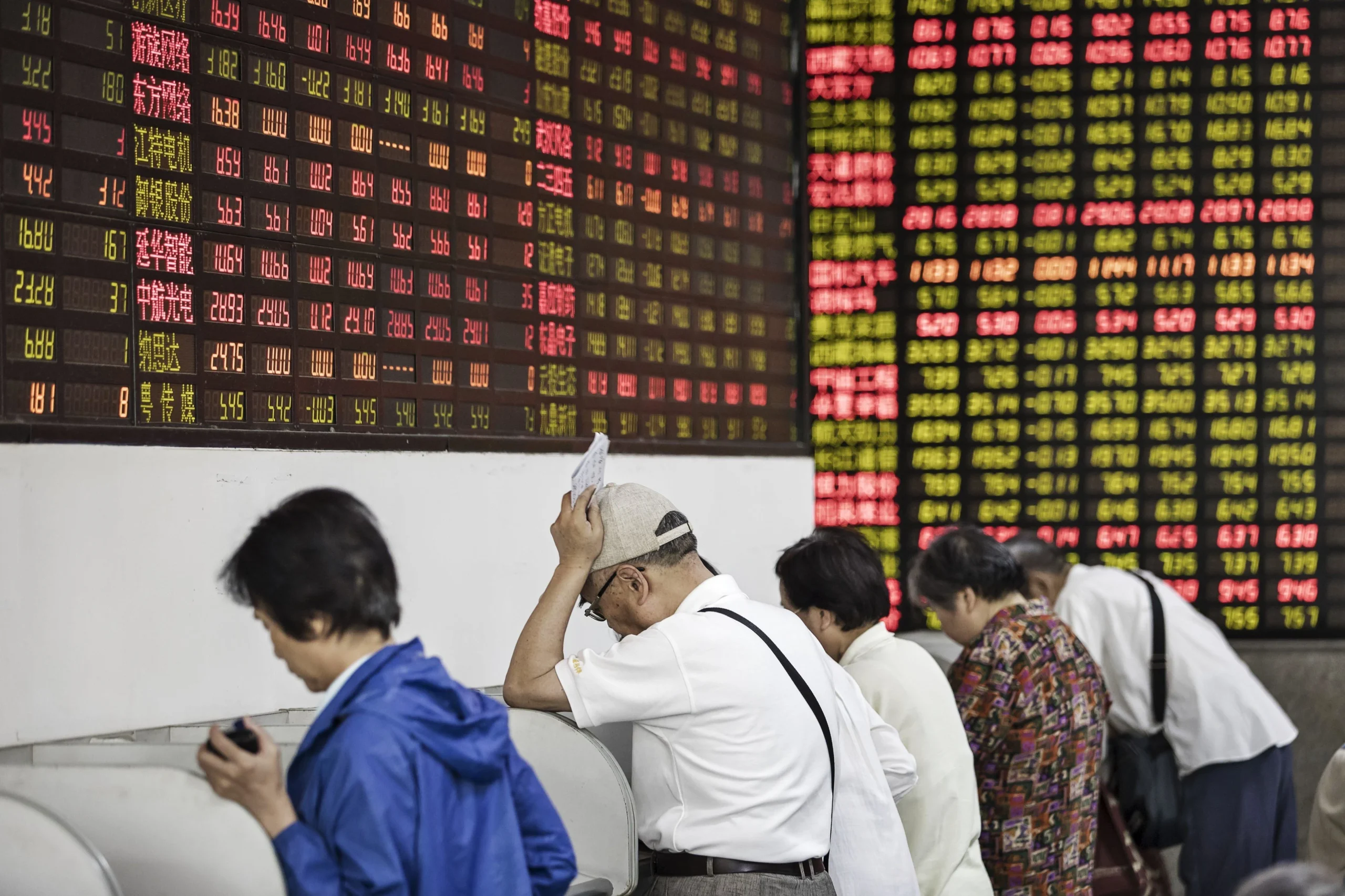
Market participants have identified several contributing factors, although Reuters reported no single obvious event that triggered the sell-off. One central concern has been the exceptionally high valuations reached during the rally. The STAR50’s price-to-earnings ratio climbed to nearly 250 times trailing earnings before falling to approximately 100 times following the correction. Such valuations reflected expectations of rapid growth in AI-related demand and future corporate profits, leaving shares vulnerable when investors began questioning whether actual business performance could justify those expectations.
Traders also identified tax bills coming due in China as a possible source of selling pressure, although the reporting did not establish a single tax-related event or quantify its contribution to the decline. Another concern involves potential restrictions by Washington on Chinese suppliers providing equipment to American data centres. The possibility of losing access to US customers has raised questions about export opportunities, overseas revenues and future growth prospects for companies such as Zhongji Innolight and Eoptolink. These concerns are particularly relevant to manufacturers whose valuations reflected expectations of substantial international demand.
Competition within China’s semiconductor and AI equipment industries has added another source of uncertainty. Fund manager Wang Zhuo, partner at Shanghai Zhuozhu Investment Management, told Reuters that Chinese chipmakers and AI suppliers could eventually face price wars, similar to other manufacturing industries. Greater competition could force manufacturers to reduce prices, compress profit margins and weaken earnings expectations.
Meanwhile, the concentration of investment in technology shares has attracted criticism from market participants who argue that excessive emphasis on companies’ technological credentials has distorted capital allocation. Leo Wang of Beijing-based Qianchuang Capital said the concentration had created bubbles in certain sectors while draining capital from others. These explanations represent a combination of reported market developments, trader assessments and analyst opinions rather than proof of a single underlying cause.
The immediate consequences extend beyond falling share prices, particularly for Chinese technology companies that depend on equity markets to finance expansion and development. The downturn has weakened investor confidence in previously popular AI and semiconductor businesses, with some retail investors moving towards defensive assets and others waiting for valuations to fall further before returning to the market. The change in sentiment could also affect companies planning initial public offerings and additional fundraising.
Hong Hao, managing partner and chief investment officer at Lotus Asset Management in Hong Kong, told Reuters that the sell-off would halt the listing plans of many companies preparing to enter the stock market. This presents a financing challenge for businesses that had expected strong investor demand to support their expansion. Valuations remain elevated despite the correction: the STAR50 trades at approximately 100 times trailing earnings, compared with around 30 times for the Nasdaq 100, according to figures cited in the Reuters report.
The comparison suggests that investors continue to assign substantial growth expectations to Chinese technology companies despite recent losses. However, institutional assessments of the market are not uniformly negative. HSBC Research reported that Asian funds remained overweight on Chinese equities, while Goldman Sachs included Zhongji Innolight and CXMT among dozens of Chinese AI-related companies on a revised recommendation list published earlier in October. BNP Paribas Securities strategist William Bratton also identified potential buying opportunities for cautious investors.
Other mainland investors, however, have preferred different sectors or are waiting for lower valuations. The correction therefore raises questions about the financial sustainability of individual businesses, the prices investors were willing to pay and the commercial returns expected from AI-related investment. It does not, by itself, establish that China’s AI technology or semiconductor industry has failed. The immediate challenge for affected companies is to demonstrate that their revenues, profitability and business prospects can support valuations after the speculative enthusiasm that drove the rally has diminished.