

How India Is Building Its Own Dilution Refrigerators for Quantum Computing?
Understanding the Dilution Refrigerator, India’s Indigenous Achievements, DRDO’s 20 Millikelvin Project and Its Strategic Significance
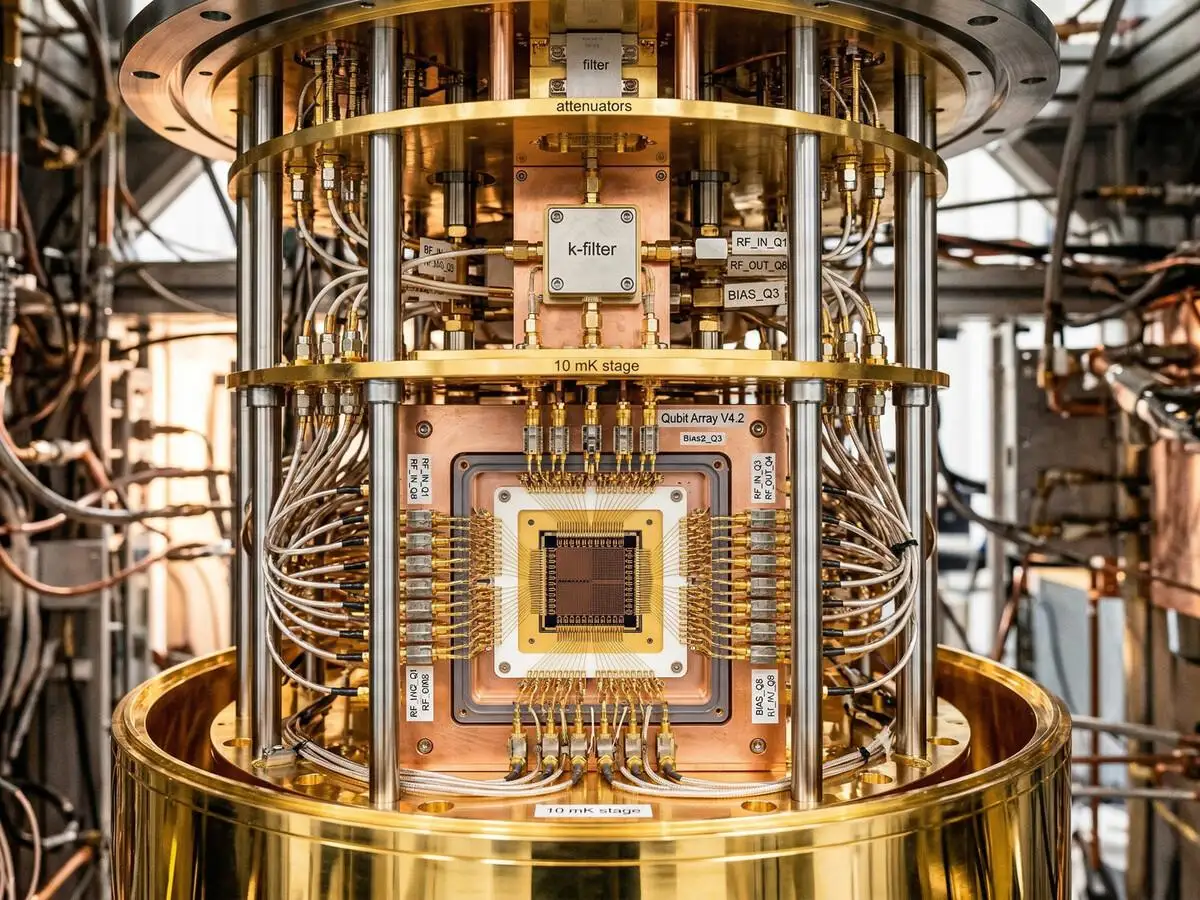
India is making significant progress in developing indigenous cryogenic technology, an essential requirement for advanced quantum computing. Recent developments in Andhra Pradesh, along with a new collaboration between the Defence Research and Development Organisation (DRDO) and an Indian deep-tech startup, have brought dilution refrigerators into focus. These specialised machines can achieve temperatures extremely close to absolute zero and are essential for operating several types of quantum computers.
A dilution refrigerator is an advanced cooling system designed to produce and maintain temperatures in the millikelvin range. One millikelvin is one-thousandth of a kelvin. These machines can bring temperatures down to approximately 10 to 20 millikelvin, equivalent to around -273.14°C. For perspective, absolute zero, the lowest theoretically possible temperature, is -273.15°C.
The technology is particularly important for superconducting quantum computers. Unlike conventional computers, which process information using bits represented by 0s and 1s, quantum computers use quantum bits, or qubits. Superconducting qubits operate at extremely low temperatures because thermal energy can disturb their delicate quantum states. A dilution refrigerator provides the controlled, ultra-cold environment required for these processors to operate and undergo testing.
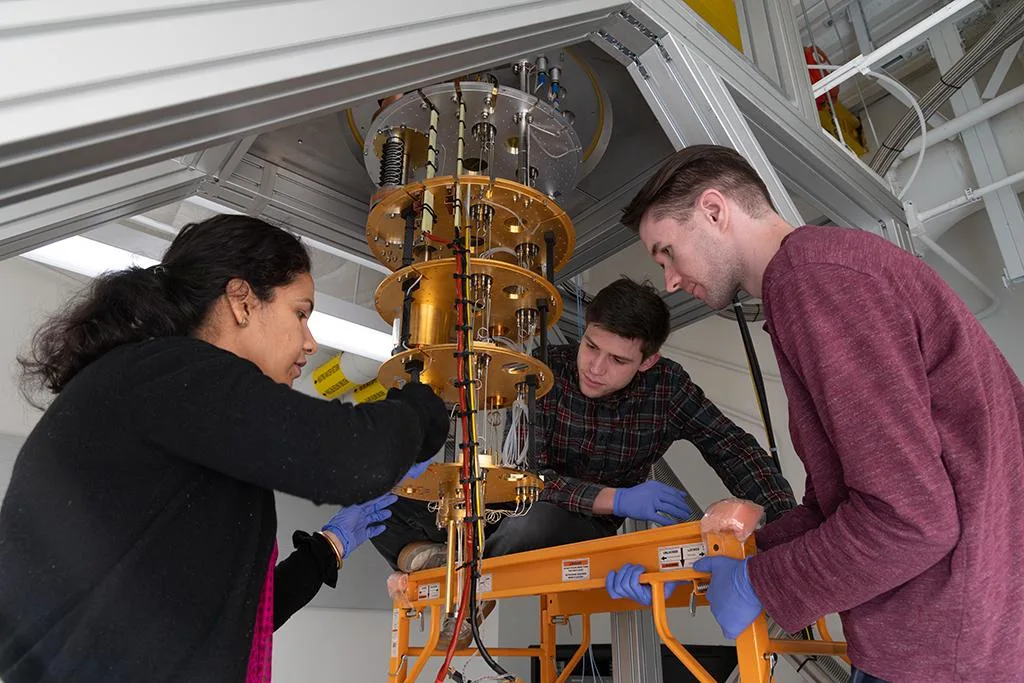
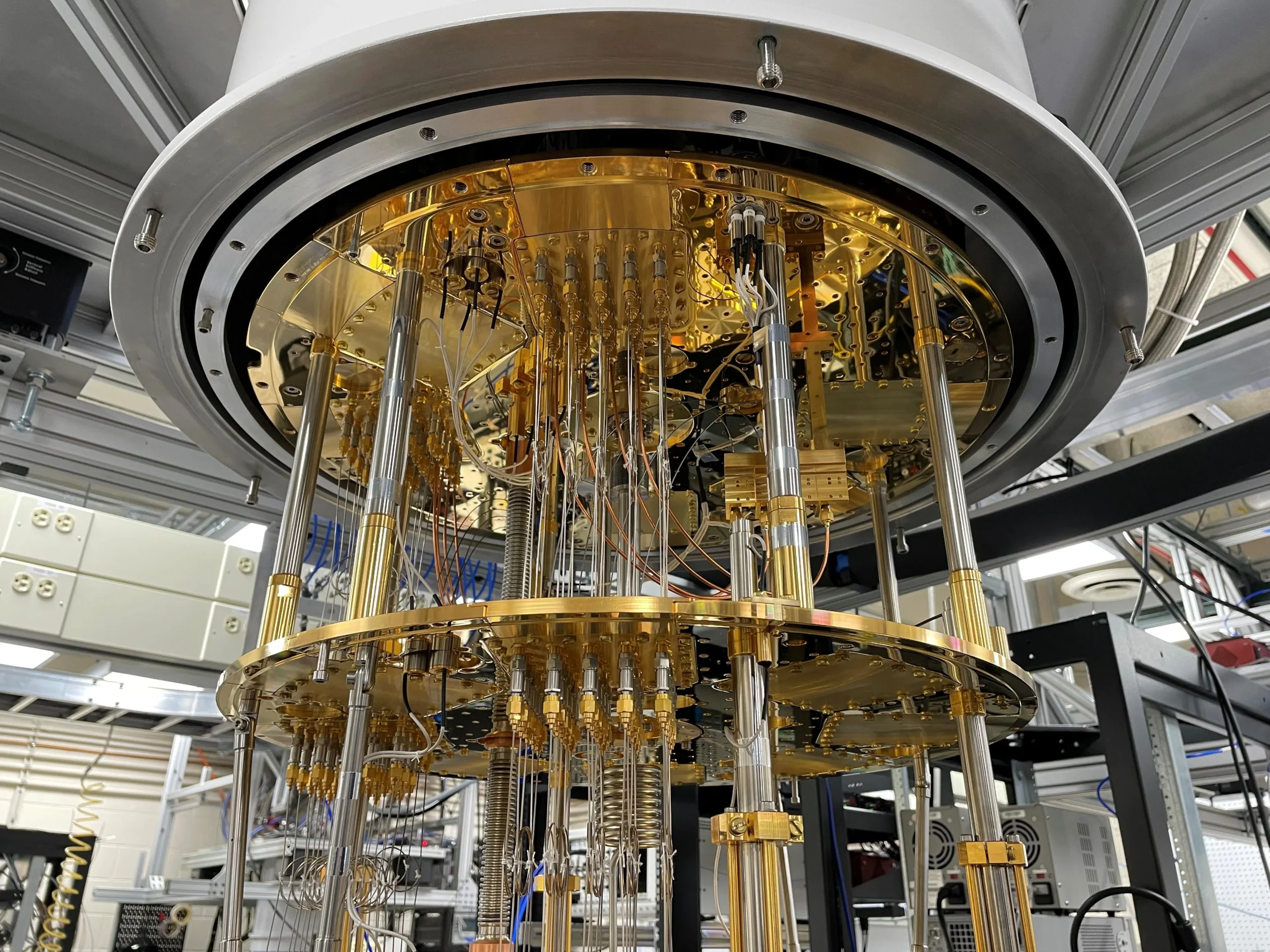
The cooling process relies on the unusual low-temperature behaviour of two helium isotopes, helium-3 and helium-4. At sufficiently low temperatures, the mixture separates into two phases. Helium-3 atoms cross from the concentrated phase into the dilute phase, absorbing heat in the process. Continuous circulation of the helium mixture allows the refrigerator to remove heat and maintain temperatures in the millikelvin range. The system also requires specialised vacuum chambers, heat exchangers, cooling stages and precision instrumentation.
India’s work in this field predates the latest developments. The Variable Energy Cyclotron Centre (VECC), a Department of Atomic Energy research facility in Kolkata, has independently designed, developed and tested a dilution refrigerator capable of achieving temperatures below 50 millikelvin in its mixing chamber. VECC’s work involved designing and fabricating individual components, developing the required infrastructure and creating a computer programme called SIDFO for the initial design and optimisation of dilution refrigerators. This demonstrated India’s scientific and engineering capabilities in an area traditionally dependent on imported equipment.
A more recent milestone came from Amaravati Quantum Valley in Andhra Pradesh. On June 19, 2026, the initiative reported achieving 4 Kelvin, equivalent to approximately -269°C, using an indigenously developed dilution refrigeration system at the Quantum Reference Facility in Medha Towers, Amaravati. According to the reported details, more than 80 per cent of the components used in the system were sourced domestically.
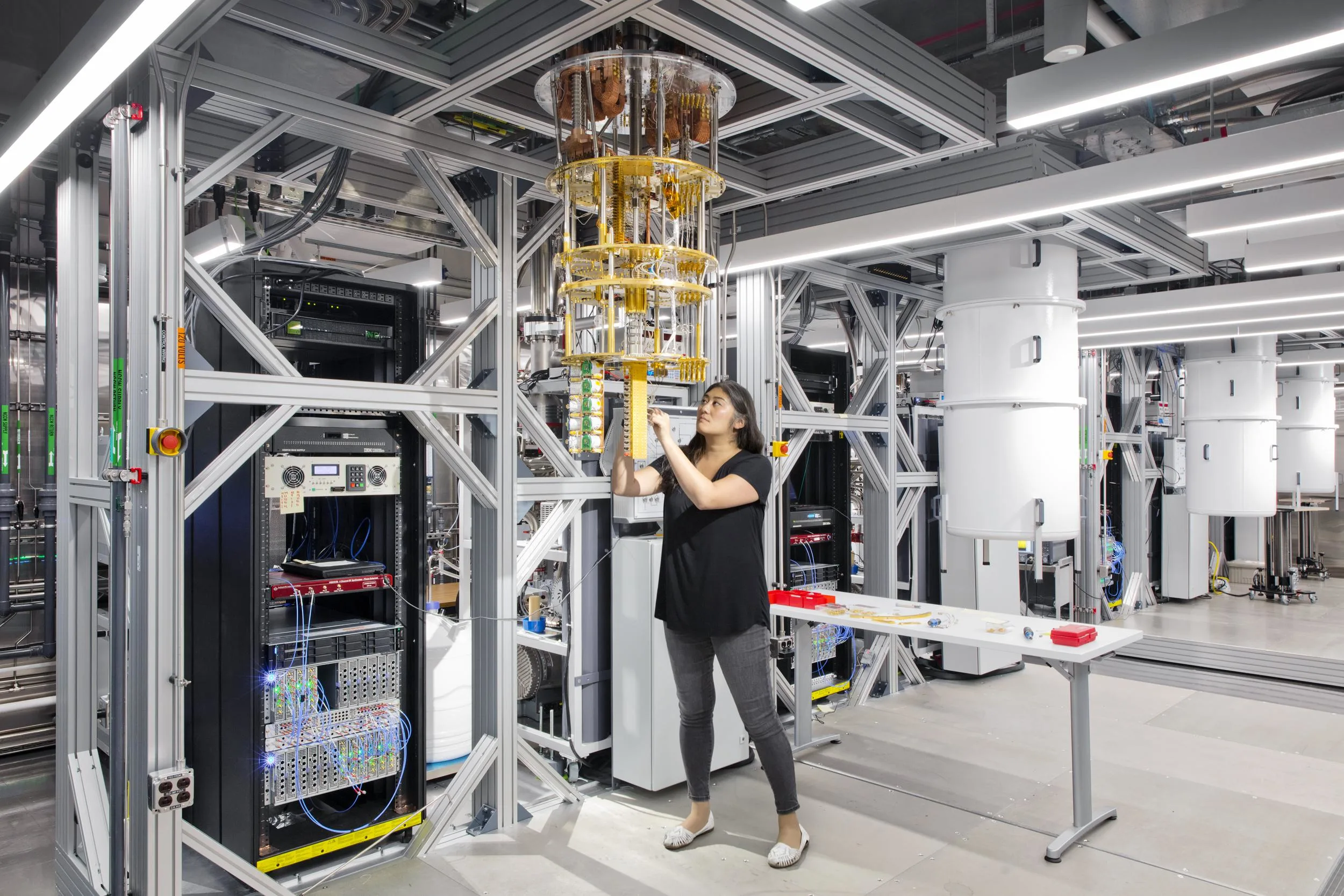
The facility is intended to support the testing and characterisation of quantum hardware, including cryogenic components, vacuum systems, control electronics and processor technologies. Its significance lies in providing Indian researchers, startups and institutions with domestic infrastructure for evaluating quantum hardware. Previously, some of this testing and characterisation required access to facilities outside India, including those in countries such as Germany and the Netherlands. It is important to distinguish the 4 Kelvin achievement from millikelvin-class operation. Reaching 4 Kelvin is a meaningful cryogenic engineering milestone, but it does not establish that the system has achieved the temperatures required by superconducting quantum processors.
Another important development was announced on September 24, 2026, when DRDO signed a project agreement with Zero mK India Private Limited, an Indian startup based in Alwar, Rajasthan. The agreement, signed under DRDO’s Technology Development Fund (TDF) scheme, concerns the indigenous development of a 20 millikelvin dilution refrigerator for quantum applications. According to the Ministry of Defence, this is the first high-value deep-tech project agreement with a startup under the scheme’s Rs 500 crore corpus.
The project is being monitored and supported by DRDO’s Solid State Physics Laboratory. Its objective is to develop domestic capability in advanced cryogenic systems and reduce dependence on imported infrastructure. A 20 millikelvin-class refrigerator would provide the ultra-low-temperature environment required for several quantum computing platforms and related technologies.
These developments are relevant to India’s National Quantum Mission, approved by the Union Cabinet in April 2023 with an allocation of Rs 6,003.65 crore for the period 2023-24 to 2030-31. The mission aims to develop intermediate-scale quantum computers with 50 to 1,000 physical qubits across platforms including superconducting and photonic technologies. It also supports research in quantum communication, quantum sensing and other applications.
The progress at VECC, Amaravati Quantum Valley and the DRDO-supported project represents different stages of India’s indigenous cryogenic development. While VECC has demonstrated millikelvin-level capability, Amaravati has reported a 4 Kelvin milestone, and the DRDO-startup partnership is working towards a 20 millikelvin system.
Developing these specialised machines within India is important for building domestic expertise in precision engineering, cryogenics, vacuum technology and quantum hardware testing. The successful development and deployment of reliable indigenous dilution refrigerators would strengthen the infrastructure available to India’s quantum research institutions and technology companies.