

Altilium and the Rise of Circular EV Batteries: A Cleaner Energy Future
The Problem Behind the EV Revolution
Electric vehicles have been positioned as the cornerstone of a zero-carbon future, but beneath that promise lies a growing structural problem that the industry can no longer ignore. The transition to EVs has created an unprecedented demand for critical minerals such as lithium, nickel, and cobalt, materials that are not only expensive and geopolitically sensitive but also environmentally costly to extract.
At the same time, the first generation of EV batteries is beginning to reach end-of-life, creating a parallel crisis of waste that risks undermining the very sustainability goals the industry was built on, and it is within this tension between resource scarcity and material waste that a new category of clean technology companies is emerging, focused not on mining more resources, but on recovering what has already been used.
Rethinking the Battery Supply Chain
Altilium is part of this emerging shift, positioning itself as a company that does not simply participate in the EV ecosystem but fundamentally alters how its supply chain operates by focusing on circularity instead of extraction. The company’s core premise is straightforward but consequential: the materials required to power the next generation of electric vehicles already exist in the batteries that have been discarded or are about to be retired, and by recovering these materials efficiently, it becomes possible to reduce reliance on mining while simultaneously lowering the carbon footprint of battery production. This approach transforms waste into a strategic resource, allowing domestic supply chains to develop resilience at a time when global competition for critical minerals is intensifying.
Inside the Altilium Process
At the center of Altilium’s approach is its proprietary recycling process, designed to recover high-value battery materials from end-of-life EV batteries and other waste streams with a level of efficiency that makes reuse commercially viable at scale. Unlike traditional recycling methods that often degrade material quality, Altilium focuses on preserving the integrity of recovered metals so they can be directly reintroduced into battery manufacturing, effectively closing the loop within the supply chain.This is not just a technical improvement but an economic one, because the ability to produce battery-grade materials from recycled sources changes the cost dynamics of EV production while also addressing regulatory and environmental pressures that are increasingly shaping how energy infrastructure is built.
From Waste to Infrastructure
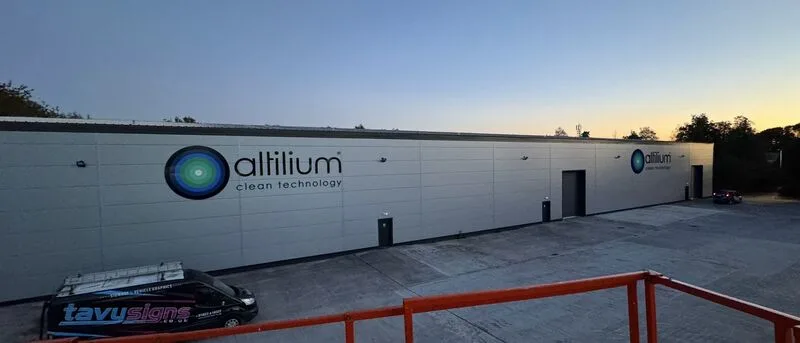
What makes this model particularly significant is that it extends beyond recycling as a service and moves into the realm of infrastructure, where companies like Altilium are building the foundational systems required to support a circular energy economy. By developing facilities capable of processing battery waste at scale, the company is contributing to the creation of a domestic ecosystem where materials are continuously reused rather than imported, used once, and discarded. This shift has implications not only for sustainability but also for national energy security, as countries seek to reduce dependence on volatile global supply chains and establish local capabilities for critical resource management.
The £18.5M Bet on a Circular Future
Altilium’s recent £18.5 million funding round marks a significant step in translating its vision into operational scale, with the capital directed toward building the UK’s first commercial EV battery recycling facility focused on recovering critical minerals. While funding announcements often signal growth, in this case they also signal a broader industry validation of circular supply chain models as a necessary evolution rather than an optional innovation, reflecting increasing confidence that battery recycling will become a core component of the EV ecosystem rather than a peripheral activity. The facility itself represents more than capacity expansion, as it establishes a blueprint for how future infrastructure can integrate recycling directly into the lifecycle of energy systems.
Industry Context: Why This Moment Matters
The timing of Altilium’s expansion is closely aligned with larger structural shifts across the energy and automotive industries, where regulatory frameworks, environmental targets, and economic pressures are converging to push companies toward more sustainable practices. Governments are introducing stricter requirements around battery sourcing and recycling, while manufacturers are facing increasing scrutiny over the environmental impact of their supply chains, creating a context in which solutions like Altilium’s are not just beneficial but increasingly necessary. As EV adoption accelerates globally, the volume of battery waste will grow in parallel, making the ability to process and reuse these materials a critical capability rather than a future consideration.

Building a Circular Energy Economy
What distinguishes Altilium’s approach is that it aligns environmental goals with economic incentives, creating a model where sustainability is not a cost center but a driver of efficiency and resilience within the energy system. By enabling the recovery and reuse of critical minerals, the company is contributing to a supply chain that is less dependent on extraction, less exposed to geopolitical risk, and more aligned with long-term climate objectives, effectively turning one of the EV industry’s biggest challenges into a source of competitive advantage. This alignment is likely to define the next phase of innovation in clean technology, where the focus shifts from adoption to optimization of existing systems.
The Future of EV Batteries Is Circular
As the global transition to electric mobility continues, the question is no longer whether EVs will replace internal combustion engines, but how sustainable that transition will ultimately be, and the answer will depend in large part on how effectively the industry can manage its resources. Companies like Altilium are demonstrating that the future of clean energy will not be built solely on new technologies, but on smarter systems that make better use of what already exists, creating a cycle where materials are continuously reused rather than discarded. In this context, battery recycling is not just a supporting function but a foundational element of the energy transition, and Altilium’s work offers a glimpse into how that future might take shape.
Altilium represents a critical shift in how the EV industry approaches sustainability, moving beyond surface-level solutions to address the deeper structural challenges of resource dependency and waste, and positioning circularity as a core principle of the clean energy transition rather than an afterthought.