

AURA AERO: Building the Next Generation of Low-Carbon Aircraft
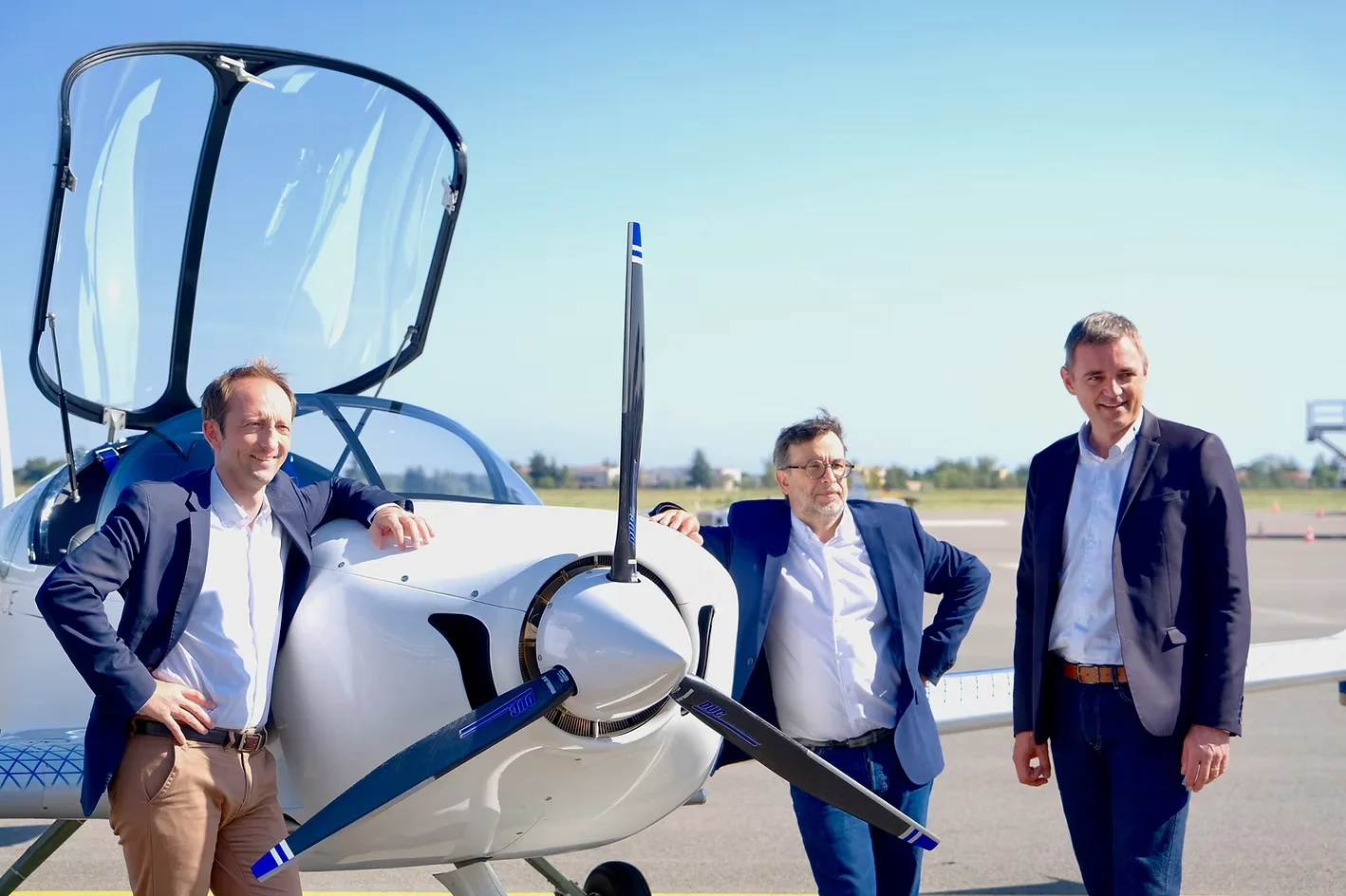
Toulouse is, by any measure, the right place to build an aircraft company. Home to Airbus’s headquarters, the birthplace of the Concorde, and one of Europe’s densest concentrations of aeronautical engineering expertise, the city has an aerospace heritage that runs deep into its industrial and academic DNA. It is fitting, then, that one of the most ambitious and technically credible bets on the future of low-carbon aviation was founded here in 2018, not in a well-funded Silicon Valley lab or a government-backed research institute, but by three engineers with a shared conviction that the tools to decarbonise flight were already within reach.
That company is AURA AERO, and eight years on from its founding at Toulouse-Francazal Airport, it is no longer a startup with a vision. It is an aircraft manufacturer with certified products in production, a 19-seat hybrid-electric regional airliner in advanced development, and a total of €340 million in funding committed to making all of it real.
Three Engineers, One City, and a Credible Ambition
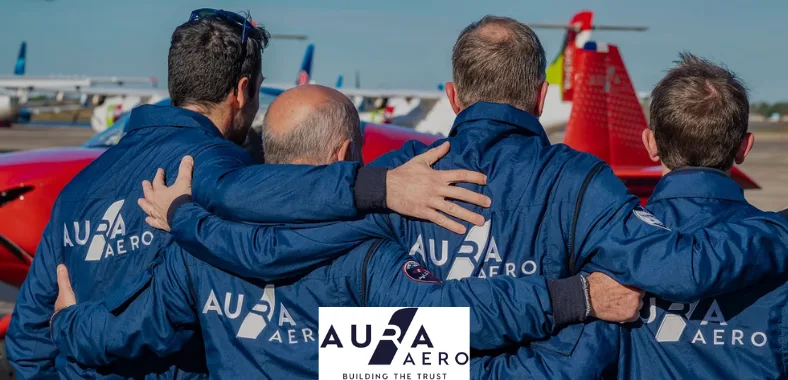
AURA AERO was co-founded by Jérémy Caussade, Wilfried Dufaud, and Fabien Raison, three engineers shaped by France’s aeronautical tradition and motivated by its most pressing contemporary challenge: aviation accounts for roughly 2.5 percent of global CO₂ emissions, but its high-altitude radiative forcing effects mean its total climate impact is estimated to be two to four times higher than the raw carbon figure suggests. The aviation industry has committed to achieving net-zero emissions by 2050 and a 55 percent reduction by 2030.
The technology pathways to get there, sustainable aviation fuels, hydrogen propulsion, and electric and hybrid-electric powertrains, are all in active development. What has been missing, AURA AERO’s founders argued, was not a technology strategy but an industrial execution strategy: a company willing to bridge the gap between certified current-generation aircraft and the genuinely low-carbon aircraft that the next decade requires.
The company’s approach to this challenge reflects its founders’ engineering backgrounds: apply new technologies to proven concepts, and integrate proven technologies into new concepts. It is a philosophy that threads through every programme AURA AERO has launched. Its INTEGRAL family of light sport and training aircraft uses a wood-carbon hybrid material, a combination of traditional wooden construction techniques reinforced with carbon fibre, that is simultaneously lighter, more durable, and more environmentally friendly than conventional composites.
Its ERA regional airliner applies hybrid-electric propulsion, a technology that is proven in its components even if the specific system configuration it demands is novel, to the established market category of 19-seat regional aircraft. Nothing here is pure science fiction. Everything here is demanding engineering executed with discipline.
The INTEGRAL Family: Certified, Flying, and in Production
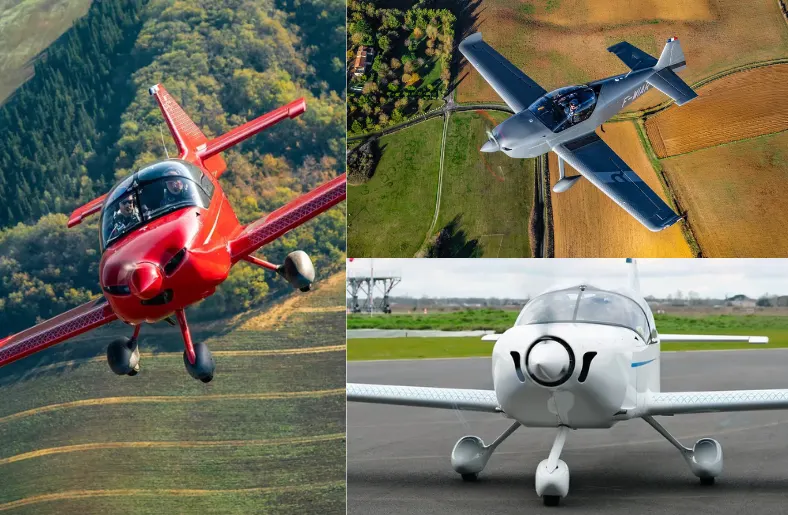
While the ERA regional airliner is AURA AERO’s most ambitious and most widely discussed programme, the foundation of the company’s credibility as an aircraft manufacturer rests on its INTEGRAL family, a range of two-seat aircraft that are already certified, already in production, and already flying with customers and distributors across multiple continents.
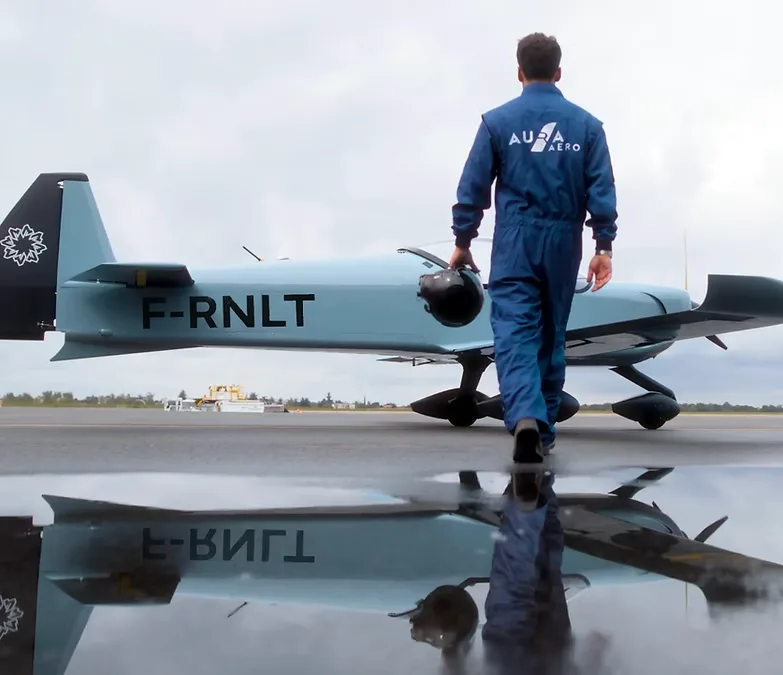
- INTEGRAL R (The High-Performance Trainer): A two-seat aerobatic and training aircraft built on AURA AERO’s distinctive wood-carbon structure. EASA certified and in production. Distributed through a global network spanning Europe, North America, and the UAE. The benchmark product that established AURA AERO’s manufacturing credentials.
- INTEGRAL S (The Sport Aircraft): A Light Sport Aircraft variant of the INTEGRAL family, optimised for accessibility and flight training markets. Certified and commercially deployed through AURA AERO’s distributor network, extending the company’s reach into sport and recreational aviation.
- INTEGRAL E (The 100% Electric Pioneer): A fully electric version of the INTEGRAL airframe, currently working toward EASA certification in the CS-23 category. AURA AERO is targeting a world first with INTEGRAL E: the first certification of a 100% electric aircraft in this category, a milestone that would establish both a technical and regulatory precedent for the entire electric aviation sector.
- INTEGRAL Wood-Carbon (The Material Innovation): The construction methodology underpinning the entire INTEGRAL line. Air Menuiserie, AURA AERO’s Bernay-based subsidiary, is the only organisation approved by both EASA and the FAA for BK repairs, an exclusive technique reinforcing wooden spars with carbon. A rare craft preserved and industrialised for modern aviation.
The INTEGRAL family is significant for reasons that extend beyond its own commercial success. It is proof that AURA AERO can certify, produce, and support aircraft at scale. In a sector where the gap between promising prototypes and certified products in customer hands is the graveyard of many well-funded ventures, the INTEGRAL line’s operational history is AURA AERO’s most important credential for everything that follows.
ERA: The 19-Seat Hybrid-Electric Aircraft That Could Reshape Regional Aviation
Regional aviation has a structural problem that is both environmental and economic. The 19-seat turboprop aircraft that connect regional airports, serve island communities, and provide the connective tissue of air transport networks in countries where geography makes road and rail impractical, are old technology running on jet fuel, expensive to operate, and increasingly uncompetitive against the emissions standards that regulators and airlines are beginning to impose. AURA AERO’s ERA aircraft is a direct answer to this problem.
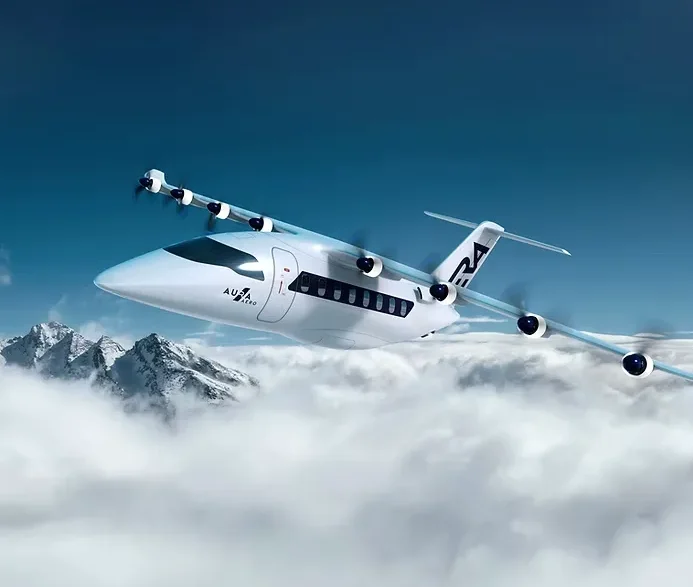
ERA is a 19-seat hybrid-electric regional aircraft with a range of 900 nautical miles, a maximum cruise speed of 300 knots, and a cabin height of 1.88 metres, making it one of the most spacious aircraft in its class. It is powered by eight certified Safran ENGINeUS electric motors, paired with two turbo-generators compatible with Sustainable Aviation Fuel, giving it the ability to switch between hybrid and pure electric modes depending on flight requirements.
The result is a reduction in CO₂ emissions of up to 80 percent compared to conventional aircraft in its category, an operating cost below €0.10 per available seat kilometre, and a short takeoff and landing capability of 800 metres that allows it to operate from small regional airports, unprepared fields, and island runways that larger aircraft cannot serve.
- 80% CO₂ reduction versus conventional aircraft in ERA’s class
- 900 NM ERA’s range, 1,500 km, on a single hybrid-electric mission
- 800 m ERA short takeoff and landing distance able to serve small regional airports
- 700+ Purchase intentions received for ERA, with 20 firm orders already placed
ERA is configured for four distinct missions: regional commuter services with 19 passengers, an exclusive private aviation configuration with up to nine seats, a cargo variant carrying up to two tonnes in 21 cubic metres of freight, and a medevac configuration for critical operations and emergency response. Its cabin features stand-up height, onboard Wi-Fi, and a noise profile significantly quieter than conventional turboprop aircraft, reflecting the hybrid-electric powertrain’s reduction of mechanical noise.
Fly-by-wire flight controls operated via joystick and enhanced by intelligent automation are standard, reducing pilot workload and improving safety margins. Testing of the first ERA prototype is expected to begin by the end of 2026, with a maiden flight targeted for 2027 and market launch before 2030. EASA and FAA certification processes are underway simultaneously.
€340 Million Raised and a Series B That Reads Like a Who’s Who of French Industrial Policy
On April 8, 2026, AURA AERO announced the closing of a €50 million Series B funding round that brings its total capital raised to €340 million, a figure that includes the grants, government support, and European programme funding alongside private equity investment. The Series B investor roster is unusually weighted toward industrial and institutional partners rather than pure financial investors, which reflects both the nature of AURA AERO’s programmes and the strategic importance France and the EU have attached to decarbonising aviation.
The round was backed by the French Tech Souveraineté fund managed by Bpifrance on behalf of the French government, the European Innovation Council Fund under the Horizon Europe programme, Safran Corporate Ventures, Blast Club, Innovacom, the Florida Opportunity Fund, and EDF Group. The presence of Safran Corporate Ventures is particularly noteworthy: Safran is one of the world’s largest aircraft engine manufacturers, and its investment in AURA AERO through its venture arm signals that an established aerospace industrial player sees the hybrid-electric powertrain direction AURA AERO is pursuing as credible enough to back with capital.
It also reflects a strategic alignment, Safran’s ENGINeUS electric motor system is the propulsion technology at the heart of ERA.
“We are building much more than just airplanes: we are building a new European industrial player. This milestone gives us the means to achieve our technological ambitions and, above all, to produce them at scale.” Jérémy Caussade, President and Co-founder, AURA AERO
Beyond the equity round, AURA AERO holds the distinction of being the first aerospace company selected by the European Union’s Innovation Fund to receive a grant funded through carbon credits under the EU Emissions Trading System, amounting to €95 million.
This is one of the largest funding programmes in the world for deploying innovative low-carbon technologies, and its selection of AURA AERO as the first aerospace recipient is a meaningful signal of institutional confidence in both the technical approach and the commercial viability of the ERA programme.
The new capital will fund three concurrent priorities: the first flight of ERA, the ramp-up of INTEGRAL production at two new industrial facilities in Toulouse and Daytona Beach, Florida, and the expansion of drone operations under AURA AERO’s ENBATA MALE drone programme. The building permit for the Toulouse-Francazal factory has been secured. A 16-hectare site at Daytona Beach International Airport, supported by Space Florida, is ready to host ERA’s American production facility.
Three World Firsts That Frame the Programme’s Ambition
AURA AERO has defined its immediate programme targets with specific and verifiable claims, each representing a genuine aviation milestone rather than a marketing aspiration.
- The first flight of a hybrid-electric regional commercial transport aircraft, with ERA. No aircraft in this category, 19-seat regional commercial transport, has ever flown with hybrid-electric propulsion. ERA’s maiden flight in 2027 would be genuinely unprecedented.
- The first certification of a 100% electric aircraft in the EASA CS-23 category, with INTEGRAL E. CS-23 governs normal-category general aviation aircraft. No fully electric aircraft in this category has received EASA type certification. INTEGRAL E is working toward closing that gap.
- The first flight of an ITAR-free MALE drone, with ENBATA. ITAR, the International Traffic in Arms Regulations, governs US military technology exports and creates significant operational and sovereignty constraints for non-US operators of US-origin military systems. An ITAR-free MALE-class drone would be a material capability for European defence sovereignty.
Global Operations With Toulouse at the Centre
AURA AERO is structured as an international group with three operational geographies, each serving a distinct function in the company’s production and commercial architecture. The Toulouse headquarters is the engineering and production hub for the INTEGRAL family, housing the primary design, manufacturing, and quality management functions.
The Bernay facility in Normandy, operated through the Air Menuiserie subsidiary, is the centre of AURA AERO’s distinctive wood-carbon expertise, producing the structural components that give the INTEGRAL its unique material character. Assembly facilities in Daytona Beach, Florida and Abu Dhabi in the UAE bring production closer to North American and Middle Eastern markets respectively, reducing lead times and supporting the distributor network across these regions.
The company is a member of La French Fab and La French Tech, participates in the Alliance Zéro Émission Aérienne, and holds EASA and OSAC certifications as a fully approved aircraft manufacturer. Its partnership with EDF, established at the 2025 Paris Air Show, is developing the charging standards and airport infrastructure that electric aviation will require, recognising that the ground infrastructure challenge is as significant as the aircraft technology challenge for the commercial viability of electric flight.
Its collaboration with Renault, which resulted in AURA AERO’s INTEGRAL E being the only aircraft showcased at the Paris Motor Show alongside the electric Renault 4, reflects the convergence of ground and air electrification that companies on both sides of that boundary are beginning to explore.
AURA AERO is not a company betting on a distant technological future that may or may not materialise. It is building certified aircraft now, securing orders for its next generation aircraft based on technology that is already proven in its components, and deploying industrial infrastructure in two of the world’s largest aviation markets simultaneously. The decarbonisation of aviation will take decades and will require multiple technology pathways. AURA AERO is pursuing the one that the physics and the regulatory environment suggest is most achievable within the timeframes that matter, and doing it from the city that has been building aircraft longer than almost anywhere else on earth.