


Spaceflux: The UK Startup Building the Intelligence Layer for Space
Spaceflux’s Mission: Making Space Safer and More Transparent
Space is becoming increasingly important to governments, defense organizations, satellite operators, and commercial businesses, but understanding what is happening in orbit remains a difficult challenge. Thousands of active satellites operate alongside inactive spacecraft, rocket bodies, and fragments of debris, creating a constantly changing environment where even small uncertainties can have significant consequences. London-based Spaceflux is building a space intelligence platform designed to give organizations a clearer picture of what is happening above Earth.
The company operates a proprietary global network of optical sensors across five continents and uses its Cortex platform to process observations and turn them into operational intelligence. Rather than simply identifying where an object is, Spaceflux aims to understand how objects behave over time, helping customers maintain accurate catalogues and identify unusual or potentially significant activity. Its customers include governments, defense organizations, and commercial space operators that require reliable space domain awareness. This capability is becoming increasingly important as satellite infrastructure becomes essential to communications, navigation, Earth observation, weather forecasting, and national security.
A collision or unexpected maneuver can potentially disrupt critical services, while uncertainty about an object’s behavior can make mission planning more difficult. Spaceflux’s mission is therefore closely connected to the growing need for a transparent and continuously monitored orbital environment. By combining persistent observation with AI-driven analysis, the company wants to make space intelligence more accessible and actionable for organizations operating in an increasingly congested orbit.

Spaceflux Products: Tracking and Monitoring Objects in Orbit
Spaceflux’s product portfolio is designed around the different stages of understanding objects in orbit. Its technology can support space object tracking, catalogue maintenance, characterization, and behavioral analysis, helping operators move from simply detecting an object to understanding what that object is doing. Traditional space surveillance has often depended heavily on radar and a relatively limited number of specialized observation systems. Spaceflux takes a complementary approach by building a distributed network of optical sensors that can observe objects from locations around the world. This geographic distribution allows the company to collect observations from different viewing conditions and create a more persistent picture of orbital activity.
Its Cortex platform then brings those observations together, applying AI and data processing to turn raw measurements into useful intelligence. For satellite operators, this can mean maintaining a more accurate understanding of nearby objects and identifying changes that could require attention. For governments and defense organizations, the same capability can contribute to broader space domain awareness, where understanding the behavior of satellites and other orbital objects has become strategically important. The company’s products are therefore not simply about tracking satellites on a map. The larger objective is to provide information that supports operational decisions.
As the number of satellites and other objects in orbit continues to increase, automated systems will become increasingly important because human analysts cannot manually process every observation or continuously monitor every object. Spaceflux is building its platform around this reality, using automation and AI to help transform large volumes of observations into information that operators can actually use.

Inside Spaceflux’s Technology: AI, Optical Sensors, and Space Surveillance
The foundation of Spaceflux’s platform is its combination of optical sensors, global observation infrastructure, and AI-powered analytics. Optical space surveillance involves observing objects using telescopes and cameras and analyzing their movement and characteristics from the resulting observations. By deploying sensors across multiple locations, Spaceflux can collect observations of satellites and other objects as they pass overhead and combine those observations into a broader picture of orbital activity. The company’s Cortex platform sits above this sensor network, using software and AI to process the resulting information. This is where Spaceflux’s technology moves beyond conventional observation.
Raw observations have limited value until they can be associated with specific objects, compared with historical behavior, and interpreted in context. AI can help automate these processes and identify changes or patterns that might otherwise require significant analyst time. Spaceflux’s technology is designed to support catalogue maintenance as well as behavioral analysis, allowing users to understand not only where objects are but also how their behavior changes.
This becomes particularly important for satellites capable of maneuvering, because an unexpected change in trajectory can be difficult to interpret without historical context. Spaceflux’s global network also gives it an important data advantage. Sensors distributed across five continents can generate observations from different geographic locations, creating opportunities to improve the continuity and accuracy of tracking.
The company operates from London with additional operations in Italy, combining its physical observation infrastructure with an AI-driven software layer. Together, these components create an end-to-end system for space domain awareness. The broader vision is to turn space surveillance from a fragmented collection of observations into a continuously updated intelligence system that governments and commercial operators can use to make decisions.
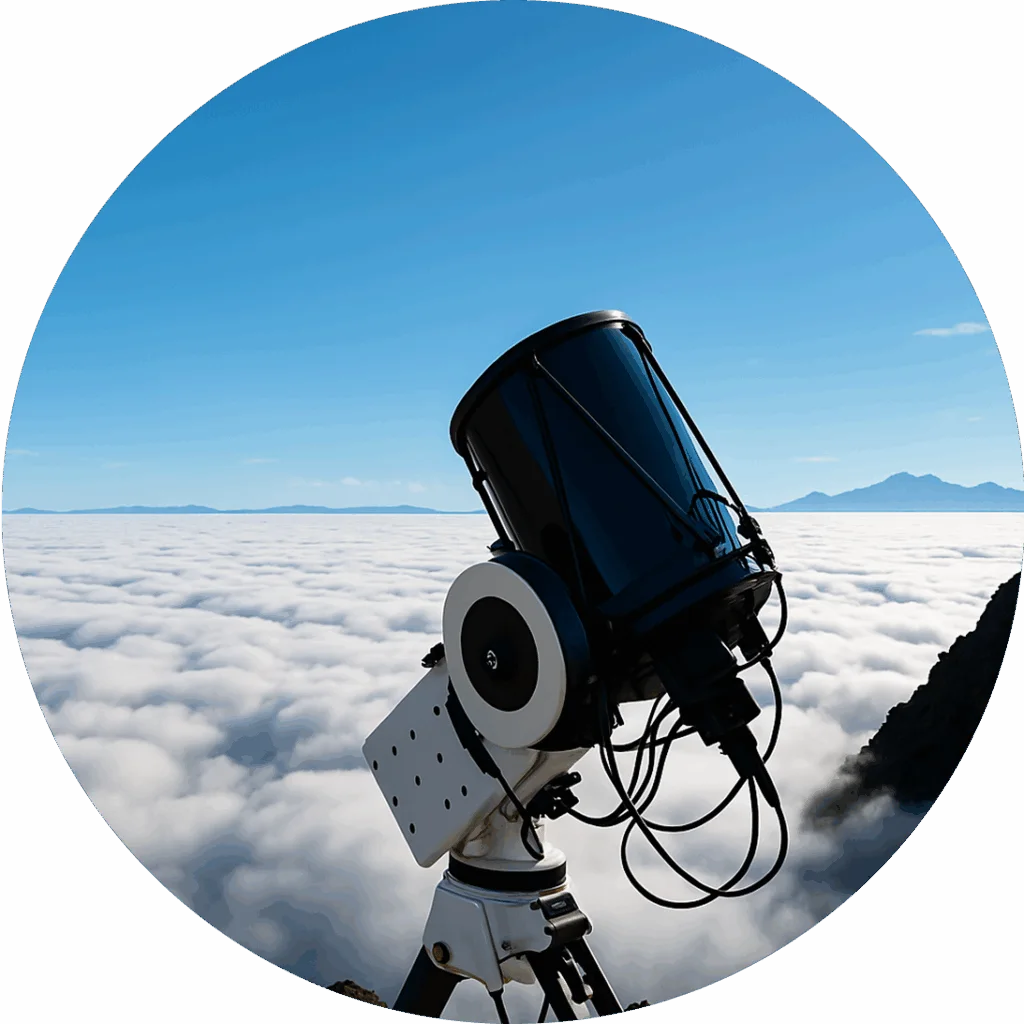
Spaceflux Labs: Building the Next Generation of Space Intelligence
Spaceflux Labs represents the company’s effort to push beyond today’s space surveillance capabilities and explore what the next generation of space intelligence could look like. The need for innovation is growing as the orbital environment becomes more complex. Commercial satellite constellations are expanding rapidly, governments are investing more heavily in space-based capabilities, and the amount of data generated by sensors and satellites continues to increase. This creates an opportunity for AI to become a much more important part of space operations. Spaceflux Labs can help explore technologies that improve how orbital observations are collected, processed, interpreted, and transformed into intelligence.
The company’s research direction is particularly relevant to the challenge of understanding behavior rather than simply location. Tracking where an object is provides one layer of information, but understanding why it is moving, how its behavior compares with previous activity, and whether a change is significant can provide far greater operational value. This is where AI-driven analysis could become transformative. In April 2026, Spaceflux raised £9 million to expand its space intelligence capabilities globally, giving the company additional resources to scale its sensor network, develop its technology, and expand its presence across international markets. The funding reflects growing investor interest in space infrastructure that sits between raw satellite data and strategic decision-making.
Spaceflux is effectively building an intelligence layer for an orbital environment that is becoming increasingly important to modern society. The long-term opportunity is significant. As more infrastructure moves into orbit, the ability to continuously understand what is happening there will become increasingly valuable. If Spaceflux can combine a global sensor network with sophisticated AI analysis at scale, it could help governments and commercial operators move from reactive space surveillance toward continuous, predictive space intelligence.