

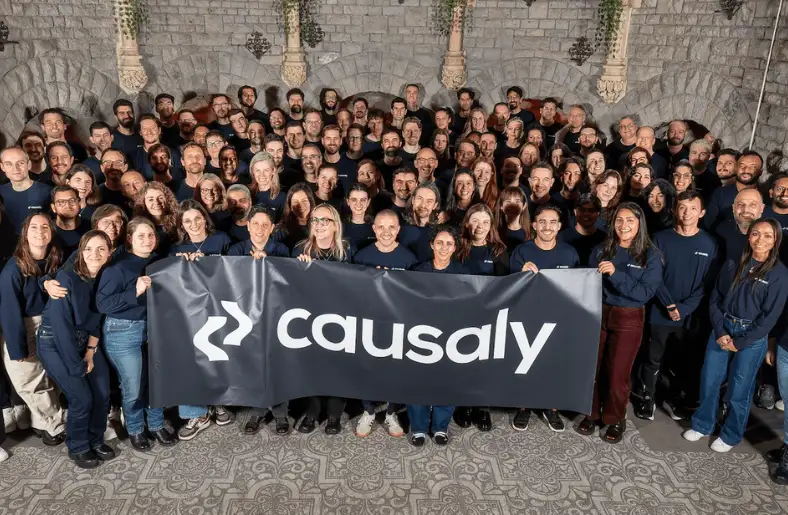
Meet Causaly: The AI Startup Turning Biomedical Research Into a Searchable Knowledge Network
Why Has Drug Discovery Become an Information Problem?
Developing a new medicine requires scientists to connect evidence scattered across millions of research papers, clinical trial records, patents, biological databases, and internal company experiments. A promising target may appear in one study, its biological mechanism in another, and evidence of potential safety risks in a separate dataset. Researchers must establish whether these findings reinforce one another, contradict existing assumptions, or reveal a relationship worth investigating. The challenge is not simply finding more information.
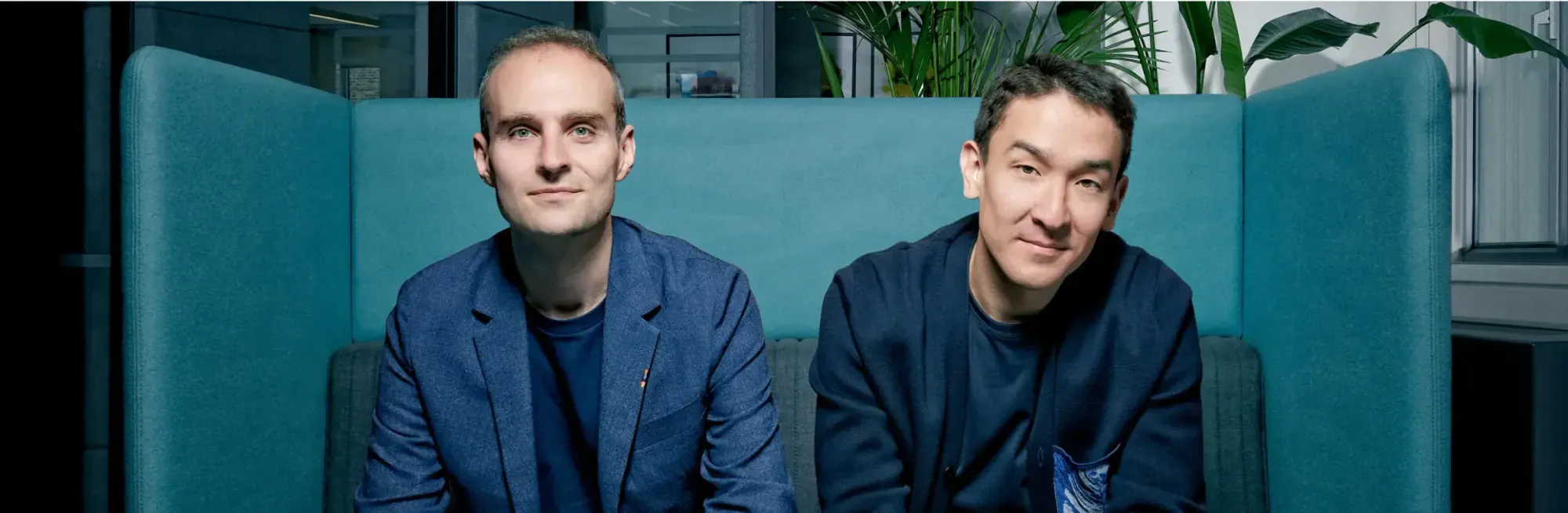
It is understanding how the evidence fits together and whether it supports a viable scientific hypothesis. These decisions are consequential because pursuing a weak drug target can consume years of research and substantial investment before its limitations become clear. Founded in 2018 by computer scientists Yiannis Kiachopoulos and Artur Saudabayev, Causaly was built around this problem.
The company aims to help pharmaceutical and biotechnology teams navigate biomedical knowledge more efficiently, using AI to identify relationships and evidence that conventional literature searches may overlook. Its broader objective is to help researchers move from fragmented information toward clearer, evidence-backed decisions earlier in the research process.

How Causaly Uses AI to Connect the Dots in Biomedical Research?
Causaly combines several technologies to make scientific information more useful. Its Bio Graph knowledge graph maps relationships among diseases, genes, proteins, biological pathways, drug targets, and treatments. The company says the graph contains more than 500 million biomedical facts and 70 million directional relationships, allowing researchers to explore connections that might be difficult to identify by reading individual studies.
Its Scientific RAG system retrieves and ranks relevant evidence, while the generative AI copilot produces answers with linked scientific citations. The platform also incorporates enterprise data, allowing research teams to combine external literature with internal knowledge and proprietary information. More recently, Causaly has expanded into Agentic Research, where specialised AI agents can plan and execute multi-step research workflows, synthesise evidence, and produce structured findings for scientific review.
Its Pipeline Graph adds competitive intelligence, helping teams compare drug-development programmes, therapeutic targets, clinical trials, and competing approaches. Together, these tools are designed to support decisions such as identifying promising targets, prioritising biomarkers, understanding disease mechanisms, and assessing the scientific rationale behind a potential therapy.
Can AI Help Scientists Find the Next Breakthrough Drug?
AI systems such as Causaly could influence drug discovery by helping researchers evaluate more hypotheses before committing to expensive laboratory experiments. Consider a team investigating a disease target. Researchers could use the platform to examine associated biological pathways, identify supporting and conflicting evidence, compare related targets, and assess whether competing pharmaceutical programmes have already explored similar approaches. This does not automatically produce a new medicine, but it can help scientists decide which questions deserve further investigation.
Causaly’s focus on relationships and evidence is particularly relevant because biological systems are interconnected: changing one protein or pathway can influence multiple processes, including those associated with efficacy and safety. The company also reports productivity improvements in research workflows. Its Agentic Research product cites an ability to analyse hundreds of documents rapidly, while a customer testimonial from Teva Pharmaceuticals describes reducing a target-prioritisation exercise from four weeks to five days using the broader Causaly suite.
Such results illustrate the potential for AI to reduce research overhead and accelerate decision-making, although outcomes depend on the workflow, evidence available, and how teams use the platform. The ultimate value lies in helping scientists reach better-supported decisions sooner, not simply generating more candidate drugs.

The Limits of AI in Drug Discovery and How Causaly Is Trying to Overcome Them
Drug discovery remains difficult because biological evidence is incomplete, experimental results can conflict, and relationships observed in datasets do not necessarily establish causation. AI can also generate plausible but incorrect explanations, overlook relevant studies, or draw conclusions from biased or incomplete data. Even a scientifically credible hypothesis must survive laboratory testing, preclinical studies, clinical trials, and regulatory review before it can become an approved medicine.
Causaly addresses some of these challenges by grounding generated answers in retrieved scientific evidence, providing citations, mapping relationships explicitly, and giving researchers access to internal and external data. Its agentic workflows are designed to make research steps more structured and their outputs easier to review. These safeguards can improve transparency, but they cannot eliminate uncertainty or replace experimental validation and scientific judgement. The larger opportunity is to make the early stages of research more systematic, allowing teams to identify weak assumptions sooner and allocate laboratory resources more carefully.
If Causaly can consistently connect reliable evidence with useful scientific reasoning, it could become an important part of the infrastructure supporting AI-assisted drug discovery. Shortening the road to new medicines will still require discoveries in the laboratory and clinic, but better decisions about where to search may help researchers make more progress with the time and resources they have.