

Tacit Labs and AI Drug Discovery
Why AI Drug Discovery Needs a Better Feedback Loop?
AI has made rapid progress in areas where answers can be verified quickly. A coding model can write software and immediately test whether it compiles. A mathematical model can produce a proof that can be checked against formal rules. Drug discovery is fundamentally different. Biology does not provide a simple verification button. A potential drug can bind successfully to a target and still fail in cells, work in cells but fail in animals, or show promising results in early studies before ultimately failing in humans.
Tacit Labs argues that this creates a fundamental bottleneck for AI-driven drug discovery: models can generate hypotheses faster than biology can tell them whether those hypotheses are actually useful. The company describes drug development as a search through a chain of interconnected decisions involving targets, molecules, assays, biomarkers, patient populations, and development strategies, where each decision influences the next. The result is an expensive and slow feedback loop, with the strongest verifier, a human clinical trial, arriving only at the end of the process. Tacit Labs was founded to build a more efficient verification system around that process.
Tacit Labs’ Vision for Autonomous Drug Discovery
Rather than attempting to build another standalone drug-design model, Tacit is focused on the infrastructure that allows AI agents to operate across the entire discovery and development process. The company is starting with long-horizon evaluations that simulate realistic drug development trajectories, combining biological foundation models, experimental data, human-designed tasks, and accessible laboratory infrastructure. These evaluations are intended to expose exactly where AI agents fail and identify where additional experimental or human data is needed.
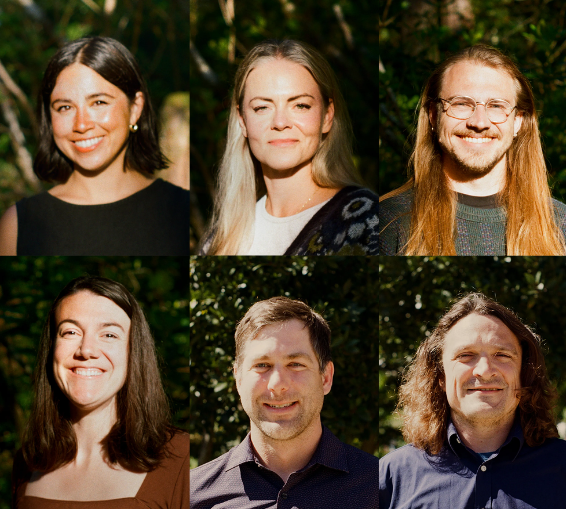
Tacit’s thesis is that increasingly capable models can use cheaper intermediate signals, including computational predictions and biochemical experiments, to narrow the search space before expensive real-world verification is required. Over time, the company wants these evaluation loops to become increasingly realistic and eventually function as infrastructure for agents operating in real research environments. Its founding team includes CEO Nicole Fitzgerald and COO Anne Marie Droste, alongside researchers and engineers working across scientific and technical infrastructure.
The Future of Tacit Labs and AI Drug Discovery
Tacit’s long-term vision is considerably more ambitious than accelerating individual steps in today’s pharmaceutical pipeline. The company believes AI agents could eventually turn drug discovery into a massively parallel search process, where thousands or even millions of therapeutic hypotheses can be explored simultaneously.
In its vision, a person could specify a disease area, target, or therapeutic hypothesis and deploy a group of specialised agents to investigate potential paths toward a human-ready molecule. Reaching that point requires more than increasingly powerful models. Scientific infrastructure must become accessible to machines, experimental results must be captured in forms that models can use, and verification needs to become faster and denser throughout the decision chain. Tacit calls this a path toward “zero-person biotechs,” where organisational capacity and scientific labour become less of a constraint on how many therapeutic ideas can be explored.
The company’s immediate challenge is turning that vision into reliable evaluations and infrastructure that demonstrate meaningful correlation with real biological outcomes. If it succeeds, Tacit could become part of a new layer of scientific infrastructure in which AI does not simply generate drug candidates, but continuously learns from the experiments used to test them.